
Business
FG Pushes For N17.89tn New Loans To Finance 2026 Budget

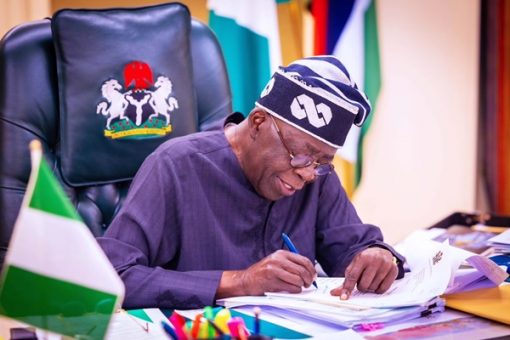
The Federal Government plans to borrow N17.89tn in 2026 to fund a widening budget deficit as revenue projections fall sharply below expenditure needs, according to the 2026 budget framework obtained from the Budget Office of the Federation.
Official figures in the 2026 Abridged Budget Call Circular issued by the Federal Ministry of Budget and Economic Planning show that total new borrowing will jump from N10.42tn in 2025 to N17.89tn in 2026. This is an increase of N7.46tn (72 per cent) in fresh loans over one year, amid concerns over rising debt costs.
The borrowing requirement is driven by a larger fiscal deficit and a weaker revenue outlook, even though overall expenditure is projected to fall slightly compared with the current year. The framework puts the 2026 fiscal deficit at N20.12tn, up from N14.10tn approved for 2025.
This represents an increase of N6.02tn, or about 43 per cent year-on-year. Despite this jump in the nominal deficit, the deficit to gross domestic product ratio is projected to decline from 4.17 per cent in 2025 to 3.61 per cent in 2026, reflecting a higher projected GDP base. The deficit ratio is expected to ease further to 3.24 per cent in 2027 and 1.92 per cent in 2028.
Revenue figures explain why the government is resorting to much larger borrowing. The amount available for the federal budget, excluding the retained revenue of government-owned enterprises, is projected to fall from N38.02tn in 2025 to N29.35tn in 2026.
This is a drop of N8.67tn or about 23 per cent between the two years. The government expects revenue to recover modestly to N31.53tn in 2027 and N34.90tn in 2028.
That implies growth of about seven per cent between 2026 and 2027 and about 11 per cent between 2027 and 2028, but the recovery is not strong enough to remove the need for heavy borrowing in the medium term.

The PUNCH further observed that the bulk of the 2026 borrowing will come from domestic creditors. The document shows that of the planned N17.89tn new loans for 2026, N14.31tn will be raised from the domestic market, while N3.58tn will be sourced from external creditors. Domestic borrowing, therefore, accounts for 80 per cent of new loans in 2026, while foreign borrowing contributes 20 per cent.
This strong tilt towards the local market is not new. In 2025, domestic borrowing is put at N8.58tn out of total new loans of N10.42tn, which is about 82 per cent of the borrowing requirement. External borrowing of N1.84tn makes up the remaining 18 per cent.
The same pattern is projected to continue after 2026. In 2027, the Federal Government plans to borrow N21.18tn, comprising N16.94tn in domestic debt and N4.24tn in external loans.
Domestic borrowing thus remains at 80 per cent of the total, with foreign loans at 20 per cent. In 2028, planned borrowing drops to N15.84tn, but the structure remains almost unchanged, with N12.67tn expected from domestic creditors and N3.17tn from external lenders, again roughly 80 and 20 per cent respectively.
When the numbers for the three budget years are added together, the scale of reliance on debt becomes clearer. Between 2026 and 2028, the Federal Government plans to borrow N54.91tn in total. Domestic creditors are expected to provide N43.92tn of this amount, while external creditors will supply N10.98tn.
This means domestic borrowing will account for exactly 80 per cent of new loans over the three-year period, with external debts making up the remaining 20 per cent. Year-on-year analysis of borrowing after 2026 shows a continued heavy dependence on debt, even though the trend turns downward towards the end of the period.
From 2026 to 2027, total new borrowing rises from N17.89tn to N21.18tn, an increase of about N3.29tn or roughly 18 per cent. Between 2027 and 2028, planned borrowing falls from N21.18tn to N15.84tn, a decline of about N5.34tn or roughly 25 per cent.
Debt service costs are also rising. According to the framework, debt service is projected at N13.94tn for 2025 and N15.52tn for 2026, an increase of N1.58tn, or about 11 per cent year-on-year.
The burden of these payments relative to revenue is captured in the debt service to revenue ratio. For 2025, the ratio is put at 34 per cent. In 2026, it is forecast to jump to 45 per cent, meaning nearly one naira out of every two naira of revenue available to the Federal Government will be used to pay interest and principal on existing debt.
The ratio is projected to rise further to 53 per cent in 2027 before easing to 47 per cent in 2028. Total federal expenditure is expected to edge down from N54.99tn in 2025 to N54.46tn in 2026, but the composition of spending continues to tilt towards recurrent items and debt service.
Recurrent non-debt expenditure is projected to rise from N13.59tn in 2025 to N15.27tn in 2026. Within this, personnel costs for ministries and departments will take N8.36tn, while pensions, gratuities, and retirees’ benefits will cost N1.38tn. Other service-wide votes, including key national programmes, will rise from N1.06tn in 2025 to N1.85tn in 2026.
Capital expenditure is set to fall from N26.19tn in 2025 to N22.37tn in 2026. The reduction is linked to a policy decision that ministries and agencies will roll over 70 per cent of their 2025 capital allocations into 2026 rather than seek fresh approvals for the same projects.
Capital spending is projected to recover slightly to N23.28tn in 2027 and then ease to N21.26tn in 2028. Even with this sizeable capital envelope, the combination of recurrent spending and debt service still dominates the budget and squeezes the room for new infrastructure.
Other financing items are relatively small when compared with the borrowing figures. Privatisation proceeds are projected at N312.33bn in 2025 and are expected to fall to N189.16bn in 2026. They are then forecast to rise modestly to N197.23bn in 2027 and jump to N486.54bn in 2028.
Even at that peak level, privatisation receipts would still amount to less than three per cent of total financing. Project-tied loans from multilateral and bilateral partners are also expected to decline from N3.36tn in 2025 to N2.05tn in 2026, then to N1.17tn in 2027, and N556.66bn in 2028.
Speaking earlier in separate interviews with The PUNCH, experts said the deficit, which represents more than one-third of the proposed N54.43tn spending envelope, raises fresh questions about debt sustainability, fiscal discipline, and the government’s ability to manage inflationary and exchange rate pressures in 2026.
The Chief Executive Officer of the Centre for the Promotion of Private Enterprise, Dr Muda Yusuf, said Nigeria must be cautious not to destroy the fragile stability achieved in recent months.
He warned that high deficits and rising debt levels pose a serious threat. Yusuf said he was worried about what he described as the risk of a debt trap, stating that “we need to worry about debt sustainability” because “high levels of deficits and high levels of debt… can choke the fiscal space and lead to a kind of vicious circle of debt.”
He explained that Nigeria has only recently regained some macroeconomic footing and that any disruption could quickly worsen inflation and exchange rate pressures.
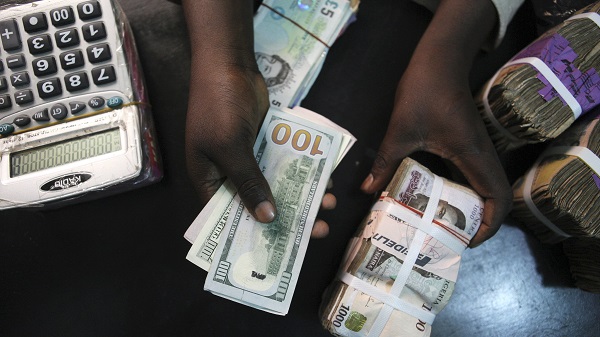
The Nigerian currency, Naira (₦), continued its battle against the United States dollar at the official foreign exchange market on Saturday.
Daily Voice reports that data from the Central Bank of Nigeria (CBN) showed that the local currency sold at ₦1,321.2160/1$ on Sunday.
The latest rate is the same as Saturday’s rate of ₦1,321.2160/1$.
At the parallel market (black market), however, the naira closed on Sunday at ₦1,400 to the dollar.
The offers by commercial banks, Bureau de Change (BDC) operators, and other foreign exchange dealers may, however, differ from the reference rates due to transaction margins and prevailing demand and supply conditions.
Market participants will continue to monitor foreign exchange inflows, demand for dollars, and CBN policies for indications of whether the naira can sustain its gains through the month.
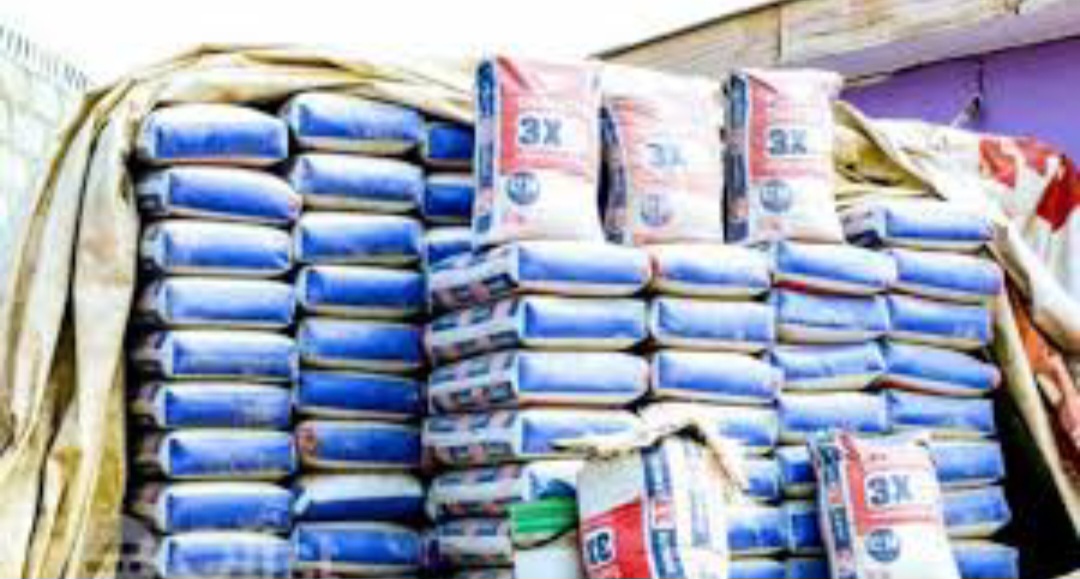
Cement prices in Nigeria remain elevated, with a 50kg bag selling for between ₦12,000 and ₦15,000 in many markets, putting further pressure on builders, contractors and Nigerians planning construction projects.
The latest market data shows that although some brands are currently available below the ₦15,000 mark, the industry remains significantly more expensive than it was at the end of 2025 and early 2026.
Recent market quotations show the following indicative prices for a 50kg bag:
Note: prices may vary by location and transportation costs.
These figures are based on a September 1 market report and can vary depending on location, transportation costs, dealer margins and supply conditions.
However, July industry data painted a more expensive picture. CementNet reported retail prices of ₦12,000 to ₦15,000, with Dangote selling for about ₦13,000–₦15,000, BUA at ₦12,000–₦14,500, and HBM Nigeria, formerly Lafarge Africa, at ₦12,000–₦13,500.
The latest figures suggest that cement prices may have eased from the highest quotations seen earlier in the year, but the broader trend remains upward.
In July, The Guardian reported that a 50kg bag typically sold for ₦12,500–₦15,000 across major markets including Lagos, Abuja and Abia.
The Federal Competition and Consumer Protection Commission (FCCPC) also reported that prices had reached between ₦13,000 and ₦15,000 in some locations during the first half of 2026.
This means the current ₦12,000–₦14,000 quotations for several major brands should be viewed as some market-level moderation rather than a broad collapse in cement prices.
Why cement remains high
High energy and transportation costs continue to weigh heavily on the industry. Cement manufacturing requires significant amounts of energy, while moving cement from factories and depots to retail markets adds further costs.
Location is also playing an important role. Buyers in areas farther from production centres can pay substantially more because of haulage and distribution expenses.
The situation is particularly significant because Nigeria has substantial cement production capacity, yet retail prices remain high. The Guardian reported that domestic production exceeds consumption, with surplus output exported to neighbouring countries.


Nigerian civil servants on Grade Level 8 now earn between N1,479,276 and N1,914,514 annually, depending on their step within the scale, following the new minimum wage signed under President Bola Tinubu’s administration.
The figures fall under the Consolidated Public Service Salary Structure (CONPSS), the framework that governs pay across Nigeria’s federal civil service.
CONPSS covers 17 grade levels in total, and a worker’s position within each level is shaped by their qualifications, length of service, and performance record.
Grade Level 8 has 14 steps, with each step representing a progression in earnings. Below is the full breakdown:
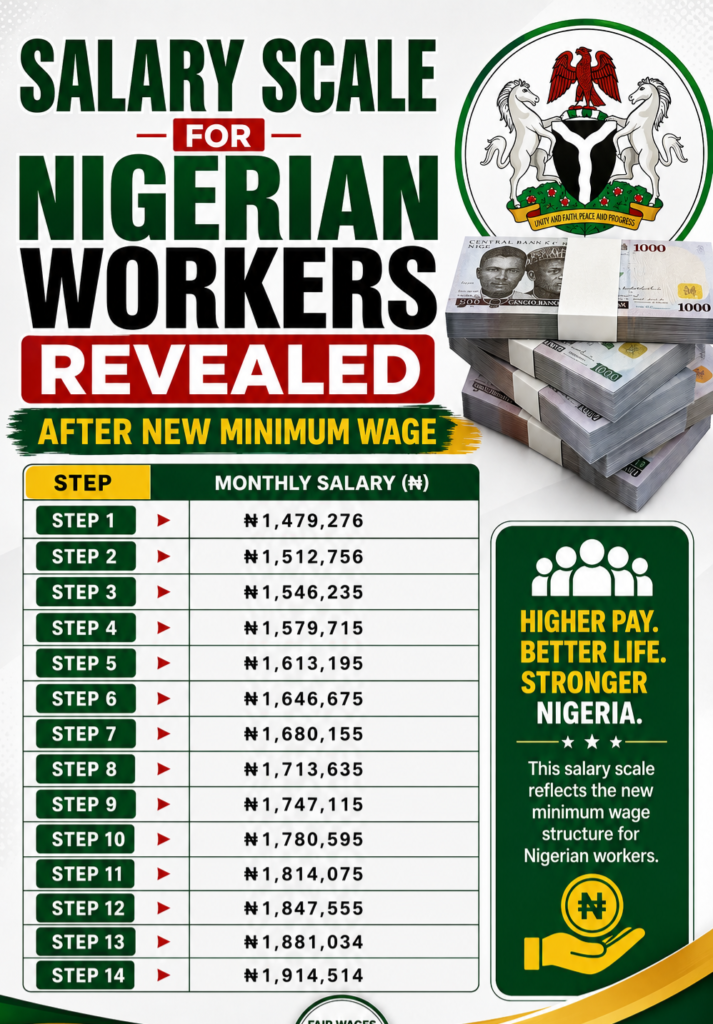
The gap between the lowest and highest steps at this level amounts to N435,238, reflecting how significantly length of service can affect take-home pay within a single grade.
Interest in the salary structure has grown since Tinubu’s government approved a new national minimum wage, which triggered a review of earnings across the public sector. Civil servants and job seekers have been keenly examining each grade level to understand what the adjusted structure means in practical terms.
Workers at Grade Level 8 are typically mid-level employees with some years of experience in the civil service. Their earnings sit above the entry-level grades but below the senior cadre, making this level a reference point for many who are planning career progression within the federal workforce.


New Files Allege Sudan Military Built Chlorine Weapons Program

Former Nigerian Senator dies At 62

2027: ADC Suffers Setback As Popular Reps Aspirant Dumps Party

Former Super Eagles Star Loses Life Savings, Duped By A Pastor of ₦1.2 Billion

I’m A Married Man, I Can Never Get Myself Involved With Such A Thing, Delta Gov Aide Reveals Why He Offered Comfort ₦500,000 Job

Lagos Imposes ₦250,000 Fine For Illegal Waste Disposal

-
 News1 day ago
Trump Is Behind My Plan To Return Fuel Subsidy – Atiku
-

 News1 day ago
2027 Presidential Election Will Be An Easy Ride For Tinubu – Says Wike’s Aide, Olayinka
-

 Sports1 day ago
Adegbuyi Named WAFU-B Player Of Tournament As Edo Queens Qualify For Champions League
-

 Entertainment1 day ago
Toxic Today, Sweet Tomorrow – Deborah Shokoya Speaks On Peller, Jarvis Marriage
-
 Business1 day ago
Dollar To Naira Exchange Rate Today, September 7th, 2026
-

 Entertainment1 day ago
Wizkid Headlines Afro Plus Fest, Marks 15 Years In Music
-
 News1 day ago
26 States Lean On FAAC As Wage Bills Outstrip IGR
-
 News1 day ago
FG Gives Update on New Minimum Wage Negotiation, Reveals Next Action