
Business
Don’t Allow Money Laundering, EFCC Urges Opay


The Economic and Financial Crimes Commission has urged OPay’s management and staff to place greater emphasis on complying with existing regulations to maintain business integrity and curb fraudulent activities.
This call was made by the EFCC Chairman, Mr. Ola Olukoyede, during a courtesy visit to the commission’s headquarters by OPay CEO, Mr. Steven Wen, along with other senior executives on Thursday.
The call comes at a time when Nigerian fintech companies are facing increasing regulatory scrutiny, especially around Anti-Money Laundering controls, fraud prevention, and customer verification processes.
The EFCC boss, speaking through its Chief of Staff, Michael Nzekwe, emphasized the role of anti-corruption in stimulating economic growth.

He urged Opay to uphold strict compliance with laws in all business operations.
“Work on Know Your Customers, KYC, don’t give room for fraud, don’t allow your company to be used for money laundering and comply with every law of the land,” Olukoyede said.
He also praised Opay for its local content employment strategy, noting that
“Your ninety-nine per cent local employees are very good, we must commend you for that, but then again, it is also important to reiterate the need for compliance with local laws. It is very important because you have to ensure it is not just by word of mouth but more by action that you comply with the local laws,” he said.

The Director of Investigation at EFCC, Abdulkarim Chukkol, underscored the importance of safeguarding company systems against insider abuse.
“Systems integrity is also very important to look at, secondly, the KYC, it is not enough for us to say let us just follow only what the CBN has given us, but again, you have to go the extra mile.
“I also want to give advice on the people that you employ, sometimes insider abuse is very rampant, no matter how tight your system is, when you bring in somebody that can do and undo, then definitely everybody is at risk,” he said.
Opay’s CEO, Wen, highlighted that Opay prioritizes regulatory compliance, customer satisfaction, and revenue generation.
He emphasized that the company places the highest importance on adhering to local laws and regulations, followed by ensuring customer satisfaction through innovative solutions that address their needs.
Additionally, he noted that growing revenue remains a key focus, with compliance considered a non-negotiable boundary for the business

…One Student Rescued – Police
Gunmen on Tuesday attacked Government Secondary School, Odo-Ekina, in Dekina Local Government Area of Kogi State, abducting four students, the school principal and a National Examinations Council (NECO) ad hoc staff member.
The attack occurred at about 5:25 p.m. while the students were writing their NECO examination. according to the Kogi State Police Command.
Confirming the incident, the State Police spokesperson, ASP Saliu Oyiza Afusat, said one of the abducted students has been rescued, while efforts are ongoing to secure the release of the remaining victims and apprehend the attackers.
She said that the state Commissioner of Police, CP Naziru Bello Kankarofi, alongside the Brigade Commander and the State Security Adviser to the Governor, Commodore Jerry Omodara (Rtd), are already on the way to the scene for an on-the-spot assessment.
The police said a more detailed statement would be issued as additional verified information becomes available.
Source: Vanguard
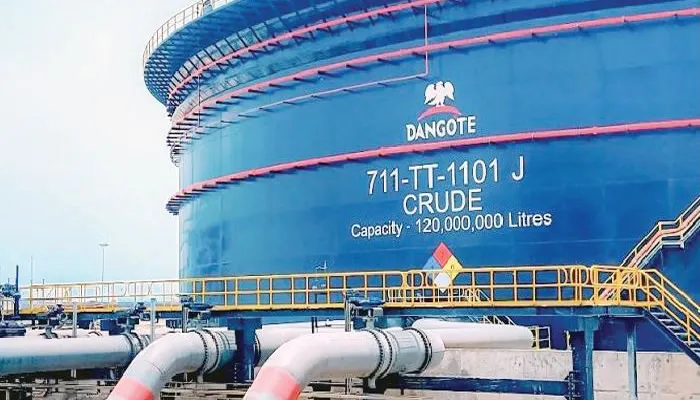
Dangote Petroleum Refinery has fixed the ex-depot price of Premium Motor Spirit (PMS), also known as petrol, at $0.779 per litre as it officially transitioned to a dollar-denominated pricing system for refined petroleum products.
The new pricing template, which took effect on Monday, July 13, 2026, also pegs Automotive Gas Oil (diesel) at $1.087 per litre and aviation fuel at $0.942 per litre, while coastal deliveries of petrol have been priced at $1,044.62 per metric tonne.
The move effectively ends naira payments for petrol, diesel and aviation fuel purchased from the refinery, marking a significant shift from the naira-based transactions introduced under the Federal Government’s naira-for-crude policy, which commenced on October 1, 2024.
In a notice to petroleum marketers and customers, the refinery said all previously issued naira-denominated Proforma Invoices (PFIs) and Deal Recaps for both gantry and coastal transactions had become invalid.
The notice, signed by the refinery’s Group Commercial Operations, stated: “Following our email of July 9, 2026, regarding the transition from naira to United States dollars (USD), please note that all issued naira coastal and gantry PFIs/Deal Recaps are now invalid, and no payments should be made against them.
“The applicable USD prices for each product, effective today, July 13, 2026, are provided below.”
Under the revised pricing template, petrol sold through the gantry will cost $0.779 per litre, diesel $1.087 per litre, aviation fuel $0.942 per litre, while coastal PMS supplies will sell for $1,044.62 per metric tonne.
The refinery, however, clarified that the transition does not affect Liquefied Petroleum Gas (LPG) transactions.
“Also note that this transition to USD does not apply to LPG transactions,” the notice added.
Industry sources said the change was necessitated by an increasing mismatch between the currency used to purchase crude oil and the currency in which refined products were being sold.
According to one source familiar with the development, Dangote Refinery now receives a significant portion of its crude oil from the Nigerian National Petroleum Company Limited (NNPCL) under dollar-denominated supply arrangements, while a large volume of refined products has continued to be sold domestically in naira.
The source said the imbalance had heightened the refinery’s exposure to foreign exchange risks.
Another industry official explained that the refinery had received fewer crude cargoes under the naira-for-crude arrangement in recent months, making it commercially necessary to align product sales with the currency used for crude procurement.
“Dangote Refinery is receiving fewer naira-denominated crude cargoes from NNPCL than dollar-denominated cargoes, while a larger volume of its petroleum products has been sold in naira.
“The resulting currency mismatch, combined with volatility in international crude oil prices and continued exchange-rate uncertainty, made it necessary to migrate product sales to dollars,” the source said.
The development is expected to have far-reaching implications for petroleum marketers, many of whom source products directly from the refinery for nationwide distribution.
It also raises fresh questions about the future of the Federal Government’s naira-for-crude initiative, which was introduced to strengthen domestic refining, reduce pressure on foreign exchange demand and help stabilise fuel prices.
Although the refinery has fixed a dollar benchmark for product sales, the retail pump price of petrol across the country will continue to depend on several factors, including the prevailing naira-dollar exchange rate, international crude oil prices, transportation and logistics costs, regulatory charges and marketers’ margins.
With Dangote Refinery now accounting for a substantial share of Nigeria’s refined petroleum supply, industry stakeholders are expected to closely monitor how the new pricing regime influences fuel prices and competition in the deregulated downstream petroleum market.
Source: Tribune
Business
Nigeria Strengthens Maritime Leadership as Fadahunsi Emerges Vice Chairman of Eastern Atlantic Hydrographic Commission

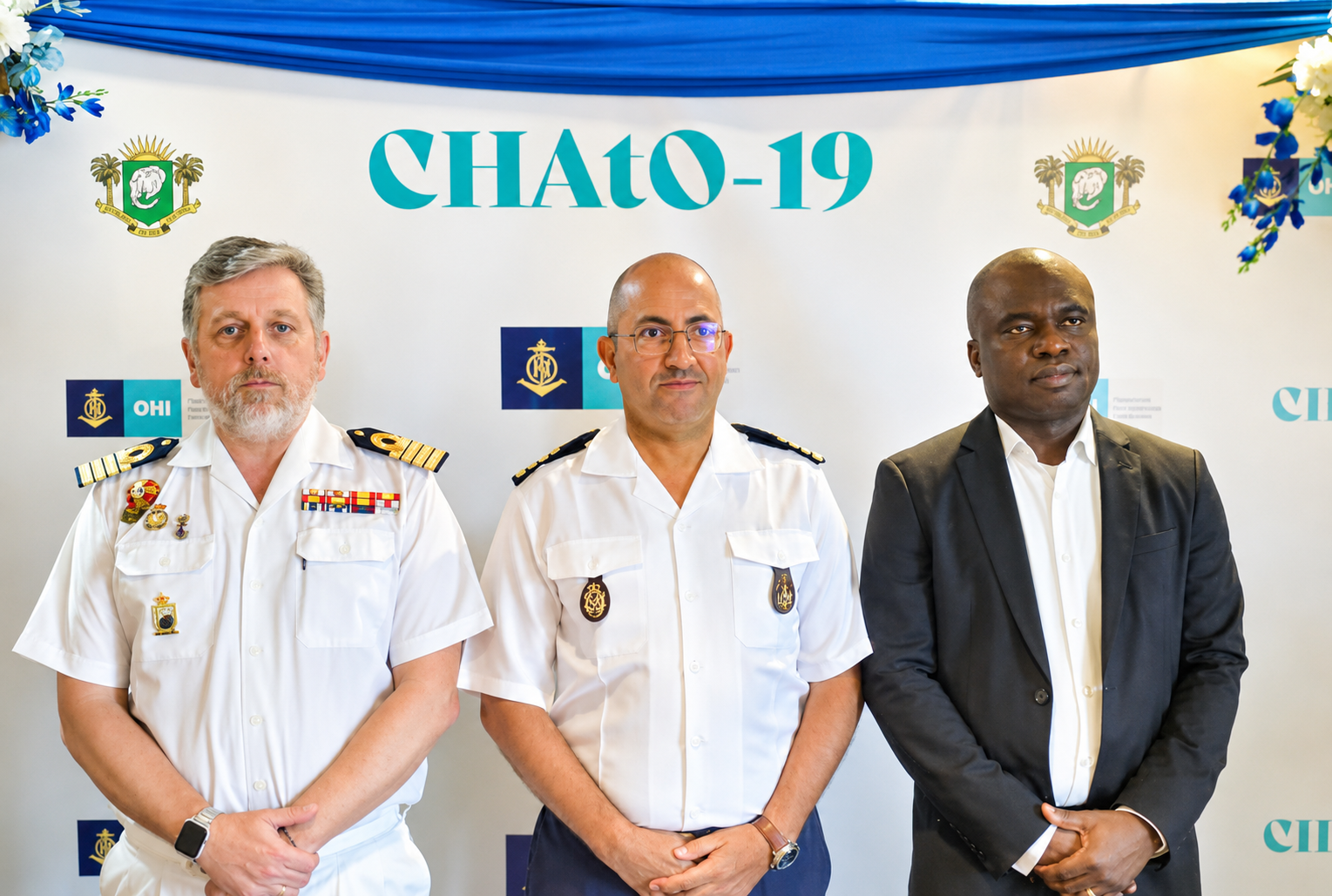
The Hydrographer of the Federation and Chief Executive Officer of the National Hydrographic Agency (NHA), Rear Admiral OO Fadahunsi, has been elected Vice Chairman of the Eastern Atlantic Hydrographic Commission (EAtHC) for the 2026–2028 term, further reinforcing Nigeria’s growing influence in regional and global maritime governance.
Rear Admiral Fadahunsi’s election was confirmed on Friday, 3 July 2026, during the ongoing EAtHC Conference in Abidjan, Côte d’Ivoire, where member states endorsed his emergence to one of the commission’s most strategic leadership positions.
Established on 26 November 1984 under the auspices of the International Hydrographic Organization (IHO), the Eastern Atlantic Hydrographic Commission was founded by France, Nigeria, Portugal and Spain. Over the past four decades, the commission has expanded significantly, comprising 11 member states, 10 associate members and six observers committed to promoting hydrographic excellence across the Eastern Atlantic region.
The commission plays a pivotal role in advancing hydrography, nautical cartography and maritime safety through capacity-building initiatives, the development and implementation of International (INT) Charts and Electronic Navigational Chart (ENC) schemes, improved hydrographic surveys, enhanced charting standards, effective dissemination of nautical information and sustained advocacy on the importance of hydrography to regional maritime development.
Since its inaugural conference in Paris, France, in April 1986, the EAtHC has convened biennially to strengthen collaboration among member states and chart the future of hydrographic development.
In another significant endorsement of Nigeria’s expanding maritime profile, the country has been selected to host the next EAtHC Conference in June 2028. Nigeria will also host the 25th Meeting of the Capacity Building Sub-Committee (CBSC25) and the 19th Meeting of the Inter-Regional Coordination Committee (IRCC19) in June 2027, positioning the country at the centre of major international hydrographic engagements.
Rear Admiral Fadahunsi’s election is widely regarded as a testament to Nigeria’s sustained investment in hydrographic development, maritime safety and regional cooperation. It also reflects growing international confidence in the National Hydrographic Agency’s contributions to safer navigation, marine resource management and the blue economy.
As Nigeria prepares to welcome leading hydrographers, maritime regulators and technical experts from across the world over the next two years, the country is poised to consolidate its reputation as a key driver of hydrographic innovation and maritime security in the Eastern Atlantic region.


BREAKING: Gunmen Abduct Students, Principal, NECO Officer In Fresh Attack

2027 Election Shock: Three Parties Miss INEC Deadline, Presidential Ambitions in Jeopardy

Niger Governor Bago Announces Running Mate For 2027 Election

Former Super Eagles Star Loses Life Savings, Duped By A Pastor of ₦1.2 Billion

I’m A Married Man, I Can Never Get Myself Involved With Such A Thing, Delta Gov Aide Reveals Why He Offered Comfort ₦500,000 Job

Lagos Imposes ₦250,000 Fine For Illegal Waste Disposal

-

 Politics2 days ago
Top APC Governor Announces Running Mate for 2027
-

 Tech2 days ago
“Irreparable Loss”: Tears as Prominent APC Chieftain Dies
-
 Uncategorized21 hours ago
Tinubu Announces Two Top Appointments, Names Revealed
-

 Politics2 days ago
BREAKING: Atiku in Strong Trouble As Court Gives Fresh Verdict on ADC Crisis
-
 Business2 days ago
Dangote Refinery Fixes Petrol Price in New Pricing Template
-
News1 day ago
Tension as Wike, Tinubu’s Allies Clash Over Top Agency’s Appointment
-
 Politics5 hours ago
Niger Governor Bago Announces Running Mate For 2027 Election
-
 Politics11 hours ago
Muslim- Muslim Ticket: Former Speaker Breaks Silence on Dumping APC