
Opinion
APC E-registration Plot To Manipulate 2027 Polls – Ogun LP


The Ogun State chapter of the Labour Party has accused the All Progressives Congress of using its ongoing electronic membership registration to allegedly manipulate figures ahead of the 2027 general elections.
In a statement issued on Wednesday, the state chairman of the Labour Party, Chief Oluwabukola Soyoye, claimed that the APC’s e-registration exercise was designed to digitally inflate its membership strength and project a false image of popularity in the state.
Soyoye alleged that the ruling party had resorted to electronic registration because it could no longer mobilise people openly, insisting that the administration of Governor Dapo Abiodun had suffered widespread rejection due to what he described as underperformance.
According to him, the APC’s e-registration, presented as a routine membership drive, was in reality “a political referendum that exposes the deep rejection of Governor Dapo Abiodun and his black-market style of governance by the people of Ogun State.
“The people of Ogun are now wiser. They have deliberately refused to participate in any open, physical APC registration because they know the ruling party has failed them,” Soyoye said.
“That is why the APC has resorted to this so-called electronic registration — a system that allows figures to be fabricated behind closed doors without the presence of real members.”
The LP further alleged that the electronic platform could be used to manipulate membership data, inflate figures and create a misleading narrative of political dominance ahead of 2027

“What we are witnessing is not a genuine political exercise but a fraudulent digital operation designed to manufacture legitimacy for a government that has lost the confidence of the people,” Soyoye added.


Arise Television co-host Rufai Oseni has faced backlash online after sharing the outcome of an online civic opinion poll that showed Peter Obi leading a hypothetical 2027 presidential field by a wide margin.
On Tuesday, September 15, 2026, Oseni posted a screenshot from the Nigeria Elections Intelligence System (NEIS) platform with a single-word caption: “Polling.”
The image showed Peter Obi of the Nigeria Democratic Congress (NDC) commanding 87.4 per cent of counted responses.
Atiku Abubakar of the African Democratic Congress (ADC) followed with 5.1 per cent, President Bola Ahmed Tinubu of the All Progressives Congress (APC) at 4.6 per cent, and Oluseyi Abiodun Makinde of the Allied Peoples Movement (APM) at 1.9 per cent.
The figures were drawn from more than 2,500 counted responses. NEIS describes itself as an independent, non-partisan election intelligence platform that conducts pre-election civic opinion polls and maps polling units across Nigeria. The results Rufai Oseni shared were from one such online exercise and carry no official electoral weight.
The post sparked immediate pushback. Several social media users argued that Rufai Oseni’s own follower base tilts heavily towards Peter Obi supporters, known as Obidients, making the poll’s findings a reflection of his audience rather than the broader Nigerian electorate.
Others pointed out that real elections are decided by voters at polling units, not by online participants, and that the results had no bearing on what a 2027 contest would actually look like. The debate unfolds as preparations for the 2027 general elections gain momentum.
Nigeria’s Independent National Electoral Commission (INEC) has already published a final list of presidential candidates, which includes Tinubu, Obi, Atiku and Makinde running on their respective platforms.
Check out Rufai Oseni’s X post about the results of the online 2027 presidential poll below: 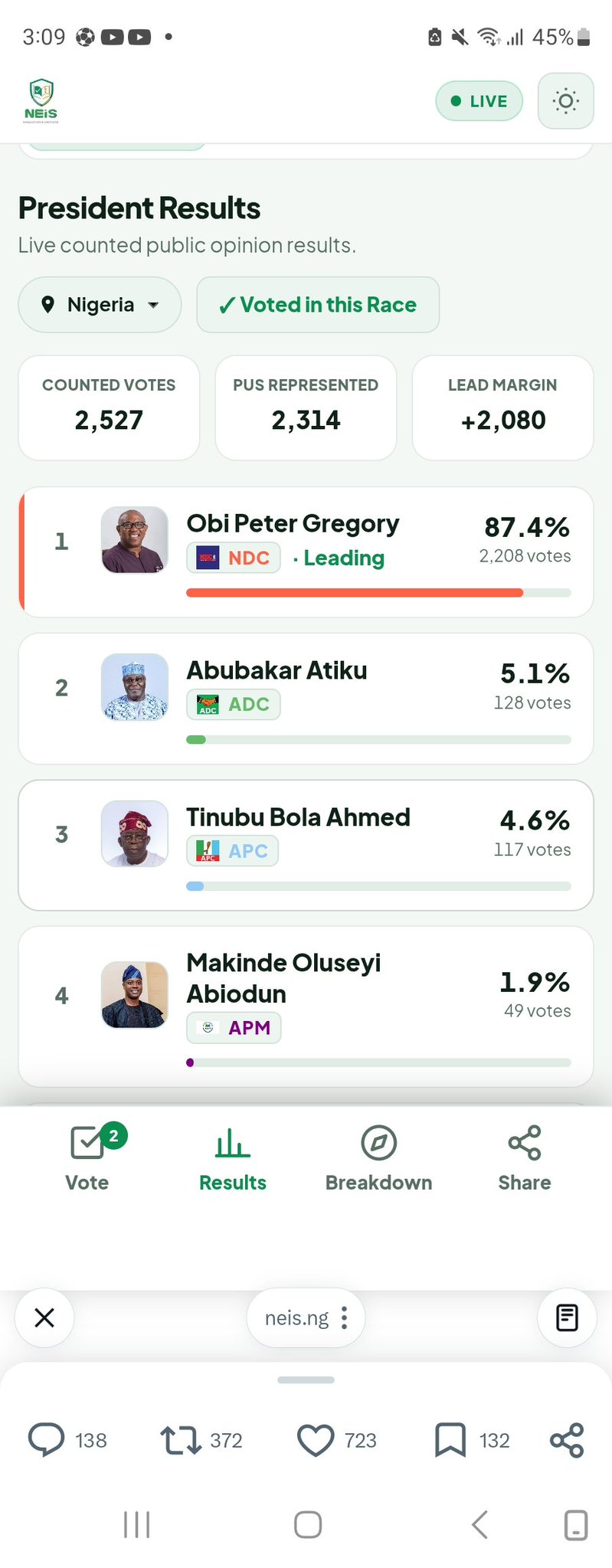
@gsbabatunde wrote: “Rufai will remain immature. You packed Obidense as followers and you are conducting Polls among them knowing fully well that the actual election involves real Voters and not Bots. What sort of ‘Childish Journalist’ are You???”
@Dailymercytye said: “They’ve start their online election gaslighting again. When they lose the real election, it’ll suddenly become a ‘rigged election’ to them and they’ll start shouting rigging.”
@adewalenisa reacted: “Same way you misled Olumide Akpata in Edo Governorship……”
@IsraelYusuf13 commented: “Twitter no be polling unit. Enough of all this online noise and let face our country”
@Commyhot1 wrote: “Online President PitObi @PeterObi,
@ruffydfire the online chairman has declared you winner oooh! Congratulations online president. Una go collect woto woto come January 16”
@AdekunleAdelaj1 stated: “Some people will call for presidential debate where this type of person will be one of them and say it’s going to be a fair one. It’s only Morons that can hold such beliefs. Online president i congratulate you as your OLOFO, chairman has declared you winner.”
@tman_musa added: “Rufai when you really want to wise up and understand online polls is not real life.”

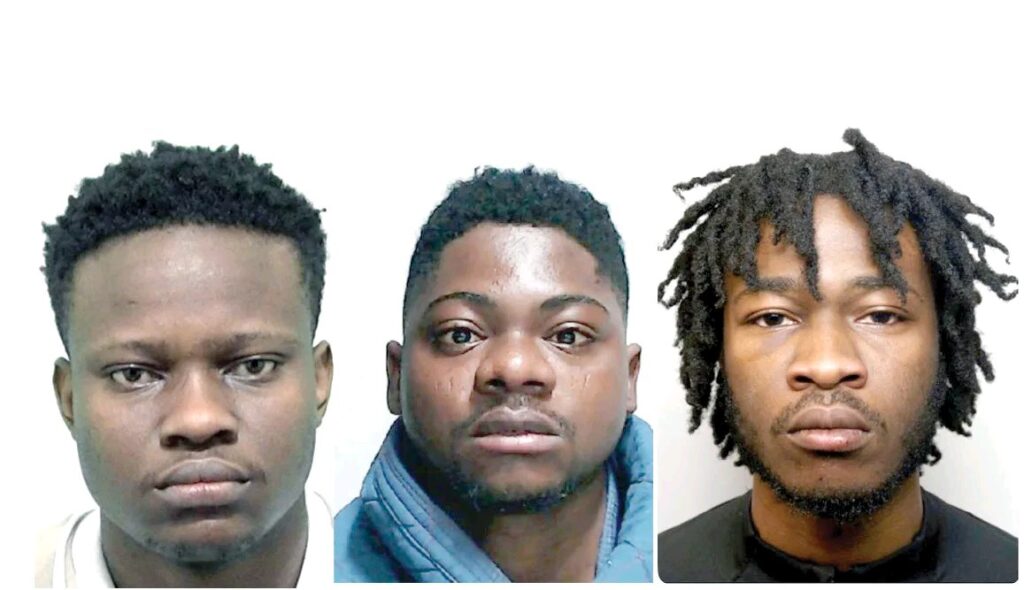
Three Nigerians have been jailed for separate offences in the United Kingdom, with one sentenced for dangerous driving, another for attempting to murder his estranged wife and the third for attempting to meet a child following sexual grooming.
A 23-year-old Nigerian, Michael Nwanze, was sentenced to 13 months in prison after pleading guilty to dangerous driving and other offences following a police chase in Northampton.
According to Northamptonshire Police, Nwanze was stopped in Abington Square on March 10, 2026, after the vehicle he was driving was flagged for having no insurance.
He allegedly sped off, drove through several red lights and reached speeds of more than 100mph on a dual carriageway and 70mph in a 40mph zone. He also collided with several vehicles while attempting to evade the police.
Nwanze was later charged with dangerous driving, driving without insurance, failing to stop for police and driving otherwise than in accordance with a licence.
He pleaded guilty at Northampton Crown Court in April and was sentenced in June.
In Scotland, a 26-year-old Nigerian, Osarenkhoe Atutie, was sentenced to seven-and-a-half years in prison for attempting to murder his estranged wife, Victory Atutie, in Edinburgh.
According to the BBC, Atutie attacked his wife on Duke Street, Leith, in November 2025 after tracking her down following the breakdown of their marriage.
The High Court in Edinburgh heard that the victim suffered 12 stab wounds and was hospitalised for four days.
Three members of the public intervened, disarmed Atutie and restrained him until police arrived. His original 10-year sentence was reduced to seven-and-a-half years after he pleaded guilty.
He was also given a lifetime non-harassment order and will remain under supervision for 18 months after his release.
Meanwhile, a Nigerian student, Anderson Ishiekwene, was sentenced to three years in prison after being convicted of attempting to meet a child following sexual grooming.
According to the BBC, the 25-year-old Ishiekwene, who arrived in the UK on a student visa in August 2025, communicated with a decoy profile operated by an online paedophile hunter group after believing the person was a 14-year-old girl.
Prosecutors said he exchanged hundreds of pages of messages with the decoy before arranging to meet at a shopping centre in Washington, England. He was arrested when he arrived at the agreed location.
Ishiekwene had earlier admitted attempting to engage in sexual communications with a child and was convicted by a jury of attempting to meet a child following sexual grooming.
He was ordered to sign the sex offenders register and comply indefinitely with a Sexual Harm Prevention Order, with the court stating that he was likely to face automatic deportation after completing his sentence.
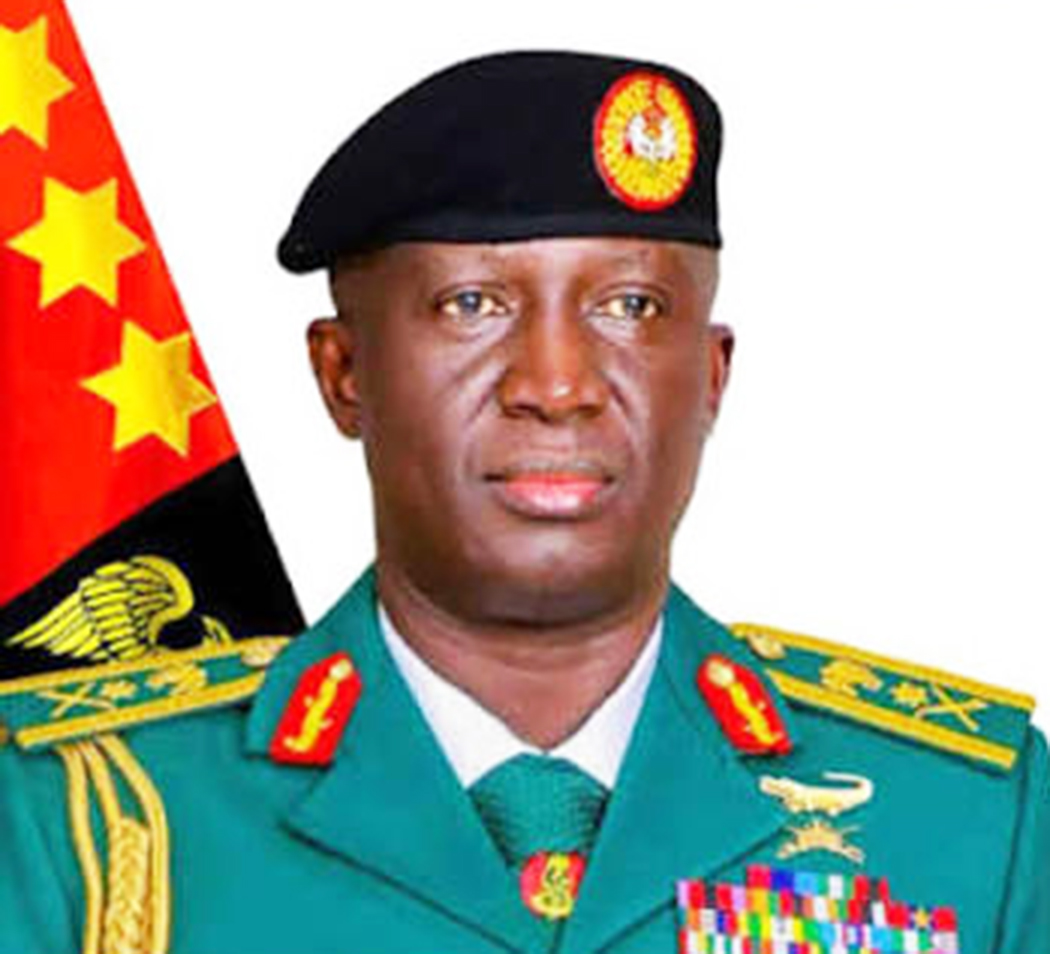
It was another sad day last Monday when the news broke that a serving colonel of the Nigerian Army had been killed while his wife was shot in an attack on their residence near Abuja.
The slain officer, Colonel Abdussalam Ude, was attacked shortly after returning to his home in Kurudu District of the nation’s capital, on Monday evening. His driver and security guard also sustained gunshot wounds during the assault.
Citing security sources, PRNigeria said the attackers attempted to abduct the officer but met stiff resistance. After failing to take him away, the assailants allegedly shot the officer multiple times before fleeing the scene.
His wife, driver and security guard, who were caught in the attack, were rushed to hospital and were receiving treatment for varying degrees of gunshot injuries.
The killing has sent shockwaves through military circles, coming at a time Colonel Ude was preparing for his promotion to the rank of Brigadier General.
An indigene of Enugu State, the late officer served in several strategic intelligence and counter-terrorism roles within the Armed Forces. LawEnforcement
Colleagues described him as a courageous and highly respected intelligence officer whose dedication to duty earned him widespread admiration within the military.
Besides the fact that the killing has renewed concerns over attacks on serving and retired military officers in Abuja and other parts of the country, the killing of a senior military officer by gunmen right inside his residence, also shows how unsafe the country has become for both ordinary and privileged Nigerians.
It is particularly worse for military personnel. They are not safe on the battlefront; they are not safe at home and they are safe in retirement.
The incident comes about two years after retired Brigadier General Uwem Harold Udokwere was killed by armed men who invaded his residence in the Lokogoma area of Abuja while he was defending his family. The attackers reportedly escaped with his firearm and other valuables.
The federal government has to seriously come up with a strategy on how to end the incessant killings in the country. In the last one week, over 70 people have been killed across the country. Nigerians cannot continued to leave in fear.
-THISDAY


Minimum Wage: Proposed Salary Structure for Nigerian Workers, Levels 1–17 Emerges

‘You Will Hear Full Details Today’ – Wike Speaks On Clash With APC Govs

Tinubu To Appoint Wike As APC Campaign Coordinator For 2027 Election

Former Super Eagles Star Loses Life Savings, Duped By A Pastor of ₦1.2 Billion

I’m A Married Man, I Can Never Get Myself Involved With Such A Thing, Delta Gov Aide Reveals Why He Offered Comfort ₦500,000 Job

Lagos Imposes ₦250,000 Fine For Illegal Waste Disposal

-

 Tech2 days ago
BREAKING: Tears as Prominent Nigerian Ex-Governor Dies in UK
-
Tech2 days ago
Government Declares Monday, September 21 Public Holiday
-
 News20 hours ago
Tinubu To Appoint Wike As APC Campaign Coordinator For 2027 Election
-
 Politics14 hours ago
‘You Will Hear Full Details Today’ – Wike Speaks On Clash With APC Govs
-
 News12 hours ago
Minimum Wage: Proposed Salary Structure for Nigerian Workers, Levels 1–17 Emerges