
Politics
Nigerian Governor Hands Over Power to Deputy, Gives Reason

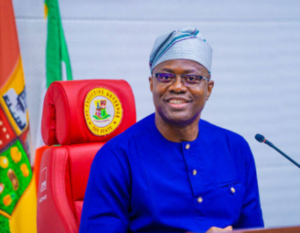
Oyo State Governor Seyi Makinde has been granted permission by the Oyo State House of Assembly to take an annual leave, during which power will be temporarily transferred to his deputy, Bayo Lawal.
The Assembly approved this request during a plenary session held on Thursday, following Governor Makinde’s formal letter that complied with constitutional requirements for notifying the legislature before any official absence.
According to the letter, the governor’s leave is set to commence on Monday, August 10, and will conclude on September 11, 2026. He is scheduled to return to office on September 14, 2026.
Deputy Speaker Muhammed Fadeyi, who presided over the sitting in place of Speaker Adebo Ogundoyin, read the governor’s letter to members of the House. Lawmakers approved the request without opposition, expressing confidence that the affairs of the state would continue smoothly under the leadership of the deputy governor.
Following the approval, Lawal will serve as Acting Governor throughout the period of Makinde’s leave, taking charge of the day-to-day administration of the state to ensure that government activities continue without interruption until the governor returns.
Speaking after the approval, Fadeyi wished Governor Makinde a restful annual leave and reaffirmed the Assembly’s commitment to sustaining a healthy working relationship with the executive arm of government. He also expressed confidence in the deputy governor’s ability to provide effective leadership while acting as governor, noting that Oyo State’s stable governance structure would ensure that policies and government programmes continue without disruption.

Other lawmakers also commended Governor Makinde for complying with constitutional requirements by formally notifying the House before proceeding on leave. They described the move as another demonstration of his respect for democratic principles, constitutional governance and the rule of law.
At the end of the plenary, the House directed that its approval of the governor’s leave request be formally communicated to the executive arm for the necessary action.
Recall that a Federal High Court on Wednesday ruled in favour of the Oyo State Government in a case involving the Economic and Financial Crimes Commission (EFCC). The court set aside the EFCC’s request seeking extensive financial records from the state government and held that the anti-graft agency could not carry out a blanket investigation without specific allegations.
The case stems from a June 2, 2025 letter in which the EFCC requested copies of all contracts involving the state government as well as details of payments made to contractors from 2021 onward. The Oyo State Government challenged the request, arguing through the Attorney General and Commissioner for Justice, Barrister Abiodun Aikomo, that the demand was oppressive, unreasonable and too broad because of the large volume of contracts and transactions involved.
Although the EFCC argued that Section 38 of the EFCC Act, 2004 empowered it to demand information from any person, authority, corporation or company for investigative purposes, Justice Maha ruled that such requests must be reasonable and linked to specific allegations rather than amounting to a blanket demand for financial records.
The ruling came months after Governor Makinde declared his intention to contest the 2027 presidential election on the platform of the Allied Peoples Movement (APM). Announcing his ambition at a joint rally of his PDP faction and the APM in Ibadan in May, Makinde said, “The time to reset Nigeria is now. Therefore, today, I, Oluseyi Abiodun Makinde, announce my candidacy for the position of the president of the Federal Republic of Nigeria.”Nigeria news updates
He also announced a political alliance between his PDP faction in Oyo State and the APM, saying the partnership would enable the opposition to field candidates for all elective positions in the 2027 general election.



The Independent National Electoral Commission, INEC, has published the names and personal particulars of presidential candidates who will contest the 2027 general election.
Daily Voice gathered that the list puts the number of presidential candidates at 19, with each candidate accompanied by a nominated running mate.
The publication brings further clarity to the field ahead of the presidential election and places the candidates’ credentials and other personal information before the Nigerian public.
President Bola Ahmed Tinubu is seeking another term on the platform of the All Progressives Congress, APC. Vice President Kashim Shettima remains his running mate.
Former Vice President Atiku Abubakar is contesting under the African Democratic Congress, ADC. The former Minister of Transportation, Rotimi Amaechi, is his running mate.
Former Anambra State Governor Peter Obi is also on the list. Obi is contesting under the Nigeria Democratic Congress, NDC, with former Kano State Governor Rabiu Musa Kwankwaso as his running mate.
The publication also includes the Peoples Democratic Party, PDP, which is fielding Sandy Onor as its presidential candidate. Umaru Babangida is listed as his running mate.
African Action Congress, AAC, has Omoyele Sowore as its presidential candidate, with Haruna Garba Magashi as his running mate.
Other candidates include former Cross River State Governor Donald Duke of the Peoples Redemption Party, PRP, with Buba Musa as his running mate.
The National Democratic Party, NDP, is represented by Ada Elizabeth Frederick Okwori, while Uchenna Anthony Chukwuemeka is listed as her running mate.
The Young Progressives Party, YPP, is fielding Anita Zugwai Chukwu as its presidential candidate, with Egbeola Olawale Mertins as the vice-presidential candidate.
Rufai Adekunle Omoaje is the candidate of the Action Alliance, AA, while Shehu Hussaini is listed as his running mate.
The Boot Party has Sunday Adenuga as its presidential candidate and Usman Turaki Mustapha as his running mate.
Samuel Memeh is contesting under the Democratic Liberty Alliance, DLA, with Alex Balogun as his running mate.
Daniel Danerechukwu Nwanyanwu is the Zenith Labour Party, ZLP, presidential candidate. Hassan Khalid is listed as his running mate.
The Labour Party, LP, is fielding Sunday Chibuzor Okereke, with Hajja Bintu Konto as his running mate.
Iken Esther Okereke is the presidential candidate of the National Rescue Movement, NRM, while Samuel Magdalene Gali is the vice-presidential candidate.
Abbas-Bin Aliyu is contesting under the Action Democratic Party, ADP, with Chinazam Ike as his running mate.
The New Nigeria Peoples Party, NNPP, is represented by Suleiman Mohammed Dikwa, while Abubakar Isah is listed as his running mate.
The Social Democratic Party, SDP, is fielding Adewole Ebenezer Adebayo, with Usman Mohammed Bugaje as his running mate.
Seyi Makinde is listed as the presidential candidate of the Allied Peoples Movement, APM, with Ibrahim Adamu Bala as his running mate.
The Action Peoples Party, APP, has Kabiru Yusuf as its presidential candidate, with Peace Egobia Ofordile as his running mate.
The publication of the candidates’ details followed the requirement for INEC to make the particulars submitted by political parties and their candidates available for public scrutiny.
The documents contain information such as dates of birth, educational qualifications, occupations and other personal details supplied by the candidates.
The exercise gives political parties, candidates and members of the public an opportunity to examine the information submitted to the electoral commission.
It also provides an important reference point ahead of the commencement of the next stage of the electoral process.
According to INEC, the publication of candidates’ particulars is tied to the provisions of the Electoral Act. Section 29(3) requires the commission to publish the personal particulars of nominated candidates after receiving the relevant nomination documents.
Tinubu is seeking to retain the presidency for the APC after winning the 2023 presidential election.
Atiku is returning to the presidential contest on a different platform after leaving the PDP for the ADC coalition.
Obi, who finished third in the 2023 presidential election, is also returning to the race under the NDC.
Moreover, the information released by INEC contains qualifications ranging from primary and secondary school certificates to university degrees and higher academic qualifications.
For instance, Tinubu’s submitted particulars include a Bachelor of Science degree in Business Administration from Chicago State University.
Shettima submitted records of his primary and secondary education, as well as degrees in agricultural studies, while Atiku’s documents include his First School Leaving Certificate, West African School Certificate and a master’s degree in International Relations.
Amaechi also submitted details of his academic background, including his university education and legal qualifications.
Obi’s records include a Bachelor of Arts degree in Philosophy from the University of Nigeria, Nsukka.
Kwankwaso’s credentials include a Higher Diploma in Civil Engineering from Kaduna Polytechnic and his National Youth Service Corps certificate.
Recall, INEC had earlier fixed the presidential and National Assembly election for February 20, 2027, before subsequent revisions to the electoral timetable.
The commission’s current online election calendar lists January 16, 2027 for the Presidential and House of Assembly election and February 6, 2027 for the Governorship and State House of Assembly elections.
INEC has also urged political parties, candidates and voters to follow the approved timetable and comply with the rules governing the electoral process.
A former House of Representatives aspirant under the African Democratic Congress (ADC), Mohammed Danjuma, has joined the All Progressives Congress (APC) ahead of the 2027 general elections.
Danjuma, popularly known as Garkuwa Babba, was the ADC aspirant for the Gombe/Kwami/Funakaye Federal Constituency and also served as National Chairman of the ADC House of Representatives Aspirants Forum.
He announced his defection after meeting with Gombe State Governor, Muhammadu Inuwa Yahaya, at the Governor’s Lodge in Abuja, Naija News understands.
During the meeting, Danjuma declared his support for the APC and pledged to mobilize his political network and grassroots supporters for the party ahead of the 2027 elections.
He said he would support Governor Yahaya’s senatorial ambition, the APC governorship candidate in the state, Dr Jamilu Isiyaku Gwamna, and other candidates of the party.
Danjuma said his decision to leave the ADC was largely influenced by Yahaya’s leadership, performance and development record in Gombe State.
He praised the governor for what he described as tangible development across the state, saying his achievements had boosted confidence in the APC and reduced the appeal of opposition parties among voters.
According to him, joining the APC was a deliberate move to support continuity, stability and further development in Gombe State.
Receiving Danjuma, Governor Yahaya welcomed his decision to join the APC, describing the development as a major boost for the party.
The governor assured the new APC member and his supporters of an inclusive and united party, stressing the importance of unity, loyalty and collective effort.
Yahaya said the APC remained open to individuals and groups who shared the vision of a peaceful, stable and prosperous Gombe State.
He added that Danjuma’s political experience, network and grassroots reach would be valuable to the party.
The governor also urged APC members and stakeholders to remain united, saying the strength of the party depended on its ability to accommodate different interests while working towards the development of Gombe State.
“These men and women will carry the ADC banner and our commitment to offer Nigerians credible leadership and a real alternative,” the party said.
The African Democratic Congress (ADC) has released the names of its governorship and deputy governorship candidates for the 2027 elections in 28 states
The list, signed by the party’s National Publicity Secretary, Bolaji Abdullahi, includes several prominent politicians and former public officials seeking to contest the poll.
“These men and women will carry the ADC banner and our commitment to offer Nigerians credible leadership and a real alternative,” Mr Abdullahi wrote in a post on X on Friday.
The Independent National Electoral Commission (INEC) has scheduled the governorship elections for 6 February, 2027. It will hold alongside the state House of Assembly elections.
The remaining eight states hold their governorship elections outside of the regular election season as a result of previous court decisions. The eight states are Anambra, Bayelsa, Edo, Ekiti, Imo, Kogi, Ondo and Osun.
The presidential and National Assembly elections will hold on 16 January, 2027.
ADC governorship candidates
The candidates and their running mates are Kalu Agu and Alozie Darlington (Abia); Modibbo Ribadu and Aguwa Iliya (Adamawa); and Akpanudedehe James and Nsien Tommy (Akwa Ibom); Halliru Jika and Sama’ila Mohammed Kabir (Bauchi); Herman Iorwase Hembe and Abba John Abba (Benue); Babagana Buhari and Mamman Dauda (Borno); Nkoyo Toyo and OkwoChe Andrew Adagbor (Cross River; and Great Ogboru and Afiari Gloria (Delta).
Others are Ukpai Mba Udeh and Onwe Daniel Ede (Ebonyi); Ocho Obodeze Chukwuma and Eze Arinze Christopher (Enugu); Bala Bello and Bala Sani Isa (Gombe); Sabo Mohammed Nakudu and Musa Ya’u Balarabe (Bauchi); and Isa Mohammed Ashiru and Kantiok Irmiya Ishaku (Kaduna).
There are also Ibrahim Ali Amin and Shehu Abdulkadir Bari (Kano); Ahmad Baba Kaita and Aminu Yar’Adua Ahmed (Katsina), Abubakar Malami and Zagi Musa Mohammed (Kebbi); Zakari Mohammed and Olawuyi Julius Olayide (Kwara); Gbadebo Rhodes-Vivour and Gbadamosi Babatunde Olalere (Lagos).
The list also includes Nuhu Angbazo and Ahmed Yusuf (Nasarawa); Mohammed Kpautagi and Musa Mamman (Niger); Biodun Collins Ogundipe and Muraina Oluwaranti Oluyemi (Ogun); Taofeek Adegboyega Adegoke and Wahab Adeniyi (Oyo); and John Sunday Sura and Pwajok-Kele Chundung Bitrus (Plateau).
The remaining candidates are Gabriel Pidomson and Okumgba David Amapakaye (Rivers); Manir Mohammad Daniya and Isah Bello Ambarura (Sokoto); Abubakar Umar Tutare and Kwetishe Haruna Kwenyan (Taraba); Kassim G. Gaidam and Kori Lawan Mohammed (Yobe); and Shinkafi Bilyaminu Yusuf and Muhammad Abdulmuddalib Auwal (Zamfara).
ADC performance in off-cycle elections
Since the ADC was adopted as the platform for the opposition coalition in 2025, it has struggled to make a significant impact in the three off-cycle elections held in Anambra, Ekiti and Osun off-cycle governorship elections.
In the 2025 Anambra governorship election, APGA’s Chukwuma Soludo was re-elected with 422,664 votes, defeating APC’s Nicholas Ukachukwu, who polled 99,445 votes. John Nwosu, the ADC candidate, finished fifth with 8,208 votes, representing about 1.4 per cent of the 584,054 valid votes cast.
In the 2026 Ekiti governorship election, the ADC candidate, Dare Bejide, finished third with 12,872 votes, accounting for about 3.4 per cent of the 375,777 valid votes cast.
In last month’s Osun governorship election, the ADC candidate, Najeem Salaam, came third with 1.7 per cent (17,180) of the 985,079 valid votes cast.


INEC Release Final List Of 2027 Presidential Candidates

Banker Shot dead As Kidnappers Strike FUTO

SO SAD: Nigerian Bishop Shot Dead In Shocking Attack

Former Super Eagles Star Loses Life Savings, Duped By A Pastor of ₦1.2 Billion

I’m A Married Man, I Can Never Get Myself Involved With Such A Thing, Delta Gov Aide Reveals Why He Offered Comfort ₦500,000 Job

