
News
NELFUND Speaks On Alleged Funding Of Tinubu Supporters With Student Loans

NELFUND has rejected allegations that the Federal Government’s student loan scheme is being used to favour supporters or children of members of the All Progressives Congress (APC).
The Managing Director and Chief Executive Officer of the Nigerian Education Loan Fund, Akintunde Sawyerr, dismissed the claim as “completely ridiculous.”
Moreover, he said the structure of the application system does not allow political affiliation to determine who receives the loans.
Sawyerr spoke during an interview on Channels Television’s Sunday Politics programme.
He explained that the loan scheme is operated through an electronic application process.
Applicants are required to provide personal and academic information, including their names and matriculation numbers.
According to him, the system is designed to establish whether an applicant meets the requirements for the programme.

It does not collect information that would enable NELFUND to determine whether a student belongs to the APC or supports another political party.
“I have not heard this allegation, but I can tell you that it’s a completely ridiculous idea that the administration of Bola Tinubu is focused on trying to fund people who support the party. We are talking about students; many of them are yet to vote, some of them are going to be voting for the first time, [and] many of them are not party members.
“How, in any event, do we determine who is a party member and who isn’t? Even if you are running a manual process, how do you do that? You can’t. It’s unlikely to yield you any result.
“It is a process you have to apply for this loan electronically. If you don’t have a name, you can’t apply for this loan. You provide your matriculation number; you have to be in a public institution,” he said.
The NELFUND boss said the allegation also failed to take into account the nature of the beneficiaries targeted by the programme.
He noted that many students accessing the loans are young people who have not yet participated in an election. Some are also not members of any political party.Executive Branch
Sawyerr therefore maintained that using political affiliation as a basis for deciding beneficiaries would be impractical under the existing system.
He said NELFUND’s focus is on Nigerian students who meet the conditions for the loan and are enrolled in eligible public tertiary institutions.
Sawyerr described the demand for the scheme as “overwhelming”, saying many students and their families were struggling to meet the financial demands of tertiary education.
“The demand has been overwhelming, because clearly a lot of people have struggled to get into these institutions,” he said. “They are hanging on by the skin of their teeth to stay in the institution, and this programme came as a rescue for them.”
He disclosed that NELFUND had so far disbursed about N162 billion in upkeep allowances to students.
The fund is also examining application and disbursement figures as demand increases, with the agency seeking to understand the financial requirements needed to sustain the programme.
The student loan initiative was introduced by the Federal Government as part of efforts to reduce financial barriers to higher education.
President Bola Tinubu signed the Student Loans Act into law in April 2024, paving the way for the current NELFUND structure. The scheme provides interest-free financial support to eligible Nigerian students in public tertiary institutions.
It covers approved institutional charges and upkeep support for qualified beneficiaries.
The programme was designed to give students access to funding without requiring them to depend entirely on their parents or guardians to remain in school.
NELFUND has repeatedly stressed the importance of an electronic process in managing applications and disbursements.
The system allows applicants to submit their information for verification before their applications are processed.
Sawyerr further insisted that the system does not discriminate based on religion, ethnicity or gender.
“We have a system that is focused on people who are Nigerians and meet the standard. The system doesn’t recognise your gender. There is no bias in the system at the front end or the back end.
“This is a system that doesn’t care whether you are of one tribe or the other. This system does not have a view or an opinion on whether you are a Christian, a Muslim, or an African traditional religionist; it doesn’t want to know.”
The NELFUND chief also spoke about the impact of the scheme on student retention.
He said available figures indicated that the programme had contributed to a reduction in the number of students dropping out of tertiary institutions, with the reduction put at about 20 per cent.
Sawyerr also addressed concerns surrounding repayment of the loans.
He maintained that beneficiaries would not be subjected to an unreasonable repayment burden, noting that repayment would be tied to their ability to pay after completing their studies.
Under the current structure, repayment is expected to commence two years after beneficiaries complete the National Youth Service Corps programme.
The NELFUND boss also disclosed that funds President Tinubu announced would be recovered by the Economic and Financial Crimes Commission (EFCC) and channelled into the student loan scheme had not yet been received by the fund.
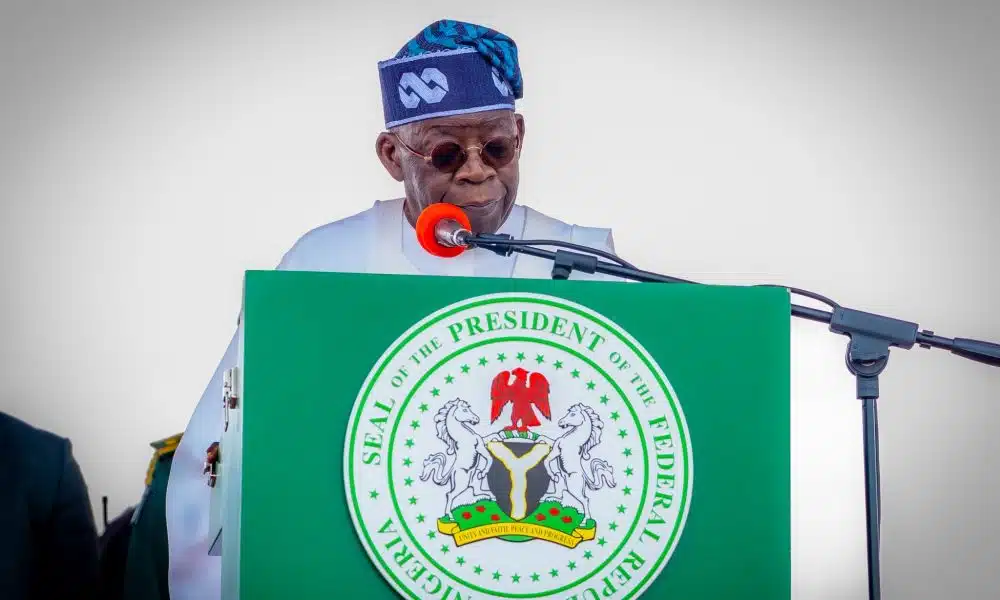
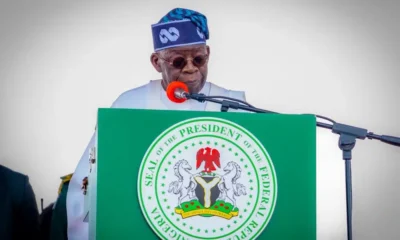
President Bola Tinubu has approved the appointment of the immediate past Director-General of the Department of State Services (DSS), Yusuf Bichi, as the Chairman of the Governing Board of the National Institute for Security Studies (NISS), Lower Usuma Dam, Abuja.
Bichi’s appointment was approved by President Tinubu based on the recommendation of the current Director-General of the DSS, Oluwatosin Adeola Ajayi.
Daily Voice reports that his appointment, according to a statement on Thursday by the Director of Coordination and Liaison of the NISS, Lilian Omo-Odigwe, is for an initial four-year term, effective 22nd October, 2026.
The statement noted that Bichi’s appointment is in accordance with Section 4 of the National Institute for Security Studies (Establishment) Act, 2019.
Bichi, who will succeed A.A. Gadzama, on the Governing Board, handed over leadership of the DSS to the incumbent Director-General in August 2024.
The former DG began his career in the Security Division of the Kano State Cabinet Office before his transfer of service in 1984.
“Bichi’s appointment to Chair the NISS Board brings an extensive experience in intelligence, security administration, operational leadership and institutional training to the governance of the National Institute,” the statement added.
Meanwhile, Nollywood actress Eniola Badmus has defended her continued support for President Bola Ahmed Tinubu, saying her political stance is the reason some people criticize her.
Naija News reports that the actress made this known during an interview with Nigerian comedian and content creator Isbae U on his podcast, Curiosity Made Me Ask.
Badmus explained that the criticism she receives is largely connected to her decision to support Tinubu, adding that she remains committed to the president despite the negative reactions from some Nigerians.
The actress maintained that she would continue to stand by her political choice, regardless of public opinion.
She also noted that democracy allows people to support political candidates and parties of their choice without being attacked for their decisions.
According to Badmus, she does not condemn people for supporting politicians different from the ones she believes in, stressing that everyone should be free to make their own political decisions.

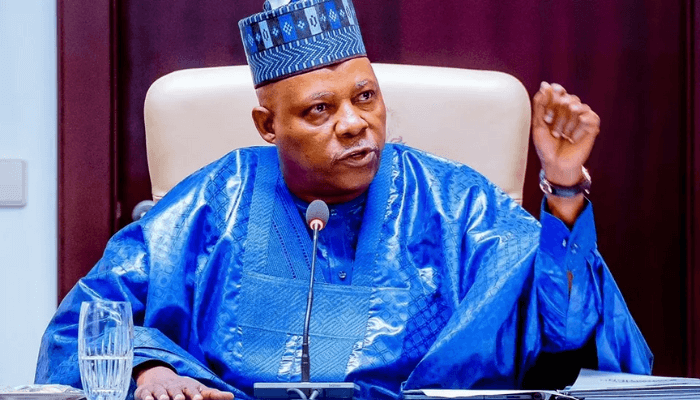
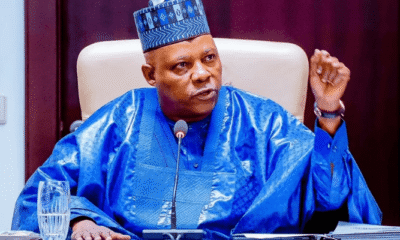
Vice President Kashim Shettima has urged state governments to stop relying solely on the Federal Government to solve Nigeria’s electricity problems and instead establish their own functional power markets to attract private investors.
He said Nigeria’s ambition to build a strong industrial economy would remain difficult to achieve without reliable electricity for businesses, homes, hospitals and schools.
Daily Voice reports that Shettima made the call on Wednesday while declaring open a national stakeholders’ workshop on the Electricity Act 2023 at the Presidential Villa in Abuja.
The Deputy Chief of Staff to the President, Senator Ibrahim Hassan Hadejia, represented the Vice President at the event.
The workshop brought together government agencies, electricity regulators, and other stakeholders to review the law’s implementation and discuss ways to improve power supply across the country.
Shettima said the Electricity Act 2023 had allowed states to regulate electricity markets within their jurisdictions and develop power solutions based on their resources and economic needs.
“Our states must shed the habit of waiting for Abuja to provide every answer,” he said.
He stressed that electricity supply should be treated as a shared responsibility between the Federal Government, state governments and private investors.
The Vice President pointed to the energy resources available in different parts of the country, saying states should take advantage of them to improve electricity supply and support economic growth.
He cited the solar energy potential of Sokoto, Borno and Katsina states, the gas resources in Delta, Rivers and Bayelsa, and the hydropower opportunities in Niger and Kebbi states.
According to him, turning these resources into viable electricity projects would help boost agriculture, manufacturing, healthcare and education.
However, Shettima warned that passing the law alone would not solve the country’s power problems, adding that states needed to establish the right institutions and create an environment that would attract investment.
He urged states that had yet to establish their electricity regulatory bodies to begin the process without further delay.
Shettima also proposed a voluntary National Electricity Reform Peer Review and Implementation Framework involving the Nigerian Electricity Regulatory Commission (NERC), the Federal Ministry of Power, the Nigeria Governors’ Forum and state electricity regulators.
He said the framework would allow states to learn from one another and assess their progress in developing electricity markets, attracting investments, protecting consumers and expanding access to power.
Earlier, the Permanent Secretary of the Ministry of Power, Mahmuda Mamman, said the success of the Electricity Act depended on states establishing credible regulatory institutions and electricity markets that could operate commercially.
On his part, the Director-General of the Nigeria Governors’ Forum, Dr Abdulateef Shittu, said the forum was working to improve cooperation between federal and state institutions on electricity reforms.
Shittu also disclosed that efforts were underway to develop a standard tariff framework that would protect electricity consumers while encouraging private investment in the sector.
Meanwhile, NERC’s Deputy General Manager and Head of Compliance, Hauwa Yakubu, disclosed that the commission had transferred regulatory responsibilities to 17 states.
She said Akwa Ibom was the latest state to receive the transfer, marking another step towards state-level electricity regulation under the Electricity Act 2023.


Obasanjo’s Son Picks Side In 2027 Race

NISS: President Tinubu Makes Fresh Appointment

Ebola fears: FG, States On Alert As Infected Diplomat Suffers Organ Failure


-
 News2 days ago
Kano Assembly Suspends Lawmaker Over Alleged Insult To Governor
-

 Politics2 days ago
PDP Moves to Sanction Wike Over Alleged Support for APC
-
 News2 days ago
Stop Depending On FG For Electricity – Shettima Tells States
-
 News1 day ago
Ebola fears: FG, States On Alert As Infected Diplomat Suffers Organ Failure
-
 News21 hours ago
NISS: President Tinubu Makes Fresh Appointment
-
 Politics21 hours ago
Obasanjo’s Son Picks Side In 2027 Race