
Business
Airtel And MTN Set For Profit Surge In 2025

With data revenue now accounting for nearly half of total income, MTN Nigeria and Airtel Africa are betting big on bytes over voice.
What used to be a value-added service is now the frontline of growth and margin expansion.
But as tariffs rise, consumer habits shift, and digital infrastructure deepens, one question looms for investors:
Can this shift to data finally lift MTN Nigeria out of its retained losses and help Airtel sustain its dollar dividend payout?

The answers lie in how each telco is leveraging data to transform its financial future. Let us start with MTN Nigeria
MTN Nigeria:
After reporting a staggering N440 billion loss after tax in 2024, largely due to foreign exchange shocks that eroded the bottom line, the telco staged a major turnaround in Q1 2025 with a N133.6 billion profit after tax.
While the stabilization of forex markets and growth in fintech revenue contributed, another catalyst was the explosive growth in data revenue.

In FY 2024, MTN reported N1.59 trillion in data revenue, up 49% year-on-year, making up 47% of total revenue, a major structural shift from the voice-led years.
That momentum continued into Q1 2025, with data revenue of N528.98 billion, accounting for 50% of total revenue for the quarter.
Subscriber metrics reinforce the trend:
- Active data users grew by 7% to 47.7 million.
- Data traffic rose by 42.9% year-on-year.
- Average data usage per subscriber jumped 33.6% to 11.2GB and even higher at 13.2GB in Q4.
According to the company:
“The performance in data revenue was supported by an increase in the number of active data users, increased usage, and enhancements to the quality and coverage of our network.
We continued to drive smartphone penetration and 4G adoption while implementing pricing actions to support revenue growth.”
These pricing actions, in addition to improved user experience, were made possible by MTN’s continued investment in digital infrastructure.
With increased 4G and now early 5G rollout in select zones, data speeds have improved, allowing the company to deepen monetization per megabyte.
So how does this translate to the bottom line?
MTN’s gross margin on data services is significantly higher than on voice, primarily because incremental costs per gigabyte decline as traffic scales. Simply put, once the infrastructure is in place, more usage equals better profitability.
Assuming the Q1 2025 trajectory holds, MTN could post over N2 trillion in data revenue for FY 2025 conservatively.
With EBITDA margin guidance at “at least mid-40%,” that means MTN could pull in N900 billion to N1 trillion in EBITDA from total revenue this year.
Compare that to N769.7 billion EBITDA in FY 2024, and you start to see just how powerful the data engine is.
If depreciation, amortization, and finance costs hold steady, and the naira remains relatively stable, MTN could be looking at full-year net profit north of N400 billion, essentially reversing 2024’s entire loss.
That would not only wipe out retained losses but position the telco to resume dividend payments by 2026 at the latest or even sooner, depending on board decisions.
As of Q1 2025, MTN’s trailing 12-month earnings per share (EPS) now stands at N5.96, pushing its price-to-earnings ratio to 53.56x.
The stock closed at N319.20 on June 5, 2025, reflecting a strong 59.6% year-to-date gain largely on the back of improving investor sentiment and the prospect of profitability recovery.
While challenges remain, FX volatility, infrastructure costs, and capex intensity, the return of profitability suggests that the darkest days may be behind the telco.
Smart investors should watch data on ARPU, user growth, and operating margins in the coming quarters. These are the levers that could flip MTN from survival mode back to a dividend-paying powerhouse.
Airtel Africa
Just like MTN, Airtel Nigeria is leaning on data to drive its business forward. While its headline numbers may look weak due to exchange rate issues, the real picture underneath tells a very different story.
In the year ending March 2025, Airtel Nigeria’s reported revenue dropped by 30% to $1.045 billion, with data income falling 26% to $483 million.
But that’s mostly because of the weaker naira. When you strip out the currency effects and look at its performance in constant terms, revenue rose 36%, and data grew by an impressive 45%.
The company explained it this way: “Our data business remains a key growth engine, supported by more smartphones, wider 4G coverage, and better network capacity.”
Data now makes up 44% of Airtel Nigeria’s total revenue, only slightly lower than 46% the previous year and not far behind MTN Nigeria’s 47% in 2024 and 50% in Q1 2025.
Airtel also saw growth in its customer base. It added about 1.7 million new data users, bringing the total to 29.1 million, while average income per user rose to $1.9 in the last quarter, a sign that more people are using more data and paying a little more for it.
Airtel Africa posted a $328 million profit after tax for FY 2025, a big turnaround from the $89 million loss it recorded the year before.
Can data sustain dividends?
In Nigeria alone, data generated $483 million in FY 2025, down due to exchange losses. But in constant currency, it was a 45% surge, pointing to strong underlying performance.
If this growth trend holds and ARPU rises moderately to $2 by Q4, Airtel Nigeria could generate over $550 million from data in the current financial year, even before factoring in FX gains or tariff increases.
Also, with data traffic climbing, data alone could account for 60–70% of its operating profit by next year. This position allows Airtel to comfortably cover its dividend, even if voice or mobile money slows down.
Indeed, Airtel Africa has already shown this confidence by declaring a $0.04 per share final dividend for FY 2025.
On the Nigerian Exchange, Airtel Africa’s share price stood at N2,372.50 as of June 5, 2025, showing a 10% year-to-date gain. It trades at a moderate price-to-earnings ratio of 26x, compared to MTN Nigeria’s 53.56x.
Nairametrics.com




The Central Bank of Nigeria (CBN) has announced a new exchange rate for the dollar, with the naira closing at N1,357 per dollar despite high demand for the greenback.
According to data from the CBN, the naira closed flat at N1,357 to a dollar, indicating no change from the previous trading session.
The current rate comes as Nigeria’s external reserves hit $52 billion, a 17-year high. Experts have said the current naira stability has trickled down to other sectors, with imports now getting cheaper.
The CBN sharply ramped up its foreign exchange interventions in March 2026, selling $953.41m to the market in what the data shows is the strongest central bank FX activity since April 2025.
Figures published in the CBN’s latest Quarterly Statistical Bulletin showed that spot market transactions made up the bulk of the March sales, with $950.10m channelled through that route and a further $3.31m directed to Ministries, Departments and Agencies.
The March figure represents a dramatic swing from the opening months of 2026. The CBN sold just $58.93m in January and $244.13m in February, meaning March’s intervention was more than 16 times the January level and roughly 291 per cent above February’s sales.
The last time interventions reached a comparable scale was April 2025, when the CBN supplied $1.65bn to the market. Sales cooled significantly after that peak, falling to $838.93m in May, $676.31m in June, and then sliding further to $399.80m in September and $150.10m in October before picking up again towards the close of 2025.

The chairman of Dangote Cement Plc, Emmanuel Ikazoboh, has explained why cement prices remain high across Nigeria, attributing the persistent increases to rising energy costs and the impact of foreign exchange on production expenses.
His comments come amid growing concerns from Nigerians over the soaring cost of building materials, with many calling on the government to intervene as cement prices continue to put pressure on construction projects and housing development.
Speaking during the 17th Annual General Meeting (AGM) of Dangote Cement Plc in Lagos, Ikazoboh said energy remains the biggest cost component in cement manufacturing, accounting for about 60 per cent of total production expenses.
Energy, dollar exchange rate driving costs According to Ikazoboh, cement manufacturers rely heavily on gas, coal, and diesel to power their operations. He noted that gas, one of the key energy sources, is sold in United States dollars, exposing manufacturers to exchange rate fluctuations. He explained that the continued depreciation of the naira against the US dollar has significantly increased production costs, making it difficult for manufacturers to maintain lower prices.
According to Ikazoboh, cement manufacturers rely heavily on gas, coal, and diesel to power their operations. He noted that gas, one of the key energy sources, is sold in United States dollars, exposing manufacturers to exchange rate fluctuations.
He explained that the continued depreciation of the naira against the US dollar has significantly increased production costs, making it difficult for manufacturers to maintain lower prices. “To produce a bag of cement, we need energy, which constitutes about 60 per cent of the production cost. To generate that energy, we use gas, coal or diesel,” he said.
“Gas is sold to us in US dollars, and its price continues to increase. We all know the impact of the exchange rate between the dollar and the naira. As a result, the cost of generating energy keeps rising.”
His remarks offer one of the clearest explanations yet from the country’s largest cement producer on the factors behind recent price increases.
Business
Dr. Deji Adeleke: How Davido’s Billionaire Father Built His Business Empire; Major Companies Linked to Him
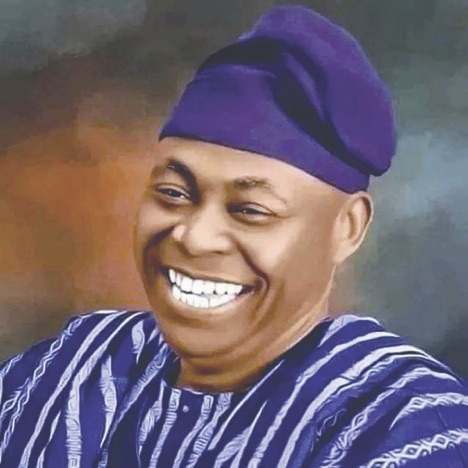
Dr. Deji Adeleke, the father of the globally recognized musician Davido, is not just known for his familial ties to the entertainment industry but also his immense wealth and substantial impact on Nigeria’s economic landscape. Born on March 6, 1957, in Enugu, Nigeria, Adedeji Adeleke has built a formidable empire through his business acumen and educational investments.
Adeleke’s Business Ventures
Dr. Adeleke founded Pacific Holdings Limited in 1983, which has grown into a major conglomerate in Nigeria, encompassing various sectors such as agriculture, energy, and real estate.
This company is a cornerstone of his financial success, with divisions like Pacific Farm Limited, Pacific Freightliners Limited, and Pacific Gas Company Limited contributing significantly to his wealth.
Adeleke’s Real Estate Investments
Adeleke’s real estate portfolio is vast and diversified. He owns properties across Nigeria, including high-value areas like Ikoyi, Lekki, Banana Island, and Victoria Island in Lagos. Additionally, he has invested in international properties, including a mansion in Atlanta, USA, which he acquired to celebrate his 60th birthday.
Adeleke’s University and Philanthropy
In line with his passion for education, Adeleke founded Adeleke University in Ede, Osun State, under the auspices of the Springtime Development Foundation, which he established in 1996. The university operates on the Seventh-day Adventist philosophy of education and offers various undergraduate and postgraduate programs.
His philanthropic efforts extend beyond education, impacting healthcare and community development. These initiatives not only enhance his public image but also contribute to long-term societal benefits, reinforcing his legacy as a socially responsible entrepreneur.

Adeleke’s Luxurious Lifestyle
Dr. Adeleke’s lifestyle reflects his financial success. He owns luxury cars such as a Rolls Royce Phantom and a 2017 Bentley Mulsanne, and he flies in style with his Bombardier Global Express 6000 private jet, valued at $62 million.
Adeleke’s Net Worth
Estimations of Adeleke’s net worth vary, with some sources placing it around $700 million, while others suggest it could be as high as $2 billion. His wealth is attributed to his diversified investments in real estate, stocks, and bonds, alongside the thriving operations of Pacific Holdings Limited.

Adeleke’s Family and Personal Life
Adeleke is a father to four children: Adewale, David (Davido), Sharon, and Coco Adeleke. Despite initial resistance to Davido’s music career, he eventually supported his son’s passion, even funding the establishment of a music department at Babcock University for him. Today, Davido is not only a successful musician but also a director in the family business.
Conclusion
Dr. Deji Adeleke’s story is one of remarkable success through strategic education, entrepreneurship, and philanthropy. His wealth and business acumen have positioned him as one of Nigeria’s most influential figures, contributing significantly to the nation’s economic and social development. As he continues to invest and expand his empire, his legacy is set to influence future generations both within and outside Nigeria.
Adeleke’s Early Life and Education
Adeleke’s journey began in an affluent family in Lagos. He attended Ansar-ud-Deen Primary School and Seventh-Day Adventist Grammar School before moving to the United States, where he earned a degree in Finance from Western Kentucky University in 1979, followed by an MBA. Furthering his education, he obtained a Ph.D. in International Business from Pacific Columbia University, and another Ph.D. in Business Administration from the University of Phoenix in 2010.
– kashgain


Full List Of 2026 Headies Awards Nominees

It Was Not Yahaya Who Retired Me From Politics – Goje Fires Back At Critics

Tinubu Inherited An Economy In Shambles — Akpabio

Former Super Eagles Star Loses Life Savings, Duped By A Pastor of ₦1.2 Billion

I’m A Married Man, I Can Never Get Myself Involved With Such A Thing, Delta Gov Aide Reveals Why He Offered Comfort ₦500,000 Job

Lagos Imposes ₦250,000 Fine For Illegal Waste Disposal

-

 Politics2 days ago
Kalu, Keyamo, Lalong Omitted As Tinubu ‘Withdraws’ APC Campaign Council List
-

 Politics2 days ago
Wike: ADC Alleges Plot To Rig Rivers Election
-

 Politics1 day ago
2027 Election: INEC, NDC Dragged To Court, Reason, Details Emerge
-

 Entertainment2 days ago
We Did Everything Possible To Save Ogogo — Yayi
-

 Entertainment1 day ago
‘If I Knew Funke Would Go This Far, I Would Have Held Her Tight’ – Nollywood Actress, Bunmi Nelson
-

 Sports1 day ago
Terem Moffi Joins Hamburg In Permanent Move From OGC Nice
-

 Entertainment11 hours ago
Another Yoruba Actor Dies Less Than 24 Hours After Ogogo’s Passing
-

 Sports1 day ago
Chukwueze Wins Man Of The Match In Milan’s Win At Torino