
News
Ex- CDS, Musa Sets To Take Over As Badaru Quits Defense Minister

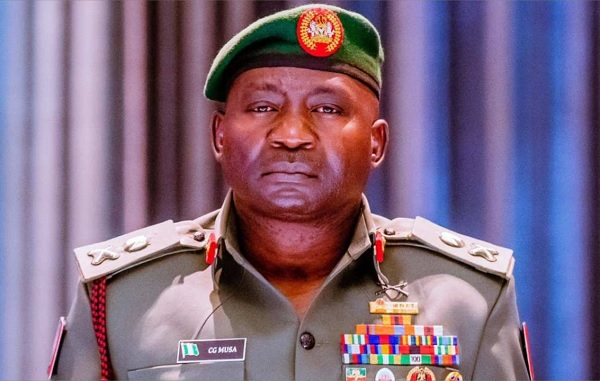
A former Chief of Defence Staff is set to return to public service in a civilian capacity, as President Bola Tinubu prepares to reshuffle the defence portfolio following the exit of Mohammed Badaru.
Naija News had earlier reported that General Christopher Musa met the President at the Aso Rock Presidential Villa on Monday evening, arriving at the State House shortly after 7:00 pm for a closed-door session.
The visit was his first public engagement with the Presidency since his retirement from military service on October 24, 2025.
Top government sources told SaharaReporters that during the meeting, President Tinubu informed the retired defence chief that he would succeed Badaru as Nigeria’s next Defence Minister.
A presidency insider disclosed that Tinubu delivered the message directly, telling Musa, “You will succeed Badaru as Defence Minister.”
Nigeria’s Minister of Defence, Badaru, tendered his resignation late Monday night, citing health concerns as the core reason for stepping away from office.
In a letter dated December 1, 2025, addressed to President Tinubu, the minister said his decision to exit public service was based strictly on medical advice, according to a statement released by the Special Adviser to President Tinubu on Information and Strategy, Bayo Onanuga, on Monday.
The statement read, “President Tinubu has accepted the resignation and thanked Abubakar for his services to the nation.”
Badaru also received praise from the President, who expressed appreciation for his commitment during his tenure.
The Presidency confirmed that Tinubu would communicate the name of Badaru’s successor to the Senate imminently.
“President Tinubu will likely inform the Senate of Badaru’s successor later this week,” the statement added.
Before his appointment to Tinubu’s cabinet, Badaru served as a two-term governor of Jigawa State.
He governed Jigawa State from 2015 to 2023, before being appointed a minister on August 21, 2023, after the 2023 general elections.
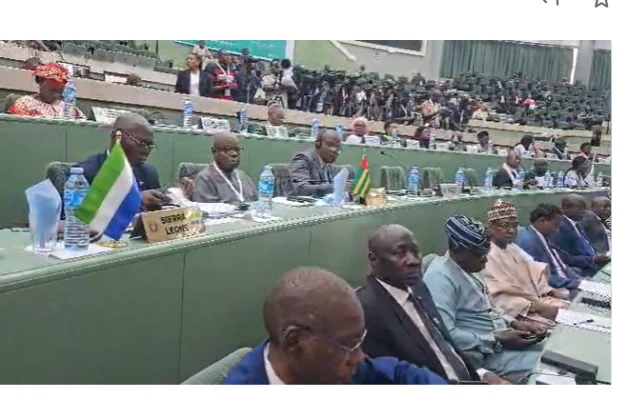
The Economic Community of West African States has declared a state of emergency across the region.
The President of the ECOWAS Commission, Omar Touray, made the announcement on Tuesday during the 55th Session of the Mediation and Security Council at the ministerial level in Abuja.
Touray said recent developments underline the “imperative of serious introspection on the future of our democracy and the urgent need to invest in the security of our community.”
Addressing ministers, diplomats and senior officials, Touray gave a sobering assessment of West Africa’s political climate, citing multiple incidents as evidence of a rapidly deteriorating security environment.
He noted that ECOWAS member states currently face an average rating of “high risk,” based on country-by-country analyses contained in documents before the ministers.
“Events of the last few weeks have shown the imperative of serious introspection on the future of our democracy and the urgent need to invest in the security of our community.
“As you would have seen in the memoranda before you, the country-by-country analyses of our member states show different risk levels across our community, from high to medium, with an average of high risk, thereby demanding immediate and concerted action.
“The risk factors are the persistence of military interventions (Guinea-Bissau and the Republic of Benin just days ago); non-compliance with transition norms in Guinea, where we face a military leader turning civilian; growing erosion of electoral inclusivity across multiple states; expanding influence of terrorists, armed groups and criminal networks; and increasing geopolitical pressures affecting member states’ diplomacy and cohesion,” he explained.
Among the most troubling trends, Touray emphasised that “elections have become a major trigger of instability in our community.”
He also cited recent attempted coups and ongoing discussions with the Alliance of Sahel States, stressing the urgent need for a coordinated regional response to terrorism and cross-border criminal activity.
Declaring the situation unprecedented, he warned, “Faced with this situation, Excellencies, it is safe to declare that our community is in a state of emergency.”
Touray called for more frequent meetings of the Mediation and Security Council over the next year, insisting ECOWAS must “pool our resources to confront the threats of terrorism and banditry, which operate without respect for territorial boundaries.”
He outlined priority areas requiring continuous ministerial oversight, including the crisis in Guinea-Bissau, managing political transitions, addressing rising political exclusion, and safeguarding regional unity amid external pressures.
The ECOWAS Commission President also drew attention to worsening humanitarian conditions in West Africa, referencing recent UNHCR data. He said that “as of October 2025, approximately 7.6 million individuals are forcibly displaced across the region,” including more than 6.5 million internally displaced persons.
According to the data, the largest displaced populations are in Nigeria, Burkina Faso, Niger and Mali, while Niger, Mali, Nigeria, Côte d’Ivoire and Togo host the highest numbers of asylum seekers.
Touray stressed, “We must therefore take decisions and actions that will reverse this trend.”
Despite the challenges, he reaffirmed ECOWAS’s commitment to its citizens.
“Let me assure our community citizens that we will not rest on our oars. We will continue to work harder to promote a peaceful, stable and stronger region for the overall benefit of Community citizens,” he said.
He urged member states to uphold constitutional norms and maintain unity: “Let us all remain committed to preserving regional unity, advancing peace and upholding the Community’s Constitutional Convergence Principles.”
Touray also welcomed new ministerial representatives attending the session for the first time.
“May I extend a warm welcome to the new Ministers of Defence of Nigeria, Rtd. General Christopher Musa, and Foreign Affairs of Cabo Verde, José Luis Livramento, who are joining today for the first time,” he said.
In his remarks, Sierra Leone’s Minister of Foreign Affairs and Chair of the Council of Ministers, Timothy Kabba, called for decisive action to protect democratic governance amid worsening political instability.
Kabba highlighted the fragile state of democracy in West Africa, pointing to the recent political crises in Guinea-Bissau and Benin.
“The recent coup in Guinea-Bissau and the attempted coup in the Benin Republic are sobering reminders of the fragility of our democratic gains,” Kabba said.
He detailed Sierra Leone’s diplomatic efforts, noting that he led a high-level delegation to Guinea-Bissau on December 1, 2025, to engage with military leaders and political stakeholders.
“His Excellency’s engagement helped ease tensions and opened the door for continued dialogue under ECOWAS’s guidance.
“These actions reflect our collective position. ECOWAS cannot and will not accept this development. They undermine everything our community stands for and threaten the peace and security of our citizens,” he said.
Kabba stressed the need for concrete outcomes from the summit.
“The discussions we have today must move beyond just reaffirming principles. They must generate decisions that offer real hope and strengthen the credibility of our institutions.
“Our people no longer have patience for commitments that remain unfulfilled. They expect us to confront these challenges with seriousness, unity and purpose,” he added.
The meeting of the Mediation and Security Council precedes the gathering of ECOWAS Heads of State and Government, who are expected to deliberate on the Council’s recommendations amid mounting pressure to restore stability in the troubled region.
PUNCH Online reports that West Africa is facing escalating political instability and security challenges, with several ECOWAS member states experiencing coups, attempted coups, and fragile political transitions.
Mali, Niger, and Burkina Faso remain under military-led administrations, while Guinea-Bissau recently joined this group following a military intervention. On Sunday, an attempted coup in the Benin Republic was foiled, further highlighting the fragility of democratic governance across the region.
These events underscore the erosion of constitutional norms, growing electoral tensions, and the rising influence of armed groups and criminal networks that threaten regional stability.
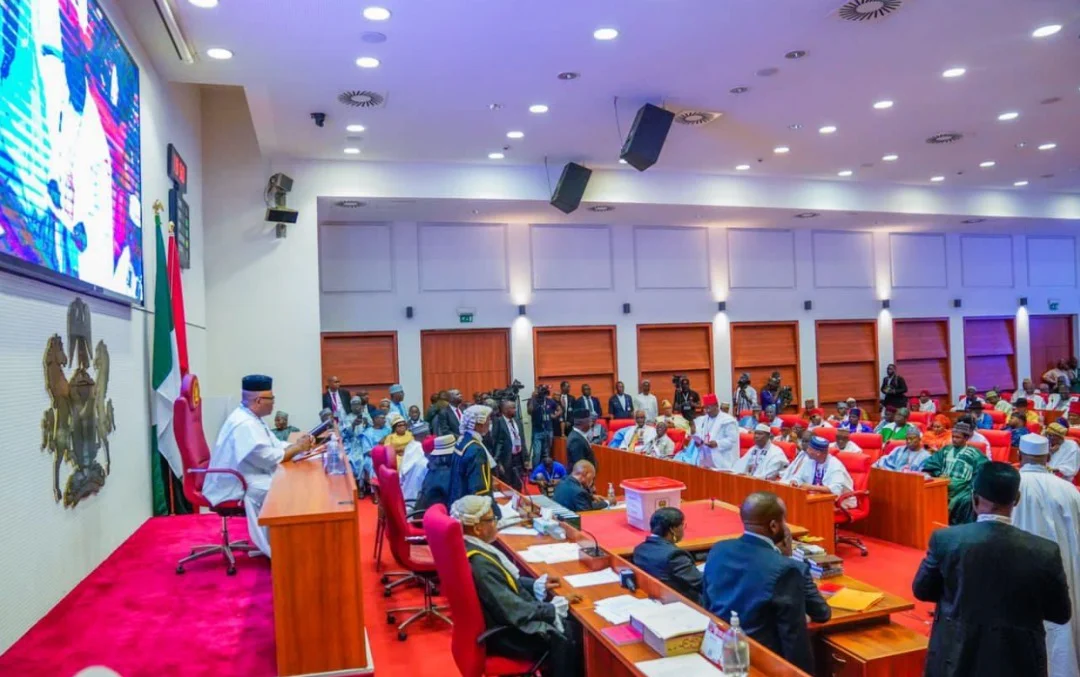
The Senate has given its approval for President Bola Tinubu’s request to send Nigerian troops to the Republic of Benin as part of efforts to help restore calm and stability after last weekend’s attempted military takeover.
The endorsement was announced on Tuesday by Senate President Godswill Akpabio during plenary, following a review of the president’s letter in the Committee of the Whole, in accordance with Section 5, Part II of the Constitution, Channels reports.
Lawmakers voted unanimously to support the deployment, effectively granting parliamentary authorization for the regional security mission.
Akpabio hailed the resolution as timely, stressing that unrest in any neighboring country could easily destabilize the wider region.
“An injury to one is an injury to all,” he stated.
He added that Nigeria has an obligation to stand with its partners under the Economic Community of West African States framework.
The Senate is expected to immediately forward its formal approval to Tinubu.
Tinubu, in his letter to the upper chamber, had requested permission for the deployment, noting that Nigeria bears a historic responsibility to assist Benin under existing ECOWAS security arrangements. He warned that the situation requires “urgent external intervention” to prevent further deterioration.
The attempted coup in Benin occurred on Sunday when a faction of soldiers identifying themselves as the “Military Committee for Refoundation” appeared on national television to declare that they had resolved that “Mr Patrice Talon is removed from office as president of the republic”.
The move was swiftly contained, as Benin’s loyal military forces pushed back and reclaimed control.
“The regular army is regaining control. The city (Cotonou) and the country are completely secure. It’s just a matter of time before everything returns to normal. The clean-up is progressing well,” sources close to Talon said.
Following the failed takeover, ECOWAS announced plans to deploy its standby force.
“After consultation among members of the Mediation and Security Council at the level of Heads of State and Government, the Chair of ECOWAS Authority of Heads of State and Government has ordered the deployment of elements of the ECOWAS Standby Force to the Republic of Benin with immediate effect,” the bloc stated.
“The Regional Force shall be made up of troops from the Federal Republic of Nigeria, the Republic of Sierra Leone, the Republic of Côte d’Ivoire, and the Republic of Ghana.
“The Force shall support the Government and the Republican Army of Benin to preserve constitutional order and the territorial integrity of the Republic of Benin”.

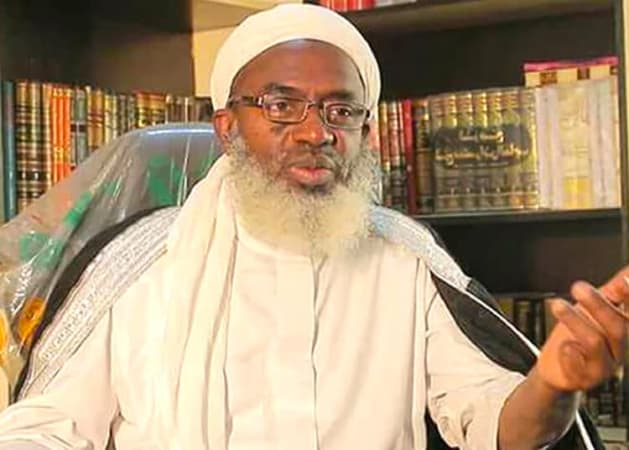
Sheikh Ahmad Gumi has reignited public debate by asserting that neither the Bible nor the Quran prohibits negotiating with terrorists or criminal groups.
Speaking on Monday, he argued that dialogue is a universal tool for conflict resolution and should be employed if it can prevent further bloodshed.
Gumi criticized the belief that negotiation is forbidden, calling it unfounded, and emphasized that peace should remain the top priority.
Once again, this controversial cleric has stirred national discussion by claiming there is no scriptural prohibition against negotiating with criminal elements or terrorists to achieve peace.
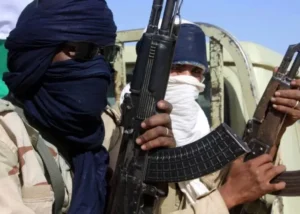
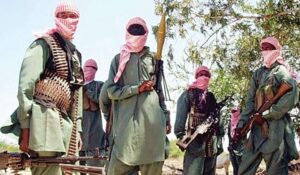
On Monday, Gumi challenged the prevailing narrative that the government should refrain from engaging with groups responsible for violence and kidnappings. He dismissed the idea that negotiation with criminals is strictly forbidden, stating that this belief is not supported by major religious texts.
“It’s not written in the Bible or the Quran that you shouldn’t negotiate with terrorists. I don’t know where people learned that from,” Sheikh Gumi stated.
He framed negotiation as a universal means of conflict resolution, arguing that the cessation of violence should be the highest priority. “Everybody negotiates for peace, and if negotiation can stop bloodshed, we should do it,” he added.


ECOWAS Declares State Of Emergency In West Africa

Senate Approves Tinubu’s Request To Deploy Troops In Benin

Bible, Quran Don’t Forbids It: Sheikh Gumi Defends Negotiating With Terrorists


-

 Politics2 days ago
Ogun 2027: Iyabo Obasanjo Opens Up On Governorship Ambition
-

 Sports2 days ago
Injured Neymar Emotional As Boyhood Club Santos Stun Cruizero 3–0, Escape Relegation
-

 Politics2 days ago
Defection Rumours Rise As Fubara Faces Mounting Assembly Fire
-

 News2 days ago
Celebration Must Go On Despite Insecurity, Hardship – Northern Christians
-
 News2 days ago
Many Feared Dead As Bandit Launch Attacks On Adamawa Communities
-
 Foreign2 days ago
ECOWAS Suspends Guinea-Bissau After Coup, Orders Immediate Release of President
-

 Business2 days ago
Petroleum Sector Retards National Progress
-
 Politics2 days ago
‘Baseless, Misleading’ – Tinubu’s Minister Denies Interference In Osun APC Primary Screening