
News
Ambassadorial List: Yakubu’s Sends A Dangerous Message – ADC Tells Tinubu


The African Democratic Congress (ADC) has condemned the recent list of persons unveiled by President Bola Tinubu for ambassadorial appointments.
The ADC submitted that the list is insensitive, uninspiring and amounts to nothing more than a political settlement by Tinubu to some of his cronies.
Specifically, the ADC questioned the nomination of the immediate past Chairman of the Independent National Electoral Commission (INEC), Professor Mahmood Yakubu, who supervised the election that brought in Tinubu as the President of Nigeria.
Naija News recalls that President Tinubu, on Saturday, appointed several new non-career and career ambassadors.
Among those freshly named for ambassadorial positions are former Aviation Minister, Femi Fani-Kayode, former presidential media aide, Reno Omokri, former chairman of the Independent National Electoral Commission (INEC), Mahmood Yakubu, former Enugu State governor, Ifeanyi Ugwuanyi, former Ekiti First Lady, Erelu Angela Adebayo, former First Lady of Oyo, Fatima Florence Ajimobi, and former governor of Abia State, Victor Okezie Ikpeazu.
However, the ADC held that Yakubu’s presence on the list would lend credence to the widespread allegation that the former INEC chairman may not have been a neutral umpire in the 2023 election and could further undermine the credibility of INEC.
In a statement on Sunday, signed by its National Publicity Secretary, Mallam Bolaji Abdullahi, the ADC said that at a time when INEC, Nigeria’s foremost democratic institution, is still mired in a major credibility crisis following the highly disputed and controversial 2023 general election, Prof. Yakubu’s nomination for an ambassadorial position sends a dangerous message.
It urged Professor Yakubu to reject the nomination and further called on the Senate to reject the former INEC Chairman’s nomination.
The statement read:
“After waiting for more than two years, and with Nigeria’s diplomacy and global perception in historic tatters, President Bola Tinubu presents an outrageously underwhelming ambassadorial list that appears designed to settle his political IOUs rather than fix Nigeria’s urgent international relations crises.
At a time that Nigeria needs a disciplined and credible diplomatic corps, capable of rebuilding the nation’s collapsing credibility on the continent and the rest of the world after two years of thoroughly damaging absence, President Tinubu has surpassed himself by presenting a comic cast of political jobbers, corruption suspects, and patronage of wives, children, and relatives of political associates.
“However, at the heart of this troubling list lies the nomination of Prof. Mahmood Yakubu, the immediate past Chairman of the Independent National Electoral Commission (INEC), who conducted the election that brought Tinubu in as President of Nigeria.
“The ADC views the appointment of Prof. Yakubu as embarrassingly insensitive, especially coming barely two years after supervising a highly controversial election that ushered in President Tinubu as President and only a few weeks after leaving office as INEC Chairman.
This particular appointment of Prof. Yakubu blurs what should be a distinct line between players and umpires. If allowed to stand, it would set a dangerous precedent where future INEC chairmen and commissioners may begin to see their positions as stepping stones to future political rewards. Once that mindset enters the bloodstream of our electoral system, neutrality becomes impossible, partisanship becomes inevitable, and elections become transactional.
“A cursory review of the list would show that almost all the nominees fall into three categories: former career diplomats or ambassadors, political supporters or their relatives, and members of the president’s political party. We wonder in which of these three categories Prof. Yakubu belongs. The implication of this is deeply unsettling indeed.
We are aware that there is no stipulated “cooling off” period under our laws, but even when the law is silent, ethical standards must be upheld, especially when the situation attacks the very foundation of our democracy.
We therefore call on Prof. Yakubu to do the patriotic thing and reject this appointment for the sake of INEC’s institutional credibility, the integrity of future elections, and the preservation of his own legacy. Failing to do so, we call on the Senate to reject his nomination in the interest of our democracy.”
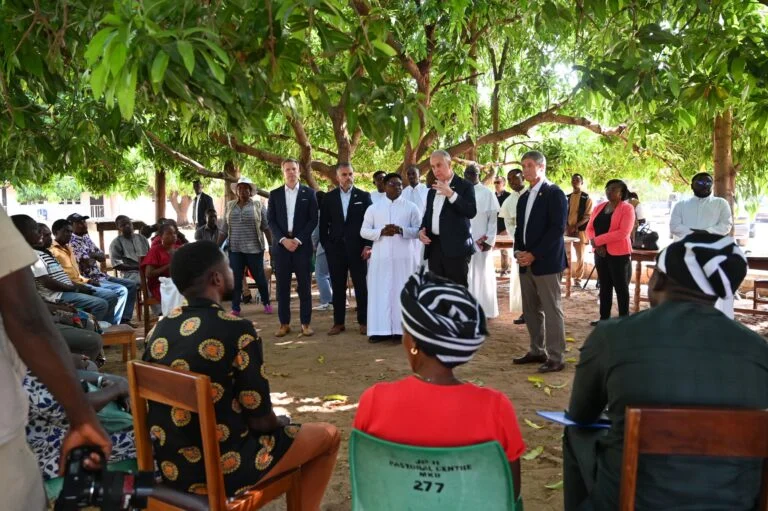
United States Congressman, Riley Moore, on Wednesday shared accounts of violence against Christian communities in Benue State, recounting what he said he was told during a visit to camps for internally displaced persons.
 US delegates in Benue
Writing on X, Moore said, while in Benue, he met “dozens of Christians who were driven from their homes and subjected to horrific violence and now live in IDP camps.”
According to the congressman, those he spoke with described attacks that left entire families dead and forced survivors to flee their villages.
“They told harrowing stories that will remain with me for the rest of my life,” Moore wrote.
He cited the case of one woman who, he said, “was forced to watch as they killed her husband and five children. She and her unborn child barely escaped.”
 US Congressman Riley Moore and delegates in Benue
Another woman, he added, told him her family “was murdered in front of her and her baby was ripped from her womb.”
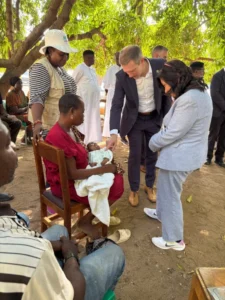
Moore also described the testimony of a man who said “his family was hacked to death in front of his eyes and his arm was permanently mangled.”
The congressman stated that “more than 600,000 Christians” are currently living in IDP camps in Benue State, a region that has experienced years of conflict between farming communities and armed groups.
“These Christians should be able to live in their ancestral homeland without fear of genocidal Fulani,” Moore wrote, calling for greater international attention to the crisis.
Moore had earlier posted that he met Tiv and Catholic leaders during his visit to the state.
“It was an honour and deeply moving to meet with His Excellency Bishop Wilfred Anagbe, Bishop Isaac Dugu, and His Royal Highness James Ioruza, traditional ruler of the Tiv people, to discuss the ongoing genocidal campaign by the Fulani in Benue State,” he wrote.
He added that the US would not ignore the experiences shared by local communities.
Moore described his trip as a “very productive visit to Nigeria,” noting on Monday that he held talks with National Security Adviser, Nuhu Ribadu, and other senior officials.
He said the discussions focused on terrorism in the North-East and killings in the Middle Belt, issues he described as priorities for President Donald Trump and himself.
According to Moore, both sides examined steps he believes could strengthen security if implemented fully.
He also referenced the rescue of more than 100 abducted Catholic schoolchildren, commending the Nigerian government and President Bola Tinubu for the operation.
Moore said US concerns were “positively received” and pointed to what he called a “now established joint task force between Nigeria and the US” as a sign of progress.
However, he added that “now, that openness has to translate to concrete action,” stressing that “there is much work still to be done.”
The NSA confirmed hosting the US delegation as part of ongoing security consultations.
Ribadu said the visit followed earlier engagements in Washington, DC, and centred on “counter-terrorism cooperation, regional stability,” and efforts to “strengthen the strategic security partnership between Nigeria and the United States.”
The visit came during heightened diplomatic tensions after the Trump administration redesignated Nigeria as a Country of Particular Concern over alleged religious freedom violations, a move accompanied by warnings of possible US military intervention.
The Federal Government have repeatedly rejected claims of systemic persecution of Christians, insisting that insecurity affects citizens of all faiths.
On November 20, Secretary of War Pete Hegseth hosted Ribadu at the Pentagon to discuss coordinated strategies to address the country’s security crisis. The same day, the US House Subcommittee on Africa held a public hearing to examine the implications of the redesignation.
Last Tuesday, House Republicans raised fresh concerns about religious violence in Nigeria during a joint briefing ordered by President Trump, who on October 31 directed Moore and the House Appropriations Committee to investigate what he described as the slaughter of Christians and report back to the White House.
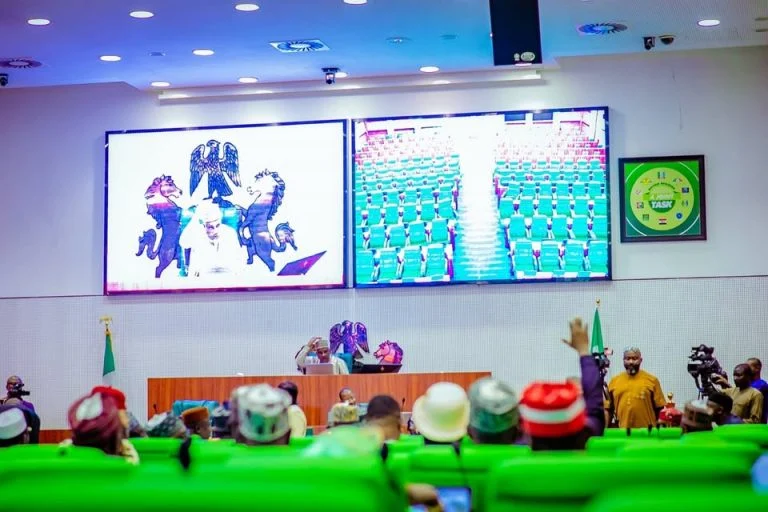
The House of Representatives has summoned the Minister of Finance, Mr Wale Edun, and the Minister of Budget and National Planning, Mr Atiku Bagudu, over poor budget implementation.
The House on Tuesday held a closed-door session with Edun, Bagudu, the Accountant-General of the Federation, Shamseldeen Ogunjimi; and the Executive Chairman of the Federal Inland Revenue Service, Zacch Adedeji.
A lawmaker who attended the session told The PUNCH in confidence that the meeting focused on the poor implementation of the capital components of the 2024 and 2025 budgets. He said lawmakers expressed deep frustration over the government’s failure to release funds for projects already executed.
As a result, the House resolved not to consider the 2026 Appropriation Bill until the Federal Government clears outstanding payments owed to contractors under the 2024 and 2025 budget cycles.
In protest, the House stepped down consideration of about 42 bills listed for first, second, and third readings. It also deferred the presentation of four committee reports on bills proposing the establishment of agricultural colleges and specialised institutions in Kaduna, Edo, and other states.
For the third time, the House also suspended its planned consideration of the constitution review report submitted last week by the Committee on Constitution Review.
The executive session lasted nearly two and a half hours and ended without an official briefing.
However, a member familiar with the discussions said the lawmakers were dissatisfied with what they described as President Bola Tinubu’s poor budget performance so far.
He said, “It was the same issue of poor implementation of the 2024 and 2025 budgets. I mean the capital component of the budgets. Projects executed have not been paid for, and this is really embarrassing.
“We have been on this for a while now, and despite the assurances we got today, many of us took it with a pinch of salt because the assurances are not new. Members were so angry that they vowed not to consider the 2026 Appropriation Bill when it is transmitted by the president unless the funding gaps in the previous budgets of this administration are addressed.”
He added that the Accountant-General pleaded for time to settle the outstanding payments. “The Accountant-General pleaded with lawmakers to be given 48 hours to address the concern of local contractors. As representatives of the people, we granted this request. But I can tell you that some of us are not optimistic,” he said.
In a separate interview, Edo lawmaker Billy Osawaru urged the Federal Government to prioritise payments to contractors, stressing that many had taken loans to execute the projects.
He said, “Since the contractors have fulfilled their obligations by executing the 2024 projects, they deserve to be paid, considering the fact that the majority of them secured loans using collateral. The executive must restore its integrity by prioritising these payments.”
The Minority Leader of the House, Kingsley Chinda, also condemned the poor level of implementation, saying full execution of the budgets was necessary to restore public confidence. “The only solution is for a commencement of full implementation of the budgets,” the Rivers lawmaker said in a telephone interview.
Similarly, the House spokesman, Akin Rotimi, said members were displeased with the government’s indebtedness to local contractors. He, however, expressed hope that recent engagements with the executive would yield improved capital releases.
He said, “As parliamentarians, we are concerned about the poor implementation of the capital component of the 2024 and 2025 budgets. Capital projects are essential to national development because they create jobs, improve infrastructure, and strengthen local economies.
“When releases are delayed or insufficient, progress slows and public confidence drops. We have been engaging with the executive and have received assurances that capital releases will improve.
“Our priority is to ensure the budget delivers real value to Nigerians, and we will continue strong oversight and collaboration to clear bottlenecks, improve cash-flow planning, and ensure capital projects are executed efficiently and transparently.”
Former Chief Economist at Zenith Bank Plc, Mr Marcel Okeke, criticised the Federal Government’s budget administration since 2023, describing the concurrent running of multiple budgets as a violation of due process.
He said, “What this (budget distortions) tells us is that the Federal Government is not living up to expectations. The discussion of the budget is another way of discussing the economy. Budget is an annual plan and it is a law meant to be implemented within a specific time frame.
“If the Federal Government is distorting this time frame, it means that the government is not serious. Every budget of a given year is done based on assumptions. The assumptions on which the 2024 budget was prepared are different from those of the 2025 budget, and the ones of 2025 will not be the same as those of 2026. They are messing everything up now,” he lamented.
He warned that the lapses at the federal level negatively affect the states. “The state governments usually take cues from the Federal Government’s presentation and assumptions. The state governments don’t control oil. It is the Federal Government that announces the volume of oil production and assumptions for the budget,” he said.
Okeke, while criticising the Buhari administration, noted that it at least maintained the January–December budget cycle. “The rolling of budgets is a joke on the running of the economy. The Buhari-led government was a failure, but if it did anything well, it was the issue of restoring the January-December budget cycle.
“As economic agents—households, families, etc—look up to the government framework every year, so that as a person, you will begin to plan. What this whole thing means is that instead of things being done according to law, they will be done according to somebody’s caprices.
“The way things are stated in the budget will no longer necessarily be the way they will be implemented. There would be all kinds of corruption, embezzlement, and malfeasance because everything becomes an emergency,” he said.
The House is expected to resume normal plenary today (Wednesday).
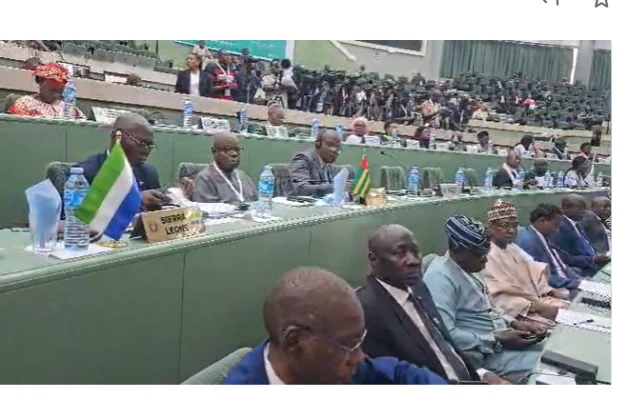
The Economic Community of West African States has declared a state of emergency across the region.
The President of the ECOWAS Commission, Omar Touray, made the announcement on Tuesday during the 55th Session of the Mediation and Security Council at the ministerial level in Abuja.
Touray said recent developments underline the “imperative of serious introspection on the future of our democracy and the urgent need to invest in the security of our community.”
Addressing ministers, diplomats and senior officials, Touray gave a sobering assessment of West Africa’s political climate, citing multiple incidents as evidence of a rapidly deteriorating security environment.
He noted that ECOWAS member states currently face an average rating of “high risk,” based on country-by-country analyses contained in documents before the ministers.
“Events of the last few weeks have shown the imperative of serious introspection on the future of our democracy and the urgent need to invest in the security of our community.
“As you would have seen in the memoranda before you, the country-by-country analyses of our member states show different risk levels across our community, from high to medium, with an average of high risk, thereby demanding immediate and concerted action.
“The risk factors are the persistence of military interventions (Guinea-Bissau and the Republic of Benin just days ago); non-compliance with transition norms in Guinea, where we face a military leader turning civilian; growing erosion of electoral inclusivity across multiple states; expanding influence of terrorists, armed groups and criminal networks; and increasing geopolitical pressures affecting member states’ diplomacy and cohesion,” he explained.
Among the most troubling trends, Touray emphasised that “elections have become a major trigger of instability in our community.”
He also cited recent attempted coups and ongoing discussions with the Alliance of Sahel States, stressing the urgent need for a coordinated regional response to terrorism and cross-border criminal activity.
Declaring the situation unprecedented, he warned, “Faced with this situation, Excellencies, it is safe to declare that our community is in a state of emergency.”
Touray called for more frequent meetings of the Mediation and Security Council over the next year, insisting ECOWAS must “pool our resources to confront the threats of terrorism and banditry, which operate without respect for territorial boundaries.”
He outlined priority areas requiring continuous ministerial oversight, including the crisis in Guinea-Bissau, managing political transitions, addressing rising political exclusion, and safeguarding regional unity amid external pressures.
The ECOWAS Commission President also drew attention to worsening humanitarian conditions in West Africa, referencing recent UNHCR data. He said that “as of October 2025, approximately 7.6 million individuals are forcibly displaced across the region,” including more than 6.5 million internally displaced persons.
According to the data, the largest displaced populations are in Nigeria, Burkina Faso, Niger and Mali, while Niger, Mali, Nigeria, Côte d’Ivoire and Togo host the highest numbers of asylum seekers.
Touray stressed, “We must therefore take decisions and actions that will reverse this trend.”
Despite the challenges, he reaffirmed ECOWAS’s commitment to its citizens.
“Let me assure our community citizens that we will not rest on our oars. We will continue to work harder to promote a peaceful, stable and stronger region for the overall benefit of Community citizens,” he said.
He urged member states to uphold constitutional norms and maintain unity: “Let us all remain committed to preserving regional unity, advancing peace and upholding the Community’s Constitutional Convergence Principles.”
Touray also welcomed new ministerial representatives attending the session for the first time.
“May I extend a warm welcome to the new Ministers of Defence of Nigeria, Rtd. General Christopher Musa, and Foreign Affairs of Cabo Verde, José Luis Livramento, who are joining today for the first time,” he said.
In his remarks, Sierra Leone’s Minister of Foreign Affairs and Chair of the Council of Ministers, Timothy Kabba, called for decisive action to protect democratic governance amid worsening political instability.
Kabba highlighted the fragile state of democracy in West Africa, pointing to the recent political crises in Guinea-Bissau and Benin.
“The recent coup in Guinea-Bissau and the attempted coup in the Benin Republic are sobering reminders of the fragility of our democratic gains,” Kabba said.
He detailed Sierra Leone’s diplomatic efforts, noting that he led a high-level delegation to Guinea-Bissau on December 1, 2025, to engage with military leaders and political stakeholders.
“His Excellency’s engagement helped ease tensions and opened the door for continued dialogue under ECOWAS’s guidance.
“These actions reflect our collective position. ECOWAS cannot and will not accept this development. They undermine everything our community stands for and threaten the peace and security of our citizens,” he said.
Kabba stressed the need for concrete outcomes from the summit.
“The discussions we have today must move beyond just reaffirming principles. They must generate decisions that offer real hope and strengthen the credibility of our institutions.
“Our people no longer have patience for commitments that remain unfulfilled. They expect us to confront these challenges with seriousness, unity and purpose,” he added.
The meeting of the Mediation and Security Council precedes the gathering of ECOWAS Heads of State and Government, who are expected to deliberate on the Council’s recommendations amid mounting pressure to restore stability in the troubled region.
PUNCH Online reports that West Africa is facing escalating political instability and security challenges, with several ECOWAS member states experiencing coups, attempted coups, and fragile political transitions.
Mali, Niger, and Burkina Faso remain under military-led administrations, while Guinea-Bissau recently joined this group following a military intervention. On Sunday, an attempted coup in the Benin Republic was foiled, further highlighting the fragility of democratic governance across the region.
These events underscore the erosion of constitutional norms, growing electoral tensions, and the rising influence of armed groups and criminal networks that threaten regional stability.


Saudi Arabia Says’ll Do ‘Whatever It Can’ To Sign Salah In Winter Transfer Window

Dollar To Naira Exchange Rate Today, December 10th, 2025

US Congressman Visits Benue, Seeks Global Attention To IDP Crisis


-
 News2 days ago
Many Feared Dead As Bandit Launch Attacks On Adamawa Communities
-

 Politics2 days ago
2027 Election: Peter Obi’s Next Move Revealed; Why He’s Still With Labour Party
-

 Business1 day ago
Govt Restores 450MW To Grid After Power Fleet Revamp
-

 Entertainment1 day ago
TikTok Restricts Late-Night Live Access For Nigerian Users
-
 News2 days ago
KWAM 1’s Awujale Dream: Ijebu Royal Family Denies Singer’s Alleged Link To Them: “He’s Not With Us”
-

 News2 days ago
Breaking: Court Takes Decision Over Nnamdi Kanu’s Plea To Be Transferred from Sokoto Prison
-
 News2 days ago
Benin Coup: Trending Video Shows Rebels Reportedly Firing At Jet Tinubu Sent
-
 News1 day ago
FG Seeks Speedy Trial Of Terrorists