
Business
PENGASSAN-Dangote Rift Widens Over Salary Suspension

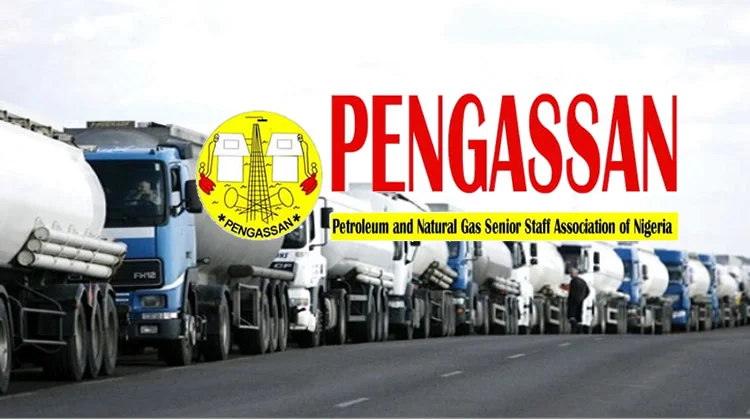
The Dangote Petroleum Refinery has stopped the monthly salaries of the engineers sacked in September during its face-off with the Petroleum and Natural Gas Senior Staff Association of Nigeria.
In a bid to address this, PENGASSAN said it is engaging the Dangote Group to resolve the matter amicably instead of resorting to another industrial action.
Findings by The PUNCH revealed that the salaries were halted following the refusal of many of the engineers to accept their redeployment to Zamfara, Borno, Benue, and Sokoto states, among others.
Some of the workers, who spoke on condition of anonymity because of the sensitivity of the issue, had earlier said individuals were sent to a coal mine in Benue, concrete road construction sites in Borno and Ebonyi states, as well as rice plants in Kebbi, Niger, Sokoto, and Zamfara.
While a few workers were said to have accepted the redeployment, many rejected it, relying on assurances from PENGASSAN that the crisis would be resolved through dialogue.
It was learnt that the Dangote Group issued a warning signal in October by slashing the wages of the affected workers before withholding their November salaries completely.
A senior official of the Dangote Group confirmed to our correspondent that the company would no longer continue paying those who rejected the redeployment offers.
While the affected workers described the non-payment of their salaries as “victimization”, the official, who did not want his name in print due to the lack of authorization to speak on the matter, wondered why the company should keep paying individuals who had refused the alternative placements offered.
“Those whose services were terminated were given an opportunity to work in our other projects, such as rice mills, concrete road construction, and coal mines.
All those who accepted have started working.
“If a newspaper terminates the services of an employee, and if it even goes out of its way to provide alternative employment, but the employee is not interested in availing the alternative employment, will it keep paying his/her salary?” the official said.
Recall that PENGASSAN had shut down oil and gas facilities in September over allegations that 800 refinery workers were fired for volunteering to be members of the union. However, the Dangote refinery said it only sacked a few workers who were sabotaging the facility, describing the exercise as a reorganization.
The shutdown caused nationwide losses in oil and gas production and contributed to a drop in power generation until the Federal Government intervened and directed the redeployment of the affected workers.
In October, the sacked engineers were invited to pick up their letters at the Ikeja office of the Dangote Group. One of the letters sighted by our correspondent was titled ’Offer of Trainee Engagement’ and carried the letterhead of Dangote Projects Limited.
It reads partly: “Based on your performance at the assessment and subsequent interviews held with you, we are pleased to engage you as Engineer Trainee (Mechanical Engineering) for the coal project we are executing at Okpokwu, Benue State. This engagement shall be subject to the following conditions: You will report to your work location within 14 days upon receipt of this letter.
“You will undergo classroom training and hands-on training in the construction, commissioning, and operation of our Coal Project at Okpokwu, Benue State. Your training will be for a period of two years, and it will be reviewed periodically. You will be required to submit reports on your learning and progress. The objective of the training is to impart to you skills and to enable you to take up a position of responsibility in the organization.”
Many of the engineers expressed concerns about the posting, especially to places perceived to be security hot spots. “The issue with the re-employment is that, firstly, there’s no address to report to on that letter. No office to report to in the states we were posted to. Secondly, those are security hot zones.
“Thirdly, in the letter, it is stated that if you don’t report within 14 days, your employment will be terminated, but no office location was given, and they don’t exist when we checked on Google Maps. So, if we accept the letters, we are basically terminating our employment by ourselves because there’s no office in those states to report to. PENGASSAN has basically told us not to accept the letters. We should let them continue with their talks,” they told The PUNCH.
Speaking during a briefing last week, the PENGASSAN President, Festus Osifo, said the union was still engaging the Dangote refinery to have the issues resolved.
Osifo said, “Since our last national industrial action, we have been engaging them in a lot of conversations, but the issues are not fully resolved. There are still a lot of pending issues. The NEC decided that, yes, let us still continue that process by pushing those issues by engaging in a dialogue to resolve the issues, and by also engaging all our social partners and stakeholders to get the issues resolved. And we hope and pray that these issues will be resolved at the table.
“These issues should be resolved in mere jaw-jaw so that we will not go back to Egypt. But as PENGASSAN, you know, we don’t shy away from doing what is right. But our preference is to get the subject resolved over the negotiation table.”
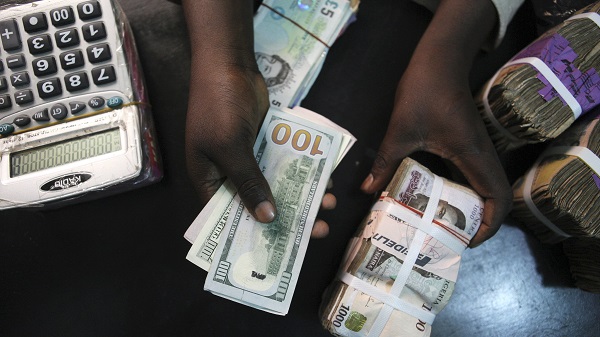
What is the Dollar to Naira Exchange rate at the black market also known as the parallel market (Aboki fx)?
See the black market Dollar to Naira exchange rate for 9th December, below. You can swap your dollar for Naira at these rates.
How much is a dollar to naira today in the black market?
Dollar to naira exchange rate today black market (Aboki dollar rate):
The exchange rate for a dollar to naira at Lagos Parallel Market (Black Market) players sell a dollar for ₦1495 and buy at ₦1480 on Tuesday 9th December, 2025, according to sources at Bureau De Change (BDC).
Please note that the Central Bank of Nigeria (CBN) does not recognize the parallel market (black market), as it has directed individuals who want to engage in Forex to approach their respective banks.
Dollar to Naira Black Market Rate Today
| Dollar to Naira (USD to NGN) | Black Market Exchange Rate Today |
| Selling Rate | ₦1495 |
| Buying Rate | ₦1480 |
Dollar to Naira CBN Rate Today
| Dollar to Naira (USD to NGN) | CBN Rate Today |
| Highest Rate | ₦1457 |
| Lowest Rate | ₦1450 |
Please note that the rates you buy or sell forex may be different from what is captured in this article because prices vary.
The four-week extended minor inspection, coThe Federal Government, through the Niger Delta Power Holding Company, has restored 450 megawatts of generation capacity to the national grid following the completion of scheduled maintenance works on the Geregu National Integrated Power Project plant in Kogi State.nducted by Siemens Energy, was executed to improve the facility’s reliability and operating efficiency. The intervention also extended the plant’s Equivalent Operating Hours, strengthening one of the country’s most strategic generation assets.
The development was disclosed in a statement on Monday by the Head of Corporate Communications and External Relations at NDPHC, Emmanuel Ojor.
According to the Managing Director/Chief Executive Officer, Jennifer Adighije, the Geregu recovery forms part of a wider effort to revive previously dormant assets across the company’s power fleet.
The statement read, “The Niger Delta Power Holding Company has successfully restored an additional 450MW of generation capacity to the national grid following the completion of scheduled maintenance on the Geregu NIPP plant.
“The four-week extended minor inspection, undertaken by Siemens Energy, was executed to enhance the facility’s operational reliability, performance, and efficiency, thereby extending the plant’s Equivalent Operating Hours and operational life span.”
She revealed that six gas turbines that had been idle for years have been restored within the last 12 months, including GT4 at the Calabar NIPP, GT1 at Omotosho II, GT1 and GT2 at Benin NIPP, GT4 at Sapele NIPP, and GT3 and GT4 at Alaoji NIPP, which are now awaiting pre-commissioning once gas supply constraints are resolved.
Collectively, the restored units will contribute about 875MW to NDPHC’s mechanically available capacity, one of the largest single-year recoveries by a power generation company in recent years.
“The company has also recovered six previously dormant gas turbines across the NDPHC fleet of gas turbines. These include GT4 at the Calabar NIPP, GT1 at Omotosho II, GT1 and GT2 at Benin NIPP, GT4 at Sapele NIPP, and currently GT3 and GT4 at Alaoji NIPP on standby for pre-commissioning after gas supply remedial works,” the statement added.
Adighije also announced the commencement of restoration works on the 225MW Gbarain NIPP plant in Bayelsa State, which has been out of service since 2020.
She described the project as “a major step toward recovering dormant national power assets,” adding that its rehabilitation will support the company’s commercialisation plans aimed at powering key industrial and commercial clusters in the Niger Delta.
Despite persistent challenges relating to gas supply shortages, grid instability, and liquidity pressures across the power sector, NDPHC said it had recorded significant operational and financial breakthroughs.
These include the recovery of 110 containers loaded with critical turbine parts and Heat Recovery Steam Generator components, which were abandoned at Onne Port for more than nine years.
Other milestones include: commencement of the Light Up Nigeria, Agbara industrial cluster project designed to deliver stable electricity to the Agbara Industrial Estate; development of a 10MW embedded solar plant for an industrial zone in Kano; completion of key transmission and distribution projects in Borno and Delta States; and completion of the Afam–Ikot Ekpene 330kV double-circuit line, a long-delayed grid-expansion project.
NDPHC also recovered over $10m from legacy bilateral customers, secured $15m insurance claims for the Alaoji power plant fire incident, and is currently working with the Nigerian Electricity Regulatory Commission on mechanisms for recovering its investments in Transmission Company of Nigeria’s infrastructure.
The company further resolved longstanding commercial disputes with ACCUGAS, leading to an amendment of the gas supply agreement that reduces exposure to the Federal Government.
Beyond infrastructure, Adighije said the company had introduced internal reforms to improve accountability and staff welfare. These include a procurement benchmarking desk to streamline processes, computer-based testing for performance evaluation, and a management support allowance to cushion the impact of fuel subsidy removal.
She explained, “Other success stories include recovery of over $10 million in legacy debts from bilateral customers, securing $15 million in insurance claims for the Alaoji plant fire incident, advanced engagements with NERC on recovering NDPHC’s investments in TCN’s transmission expansion projects, resolution of longstanding commercial issues with ACCUGAS, leading to an amendment of gas supply agreement which reduces government’s exposure.
“To strengthen accountability and staff welfare, the management of NDPHC has introduced a procurement benchmarking desk for streamlining procurement practices, Computer-Based Testing for enhanced staff performance management, and a management support allowance to cushion the impacts of fuel subsidy removal.”
Reaffirming NDPHC’s long-term mandate, Adighije said the company remained committed to “restoring dormant capacity, stabilising operations and supporting Nigeria’s goal of a more reliable and sustainable electricity supply chain.”
She added that the management would continue to prioritise transparency, accountability, and stakeholder engagement as it works to “unlock universal access to electricity that powers businesses and households across the country.”
NDPHC is the special-purpose vehicle managing Nigeria’s National Integrated Power Project, created in 2005 to accelerate power infrastructure development. Many NIPP plants have suffered years of underutilisation due to gas shortages, delayed transmission projects, and liquidity challenges in the electricity market.
The recent restoration efforts mark one of the most aggressive recovery drives undertaken by the company since its inception.
As the 2025 licensing round gets underway, the Federal Government has reduced the signature bonus from $10m to $3m and $7m. The Nigerian Upstream Petroleum Regulatory Commission disclosed this in an update on its website.
According to the commission, this was part of the government’s efforts to reduce entry barriers. “Interested in one of the oil blocks listed for the 2025 Licensing Round? The Nigerian government has graciously reduced the signature bonus to between $3m and $7m.
“All bidders shall be required to submit a bid within a range of $3m and $7m as approved by the minister of petroleum for the reduction of entry barriers,” the commission said.
The PUNCH recalls that in 2024, the government slashed the signature bonus payable by successful bidders from around $200m to $10m. The Chief Executive of the Nigerian Upstream Regulatory Commission, Gbenga Komolafe, stated that the NUPRC surveyed what other countries like Brazil demand as signature bonuses from would-be investors and discovered the need to slash that of Nigeria.
A signature bonus is a non-refundable payment made by a contractor to the government upon the signing of an agreement. Firms who are awarded oil or gas sassets are expected to pay signature bonuses to the government.
The NUPRC disclosed last year that an investment in Deepwater would attract $10m as a signature bonus, while shallow water and onshore attract $7m. It appears the figures have been reduced further to $7m and $3m, respectively.
It was added that the signature bonus cannot be paid in naira. “The designated signature bonus account is United States dollar-denominated,” the NUPRC mentioned.
The regulator stated that the winners of this licensing round will be awarded a Petroleum Prospecting License, which confers to the holder the exclusive right to drill exploration and appraisal wells; the non-exclusive right to carry out petroleum exploration operations within the area provided for in the license; and the right to carry away and dispose of crude oil or natural gas won or extracted during the drilling of exploration or appraisal wells as a result of production tests.
It clarified that the license is for “an initial duration of three years, with a possible extension of another three years for onshore and shallow waters, while it is five years for deep water and frontier.”
The commission disclosed that it has adopted a two-stage bidding process for the award of the blocks, saying the bidding process shall comprise a qualification stage and a bid stage.
“The qualification stage involves the submission and evaluation of applications by interested parties or consortia in accordance with the Regulation and the Guidelines.
“Applicants shall provide all information required for this stage. Only applicants who are adjudged qualified and subsequently shortlisted by the commission shall proceed to the bid stage and will be required to execute a Confidentiality Agreement prior to participation.
“At the bid stage, shortlisted applicants or bidders shall submit their technical and commercial bids in accordance with the regulation, the guidelines, and any other bidding documents issued by the commission.”
The regulator warned that no bidder, whether participating individually or as a member of any consortium, shall submit applications for more than two assets in total across all applications.
“Participation in more than one consortium shall count towards this limit. For the avoidance of doubt, where a company has equity, direct or indirect ownership, or management involvement in multiple consortium vehicles, all such applications shall be aggregated and treated as a single bidder’s application,” it was stated.
NUPRC informed that there are 50 blocks covering the onshore, shallow water, and deep offshore areas.
“The blocks on offer are: PPL 2A29; PPL 2A30; PPL 2A31; PPL 2A32; PPL 2A33; PPL 2A34; PPL 2A35; PPL 2A36; PPL 2A37; PPL 2A38; PPL 2A39; PPL 2A40; PPL 2A41; PPL 2A42; PPL 2A43; PPL 2A44; PPL 2A45; PPL 2A46; PPL 2A47; PPL 2A48; PPL 2A49; PPL 2A50; PPL 2A51; PPL 2A52; PPL 2A53; PPL 2A54; PPL 2A55; PPL 2A56; PPL 2A57; PPL 2A58; PPL 2A59; PPL 2A60; PPL 2A61; PPL 2A62; PPL 2010; and PPL 307.”
Others are “PPL 308; PPL 309; PPL 900; PPL 901; PPL 902; PPL 903; PPL 700; PPL 701; PPL 702; PPL 703; PPL 800; PPL 801; PPL 802; and PPL 803.”


Former Aviation Minister, Stella Oduah Arraigned Over Alleged ₦2.4 Billion Fraud

Ogun 2027: Akinlade Declares Governorship Ambition

We’ll Do Whatever We Can To Sign Salah, Saudi Arabia Vows


-

 Entertainment2 days ago
TikTok Restricts Late-Night Live Access For Nigerian Users
-
 Business2 days ago
Govt Restores 450MW To Grid After Power Fleet Revamp
-

 Politics2 days ago
PDP Leadership Bloc Throws Weight Behind New NWC, Turaki
-

 News2 days ago
FG Seeks Speedy Trial Of Terrorists
-

 Politics2 days ago
Governor Mutfwang Meets Tinubu, Finalises Defection To APC
-

 Business2 days ago
FG Defers 70% Of 2025 Capital Projects To 2026
-
 News2 days ago
Man Bags Seven-Year Jail Term For Land Scam In Enugu
-
 Business2 days ago
FG Reduces Oil Block Entry Costs To $3M