
Business
Petroleum Sector Retards National Progress

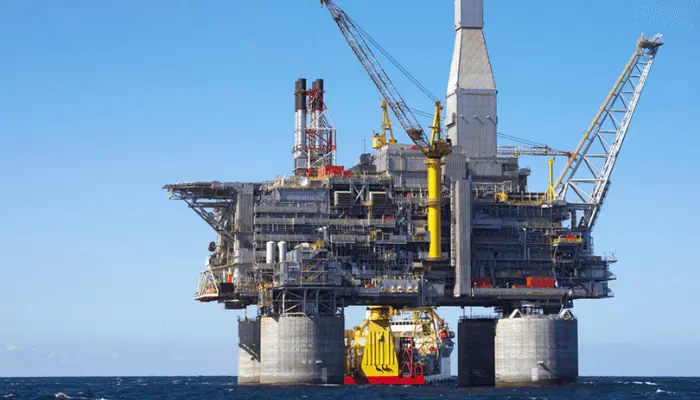
NNPCL is the only state-owned oil producing organization in the entire world which has become a perpetual drag on the nation’s progress. Last week, just as the nation was celebrating the declaration of Ntn profits from operations last year, Nigerians were once again reminded that very little has changed in the management of the affairs of the most important business organization in Nigeria. Until new evidence surfaces indicating a new re-orientation of corporate governance, the NNPCL will find it difficult to shed its negative image. For the most part, nothing seems to work well in the organization.
“Power tends to corrupt; and absolute power corrupts absolutely.”
Lord Acton, 1834-1902.
Late President Yar’Adua and former President Jonathan appointed Ministers who served themselves more than Nigeria, and, although they were not well supervised, the two Presidents were personally above reproach with regard to the operations of the NNPC. Failure to ensure that the mandatory Turn Around Maintenance, TAM, was carried out, as and when due was the only error which can be justifiably charged to their accounts.

Buhari returned Nigeria to the discredited President/Minister approach to governance. It was a monumental disaster. Unlike when he was Petroleum Minister in 1973 and left office in a cloud of financial uncertainty, the sector had become highly technical; and only very few people in any country could successfully manage it. Buhari was not one of them.
He left an unmitigated disaster behind. One of them was the N8tn Crude-for-Loans agreement reached to finance budget deficits incurred by the FG. Under the agreements, 213,000 barrels of crude oil were daily reserved to service the loans.
Given that, at the time, daily output of crude was about 1.4 million barrels a day, daily net production was under 1.2 million barrels each day. Meanwhile, the budgets each year were based on 2 million barrels per day; and later, Alhaji Dangote was promised all the crude required to run his 600,000 barrels refinery. TAMs were not carried out; petrol was imported in large quantities and fuel subsidy payments escalated to untenable proportions. The stage was set for our present predicament.
“828M litres of fuel imported to avert nationwide shortage.” News, December 1, 2025.
Tinubu came into office and applied a shock treatment to the economy which almost killed the patient. Divinely, the nation survived the therapy is now gradually getting out of the intensive care unit. A recovery is now underway – even if tentative. Still, it is undeniable that the economy might be turning the corner. The Organised Private Sector, OPS, has demonstrated resilience, once again, as it did when the Structural Adjustment Programme, SAP, was introduced in the 1980s. There is faint light at the end of the dark tunnel. There is however, an elephant in the room – NNPCL.
Notwithstanding the profits recently declared by the company, the overall performance this year has been underwhelming.
The news report in reference touched on some of the problems. According to the reporter, “Fuel security slowed in October as the Dangote Petroleum Refinery supplied only an average of 17.1 million litres per day of the nation’s petrol needs, forcing the country to rely heavily on imports, despite earlier hopes of self-sufficiency.”
In reality, the hope of self-sufficiency which was based on the assumption that Dangote would be fully supplied with crude was delusory at best. Dangote’s refinery could not attain full capacity in 2025; even if the crude promised was fully delivered. Furthermore, Dangote was not expected to be the sole supplier of petrol to Nigerians. NNPCL, under the former Group Managing Director, Mele Kyari, requested for and was given $2.9 billion to revive the Port Harcourt and Warri refineries; and get them to start supplying fuel. Promises were made to start production by December 2024.
We are now in December 2025. After months of shameless deceit, including reported supply of fuel by the two refineries, Nigerians woke up to the truth. Funds provided for another TAM by NNPCL had vanished with no fuel being produced. That has been the history of the NNPCL since all the four refineries produced petrol during the Babangida administration – a feat which has not been repeated by any other government since 1993.
The NNPC(L) has consistently duped Nigeria because our governments have repeatedly appointed untrustworthy individuals to manage the business. Their crimes have been overlooked by Presidents and the National Assembly for reasons most of us can only guess because nobody has been prosecuted in Nigeria yet.
NNPC(L) ROBIN HOODS
Robin Hood, the famed fairy tale English robber, took from the rich to give to the poor.
Meanwhile, two former Directors of the NNPC(L) have been successfully prosecuted and sentenced in the United States for stealing Nigerian money and laundering the proceeds of crime in the US. The funds stolen in Nigeria were forfeited to American states. The robbers of NNPC(L) rob Nigeria to enrich wealthy nations even more.
CRUDE PRODUCTION PROMISES UNFULFILLED
“Promises like [cookies] are made to be broken.” Jonathan Swift, 1667-1745.
Nothing is more dangerous than a convincing illusion. Nigerian governments have operated on one for over ten years; and NNPC(L) was responsible for it. Nigeria’s budgets in the last twelve years have been based on two million barrels per day crude oil production. NNPC(L) directors invariably accept the budget estimates for crude production. In no single month was the target achieved. That fact has never stopped NNPC(L) from repeating the same promise to Presidents – who were too eager to be deceived. The repercussions have been devastating.
Expected crude oil revenue estimates were never achieved; the increasing negative variances generated were largely responsible for the escalating national debt – of which the N8tn is just a small fraction. Question is: when will NNPC(L) play a positive role?

The cost of importing petrol into Nigeria has dropped sharply following the recent decline in global crude oil prices, creating fresh competition for local refiners, including the $20 billion Dangote Refinery.
New data released by the Major Energy Marketers Association of Nigeria (MEMAN) shows that the landing cost of imported Premium Motor Spirit (PMS), also known as petrol, has fallen to N1,117 per litre.
The figure is now significantly lower than Dangote Refinery’s gantry price of N1,250 per litre, leaving a difference of N133 per litre.
The development comes days after the mega refinery reduced its ex-depot petrol price from N1,275 to N1,250 per litre in response to changing market conditions.
The latest MEMAN pricing template suggests that fuel importers may now enjoy a competitive edge over domestic refiners as international crude prices continue to soften. Aside from petrol, the landing costs of other petroleum products also recorded notable declines.
According to the data, diesel landing cost dropped to N1,470 per litre, compared to Dangote Refinery’s price of N1,700 per litre. Aviation Turbine Kerosene (ATK), commonly known as aviation fuel, also fell to N1,426 per litre, while Dangote’s price remains N1,650 per litre.
MEMAN estimated the exchange rate for fuel imports at N1,366.85 per dollar, reflecting the prevailing official foreign exchange rate at the time of the calculation.
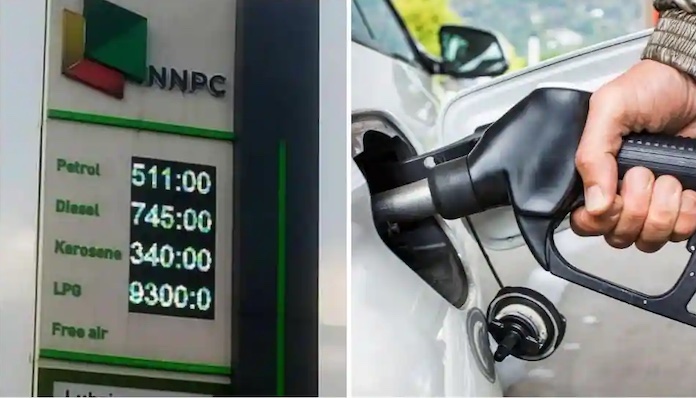
Some filling stations along the Lagos-Ibadan Expressway and in other locations across Lagos and Ogun states have reduced petrol prices below N1,300 per litre.
This follows a price cut announced by the Dangote Petroleum Refinery on Sunday.
The refinery adjusted its ex-depot gantry price of petrol down to N1,250 per litre from N1,275 per litre, while also slashing the price of diesel to N1,700 per litre from N1,800 per litre.
According to Dangote officials, the price review reflects a recent decline in global oil prices and reinforces the company’s commitment to making refined products more affordable while providing cost relief to Nigerian consumers and businesses.
Following the announcement, observations across the Mowe/Ibafo axis of the Lagos-Ibadan Expressway in Ogun State showed that several independent marketers immediately adjusted their pumps. For instance, MRS filling stations reduced their petrol pump price to N1,286 per litre, NIPCO and Heyden retailed the product at N1,290 per litre, and SGR adjusted its price to N1,297 per litre.
Reductions were also recorded in the diesel market, with many filling stations dropping their prices to N1,800 per litre from the previous N1,900 per litre.
Despite these downward adjustments, many retail outlets still sell petrol above the N1,300 mark. Outlets operated by the Nigerian National Petroleum Company Limited (NNPC) in Ibafo adjusted their pumps to N1,305 per litre, while Mobil and Asharami sold the product at N1,310 and N1,320 per litre, respectively.
The overall price drop comes after a prolonged period of high fuel costs in Nigeria, which saw petrol skyrocket from N830 per litre to over N1,300 after global crude oil climbed past $115 per barrel due to tensions between the United States and Iran.
Barely 24 hours after announcing a reduction in the price of premium motor spirit (PMS), commonly known as petrol, Dangote Refinery has adjusted its ex-depot price upward, joining several other fuel depot operators in responding to renewed volatility in the global oil market.
The latest development comes after the refinery had cut petrol prices twice within two days, lowering its ex-depot rate from N1,275 per litre to N1,250 per litre.
However, fresh market data now indicates a reversal of that trend as rising crude oil prices continue to influence domestic fuel pricing.
Industry observers attribute the latest increase to growing uncertainty in the international energy market, particularly concerns surrounding the Strait of Hormuz, a critical shipping route for global oil supplies.
Data from PetroleumPriceNG shows that Dangote Refinery increased its petrol price by 0.46 per cent to N1,256 per litre, up from N1,250 per litre announced earlier.
The refinery’s adjustment was mirrored by several major depot operators across the country. According to the data, AIPEC raised its petrol price to N1,252 per litre, while Ardova also fixed its rate at N1,252 per litre. Bulk Strategic and Liquid Bulk both increased their prices to N1,285 per litre.
The coordinated adjustments reflect growing concerns among marketers and depot operators over the rising cost of crude oil and the need to manage pricing risks.


BREAKING: Tinubu’s Ex-Minister in Trouble Over Certificate Scandal

BREAKING: Peter Obi Drags Kenneth Okonkwo to Court, Reasons Emerge

FG to Declare Nationwide Public Holiday, Date Revealed

Former Super Eagles Star Loses Life Savings, Duped By A Pastor of ₦1.2 Billion

I’m A Married Man, I Can Never Get Myself Involved With Such A Thing, Delta Gov Aide Reveals Why He Offered Comfort ₦500,000 Job

Lagos Imposes ₦250,000 Fine For Illegal Waste Disposal

-
 Politics2 days ago
BREAKING: APC Releases List of Qualified Senatorial Candidates Ahead 2027
-

 News2 days ago
JUST IN: INEC Releases Final List Of Candidates For 2026 elections
-
 Politics1 day ago
BREAKING: Kwankwaso Breaks Silence on Dumping NDC
-
 News16 hours ago
FG to Declare Nationwide Public Holiday, Date Revealed
-

 Business1 day ago
JUST IN: Marketers Crash Petrol Prices Nationwide, New Pump Prices Emerge
-

 News23 hours ago
BREAKING: Top Nigerian Emir is Dead, Details Emerge
-

 News2 days ago
Abductors Demand Sharia Law, ₦1bn Ransom For Release Of Oyo Pupils, Teachers
-
News2 days ago
BREAKING: Tinubu Swears In Two New Ministers