
News
FULL LIST: Plateau, Borno, 13 Other States That Likely Be Targeted If US Carries Out Strike; Reason Emerges

FULL LIST: Plateau, Borno, 13 Other States That Likely Be Targeted If US Carries Out Strike; Reason Emerges
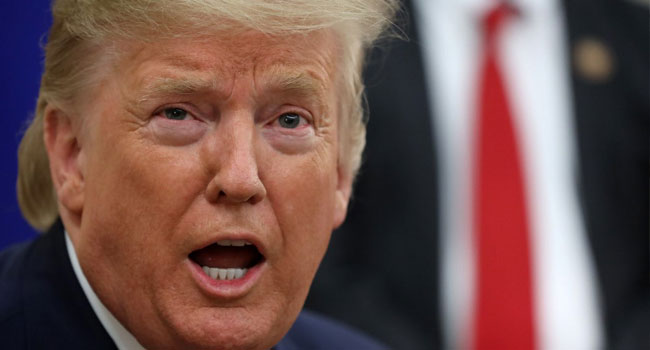
US President Donald Trump threatened Nigeria with a potential military attack, accusing the country of permitting the killing of Christians.
The Nigerian government has denied these allegations, while citizens continue to discuss the situation.
Amid the US’s anger, Legit outlines all the states that could be affected if the US decides to carry out strikes on Nigeria. …CLICK LINK TO CONTINUE READING HERE

President Donald Trump took to Truth Social on Saturday, November 1, to announce that he has instructed America’s Department of War to prepare for possible action against Nigeria over “the killing of Christians.”
The US defence secretary, the equivalent of the minister of defence in Nigeria, Pete Hegseth, added that the United States (US) would stop aid to Nigeria and would deploy troops to “completely wipe out the Islamic terrorists”.
Earlier, the American leader put the West African nation on a US watch list, designating it a “country of particular concern” (CPC).
Although a war between the US and Nigeria is not envisioned, and the African country’s military is not expected to be initially involved even if the US deploys its military assets against terrorists, Washington’s pronouncements have caused anxiety in Nigeria.

Amid widespread concerns, Legit highlights all the Nigerian states that may be affected by the US’ threat.
1) Borno state
Borno is widely considered the epicentre and the state most affected by terrorism in Nigeria.
This is primarily due to the long-standing Boko Haram insurgency and the presence of its offshoot, the Islamic State West Africa Province (ISWAP).
2) Yobe state
Yobe is one of the states most affected by terrorism in Nigeria, particularly by the Boko Haram and ISWAP insurgencies. The state has experienced a devastating impact, with significant loss of life, displacement of people, and destruction of infrastructure and economic activities.
3) Adamawa state
Adamawa is one of the Nigerian states most affected by insurgents’ condemnable activities. Legit reports that regular military operations are ongoing in Adamawa to counter the terrorists’ actions.
4) Kaduna state
The insecurity in Kaduna is part of a broader pattern of violence in northern Nigeria.
In September, the governor of the state, Uba Sani, cautioned opposition politicians against politicizing insecurity, warning that claims that bandits could be “carpet-bombed” out of existence are misleading and deceptive.
Sani traced the security challenges in Kaduna state and the north-west zone of the country at large to poverty, unemployment and poor leadership or governance at several tiers of the people’s being.
5) Katsina state Katsina has experienced its share of attacks by outlaws.
In Katsina, there is persistent bandit/terrorist violence and frequent abductions.
6) Zamfara state
President Bola Ahmed Tinubu hinted that his administration would create state police to effectively address the security challenges in Zamfara and other Nigerian states.
Subsequently, Governor Dauda Lawal stated that banditry would become history in his state if he had control over security outfits.
7) Sokoto state
Sokoto faces its own security challenges, problems more frequently associated with armed banditry and kidnappings, particularly in its rural and border areas.
In September, the Sokoto police command arrested three suspected collaborators of bandits and recovered arms and ammunition in separate operations across the state.
According to a statement issued by the police spokesperson, Ahmad Rufai, the arrests were made in intelligence-driven operations conducted by the anti-kidnapping unit of the State Criminal Investigation Department and operatives of the Tureta division.
8) Niger state
Niger is one of the states in Nigeria significantly affected by armed attacks and terrorism.
The attacks in Niger, a state within 30 kilometres of the federal capital territory (Abuja), have highlighted the spread and seriousness of the threat in the northern region.
Seven other states that could be affected if the US carries out military action in Nigeria are listed below:
1 Kano
2 Kogi
3 Benue
4 Plateau
5 Taraba
6 Gombe
7 Bauchi
Rwanda has declared Friday, August 7, 2026, a public holiday to mark Umuganura Day, a national harvest festival with roots stretching back to pre-colonial times.
Legit.ng reports that the announcement came from the Ministry of Public Service and Labour on Tuesday, August 4, 2026, and applies to workers across all sectors, both public and private.
The ministry said in its official statement:
“The Ministry of Public Service and Labour informs all employers and employees in both public and private sectors that Friday, August 7, 2026, will be a public holiday in celebration of Umuganura Day.”
What is Umuganura Day?
Umuganura is one of Rwanda’s most significant cultural observances. The festival gives thanks to God and ancestors for the bounty of the land and marks the collective effort of communities in cultivating it. Despite being called a harvest festival, it is observed before the harvest begins, a tradition rooted in the practice of elders tasting the fruits of the new season before any family member is permitted to do so.
The celebration starts within individual families and then expands into wider community gatherings where traditional foods, crafts, and performances are shared. Rwandan restaurants and cultural centres, both at home and abroad, typically mark the occasion with special offerings tied to the country’s culinary heritage.
Agriculture sits at the heart of why the day carries such weight. About 80% of Rwanda’s labour force is engaged in farming activities, which contribute roughly 40% of the country’s Gross Domestic Product. Tea and coffee are the country’s most important cash crops, making up around 80% of its agricultural exports.
History of Umuganura festival
Umuganura has survived considerable upheaval. Germany colonised Rwanda in 1899 as part of German East Africa, and Belgium took control in 1916 during World War I. The prolonged period of colonial rule disrupted the festival, and it went uncelebrated for many years. Rwanda gained independence in July 1962, and the country gradually rebuilt its national identity in the decades that followed.
Despite its ancient origins, Umuganura was only formally recognised as a public holiday in 2011. Beyond its cultural significance, the day also serves as an occasion to reflect on the country’s yearly achievements across the sectors that drive national development.

Kano State Governor Abba Kabir Yusuf has approved the appointment of 19 new permanent secretaries and the redeployment of 14 others across Ministries, Departments and Agencies in the state civil service.
The state Head of Civil Service, Hajiya Bilkisu Shehu-Maimota, made this known through a statement released on Tuesday, August 4, in Kano, signed by the Director of Public Enlightenment in her office, Rukayya Uba-Sulaiman.
Uba-Sulaiman said the new appointments followed the recent promotion of qualified directors to the rank of permanent secretary, with the aim of strengthening government operations and improving service delivery across state agencies.
“The posting follows the recent upliftment of some deserving Directors to the position of Permanent Secretaries, which was aimed at re-strengthening the machinery of Government for an effective and efficient service delivery,” the statement read.
The statement conveyed the governor’s approval directly, noting that the exercise was designed to reposition the civil service for greater efficiency under the current administration.
Newly appointed permanent secretaries were urged to carry out their duties with diligence and competence in support of the government’s broader objectives, Punch reported.
According to the statement, the postings take immediate effect. All handover processes between outgoing and incoming officers are expected to be concluded no later than Wednesday, August 12, 2026.
Uba-Sulaiman described the appointments as a call to greater responsibility and selfless service to the people of Kano State, Vanguard reported.
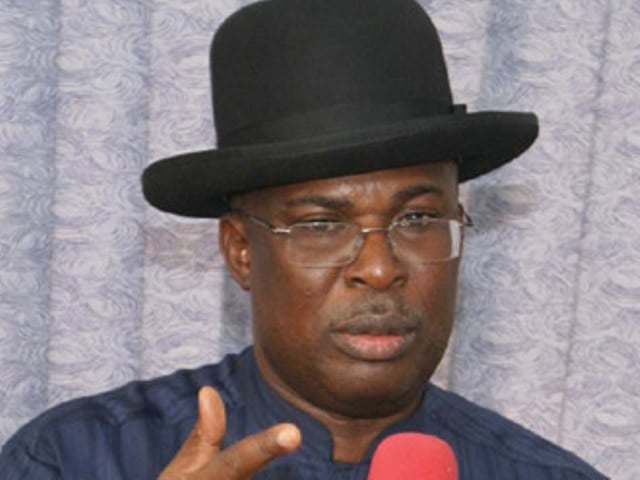
Full List: How Sylva’s Alleged Coup Funds Were Shared Among Soldiers, Clerics
The investigation records alleged that a former Bayelsa State governor, Timipre Sylva, provided ₦785m through Purple Waves Limited, an Abuja-based construction and real estate company accused of serving as a financial intermediary for the purported plot.
The funds were allegedly transferred from the company to accounts controlled by a Kano-based Bureau de Change operator, Abdullahi Sani Mohammed, who reportedly disbursed the money on the instructions of the suspected coup leader, Col. Mohammed Ma’aji.
The claims remain allegations and are subject to determination by the General Court Martial and the Federal High Court, where several suspects are standing trial.
Sylva, who is believed to be outside Nigeria, has denied involvement in the alleged plot.
According to investigation records reviewed by PREMIUM TIMES, Mohammed made 47 payments to various beneficiaries between September 20 and 30, 2025, as preparations for the alleged coup intensified.
The transactions occurred shortly before dates reportedly considered by the alleged conspirators for the operation, including September 27, October 1 and October 4.
The plan collapsed following Ma’aji’s arrest on September 29, 2025.
Investigators said several members of the alleged network were unaware of his arrest, allowing the BDC operator to continue making transfers until September 30.
Mohammed also reportedly continued receiving funds from Purple Waves until October 2.
In an extra-judicial statement to investigators, Mohammed said he had maintained a longstanding foreign exchange relationship with Ma’aji before the Purple Waves transactions began.
“Sometimes, Oga Ma’aji will call me to ask for a dollar price. If he asks me, I’ll tell him,” he wrote.
“Sometimes, he will ask if he can buy $1,000 or $3,000. Sometimes, he will ask for $10,000 or $9,000.”
He said their dealings later expanded to larger transactions involving accounts operated by A&A Express Link, ASA Multipurpose Concept and Luji Trade and Investment Limited.
Mohammed recalled receiving the first two major payments of ₦150m each into his Providus Bank account around September 18.
“Oga Ma’aji called me around 18 September 2025. He told me his people would pay money into the account,” the statement read.
“As I checked the account, I saw ₦150,000,000 in A&A Express in Providus Bank.”
He said Ma’aji subsequently sent instructions through a WhatsApp voice note directing him to pay ₦10m into a First Bank account.
Mohammed claimed another ₦150m was later credited to the same account, followed by transfers of ₦100m, ₦50m, another ₦100m and ₦50m into his Luji Trade and Investment account at Fidelity Bank.
He confirmed receiving a total of ₦785m from Purple Waves between September 20 and October 2, 2025.
Investigators alleged that some serving and former military personnel received payments for operational responsibilities in the planned takeover.
Lt. Col. Shamsudeen Bappah, allegedly assigned to seize and hold the 102 Battalion in Zuma, Niger State, reportedly received ₦5m on September 27.
Lt. Felix Sunday Stephen, who was allegedly tasked with surveying an airport in Lagos, gathering intelligence and disrupting flights on the proposed operation day, reportedly received an initial ₦5m on September 23 and another ₦12m two days later.
An army officer identified as Lt. Aminu John allegedly received ₦10m on September 22.
Maj. Mundi Usman, who was reportedly assigned to lead an operation at the Presidential Villa, allegedly received multiple transfers, including ₦10m on September 23, another ₦10m on September 25 and ₦5m on September 28.
Squadron Leader Zuzu Noel Goddy of the Nigerian Air Force allegedly received ₦1m on September 28 to deploy gun trucks onto the Abuja airport runway and halt flight operations.
Another officer, Squadron Leader Sani Bubara Adamu, allegedly received ₦1m on September 25 for a purported operation targeting the Air House. Investigators said he remained at large.
Other alleged beneficiaries included former Capt. Abubakar Mohammed, Corporal Aliyu Ibrahim and Warrant Officer Nasiru Ibrahim, who reportedly received ₦5m each.
The records also identified an Islamic cleric, Goni Bukar, as one of the largest individual beneficiaries.
Investigators alleged that Bukar was engaged to provide spiritual support for the planned operation.
He reportedly received ₦10m on September 20, ₦20m on September 23 and another ₦20m on September 29, bringing the total transferred to him to ₦50m.
The cleric has maintained in statements attributed to him that money received from Ma’aji was intended for prayers, charity and mosque-related activities rather than an attempt to overthrow the government.
Investigators also traced several transfers to corporate accounts.
An account belonging to Cutzbytz Cakes reportedly received ₦10.3m on September 22, ₦20m on September 26 and ₦1.2m the following day.
Other recipients listed in the records included Co-fran Spinfluence, which allegedly received ₦32m; Aduko Engineering Services, ₦3.5m; Schutmann Nigeria Limited, ₦10m; Overere Services Limited, ₦15m; and Auto Revive, ₦6.26m.
An auto dealer identified as Ahmed Abdulganiyu allegedly received ₦46.5m on September 27.
Alhaji Abubakar Maliki reportedly received two payments totalling ₦55m, while Christopher Elube allegedly received two transfers totalling ₦36m on September 28.
Investigators said the use of corporate accounts suggested that some beneficiaries received the alleged coup funds through business entities rather than personal accounts.
Mohammed reportedly admitted transferring more than ₦700m to the listed beneficiaries on Ma’aji’s instructions.
The investigation records showed that the BDC operator received names, account details and payment amounts from the colonel.
“Later, he called me to his house in Lokogoma to calculate some money that I paid into people’s accounts,” Mohammed stated.
“He brought out his paper and his list to show me and tell me to buy $5,000 to bring to his house.”
The Nigerian Army reportedly recovered the funds that had not been disbursed when the BDC operator was arrested.
Investigators said the suspected conspirators used agricultural expressions to conceal their communications.
The entire operation was allegedly referred to as “farming,” while logistics were called “fertilisers.”
The proposed execution day was described as the “harvest,” the operation itself as “digital farming,” and clerics consulted for prayers as “technical partners.”
The records alleged that Sylva initially hesitated to support the plot before later becoming a major financier through Purple Waves.
The company’s account reportedly held more than ₦5bn when disbursements began in September 2025.
More than 40 suspects, including serving and retired military personnel, a police officer, clerics and civilians, were arrested between September and October 2025.
Thirty-six military personnel are facing trial before a General Court Martial in Abuja.
Six other defendants are standing trial before Justice Joyce Abdulmalik of the Federal High Court in Abuja on 13 counts.
The defendants before the Federal High Court have challenged the admissibility of their statements and video recordings.
They argued that the evidence was obtained in violation of safeguards provided under the Administration of Criminal Justice Act.
The prosecution, however, urged the court to dismiss the objections and admit the materials in evidence.
Five associates of Sylva are also reportedly being prosecuted over allegations that they failed to disclose information about his whereabouts.


ADC Secretary Resigns from Party Ahead of 2027 Election, Joins New Party

BREAKING: Sultan of Sokoto Speaks on Endorsing Tinubu’s 2027 Re-election Bid

JUST IN: Fresh Trouble For Atiku as Powerful ADC Senator Resigns, Joins New Party

Former Super Eagles Star Loses Life Savings, Duped By A Pastor of ₦1.2 Billion

I’m A Married Man, I Can Never Get Myself Involved With Such A Thing, Delta Gov Aide Reveals Why He Offered Comfort ₦500,000 Job

Lagos Imposes ₦250,000 Fine For Illegal Waste Disposal

-
 Politics1 day ago
2027 Election: Oriyomi Hamzat Makes Major Move, Picks Female Running Mate
-
 Business2 days ago
Dollar To Naira Exchange Rate Today, August 4th, 2026
-
 Tech2 days ago
Did Lady Who Filmed Oloolu Masquerade Procession Die? Truth Emerges
-
 News2 days ago
Full List: How Sylva’s Alleged Coup Funds Were Shared Among Soldiers, Clerics
-

 Business1 day ago
BREAKING: Again, Dangote Reduces Petrol Prices
-
 Business2 days ago
Good News as Cooking Gas Prices Crash, NLNG Suspends Exports Amid New Policy
-
 Uncategorized1 day ago
BREAKING: President Tinubu Approves New Salary Package for Armed Forces Personnel
-
 News1 day ago
BREAKING: Nigerian Gov Announces 19 New Appointments
Chukwu Ariko
November 2, 2025 at 9:59 pm
The killing is too much,let America come for our rescue simple because our leaders are using it to play politics in this country
Benjamin
November 3, 2025 at 3:31 am
Yes bro. The killing is toomuch, we are supering alot