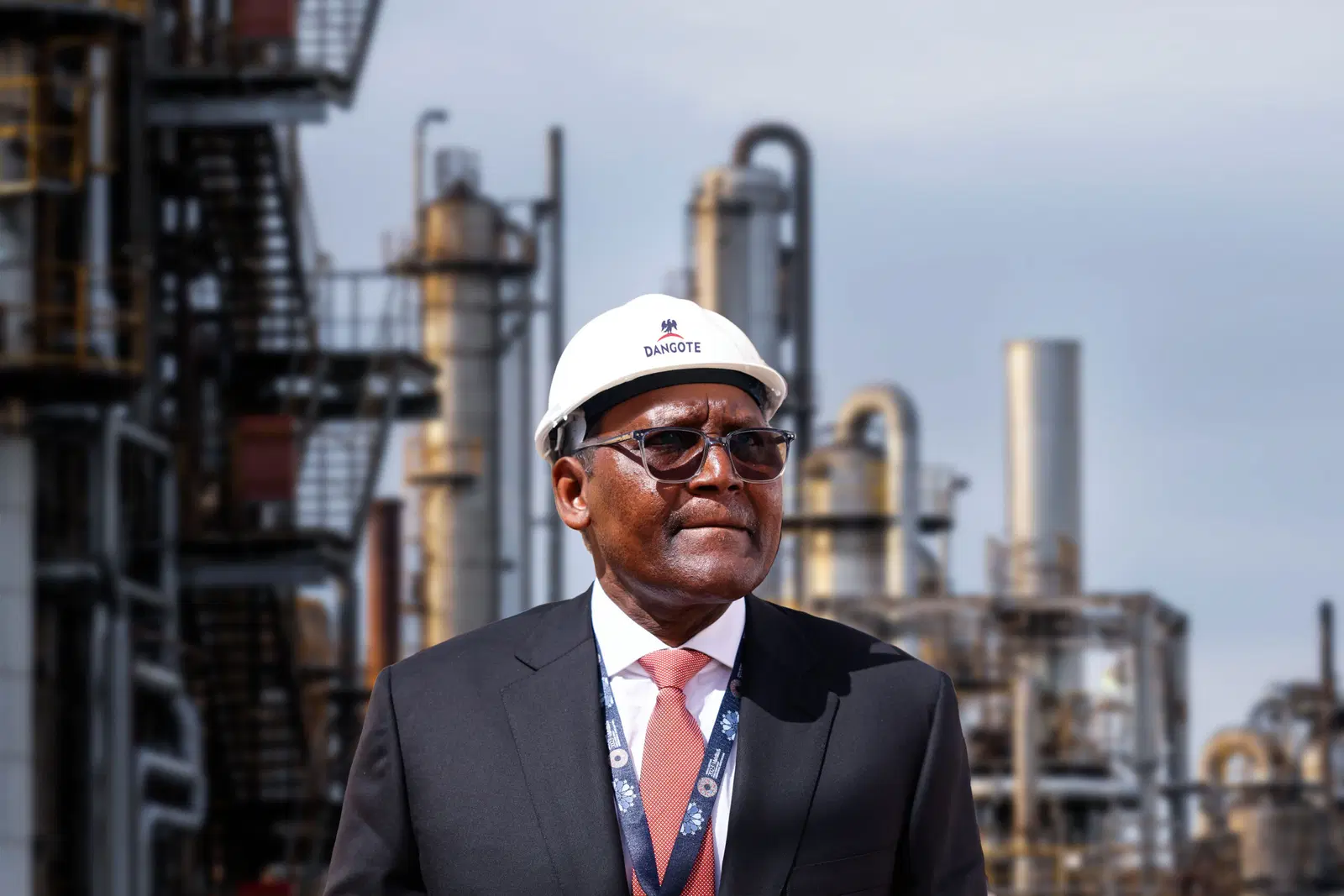
“An asset of this magnitude should not create value for only a very few people. It should create value for millions of people, not only Nigerians, but all over the world.”
Dangote noted that the IPO was not primarily about raising funds, as the group already had sufficient resources for its expansion.
He said the group had planned to raise $2.5 billion through private placement and the IPO, comprising $1.5 billion from the IPO and $1 billion from private placement.
According to him, the private placement attracted significant demand, with applications of about $2.5 billion for the $1 billion offer.
He said the strong demand made it necessary to return about $1.2 billion to investors after allocations were made.
“We already met all our demands with the private placement. Coming back now to the IPO is actually about making sure that the public can get part of these benefits,” he said.
Dangote said the broad-based ownership would provide investors with an opportunity to preserve and grow their wealth through exposure to a business whose revenues were largely dollar-linked.
He said this could particularly benefit Nigerians with financial obligations abroad, including payment of school fees, as investors would receive dividends in dollars.
He urged Nigerians and Africans to seize the opportunity, saying the refinery could become Africa’s largest company by the end of the year.
“You are buying a future. It is a company that is not only about revenue, but profitability,” he said
Dangote described the refinery as a world-class industrial asset and the largest refinery in Africa, built to international standards and equipped with modern technology.
He said the facility was supplying Nigeria’s domestic market while also serving other African and international markets.
According to him, the refinery has become a major supplier of aviation fuel to Europe, and that its jet fuel production had been sold out for August and September.
Dangote said the group was also expanding its petrochemical operations, including plans to produce polypropylene, polyethylene and polystyrene.
He said the expansion would create additional opportunities for investors and contribute to the development of industries that depended on petrochemical products.
The business mogul also disclosed that the group was exploring opportunities outside Nigeria, including plans to establish a refinery in Lamu, Kenya.
He said the group’s expansion was part of efforts to position African businesses to attract large-scale global investment.
“Africa is like a scratch card. Unless you scratch it, you don’t see the use of it. The opportunities are immense,” Dangote said.
He called on Nigerians and Africans to seize the opportunity, saying the refinery could become Africa’s largest company by the end of 2026.
“What we are trying to do is to open up the market and make sure that when we open up the market, Africans and non-Africans will join us to have what you call the new Africa rising,” he said.
Dangote added that crude oil could yield thousands of products, emphasising the importance of building refining and petrochemical capacity in Africa.
He said the growing number of aircraft being ordered by airlines globally would continue to create demand for aviation fuel, particularly as new refineries were not being developed at the same pace.
‘It’s a historic offer’ — Aig-Imoukhuede
Commenting on the offer, Aigboje Aig-Imoukhuede, Chairman, Access Holdings, described it as historic.
He said: “The Dangote Refinery has a nameplate capacity of 650,000 barrels per day and is one of the largest single-train refineries in the world.
“With this particular, sterling, historic offer and what I have seen in the data room, where already billions of Naira have been subscribed by thousands of investors within minutes or under an hour, you are a blessing to humanity.”
IPO demonstrates capacity of capital market — NGX Chairman
Also speaking, Dr Umar Kwairanga, Chairman, NGX Group, said the IPO demonstrated the capacity of Nigeria’s capital market to support businesses at a global scale.
Kwairanga said the offer of 4.1 billion ordinary shares at N525 per share, to raise about N2.15 trillion, was significant in scale and importance.
According to him, the transaction is an opportunity to demonstrate the capacity of the capital market to support enterprise and provide investors with confidence in the integrity, transparency and efficiency of the market.
He described Dangote Petroleum Refinery as one of the most significant industrial investment projects on the continent and a demonstration of what Nigerian enterprise could conceive, finance and execute.
He said deeper and more effective capital markets were required to connect African savings with African enterprises and finance businesses capable of competing globally.
“Transactions of this scale strengthen our proposition and demonstrate what our markets can achieve when capital, enterprise and ambition come together,” he said.
The NGX chairman said the development of Africa required Africans to actively participate in businesses and investments on the continent.
“Dangote has built Africa. Now, we are going to exercise our rights and be part and parcel of this huge investment as part owners of Dangote Refinery after this offer,” he said.
Kwairanga commended Dangote and the board and management of Dangote Petroleum Refinery for taking the company to the capital market.
He said the NGX had the capacity and resources to support more large-scale transactions and attract significant businesses to the capital market.
Meanwhile, Mr David Bird, Chief Executive Officer of Dangote Refinery, said the IPO was designed to encourage broad participation.
He said: “The intent is very much the people’s IPO, drive wide participation, enable Nigerians and the Nigerian diaspora, and Africans more broadly, the opportunity to participate in this wealth creation that comes from such an iconic industrial asset, like the Dangote refinery.”
Over 100 approved channels for Dangote IPO
— NGX boss
Investors looking to buy shares in Dangote Petroleum Refinery can access the N2.2 trillion IPO through more than 100 approved channels, Temi Popoola, Group Chief Executive Officer, Nigerian Exchange Group, NGX, said yesterday.
He said: “NGX, other regulators, market operators have made it possible for banks, stockbrokers, fintech companies, mobile operators, and POS operators to give investors multiple channels to participate in the landmark offering.”