Business
Petrol Battlefield: ICPC Plans NMDPRA Boss Probe After Dangote Petition


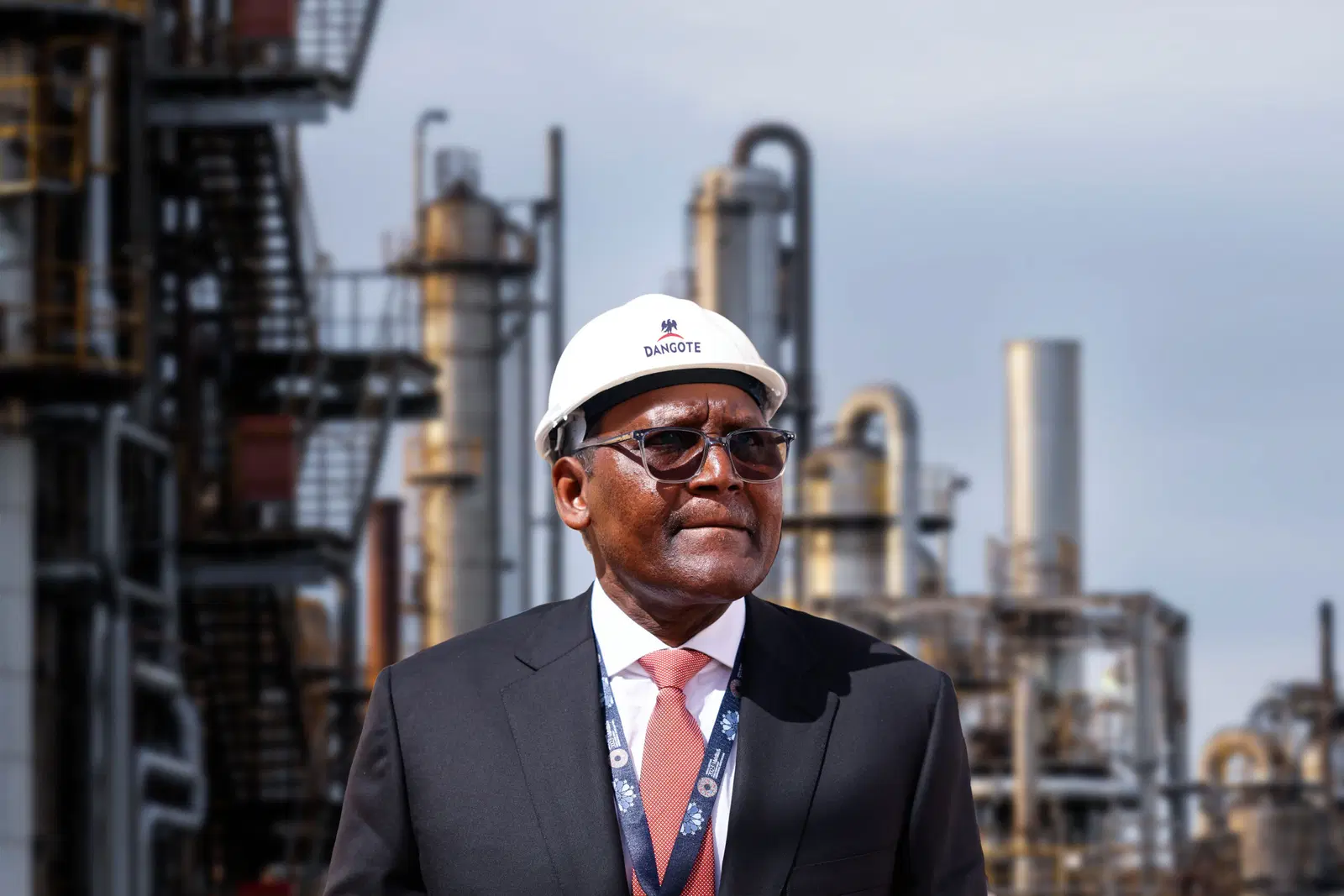
The Nigerian oil and gas sector has been thrown into fresh controversy as the Independent Corrupt Practices and Other Related Offences Commission has declared that it will investigate a petition lodged against the Chief Executive Officer of the Nigerian Midstream and Downstream Petroleum Regulatory Authority, Farouk Ahmed, by the Chairman of Dangote Group, Aliko Dangote.
Dangote, in a petition submitted on December 16, 2025, through his lawyer, Ogwu Onoja (SAN), called on the ICPC to investigate, prosecute, and potentially arrest Ahmed over allegations of corruption and financial impropriety. The petition claims that Ahmed spent more than $7m on the education of his four children in Switzerland, reportedly paid upfront for a six-year period, without any lawful source of income to justify such expenditure.
“That Engr Farouk Ahmed has grossly abused his office contrary to the extant provisions of the Code of Conduct for Public Officers and, by so doing, enmeshed himself in monumental corruption and unlawful spending of public funds running into millions of dollars.
“That Engr. Farouk Ahmed spent, without evidence of lawful means of income, a humongous sum of over $7m of public funds on the education of his four children in different schools in Switzerland for a period of six years upfront,” the petition stated.
Dangote named the children and the Swiss schools they attend, providing the alleged amounts paid for each to enable verification by the ICPC. He further accused Ahmed of diverting public funds for personal gain through the instrumentality of the NMDPRA, an action the billionaire businessman claims has fuelled public outrage and recent protests by civil society groups.
“It is without doubt that the above facts in relation to abuse of office, breach of the Code of Conduct for public officers, corrupt enrichment and embezzlement are gross acts of corrupt practices for which your Commission is statutorily empowered under Section 19 of the ICPC Act to investigate and prosecute,” Dangote said.
Dangote added that successful prosecution under the law could result in a five-year prison sentence without the option of a fine. He alleged that Ahmed had enriched himself with taxpayers’ money meant for public use, diverting it for private purposes, which he said undermined public trust in Nigeria’s petroleum sector.

Reacting to the petition, the ICPC spokesperson, John Odey, confirmed its receipt. He said, “The ICPC wishes to confirm that it received a formal petition today, Tuesday, December 16, 2025, from Alhaji Aliko Dangote through his lawyer. The petition is against the CEO of the NMDPRA, Alhaji Farouk Ahmed. The ICPC wishes to state that the petition will be duly investigated.”
A coalition of 40 lawyers under the aegis of Lawyers in Defence of Democracy and Anti-Corruption has condemned the corruption allegations leveled against Ahmed as baseless, describing Dangote’s claims as a malicious media trial aimed at unjustly portraying Ahmed as guilty without due process.
Addressing a press conference in Abuja, Emeka Okafor, National Coordinator, and Barrister Mohammed Bello, Secretary, said the allegations, including claims of $5m spent on Ahmed’s children’s education in Switzerland, were reckless fabrications unsupported by facts or evidence.
Okafor emphasised that the NMDPRA boss’s regulatory efforts were in the national interest, aimed at dismantling monopolistic practices and promoting investor participation in the petroleum sector.
“This is a clear attempt at a media conviction of a public officer who has not been investigated, charged, or found guilty by any competent authority,” Okafor said.
The lawyers warned that such tactics could discourage local and foreign investors, particularly at a time when President Bola Tinubu’s Renewed Hope Agenda is focused on economic revitalisation. They stressed that any grievances should be addressed through lawful institutional channels rather than media campaigns.
“If indeed there were genuine concerns, the proper course of action would have been to submit a petition to relevant anti-corruption agencies for investigation, not a trial by media,” said Barrister Bello.
Students, CSOs react
The National Association of Nigerian Students also decried what it described as a media smear campaign against Ahmed. In a statement signed jointly by Samson Ajasa and Mr Humphrey Jonathan, NANS stressed that NMDPRA is a statutory regulatory body that must never be coerced, intimidated, or blackmailed to serve individual or corporate interests.
NANS noted that while it had supported the Dangote Refinery during operational challenges, it drew a firm line against character assassination and reputational attacks against credible public servants.
“The recent actions and allegations directed at Farouk Ahmed, a man of proven integrity, professionalism, and service to the nation, are totally unacceptable to Nigerian students and civil society groups,” the statement read.
NANS called on Dangote Refinery to engage regulatory bodies and government institutions through established legal and administrative frameworks instead of media campaigns that could undermine public confidence and national stability.
The students’ association commended Ahmed and the NMDPRA for transparency in publishing regulatory reports and urged collaboration between regulators and investors to support national development.
Over 50 civil society organisations also dismissed Dangote’s allegations as false, unfounded, and unsupported by evidence. Speaking on behalf of the coalition, Comrade Ibrahim Bello, National Coordinator of the Centre for Fiscal Transparency and Public Integrity, said the organisations had conducted internal reviews and found no basis for the corruption claims against Ahmed.
They described the allegations as a calculated attempt to discredit NMDPRA’s leadership over its anti-monopoly stance in Nigeria’s midstream and downstream petroleum sector.
PETROAN backs Farouk
The Petroleum Products Retail Outlets Owners Association of Nigeria criticised Dangote’s public allegations against Ahmed, declaring strong support for the NMDPRA leadership.
In a statement signed by Dr Joseph Obele, National Public Relations Officer, PETROAN called on President Tinubu to intervene in what it described as a deepening cold war in the downstream sector, warning that public attacks on regulators could damage investor confidence.
Dr Billy Gillis-Harry, PETROAN National President, said, “The ongoing allegations and verbal attacks directed at the leadership of the NMDPRA by the President of Dangote Group are capable of discouraging potential foreign investors and eroding confidence in Nigeria’s regulatory institutions.”
PETROAN passed a vote of confidence in Ahmed’s management, citing the authority’s reforms, regulatory clarity, and improvements in operational efficiency, transparency, and competition in the downstream sector. The association condemned Dangote’s negative public statements about Nigeria’s national refineries, warning that such comments could undermine investor confidence.
The retailers’ body also stressed that public announcements of petrol prices by any individual or organisation violated the Petroleum Industry Act, Section 205(1), which provides that wholesale and retail prices should be determined by free market conditions with limited regulatory oversight.
The association raised concerns over unresolved labour disputes involving the National Union of Petroleum and Natural Gas Workers and the Petroleum and Natural Gas Senior Staff Association of Nigeria with the Dangote Refinery. PETROAN warned that prolonged conflicts could lead to supply disruptions, artificial scarcity, price instability, and weakened investor confidence.
“The current dirty price war is already causing collateral damage to all parties involved. Most of the aggressive price crashes appear designed to frustrate importers and are often executed below cost. This is unsustainable and harmful to the long-term stability of the downstream sector,” the statement added.
The association urged President Tinubu to intervene decisively to resolve the disputes, promote dialogue, uphold the Petroleum Industry Act, and restore stability in the downstream petroleum sector.
At a press briefing at the Dangote Petroleum Refinery in Lekki, Lagos, on Sunday, Dangote called for a full investigation into the source of funds used by Ahmed, urging him to appear before the Code of Conduct Tribunal to offer a public explanation.
“I’ve actually had people making complaints about a regulator who has actually put his children in secondary school. And that secondary school education, which is six years, four of them cost Nigeria $5m. I mean, you cannot imagine somebody paying $5m for educating four children,” Dangote said.
Dangote also petitioned the ICPC to probe Ahmed’s financial activities, while alleging that the regulator’s actions amounted to economic sabotage that could undermine public trust and investor confidence.
Ahmed and the NMDPRA had previously dismissed similar claims in July 2025, when another group accused the CEO of spending over $5.5m on foreign education for his children. At that time, the authority described the allegations as orchestrated smear campaigns designed to discredit its leadership and inconsistent with the facts.
Since the commencement of phased operations at the Dangote Refinery, tensions between the refinery and NMDPRA have been marked by disagreements over import licences, crude supply access, pricing transparency, and the broader role of domestic refineries in meeting Nigeria’s fuel demand.
The controversy has highlighted the tensions inherent in Nigeria’s downstream petroleum sector, where regulatory reforms, investor interests, and the operations of domestic refineries intersect.
While Dangote’s petition has triggered formal investigation by the ICPC, legal experts, civil society groups, students, and industry stakeholders have emphasised due process, the presumption of innocence, and the need for collaborative engagement to ensure the sector remains stable, competitive, and attractive to investors.
With PETROAN, NANS, lawyers, and civil society groups backing Ahmed, the matter is expected to test the balance between regulatory authority and private sector interests, underscoring the delicate interplay of governance, compliance, and industrial growth in Nigeria’s vital oil and gas industry.

The Emir of Kano, Muhammadu Sanusi II, has warned prospective investors against using their children’s school fees or selling their homes to invest in shares.
Sanusi gave the warning on Thursday while speaking at the Dangote Refinery Initial Public Offering investor roadshow in Kano.
He urged Kano residents and other prospective investors to invest only money they could afford to set aside for some time, saying they could consider amounts such as N10,000, N20,000 or N30,000.
He said, “Do not take your children’s school fees and put in shares, Do not sell the house that you live in and put in shares.
“But what you can afford,10,000, 20,000, 30,000, what you can afford to set aside for some time, set it aside. And if you look at the fundamentals of the economy, over time you can be assured that this investment will grow, and you will not regret it.”
The Emir was speaking as part of the ongoing investor outreach for the Dangote Refinery IPO, which opened on September 14.
Sanusi urged Kano residents to participate in the capital market, saying they should seek to become shareholders in the refinery founded by Kano-born businessman, Aliko Dangote.
“I speak as the Emir of Kano, I would like my people to be owners of this company.
“I do not want us to be left behind in the capital markets. I do not want us to be left behind in financial inclusion. So this is the time and this is the opportunity,” he said.
The Emir also urged representatives of unions and other groups to educate their members about the opportunity to invest.
He advised prospective investors to adopt a long-term approach rather than buying shares in anticipation of quick profits.
“And I’m not talking about someone who will buy 5,000 shares and want to sell tomorrow and believe he will get 10,000. No, I’m talking about you have some money, put it in, leave it there for some time, and just watch your money grow.
“Forget about it for some time. You’ll be surprised in five years the 10,000 Naira you invest today, what it will be. The 100,000 Naira you invest, what it will be,” Sanusi said.
Sanusi also said the location of the refinery should not discourage Kano residents from investing, stressing that shareholders, rather than the location of the facility, determine ownership of the company.
“It doesn’t matter where the refinery is located. It could be located in Lagos, or Ibadan, or on the moon. It is the shareholders who own it.
“It is the shareholders who own it. It’s the shareholders who take the return. It is the shareholders who own the profit,” he said.
The Emir described Dangote as a son of Kano and urged residents to take advantage of the IPO to have a stake in the company.
“We have heard Lagos claim Aliko. I know very soon even Egypt will claim him, America will claim him. But we all know where he comes from,” Sanusi said.
He added, “I would like to say that this is his grand homecoming. We are happy to donate him.
“We are happy to share him, but please do not take him away from us.”
Sanusi also highlighted the refinery’s operations, saying prospective shareholders could see the assets and activities of the company, including its production of refined petroleum products and fertiliser.
He said the refinery was also creating direct and indirect jobs and had secured its gas supply, port access and markets.
-Punch
Alhaji Aliko Dangote, President and Chief Executive Officer of Dangote Industries Limited, has said the Initial Public Offering, IPO, of Dangote Petroleum Refinery and Petrochemicals, FZE, would democratise wealth creation by giving Nigerians and investors globally an opportunity to own shares in one of Africa’s major industrial projects.
Dangote stated this yesterday at the “Facts Behind the Offer” presentation and opening gong ceremony for the refinery’s IPO in Lagos, where the Nigerian Exchange Limited, NGX, formally opened the N2.2 trillion offer.
The IPO comprises 4.1 billion new ordinary shares offered at N525 per share, with a minimum subscription of 10 shares valued at N5,250. The offer is scheduled to close on October 13, subject to the terms contained in the prospectus.
Describing the offer as a historic moment for Nigeria’s capital market, the Dangote Group and Africa, Dangote said: “It would enable ordinary Nigerians and investors globally to own shares in one of Africa’s major industrial projects.
“What initially belongs to a country, begins in a deeper sense, now belongs to the people. Today is such a moment; today is a historic day
“The IPO is not simply about listing a company but creating a new possibility for Nigeria and Africa by broadening ownership of a major industrial asset.
“The decision to offer shares to the public was driven by the desire to allow more people participate in and benefit from the prosperity created by the refinery.
“An asset of this magnitude should not create value for only a very few people. It should create value for millions of people, not only Nigerians, but all over the world.”
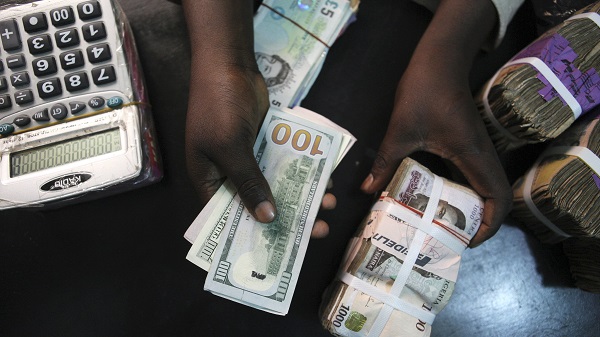
The Nigerian currency, Naira (₦), continued its battle against the United States dollar at the official foreign exchange market on Saturday.
Daily Voice reports that data from the Central Bank of Nigeria (CBN) showed that the local currency sold at ₦1,321.2160/1$ on Sunday.
The latest rate is the same as Saturday’s rate of ₦1,321.2160/1$.
At the parallel market (black market), however, the naira closed on Sunday at ₦1,400 to the dollar.
The offers by commercial banks, Bureau de Change (BDC) operators, and other foreign exchange dealers may, however, differ from the reference rates due to transaction margins and prevailing demand and supply conditions.
Market participants will continue to monitor foreign exchange inflows, demand for dollars, and CBN policies for indications of whether the naira can sustain its gains through the month.


Courts Sacks ADC Prominent Candidate

Ex Police Commissioner Dies

Minimum Wage: Proposed Salary Structure for Nigerian Workers, Levels 1–17 Emerges

Former Super Eagles Star Loses Life Savings, Duped By A Pastor of ₦1.2 Billion

I’m A Married Man, I Can Never Get Myself Involved With Such A Thing, Delta Gov Aide Reveals Why He Offered Comfort ₦500,000 Job