
News
Tinubu Govt Deploys 7,000 Forest Guards To Flush Out Bandits, Terrorists


The Federal Government has concluded plans to deploy no fewer than 7,000 newly trained forest guards to seven pilot states as part of renewed efforts to curb insecurity and reclaim Nigeria’s vast ungoverned forest spaces.
The National Security Adviser, Mallam Nuhu Ribadu, disclosed this on Saturday in Yola, the Adamawa State capital, during the graduation ceremony of the forest guards who had undergone intensive training.
Ribadu said the guards would be deployed immediately to communities worst hit by insecurity, particularly areas around forests that have become havens for criminal elements.
“We are fully aware of Nigerians’ concerns about insecurity across the country. Accordingly, the newly trained Forest Guards will be deployed immediately to all the beleaguered communities in the highlighted states, particularly around forested and ungoverned spaces,” the NSA said.
According to Ribadu, the primary responsibility of the forest guards is to gather actionable human intelligence, support ongoing security operations, and restore government presence in areas where it has been weak or completely absent for years.
He noted that the guards are expected to work closely with existing security agencies in tackling banditry, insurgency, terrorism, and other criminal activities being perpetrated from forest hideouts across the country.
“The mandate of the Forest Guards is essentially to tackle bandits, insurgents, terrorists, and other criminal elements that are exploiting Nigeria’s vast, ungoverned forest spaces,” he stated.

Ribadu explained that the guards earned their graduation after completing an intensive three-month training programme conducted simultaneously in the seven pilot states of Adamawa, Borno, Kwara, Kebbi, Niger, Sokoto and Yobe.
He said the training was designed to prepare them for the harsh realities of forest operations.
“Trainees underwent extensive physical and mental conditioning, including endurance exercises, obstacle-crossing drills, and long-range patrol simulations to prepare them for sustained forest operations,” he said.
The NSA recalled that the trainees were mobilized under the Presidential Forest Guards initiative, which was launched by President Bola Tinubu in May this year as a collaborative effort between the Federal Government and the states.
According to him, the programme reflects the administration’s resolve to address insecurity through proactive and intelligence-driven measures.
He added that instructors and coordinators for the training were drawn from several security and intelligence agencies, including the Nigerian Army, Nigerian Navy, Department of State Services, Nigeria Police Force, Nigeria Security and Civil Defense Corps, National Park Service, and the National Intelligence Agency.
Ribadu disclosed that the current deployment marks only the pilot phase of the initiative, stressing that the Federal Government is already working towards expanding the programme nationwide.
“The pilot phase of the forest guard’s rollout provides a solid foundation for a nationwide deployment after more guards are accordingly recruited,” he said.
“As we speak, processes have commenced to train new batches across additional states, ensuring rapid expansion and comprehensive national coverage.”
In his remarks, the Adamawa State Governor, Ahmadu Fintiri, charged the graduating forest guards to see their assignment as a call to national service.
He urged them to carry out their duties with professionalism and respect for civilians.
Fintiri advised the guards to treat residents of host communities with civility, noting that winning the trust of locals would be critical to the success of the initiative.
Naija News reports that the deployment of the forest guards is expected to boost security operations in forested areas that have long served as hideouts for criminal gangs across the country.

The Federal Government has approved an increase in the feeding allowance provided for members of the National Youth Service Corps (NYSC) during their orientation course, with implementation expected to begin in 2027.
The Director-General of the NYSC, Brigadier General Olakunle Nafiu, disclosed this while addressing members of the 2026 Batch C, Stream One corps members at the Cross River State Orientation Camp in Obubra.
Nafiu said the Budget Office had been informed of the upward review of the feeding budget.
He explained that the adjustment was expected to take effect next year, although the specific amount of the increase was not disclosed.
The development comes amid ongoing discussions about the welfare of Nigerian youths participating in the national service scheme.
Recall the Federal Government had began implementing reforms in the NYSC, Politics Nigeria earlier reported.
Feeding is an essential part of the orientation programme, during which corps members undergo military drills, lectures, physical exercises and other activities designed to prepare them for the service year.
The proposed increase is expected to provide additional support for feeding arrangements at orientation camps.
However, details regarding the revised allocation and how much additional funding each corps member would receive were not provided during the announcement.
Beyond the feeding allowance, the NYSC Director-General urged the corps members to develop sound financial habits and prepare responsibly for life after the service year.
He advised them to avoid unnecessary spending, exercise restraint in their financial decisions and cultivate the habit of saving.
Nafiu also commended the corps members for their resilience and willingness to serve the country, noting the importance of their contributions to national development.
He encouraged them to make responsible choices throughout their service year and take advantage of opportunities that could improve their future prospects.
The Director-General placed particular emphasis on the safety of corps members travelling between their places of residence, orientation camps and places of primary assignment.
He advised them to avoid travelling late in the evening, recommending that they stop their journeys after 6 p.m. and continue the following day.
He warned against the practice of resting in exposed public places or sleeping in groups at filling stations while travelling, noting that such situations could make corps members easy to identify.
“Refrain from resting in public places and avoid sleeping in groups at filling stations, as this makes you easily identifiable.
“Proceed to military installations, police stations or DSS offices, and contact the NYSC hotline,” he advised.
Nafiu further assured the corps members that efforts would be intensified to engage relevant stakeholders in addressing infrastructure needs at the Obubra Orientation Camp.
He said there would be further engagement with stakeholders to support the establishment and rehabilitation of facilities at the camp.
The condition of orientation camp facilities remains an important aspect of corps members’ welfare, as the camps provide accommodation, feeding, training and other essential services during the initial phase of national service.
Improved infrastructure can also support the delivery of orientation activities and help create a more suitable environment for corps members and camp officials.
The NYSC chief also encouraged the participants to acquire practical skills that could improve their employability and provide alternative sources of income after their service year.
He urged them to look beyond their academic qualifications and use the orientation period to consider additional areas of personal and professional development.
“Acquire skills in fields that will benefit you, such as cosmetology, traditional hairstyling techniques and similar disciplines,” he said.
The Director-General’s visit also provided an opportunity for camp officials to brief him on activities and conditions at the Cross River State Orientation Camp.
National Youth Service Corps NYSC
National Youth Service Corps NYSC
Presenting an assessment of the camp, the NYSC Cross River State Coordinator, Mrs Adejoke Oyenuga, described the visit as a demonstration of the Director-General’s commitment to the welfare of corps members.
Oyenuga disclosed that 1,064 corps members had been registered at the camp.
She added that the participants had successfully adapted to the structured environment and routine of the orientation programme.
The registration figure reflects the number of corps members recorded at the camp during the period covered by the assessment.
The orientation exercise is intended to familiarise participants with the objectives of the NYSC scheme, encourage discipline and teamwork, and prepare them for their subsequent deployment to places of primary assignment.
The proposed increase in feeding allocation, together with the planned engagement on camp infrastructure, forms part of the issues raised during Nafiu’s interaction with the corps members and camp management.

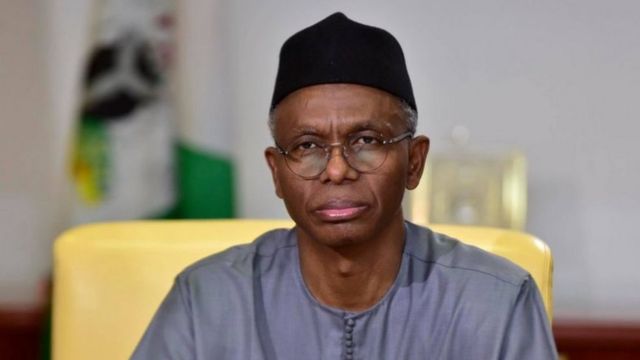
A federal high court in Abuja has thrown out a suit filed by Nasir el-Rufai, former governor of Kaduna State, in which he sought to block the Independent Corrupt Practices and Other Related Offences Commission (ICPC) and other government agencies from freezing his bank accounts or seizing his assets.
Justice Joyce Abdulmalik dismissed the case on Thursday, ruling that it amounted to an abuse of court process.
The Cable reported that El-Rufai had dragged the ICPC, the Economic and Financial Crimes Commission (EFCC), the Department of State Services (DSS) and the Attorney-General of the Federation (AGF) before the court as first to fourth respondents.
The suit, marked FHC/ABJ/CS/368/2026, was filed on February 24 by his counsel, Oluwole Iyamu, a Senior Advocate of Nigeria.
The judge found that el-Rufai had filed similar suits before both the FCT High Court and the Federal High Court, accepting the respondents’ argument that running parallel cases before courts of the same level created a risk of conflicting judgements.
Abdulmalik also held that a court could not be used to prevent law enforcement agencies from performing their statutory duties, and described the suit as speculative and lacking in merit. She struck out the names of the EFCC, DSS and AGF as respondents, finding that the suit disclosed no reasonable cause of action against them.
The ICPC had asked the court to dismiss the case outright, arguing that el-Rufai fragmented a single, ongoing criminal investigation into three separate suits filed before two different courts within 12 days.
According to the commission, he filed one suit at the Federal High Court on February 20 challenging a search warrant, a second at the FCT High Court on March 3 challenging a remand order, and this third suit on February 24.
In the dismissed suit, the former governor asked the court to restrain all four respondents from freezing his accounts or seizing his assets while the substantive matter was being heard.
He argued that the severance pay he received after his governorship, which ran from 2015 to 2023, could not reasonably be considered proceeds of unlawful activity, and that properties purchased with those funds were lawfully owned.
Beyond the injunctions, el-Rufai sought N1 billion in general, exemplary and aggravated damages, citing psychological distress, anxiety and reputational harm he said would arise from any unlawful forfeiture proceedings. He also claimed N100 million in legal costs.
The AGF’s representative, Maimuna Lami-Shiru, Director of Civil Litigation and Public Law, argued that an interim forfeiture order was not a final forfeiture order and that seeking one did not, on its own, violate el-Rufai’s rights, as the ICPC, EFCC and DSS were each legally empowered to apply to a competent court for such orders during investigations.
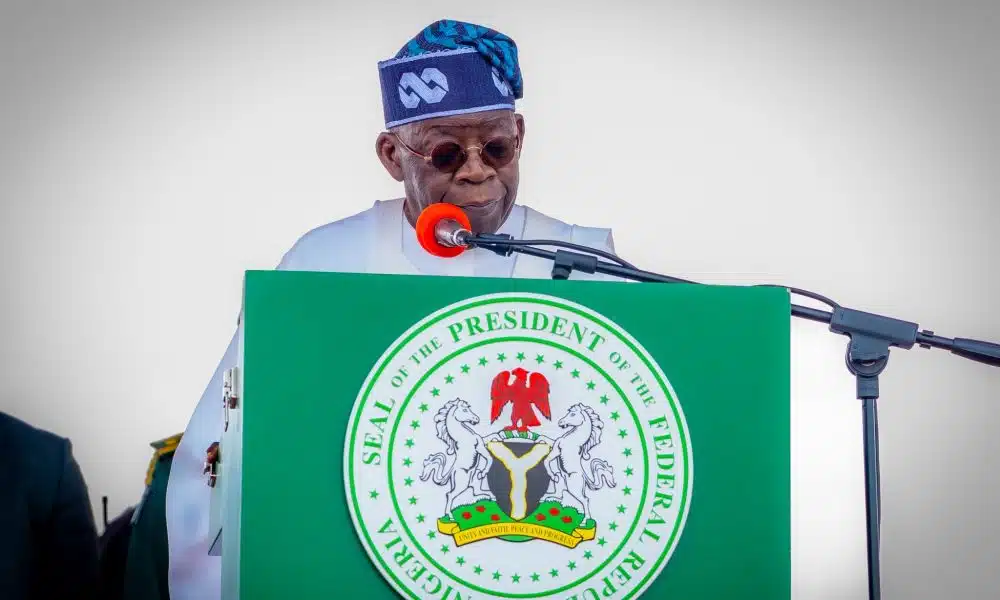
The Trade Union Congress (TUC) has called on President Bola Tinubu’s administration to take further measures to strengthen the naira, saying a stronger exchange rate would help reduce the pressure on petrol prices and the wider cost of living.
TUC President, Comrade Festus Osifo, made the demand on Wednesday in Abuja after a meeting of the union’s National Administrative Council (NAC). He said the exchange rate remained one of the major factors affecting the prices of fuel and other essential commodities in the country.
Osifo said the government should work towards moving the naira to between N700 and N800 to the dollar. He argued that the currency remained undervalued despite recent improvements in the foreign exchange market.
“We cannot be tired talking about exchange rate because it is central to literally everything. Today, the official rate is just a little above 1,300 Naira to the USD, but we see that government can still do better.”
He said a stronger naira would have an effect beyond the foreign exchange market.
According to him, it would also reduce the cost of petroleum products, food, fertiliser, equipment and other items that depend heavily on foreign exchange.
The TUC president also commended the Governor of the Central Bank of Nigeria, Olayemi Cardoso, for measures aimed at stabilising the naira and improving macroeconomic conditions.
However, Osifo said the current exchange rate was still not satisfactory to the labour centre.
“We commend the CBN governor Cardoso for the great work that he is doing in the Central Bank, but we can still do much more because we still believe that 1300 Naira to $1 is still undervalued.”
He explained that the position of the union was not that the naira should be returned to the levels where it was considered overvalued.
Rather, he said the government should pursue policies that would allow the currency to trade at a stronger and more sustainable level.
“From all international commentators, from economic think-tanks, both local and international, from scholars, currently our Naira is undervalued and is not trading at the strength it should.
“Yes, we knew that before, when it was around N400, it was overvalued, but today at N1,300 it is still undervalued. So, government should do everything possible to move the Naira to the right value.”
Osifo linked the exchange rate directly to the continued pressure on Nigerians, particularly through the prices of petroleum products.
Petrol Station Price
TUC had previously argued that intervention in the foreign exchange market could help lower the cost of crude supplied to domestic refineries and, in turn, reduce petrol prices.
The union’s latest position comes as workers continue to deal with the effects of high living costs.
TUC said the government should therefore pay attention not only to broader economic indicators but also to the impact of economic policies on households and workers.
Osifo said some macroeconomic indicators were beginning to show signs of improvement, including inflation and exchange-rate stability.
He, however, maintained that the government needed to translate such improvements into tangible relief for Nigerians.


JUST IN: Makinde Appoints New Chief of Staff After Ogunwuyi’s Resignation

Federal Government Approved Feeding Allowance For Corps Members

BREAKING: 8 State Governors Out as INEC Releases Final List for 2027 Election

FULL LIST: Top 10 “Tokunbo” Cars You Can Get For ₦3m–₦5m

Former Super Eagles Star Loses Life Savings, Duped By A Pastor of ₦1.2 Billion