
Uncategorized
Wike In Fresh Trouble: River Crisis Escalates As Top APC Governors Back Fubara


Moves by the Minister of the Federal Capital Territory, Nyesom Wike, to scuttle the 2027 re-election bid of his successor, Rivers State Governor Siminalayi Fubara, appear to have suffered a setback as several All Progressives Congress governors rallied behind the embattled Fubara.
Multiple sources in the APC confirmed to The PUNCH on Monday that the renewed hostilities between Wike and Fubara were ignited by some top APC governors’ decision to back Fubara’s second term bid, a development the FCT minister found galling and is bitterly opposed to.
The latest development was further compounded by the APC leadership’s endorsement of Fubara, who appeared to have endeared himself to the party’s top echelons, many of whom have been praising his projects across the state.
Trouble reportedly started when forces loyal to Wike attempted to back the erstwhile National Secretary of the Peoples Democratic Party, Samuel Anyanwu, as the next governor of Imo State without consulting Governor Hope Uzodimma.
The move reportedly infuriated Uzodimma, who is also the Chairman of the APC governors. Following the development, some APC governors reportedly began to mobilise other colleagues against the FCT minister.
“The plan is to weaken the FCT minister in his home state and reduce his influence and political power. This was further compounded by the fact that Wike is reportedly not favoured by some powerful members of the Tinubu administration. So, some APC governors mobilised their colleagues to support Fubara, and the result is what is playing out in the form of the renewed hostilities between the two men,” a senior APC official told The PUNCH on Monday night.
Another insider disclosed that Fubara had been emboldened by the promised backing of the APC governors for his re-election bid, hence his readiness to challenge the FCT minister’s political strength in the state.

Meanwhile, the APC National Secretary, Ajibola Basiru, and Wike on Monday traded words over Rivers politics and the minister’s insistence that he would not support Fubara for a second term.
Basiru, in a statement, asked the ex-Rivers State governor to resign his ministerial position and focus on what he described as his obsession with Rivers State politics.
He said he was unfazed by what he termed veiled threats from the minister, insisting that his political background had prepared him to withstand intimidation.
Basiru had, in an exclusive interview with Sunday PUNCH, declared support for Fubara amid ongoing confrontations between him and Wike.
The APC scribe also cautioned the South-South Chairman of the APC, Victor Giadom, against derogatory remarks about Fubara or any other governor, stating that members of the National Working Committee of the party should not take sides in political crisis.
Giadom had said Fubara could not succeed in the state without Wike’s support.
While noting that Wike is the only dominant political figure in Gokana LG where he hails from, Giadom described the minister as a “dependable leader”, adding that his influence in the LG remained unchallenged and essential for any political inroad or success in the area.
“I guarantee, on behalf of my brothers, that the Gokana people are for Wike and Tinubu, and nobody will challenge Wike’s influence in Gokana.
“Gokana is a ‘no-go area’ for anybody, even the so-called Governor, for him to win anything in Gokana, he must pass through Wike,” the APC chieftain stated, a position that irritated Basiru, who, in a statement, berated Giadom for belittling Fubara.
Basiru, while speaking late last year, during the inauguration of the newly completed Permanent Secretaries’ Quarters at Elimgbu community in Obio-Akpor Local Government Area, called on the people of Rivers State to rally behind the ruling party and support President Bola Tinubu and Governor Fubara in the 2027 general elections.
Basiru also praised Fubara for what he described as commendable governance strides and quality project delivery.
However, Wike, during his “thank-you” visit to Oyigbo Local Government Area of Rivers State on Monday, warned Basiru to steer clear of the state’s politics.
“Let me warn those who come to Rivers State, because you have heard that we have N600bn, you come here, you collect, and you open your mouth to talk anyhow.
“I say it here, take this message to your National Secretary, leave Rivers State alone. Go and ask those who have done it before. Please don’t take our support for Mr President for granted. You have to be careful with the statements you make.
“Today, you are enjoying in Osun, you don’t know those who did the work. You are opening your mouth to talk about Rivers State. Anything you see, take it.
“Go and ask other people what has happened to them before. If your hand burns, no be me burn am o (I’m not the now who burnt them). This state is a no-go area. Take the one you have taken, stop making unnecessary comments.”
Responding to Wike’s comments in a statement he personally signed on Monday, Basiru said the minister lacked the authority to interfere in the affairs of the ruling party, stressing that Wike was not a member of the APC.
Basiru maintained that contrary to Wike’s impression, he had the authority to oversee affairs of the APC across the country as the national secretary of the party.
He said, “From my record, he isn’t a member of APC. I don’t see which authority or temerity he has to be dabbling in APC affairs.
“I am the National Secretary of APC, and I don’t see any basis for him to be making comments about my activities either in Rivers State or in any part of Nigeria.
“As the National Secretary of the party, my activities aren’t confined to Osun State, contrary to his wrong impression.
“I am the head of the National Secretariat of the APC. So, he has no locus whatsoever to engage me in any political activity that concerns the APC until he joins the party.”
Basiru also dismissed allegations linking him to an alleged interest in Rivers State funds, describing the claims as baseless and inconsistent with his personal record.
“I take strong exception to his allusion that I am interested in the N600bn allocations of Rivers State. My records of service are those of integrity and commitment to service. I am not an opportunist, and I have never shied away from taking principled positions on any matter, no matter whose ox is gored.
“I am one of the young Nigerians who confronted military dictatorship. I can’t be bullied by anybody, no matter how highly placed. My records as National Secretary are above board, and I can’t be queried by somebody who isn’t a member of APC.’’
The prospect of Fubara seeking a second term has remained contentious following the political crisis in the state, which was triggered by a rift between the governor and Wike, his predecessor.
Following the intervention of Tinubu, a resolution was reportedly reached and signed by both parties. It was widely reported that a key aspect of the agreement was that Fubara would not seek re-election in 2027.
However, Basiru appeared to offer renewed hope to the governor, whom he described as one of the latest entrants into the APC.
Sequel to the political disagreements with Wike, Fubara officially left the PDP and joined the ruling APC on December 9, a move widely seen as a major political realignment ahead of the 2027 general elections.
The defection came shortly after several key members of the Rivers State House of Assembly also defected to the APC. Fubara’s switch effectively ended his long-standing ties with the PDP and positioned him as the APC’s leading figure in Rivers State.
In response, Wike has spent the past week criticising Fubara, accusing him of failing to honour agreements and questioning his prospects for re-election.
The FCT minister also claimed that Fubara lacked the support of the APC, insisting that he is being misled and would not win re-election as governor of the oil-rich state in 2027.
Backing the minister, APC National Vice Chairman for the South-South Zone, Victor Giadom, expressed support for Wike, stating that Fubara must contend with the former governor to secure re-election.
Basiru admonished Wike against causing confusion in the ruling party, saying, “Finally, my advice to Nyesom Wike is that he cannot be in the Federal Executive Council of an APC government and be causing confusion within any organ or structure of the party at any level, using the leverage of that same office. The honourable thing to do is to resign his appointment as minister.’’
The APC scribe stated that Wike’s alleged efforts to destabilise the ruling party in Rivers State would not be tolerated, adding that he cannot bring the practices of the PDP into the APC.
Basiru added that he would not be intimidated by Wike’s empty threats.
“As to his veiled threat against me, let me remind Wike that he is not God and may be overplaying his political card. My faith is in God, and I will not succumb to cheap threats such as the one from Wike. I am one of the young Nigerians who confronted military rule, fighting for democracy, when the likes of Wike were nowhere in sight.
“Let me also remind Nyesom Wike that his support for President Bola Ahmed Tinubu does not automatically make him a member of the APC. Millions of non-APC Nigerians also support Mr President, and his own is no different. His attempt to destabilise our party in Rivers State will not be tolerated, and he cannot bring the spirit of PDP into the APC.”
Reacting to the spat between Basiru and Wike, the Coalition for United Political Party National Secretary, Peter Ameh, praised the APC National Secretary for his boldness, claiming that Wike was undermining governance in both Rivers State and Nigeria as a whole.
Ameh stated, “He has been used by the APC in destroying his own party. Now he is no longer needed because the full gamut and structure of the party is now in the APC. So, what do they need him for? He is no longer needed. He has completed his assignment. The only thing he needs to do now is to join the APC and start taking instructions from the leader of the party, who is Fubara. He has to know that, based on the APC structure and their manifesto, the governor is the leader of the party.
“I do not cry or shed tears for either Fubara or for Wike. I think it is the game of President Tinubu, which he has played from day one, to make sure that he has two groups of people campaigning for him in River State, and to the detriment of the River State people who are supposed to be beneficiaries of good governance.’’
Defending Wike, Dr Chidi Lloyd, a former Chairman of Emuoha LGA, Rivers State, said Basiru couldn’t demand Wike’s resignation, saying it was the President who appointed him.
“He wasn’t the one who appointed the minister of the FCT, and cannot ask him to resign. I wish he could have said so before the 2023 elections. I wonder how many votes he gave to the All Progressives Congress in the State of Osun. You know, people forget easily. When they come to collect dollars, they forget where we are coming from.
‘’So, it’s normal, but I don’t want to believe that such a statement emanated from him. But it could be dollars because for you to get the attention of the Governor of Rivers State, you must abuse Nyesom Wike. And he forgets how the person he is talking to now, who has become his friend overnight, emerged as governor.”
Also, Chimelem Wodi, an ally of the minister, dismissed the APC scribe’s statement, arguing that only the President could ask Wike to resign.
“He has no right to say what he has said because he is not even active in his party. So, he has no such powers and I think he is trying to incur the wrath of Rivers’ people and well-meaning citizens of the state who collectively backed the FCT minister to represent them.
“Again, the FCT minister has not committed any crime, or whatsoever that will make Mr President disqualify him. Mr President has on several occasions said the FCT minister is a good man and a performer. Today, if you are talking about the best minister so far in terms of performance, Wike has done very well. So, I think the APC secretary is just a busybody,” he noted.
In a related development, the Rivers State deputy governor, Prof. Ngozi Odu and the Secretary to the Rivers State Government, Dr Benibo Anabraba, have resigned their membership of the Peoples Democratic Party.
Odu formally registered as a member of the APC in her ward in Ogba/Egbema/Ndoni Local Government Area of the state.
She completed her e-registration at Akabuka, Ward 8, Unit 11 on Sunday and thereafter, undertook the tour of the six zones of the LGA to sensitise the people on the ongoing APC e-registration exercise.
This was contained in a statement issued in Port Harcourt on Monday by the Head of Press Unit, office of the deputy governor, Owupele Benebo.
Anabraba’s resignation was contained in a letter dated January 5, 2026, and addressed to the Chairman of Ward 1, PDP in Akuku-Toru Local Government Area of Rivers State.
The letter was submitted through the party’s ward office at Bob-Manuel’s Compound, Abonnema, the council headquarters in Rivers State.
The SSG said his decision to withdraw from the PDP was purely personal, even as he expressed gratitude to the PDP for the political leverage and opportunities he enjoyed during his period of membership.
Meanwhile, former Ambassador to South Korea and Coordinator, Renewed Hope Ambassadors in Rivers State, Desmond Akawor, has said that the development of Oyigbo Local Government Area in Rivers State has been stalled under Governor Fubara.
Akawor stated this on Monday during the FCT minister’s visit to Oyigbo LGA.
He said that the people of the area elected Governor Fubara with the belief that he would continue from where Wike stopped in developing the area.
“Permit me to speak frankly. If these things are not said now, they may never be said. We elected Governor Siminalayi Fubara with the expectation that Oyigbo would benefit meaningfully from development.
“Your Excellency, development in Oyigbo has stalled. We have not moved an inch forward. The only tangible benefit Oyigbo has received is a commissioner’s slot, which was given to me. Beyond that, nothing substantial has come to our people, “ Akawor stated.
Speaking on the N600 billion in the state treasury, he warned that Oyigbo must not be excluded from the utilisation of the funds.
Rivers elders
Prominent Niger Delta activist and member of the Rivers State Elders Forum, Ann Kio-Briggs, took a swipe at Wike over his recent comments against Fubara.
Kio-Briggs described Wike’s vow not to allow Fubara to seek reelection in 2027 as both a threat to Rivers State and the people and therefore unacceptable.
She said, “Let me put it like this, Nyesom Wike is a former Governor of Rivers State. He is a son of Rivers State. Wike is the Minister of the Federal Capital and a member of the Peoples’ Democratic Party. Nobody can claim that any one individual has 100 per cent support in any state in Nigeria, in any place in the world.
“You cannot have 100 per cent support even when you put a gun to somebody’s head, the support is not 100 per cent.
“The minister is not the owner of Rivers State. He doesn’t own Rivers State, and he doesn’t own the people of Rivers State. At least, given this preamble, nobody can claim that the present governor is not the Governor of Rivers State; nobody can claim how many people can vote for him or cannot vote for him. But as of today, the Governor of Rivers State, Sir Siminalayi Fubara, has the majority of votes of the people of Rivers State.”
On the FCT minister’s moves to stop Fubara from contesting the 2027 polls, Kio-Briggs added, “It’s almost like a threat that Siminalayi Fubara is not going to come back; it’s actually a threat to Rivers State itself, and it is also a threat to the people of Rivers State themselves, and it is not acceptable.
“It is unfair to the people of Rivers State who are being put through this because of political ambition. The people of Rivers State that I know and that I’m in touch with as of today, the majority of the people are in support of the present Governor of Rivers State, Sir Siminalayi Fubara.
“And what I know is that what the Rivers people want is peace. We want peace in our state, and the people of Rivers State want to be allowed to choose a man or woman of their choice, and if at the end of the day Sir Siminalayi Fubara is the choice of the people, it is only if God allows anybody that they can overturn that choice of the people.
“But I think that any true son or daughter of Rivers State should want peace and tranquillity in our state, no matter the political party you belong to.”
A former Lagos APC spokesman, Joe Igbokwe, expressed concern over the altercation between Wike and Basiru, urging for unity within the party.
In a Facebook post on Monday, Igbokwe wrote, “The altercations between Hon Minister FCT, Nyesom Wike, and the National Secretary APC Nigeria , Ajibola Basiru, is totally uncalled for and unnecessary. It is a needless distraction.
“If, out of annoyance, you remove your cap and throw it away, a madman will pick and use it forever. This misunderstanding is totally uncalled for. Let it cease to exist now. We have a job to do. All hands should be on deck. Wike is a strong man in this government; you ignore him at your own peril. Wike is a huge pillar and an asset in the APC. He has been an LGA chairman, a minister, a former governor and FCT Minister. He is a big pillar in this government. He has a lot to bring to the table.”
●How Abdul Samad Rabiu Became the Asiwaju’s Most Visible Billionaire Companion
●Inside BUA Boss Remarkable Access to the President
●Why Rabiu Is Always in Tinubu’s Company
●Why Abdul Samad Rabiu Enjoys an Enviable Bond With President
By Uduak Akpan
From the sacred precincts of Makkah to the corridors of presidential power, the BUA billionaire’s remarkable proximity to President Bola Ahmed Tinubu tells a compelling story of friendship, trust, influence and the quiet privileges of belonging to the President’s innermost circle.
There are friendships that flourish beneath the chandeliers of power, and there are relationships that endure long after the ceremonial lights have dimmed and the corridors have emptied of their ambitious visitors. The distinction is neither trivial nor accidental. In the rarefied universe where political authority encounters stupendous private wealth, proximity is a coveted currency, access is an exquisite privilege, and the ability to walk through doors before which other powerful men must patiently wait is perhaps the most eloquent advertisement of influence.
For billionaire industrialist Abdul Samad Rabiu, the founder and chairman of BUA Group, that privilege appears to have acquired an almost effortless familiarity.
In the increasingly crowded constellation of businessmen orbiting the presidency of Bola Ahmed Tinubu, Rabiu has emerged as one of its most conspicuous and enduring stars. His presence around the Nigerian leader has become so recurrent, so conspicuous in its geographical reach and so seemingly unencumbered by the elaborate rituals of officialdom, that it invites an irresistible question: Has the Kano-born industrialist quietly become the President’s favourite billionaire?
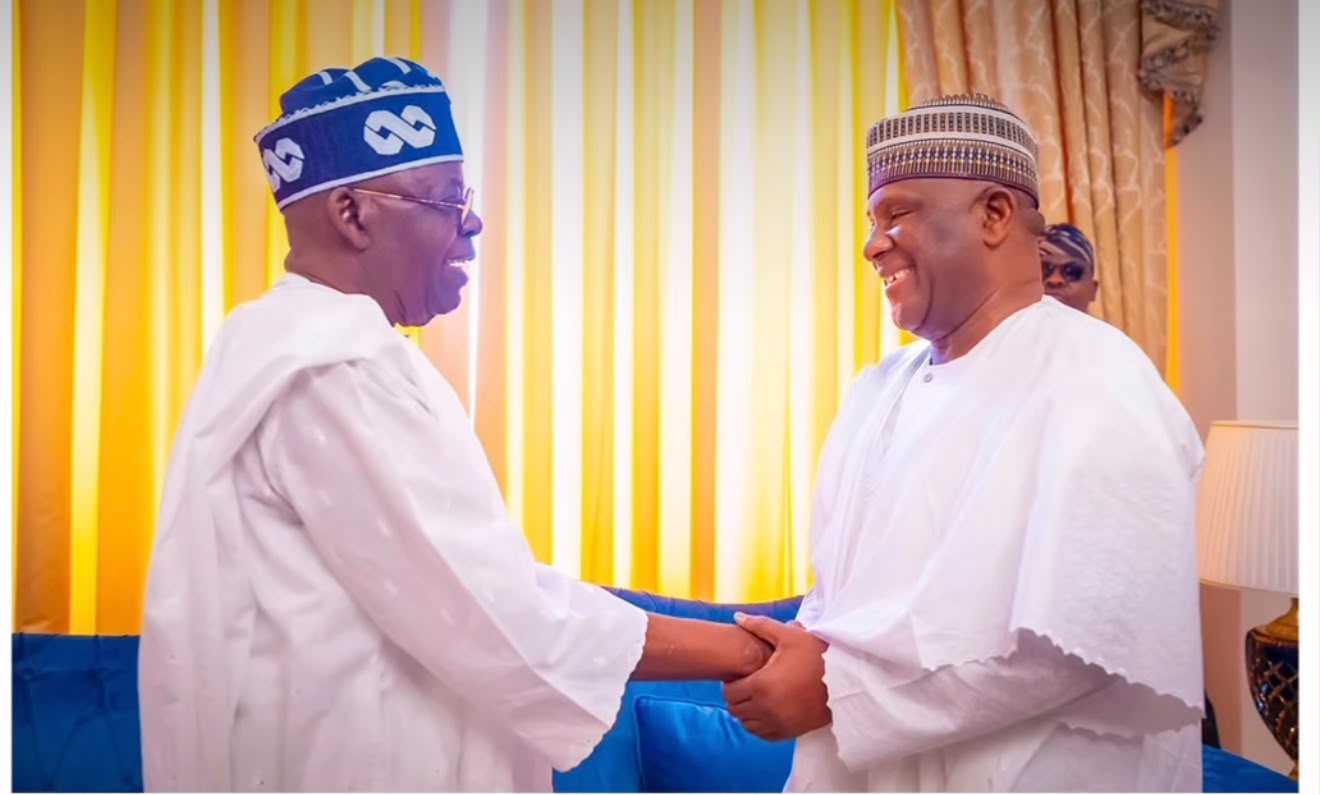
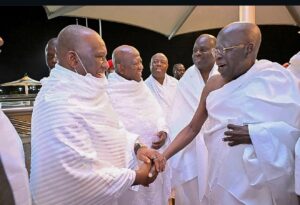
The photographs offer a fascinating chronicle. In Abuja, the men are pictured in the stately surroundings of presidential authority, exchanging the pleasantries of familiarity. In Lagos, their encounters carry the warmth of an association that Rabiu himself describes as a longstanding tradition. And now, in the sacred city of Makkah, thousands of kilometres from the familiar theatre of Nigerian politics, the billionaire has once again appeared in the President’s company, this time beneath the solemn canopy of shared faith and supplication.
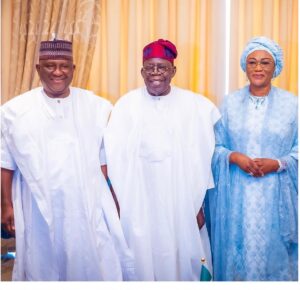
The latest images from Saudi Arabia are particularly evocative. On October 30, 2026, President Tinubu performed Umrah, offering prayers for Nigeria’s peace, unity and stability. Rabiu was among those who accompanied him, speaking of the privilege of joining the President in the holy city and praying for the country’s future. It was another chapter in a relationship that increasingly commands attention beyond the boardrooms of Nigerian enterprise.
And perhaps that is where the true significance of their association lies. For although money may purchase the grandest mansions and command the attention of the marketplace, it cannot, on its own, manufacture genuine familiarity with a President. The corridors of power are littered with wealthy supplicants who possess everything except the one commodity they desire most: the confidence of the man at the summit.
Rabiu, by every outward indication, appears to enjoy an enviable measure of that confidence.
The story stretches beyond the familiar geography of Aso Rock. In March 2026, when King Charles III hosted President Tinubu at Windsor Castle during the Nigerian leader’s state visit to the United Kingdom, Rabiu was among the distinguished guests at the royal banquet. Beneath the splendour of British royalty, amid the ancient rituals of monarchy and diplomacy, the Nigerian industrialist once again occupied a place within the President’s wider circle.
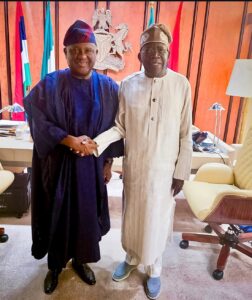
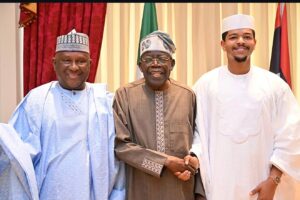
There is something profoundly revealing about such appearances. For in the theatre of power, invitations are seldom without meaning. A seat at a royal banquet may be an honour bestowed upon a distinguished businessman, but when considered alongside a succession of presidential encounters, it becomes another illustration of the remarkable visibility Rabiu enjoys in the highest reaches of national life.
From the cosmopolitan world of Paris, where Rabiu has cultivated formidable business relationships through the France-Nigeria Business Council, to the royal splendour of Windsor, the presidential residences of Lagos and Abuja, and the sacred precincts of Makkah, the industrialist’s international engagements have acquired a fascinating political dimension. His association with Tinubu appears to transcend the occasional courtesy call and the predictable handshakes of ceremonial business diplomacy.
There is, indeed, a certain elegance to the way the relationship has unfolded. Rabiu does not appear to need a public declaration of intimacy with the President. The encounters, the photographs and the recurring gestures of goodwill have done much of the talking.
Perhaps even more instructive is the President’s own assessment of the industrialist.
In August 2025, Tinubu publicly described Rabiu as a trusted partner in Nigeria’s progress, praising his entrepreneurial achievements, philanthropic commitments and contributions to domestic industrialisation. Such an endorsement, delivered from the highest office in the land, provides more tangible evidence of presidential regard than any speculation about the private conversations between the two men.
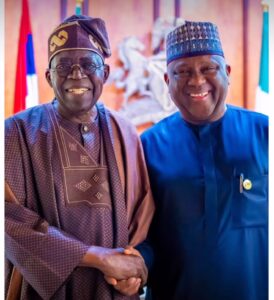
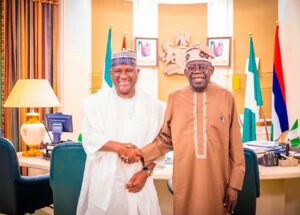
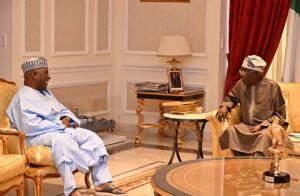
It is easy to understand the foundations upon which their association may have prospered. Tinubu is a politician whose economic philosophy places considerable emphasis on private enterprise, investment and industrial expansion. Rabiu, for his part, has spent decades constructing a sprawling commercial empire across cement, food production, sugar, infrastructure and other strategic sectors. One occupies the summit of political authority; the other commands an industrial establishment whose factories, investments and commercial ambitions are intimately connected to Nigeria’s economic fortunes.
Their interests therefore intersect at a particularly consequential point in the nation’s history.
But the relationship appears to possess something beyond the transactional necessities of government and business. In April 2026, following a visit to Tinubu’s Lagos residence, Rabiu described his habit of extending Sallah greetings to the President as a longstanding tradition. It was a seemingly simple admission, yet it illuminated a dimension of familiarity that official communiqués do not always capture.
That sense of continuity was reinforced in October when Rabiu visited the President alongside his son, Khalifa, during the country’s Independence anniversary celebrations. The photograph of father, son and President carried a symbolism that was difficult to overlook. It suggested not merely the continuing association of two powerful men but the introduction of another generation into the social landscape of that relationship.
Of course, Nigeria’s presidential orbit is inhabited by other formidable figures. Aliko Dangote, Femi Otedola, Tony Elumelu and several other leading industrialists maintain their own relationships with the administration. Each commands influence in different spheres, and the frequency of photographed meetings cannot conclusively establish who enjoys the greatest private access.
Yet Rabiu’s increasingly visible presence makes him difficult to ignore. While other billionaires are photographed with the President at economic summits, business engagements and ceremonial occasions, Rabiu’s encounters extend conspicuously into the more personal territories of religious observance, festive greetings and family introductions.
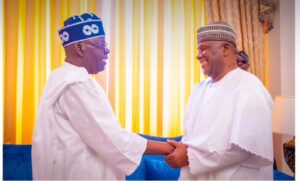
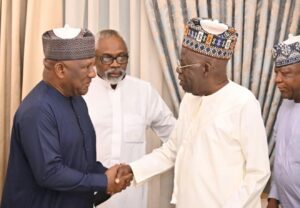
It is this combination of the official and the personal that makes his story particularly intriguing.
The latest pilgrimage to Makkah has only deepened that impression. There, stripped of the ostentatious accessories of earthly achievement, the President and the billionaire participated in a sacred exercise that recognises neither the grandeur of presidential office nor the magnificence of accumulated wealth. Before the Almighty, the distance between the occupant of Aso Rock and the chairman of BUA is rendered inconsequential.
And yet, in the earthly calculations of influence, the significance of their shared journey is unlikely to escape discerning observers.
For Rabiu, whose business interests span vital sectors of the Nigerian economy, proximity to the President can carry both opportunity and responsibility. The privilege of being heard by power is substantial, but so too is the expectation that such access should ultimately contribute to the welfare of the country, the growth of industry and the prosperity of ordinary Nigerians.
Therein lies the larger significance of his association with Tinubu. The true measure of influence is not merely the number of presidential photographs adorning a billionaire’s collection, nor the ease with which he enters rooms inaccessible to lesser mortals. It is what that influence accomplishes when the cameras have been lowered, the handshakes concluded and the doors closed upon conversations the public may never hear.
Still, the images remain compelling. They form a growing album of political familiarity and personal regard, each photograph another fragment in the portrait of a businessman whose relationship with the President has become one of the more fascinating narratives at the intersection of Nigerian wealth and power.
And perhaps, years from now, when historians attempt to reconstruct the intimate architecture of the Tinubu presidency, the photographs of Abdul Samad Rabiu will offer an intriguing glimpse into the social geography of the era.
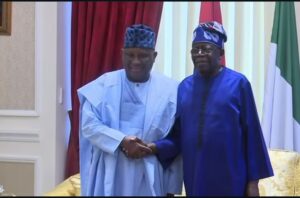
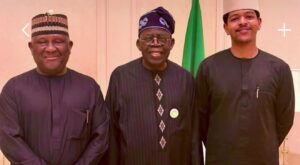
For now, one conclusion seems increasingly difficult to dispute: among Nigeria’s wealthiest entrepreneurs, Rabiu has established himself as one of the most visible and seemingly welcome presences in President Tinubu’s circle.
From the hallowed chambers of Aso Rock to the royal grandeur of Windsor and the sacred sanctuary of Makkah, the story continues to unfold with a remarkable consistency.
For in the magnificent theatre of power, many men possess the wealth to reach the palace gates. Far fewer appear to possess the familiarity that makes the welcome seem assured. And Abdul Samad Rabiu, it would seem, has mastered the delicate art of being not merely received, but repeatedly welcomed.

A funeral ceremony in Aleto, Eleme Local Government Area of Rivers State, reportedly turned tragic on Friday after a pastor collapsed and died while delivering a sermon on the certainty of death.
The cleric was identified as Deacon Steve Eyo, the Resident Pastor of the Redeemed Christian Church of God (RCCG), Aleto.
He was preaching before more than 300 mourners when he suddenly collapsed as he was concluding his message.
Eyo’s sermon was titled “The Certainty of Death and Hope Beyond.” According to eyewitness accounts cited by multiple local news outlets, he began preaching at about 1:10 p.m., speaking about the inevitability of death and urging those present to live their lives with the awareness that nobody knows when death will come.
In illustrating his message, the pastor reportedly compared life to going to the market, explaining that some people leave early while others remain until later, just as some people die young while others live longer.
About 15 minutes into the sermon, at approximately 1:25 p.m., Eyo reportedly collapsed while rounding off his message.
His sudden fall initially confused some mourners, with eyewitnesses saying some thought the pastor was demonstrating the suddenness of death as part of his sermon. The situation quickly became clear, however, as church ministers, choir members and others rushed to his aid.
People at the scene reportedly prayed for him while individuals with medical knowledge attempted to administer first aid. He was subsequently taken to a nearby medical facility in the same ambulance that had been hired to convey the remains of the deceased person whose burial was taking place.
He was reportedly confirmed dead at the hospital, after which his remains were taken to a mortuary.
The circumstances surrounding Eyo’s death have not been publicly established in the reports reviewed, and no specific medical cause of death was disclosed.
However, the timing of the incident has left mourners and members of the Aleto community deeply shocked because of the subject of his final sermon.
According to eyewitness accounts, Eyo had urged the congregation to “number your days and prepare, for it can happen anytime” shortly before he collapsed.
The incident transformed what had begun as a solemn farewell for one deceased person into another moment of mourning, as attendees were confronted with the sudden death of the minister delivering the funeral sermon.
Uncategorized
VIDEO: ‘I Was Just Being Myself’ – Poco Lee Breaks Silence After Release From UK Prison

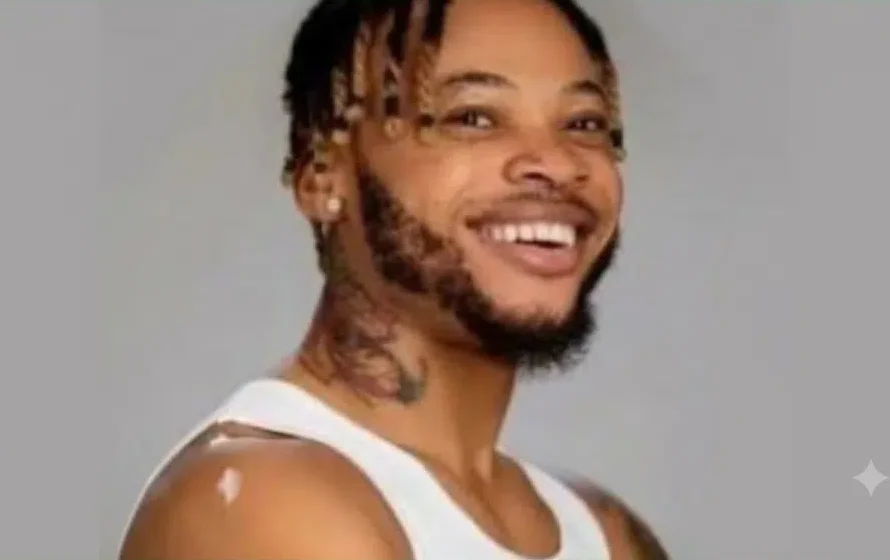
Nigerian dancer cum entertainer, Iweh Odinaka, popularly known as Poco Lee, has spoken about his ordeal following his release on bail in the United Kingdom.
Naija News recalls that Snaresbrook Crown Court had earlier fixed September 15 for plea and trial preparation in Poco Lee’s sexual offence case.
The case stems from Poco Lee’s visit to the UK in August for the Davido and Friends concert, which was held at the Crystal Palace Bowl in London on August 14.
However, during a video call with social commentator, VeryDarkMan, Poco Lee said his main concern while he was away was the welfare of his associates and the impact of his absence on their business activities.
The dancer maintained that he is innocent of the sexual allegation and his mind is pure.
He said, “I was just being myself. God sees my heart. My only worries were about my people. Jago could not do anything business, and I didn’t want to stress anyone.
“If I was inside there and I did what I was accused of, I would have felt I was paying for my sins, but since I knew I didn’t do what I was accused of, my mind is pure.
“Nobody would have wanted to associate themselves with something like that, but Burna Boy stood by me, Jago and some of my other guys.”
VeryDarkMan, who shared the video call on social media, also praised Nigerian singers, Burna Boy and Rahman Jago for their support.
In the caption accompanying the video, VDM wrote: “I just got off a video call with @rahman_jago_ and @poco_lee. I guess the next narrative will be this is AI. THERE IS A REASON WHY I BRAG WITH INTEGRITY, I AM NOBODY’S mate, WHEN I talk take it to the bank.”


Judgement On ADC Will Lead To Your Downfall – US Firm Warns Tinubu

NDC Raises Alarm Over Fresh Restrictions In Abuja, Fingers APC


