
News
NASS To Harmonise Electoral Bill On Monday

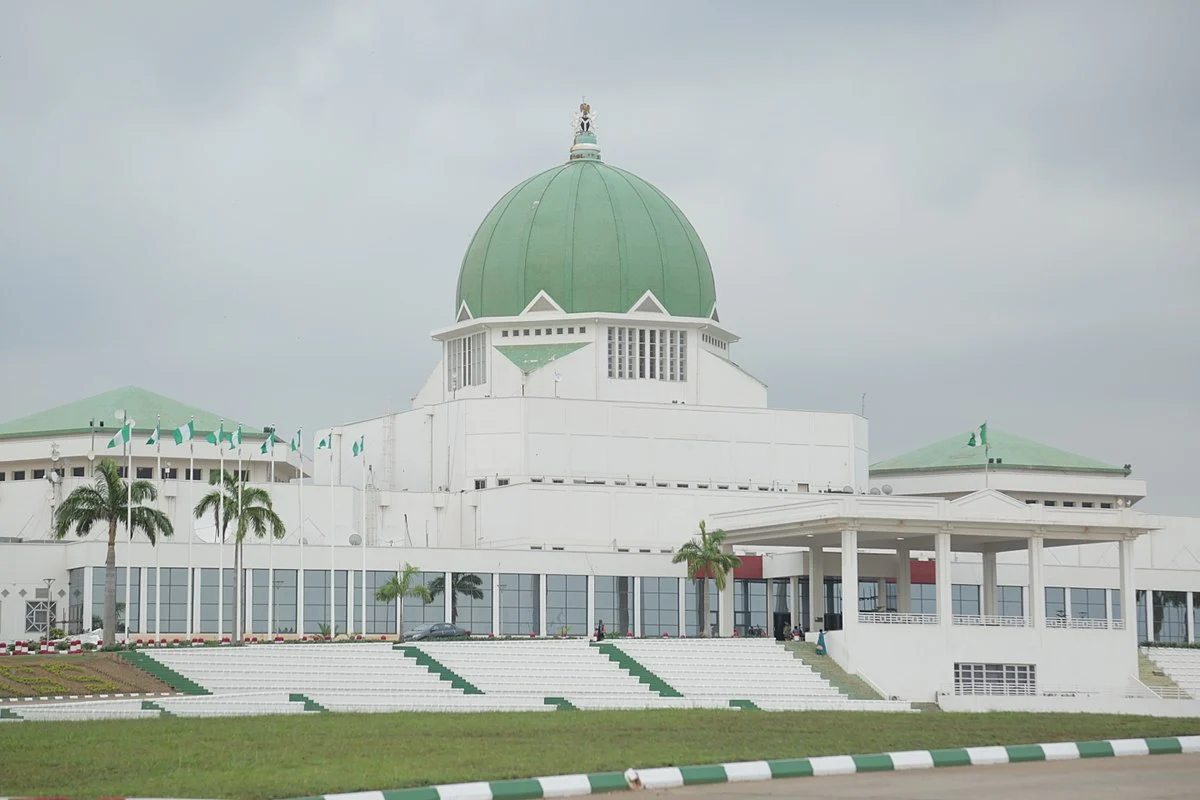
Members of the Joint National Assembly Conference Committee constituted to reconcile differences in the Electoral Amendment Bill passed separately by the Senate and the House of Representatives are expected to meet on Monday as lawmakers move to transmit a harmonised version to President Bola Tinubu for assent.
Findings by The PUNCH on Thursday showed that the joint panel, made up of members from both chambers, has been given a one-week window to resolve contentious provisions in the bill — notably those dealing with the electronic transmission of election results.
The decision to harmonise the bill follows the passage of different versions by the Senate and the House, particularly on the role of technology in result collation and transmission. Under legislative procedure, where both chambers pass varying texts of the same bill, a conference committee is set up to produce a single version acceptable to both sides before transmission to the President.
The current amendment process is coming on the heels of the controversies that trailed the 2023 general election, especially the failure of the Independent National Electoral Commission to upload presidential election results to its Result Viewing Portal in real time.
Civil society groups, opposition parties and several lawmakers have since pressed for clearer statutory backing for the electronic transmission of results to prevent ambiguity and strengthen electoral transparency ahead of 2027.
Although many lawmakers have remained silent on the likely outcome of the harmonisation process, some admitted privately that they were keenly awaiting the meeting to know the committee’s final position on the disputed clauses.
A National Assembly source confirmed that the harmonisation exercise would begin on Monday.
“It is taking place on Monday,” the source stated via a WhatsApp message.
When approached after a recent interaction with journalists on the proposed meeting date, the lawmaker representing Bayelsa West, Senator Seriake Dickson, told The PUNCH Monday was a likely date for the harmonisation of the bill.
“I don’t know the actual date since I am not a member of the Conference Committee. But we are hoping it may take place next Monday,” he said.
Efforts to obtain clarification from the Senate spokesman, Senator Yemi Adaramodu, and the Chairman of the Senate Committee on Judiciary, Human Rights and Legal Matters, Senator Niyi Adegbonmire, were unsuccessful, as they neither answered calls nor responded to text messages seeking comment.
The development comes amid heightened public interest in the fate of the Electoral Amendment Bill, following recent disagreements over provisions relating to the electronic transmission of results.
The PUNCH had earlier reported that Dickson, on Wednesday, urged members of the Conference Committee to adopt entirely the version passed by the House of Representatives, warning that weakening the electronic transmission clause could erode public confidence in the electoral process.
The former Bayelsa State governor spoke in Abuja, less than 48 hours after the Senate reversed an earlier position and restored electronic transmission of election results to INEC’s Result Viewing Portal, IReV, while allowing manual collation as a fallback in the event of technological failure.
Dickson, a member of the Senate Committee on Electoral Matters, maintained that extensive consultations had been undertaken by lawmakers and stakeholders to strengthen the country’s electoral legal framework before the Senate’s initial alterations.
Senate President Godswill Akpabio had also indicated that the harmonised bill would be transmitted to President Tinubu for assent before the end of the month, raising expectations that the amendments could be concluded well ahead of preparations for the 2027 general election.
Meanwhile, a source familiar with the process told The PUNCH that Senator Simon Lalong, representing Plateau South, had earlier confirmed Monday, February 16, 2026, as the date for the committee meeting to reconcile the bill ahead of its transmission for presidential assent.
“Senator Lalong has given Monday as the day of the meeting on the bill. I think the members may have been excused from the ongoing budget defence exercise by the various Ministries, Departments and Agencies to work on the bill, given its importance to the 2027 election,” the source said.
Although he did not expressly confirm the Monday meeting, the House spokesman, Akin Rotimi, said members drawn from both chambers had already begun consultations.
“They are already engaging,” he said, without offering further details.
In the same vein, two members of the committee, Sada Soli (APC, Katsina) and Iduma Igariwey (PDP, Ebonyi) said the meeting will likely hold on Monday.
“It’s possible but not yet confirmed,” Soli said while Igariwey added, “not yet confirmed.”
The outcome of the meeting is expected to determine the final shape of the amended Electoral Act and signal the National Assembly’s position on the central issue that has dominated electoral reform debates since the last general election — the place of technology in safeguarding the credibility of Nigeria’s polls.
Although the House approved real-time transmission of election results in Section 60 (3), the Senate’s version excluded it but bowed to pressure earlier in the week to approve electronic transmission with a provision that, when technology fails, manual transmission will suffice.
The House version read, “The Commission shall electronically transmit the results from each polling unit to the IREV portal in real time, and such transmission shall be done simultaneously with the physical collation of results.”
On its part, the Senate version provides that “The Presiding Officer shall electronically transmit the results from each polling unit to the INEC Result Viewing Portal, and such transmission shall be done after the prescribed Form EC8A has been signed and stamped by the Presiding Officer and countersigned by the candidates or polling agents where available at the polling unit.
“But if the electronic transmission of the result fails as a result of communication failure, and it becomes impossible to transmit the result electronically, the signed and stamped Form EC8A by the Presiding Officer, and countersigned by the candidates or polling agents where available, shall in such a case be the primary source of collation and declaration of results.”
House okays affidavit
The House also strengthened Section 31 of the Principal Act, which focused on the withdrawal of a candidate in an election.
In the Electoral Act 2022, the Section read, “A candidate may withdraw his or her candidature by notice in writing signed by him and delivered personally by the candidate to the political party that nominated him for election, and the political party shall convey such withdrawal to the Commission not later than 90 days to the election.”
The version amended by the 10th House read, “A candidate may withdraw his or her candidature by notice in writing signed by him together with a sworn affidavit and delivered personally by the candidate to the political party that nominated him for election, and the political party shall convey such withdrawal to the Commission not later than 90 days to the election.”
Tribunal timeline reduced
The House also amended Section 137 of the Principal Act on the Establishment of Area Council Election Appeal Tribunal, proposing in sub-section 7 that “The tribunal shall deliver a judgment in writing within 150 days from the date of the filing of the petition. This contrasts with the Principal Act, which provides for 180 days from the date a petition is filed.”
Meanwhile, the Senate stated that real-time transmission of election result does not automatically translate to electronic voting, contrary to insinuations in some quarters in the past few days.
The Senator representing Ondo Central, Adeniyi Adegbonmire, made this known while speaking on an Arise News programme on Thursday.
According to him, INEC does not have the capacity to conduct e-voting at present, noting that the Commission has clarified that the Result Viewing Portal (IReV) “is not an e-voting platform, but a platform where the election results that have been manually counted and declared at the polling units are uploaded and publicised.”
Adeggbonmire, who chairs the Senate Ad-hoc Panel to Review the 2026 Electoral Bill, said Nigeria had not transitioned to an e-voting system, contrary to what some people had insinuated or what some media platforms want the public to believe.
He said, “People need to understand what real-time means. Real-time transmission can only happen if INEC adopts an e-voting system. For now, INEC does not have the capability for e-voting. Maybe in two or three years, we can adopt e-voting. But as of today, INEC has not put an e-voting system in place.
“This is the misconception that the media has brought into play. The provision you keep emphasising says the presiding officer will first fill in the result manually in Form EC8A. It is the Form EC8A that has been filled manually that will be transmitted to IReV. If we change ‘transmit’ to ‘upload’ in the Electoral Bill, 2026, will it change anything? The answer is ‘No.’”
Adegbonmire, a Senior Advocate of Nigeria and Chairman, Senate Committee on Judiciary, Human Rights and Legal Matters, further explained the misconception about IReV, which, according to him, should be corrected considering its implications for the country’s peaceful co-existence.
The lawmaker, therefore, pointed out that IReV “is not a voting platform, but a podium meant to publicise election results already declared by the presiding officers at polling units across the federation.
“It is important, first of all, to understand what IReV does because there is a lot of misconception about it or deliberate misrepresentation of what it stands for. The Senate never said INEC should not use IReV for the 2027 elections. So, what is IReV? It is a software developed by INEC to publicise the results by INEC.
“IReV is not an e-voting platform as some people think. This is the misinformation some people are peddling. This is not an emotional argument. I heard people say the version of the House of Representatives should be adopted. It is a sheer misconception. What does the version say? It simply says the presiding officer shall electronically transmit the result from each polling unit to the IReV portal in real time, and such transmission shall be done after Form EC8A has been signed by the presiding officer and countersigned by the candidate or polling agent at the polling unit.”
He also explained that IReV, as an electronic platform to display election results, had “a pattern of working, and the National Assembly cannot change the software by mere legislation. It was a sheer misconception to conclude that the Senate declined the use of IReV for the transmission of election results.”
He argued that semantics won’t change what the platform was meant to achieve, saying, “whether we call it upload, transfer, or transmission, as far as it says IReV must be used, it will be used in the manner it was configured. That is the point I am making. You must first manually write out the figures. After you have written out the figures at the polling unit, then you can upload, transfer or transmit, depending on the nomenclature we want to use.
“When you have not complied with the proper filing of Form EC8A, you cannot transfer, transmit or upload it. That is what people must understand. When you talk about transmission, it has nothing to do with the sanctity of the voting process. If you are given a ballot paper to thumbprint, it is counted manually after the election. It is not IReV or BVAS that counts ballots. The vote count is manually done.
“In my own case, for instance, I come from Akure. I vote in Akure. All the electoral materials are brought into Akure two to three days before the election. They are kept in the Central Bank of Nigeria (CBN). The night before, they start transporting them to different locations across the state. In Ondo State, there are places where one has to travel for eight hours to get there. In some cases, they have to use boats to get to the riverine areas.
“This means voting cannot start at the same time nationwide. In Akure, voting can start at 10am. In other parts of the state, voting may not start until 2pm, even some at 4pm in some cases. Most likely, they will finish the vote count by 10pm.
“In Akure, for instance, the presiding officers will upload election results at polling units at 4pm because voting is concluded as scheduled. In Arugbo Ijaw, however, voting kicks off at 4. This is the reality in the country, and we must take it into consideration in our reforms. The truth of the matter is that you are not going to see how you voted on the IReV because it is not an e-voting platform.
“What the Senate has done is that we do not want a situation in which somebody will say this man ought to have uploaded this result at 2pm. You and I know that it is not every time you put something on the Internet that it will go through freely. If we are not careful, the smallest thing will spark an issue.
“If somebody said the election result was declared at 2pm, how did you put it on IReV at 7pm? They will simply assume that the election results must have been rigged. The media needs to be careful how they report all these issues.”
Agbakoba reacts
A former President of the Nigerian Bar Association, Dr Olisa Agbakoba, on Thursday called on the National Assembly to amend the Electoral Act to allow mandatory real-time electronic transmission of election results.
In a statement made available to The PUNCH on Thursday, Agbakoba argued that real-time transmission would guarantee transparency and credibility, similar to the Option A4 system used in the June 12, 1993 election, widely regarded as Nigeria’s freest and fairest poll.
He said, “The National Assembly must act decisively to embed mandatory real-time electronic transmission of results in the Electoral Act. Democracy demands nothing less.”
Agbakoba described the June 12 election as Nigeria’s benchmark for electoral credibility, attributing its success to transparency rather than technology.
“The Option A4 system allowed voters, party agents and observers to openly verify results at polling units before collation,” he said.
“If manual transparency could deliver such credibility in 1993, imagine the transformative impact of real-time electronic transmission in our digital age.”
He maintained that Nigeria’s electoral framework remained flawed despite previous amendments to the Electoral Act.
According to him, the country’s electoral crisis is rooted in “the absence of strong regulatory processes backed by express statutory authority,” noting that repeated amendments have failed to address fundamental defects.
“With every election cycle, we rush to amend the Electoral Act, yet we continue to grapple with the same challenges. This vicious cycle must end,” he said.
Agbakoba added that persistent legal uncertainty continued to undermine democratic outcomes and pushed the courts into the role of deciding election winners.
The lawyer said the 2023 general election exposed weaknesses in Nigeria’s electoral legal framework, particularly on electronic transmission of results, as the Supreme Court ruled that the IReV innovation lacked legal force.
“The court was clear that because electronic transmission is not expressly provided for in the Electoral Act 2022, it is not legally binding,” he stated.
“The IReV portal, according to the court, serves merely for public viewing and is not admissible evidence of results in election petitions.
“The ruling sent an unmistakable message that without explicit statutory provision, electronic transmission remains optional and legally inconsequential, no matter how transparent or efficient it may be.”
He warned that the legal gap had imposed an “insurmountable evidentiary burden” on election petitioners, making it practically impossible to successfully challenge flawed elections.
Citing the late Justice Pat Acholonu’s concurring opinion in Buhari v. Obasanjo (2005), Agbakoba recalled the jurist’s observation that a petitioner would need between 250,000 and 300,000 witnesses nationwide to prove a presidential election case.
“Justice Acholonu warned that even a successful challenge could amount to an ‘empty victory bereft of any substance’ because the president-elect might already have completed the four-year tenure. Tragically, no presidential election petition has succeeded since 1999,” he said.
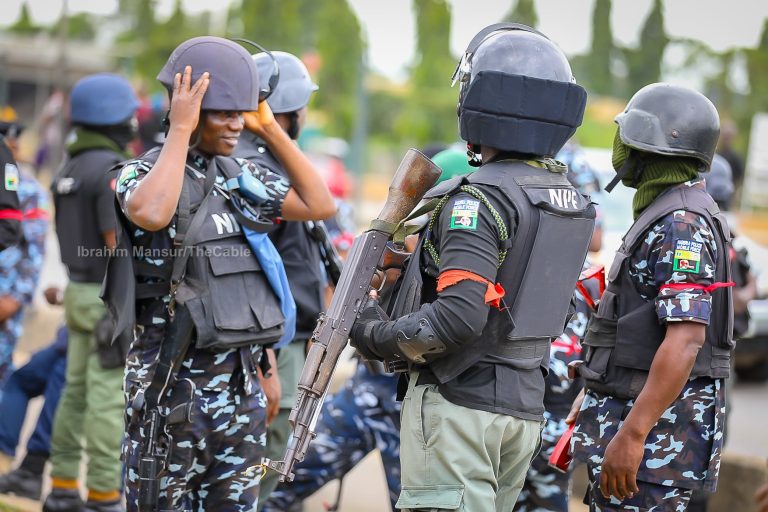
Mohammed Idris, minister of information and national orientation, says the Nigeria police force (NPF) has carried out a large-scale redeployment of officers previously assigned VIP protection duties.
According to the minister, the operatives have been sent to communities in Kwara, Plateau, Benue, Kogi, Nasarawa, Niger, and the Federal Capital Territory (FCT) to carry out “core community policing functions”.
He said the redeployment is part of intensified security measures under Operation Savannah Shield, aimed at protecting vulnerable communities in the north-central region, following recent terrorist attacks, including one in Kwara that claimed about 75 lives.
President Bola Tinubu had condemned the Kwara killings as “beastly” and “heartless”, while directing full state resources against perpetrators targeting civilians.
Idris said enhanced deployments now include better intelligence, rapid-response units, and increased visible policing around places of worship.
The information minister said the president has reiterated that Nigeria’s counter-terrorism operations remain fully Nigerian-led, while welcoming selective international cooperation on intelligence, surveillance, and reconnaissance from partners like the United States.
“With heightened deployments now underway in at-risk communities, President Tinubu is demonstrating an unwavering commitment to safeguarding Nigerian lives and upholding the fundamental right of all citizens to worship freely,” he said.
“Enhanced security around places of worship, including increased visible presence around churches on Sundays, is being implemented in close coordination with the local community and faith leaders.
“Further strengthening the security architecture, the Nigeria Police Force has executed a large-scale redeployment of officers previously assigned to VIP escort duties nationwide.
“These personnel have been returned to core community policing functions, delivering measurable improvements in security presence across Kwara, Plateau, Benue, Kogi, Nasarawa, Niger, and the Federal Capital Territory.”
On November 23, 2025, Tinubu ordered the immediate withdrawal of police officers attached to VIPs across the country.
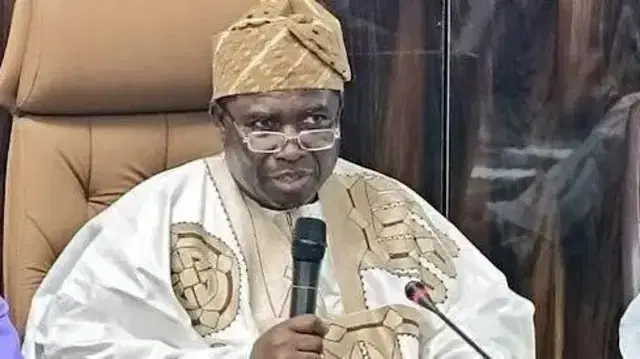
The Independent National Electoral Commission, INEC, has proposed N873.778 billion for the conduct of the 2027 general election.
INEC Chairman, Prof. Joash Amupitan, disclosed this yesterday, while presenting the Commission’s 2026 budget proposal and the estimated cost of the 2027 elections before the National Assembly Joint Committee on Electoral Matters.
He clarified that the N873.778 billion election budget is distinct from INEC’s N171 billion proposal for the 2026 fiscal year, which covers routine operations, including by-elections and off-cycle polls.
According to Amupitan, the projected cost for the 2027 elections excludes a fresh request by the National Youth Service Corps, NYSC, seeking an upward review of allowances for corps members deployed as ad-hoc election staff.
Breaking down the proposed election budget approaching N1 trillion, the INEC chairman said it was structured into five major components: N379.748 billion for operational expenses; N92.317 billion for administrative costs; N209.206 billion for technology; N154.905 billion for capital expenditure; and N42.608 billion for miscellaneous items.
He noted that the proposal was prepared in compliance with Section 3(3) of the Electoral Act 2022, which mandates the Commission to submit its election budget at least one year before a general election.
On the 2026 fiscal framework, Amupitan revealed that the Ministry of Finance issued INEC a budget ceiling of N140 billion. However, the Commission is proposing N171 billion to meet its obligations. The breakdown include N109 billion for personnel costs, N18.7 billion for overheads, N42.63 billion for election-related activities, and N1.4 billion for capital projects.
The INEC chairman criticised the envelope budgeting system, arguing that it does not align with the Commission’s operational realities, which often demand urgent and flexible funding.
He also identified the absence of a dedicated communications network as a major challenge, stressing that developing an independent infrastructure would enhance transparency and enable Nigerians to hold the Commission accountable in the event of technical failures.
Lawmakers at the session raised concern over funding Mechanism for the country.
Senator Adams Oshiomhole (Edo North) argued that given INEC’s sensitive constitutional mandate, its budget should not be subjected to rigid external frameworks.
He called for the removal of the envelope system in the Commission’s case and urged Parliament to consider its actual funding requirements to forestall complaints of underfunding.
Similarly, Edo lawmaker, Billy Osawaru advocated placing INEC’s budget on first-line charge in line with constitutional provisions, with full and timely releases to ensure effective planning and implementation.
The Joint Committee subsequently approved a motion recommending the one-time release of the Commission’s annual budget.
It also indicated that it would examine the NYSC’s separate request for about N32 billion to raise election duty allowances for corps members to N125,000.
Chairman of the Senate Committee on INEC, Senator Simon Lalong, assured the Commission of legislative backing to ensure adequate preparation for the 2027 polls.
However, Chairman of the House Committee on Electoral Matters, Mr. Bayo Balogun, while pledging support, cautioned the Commission against making commitments it may struggle to fulfil.
He referenced the last general election, noting that INEC had created strong expectations about uploading results to the INEC Result Viewing (IREV) portal, which gave the impression of real-time monitoring.
“Meanwhile, the IREV was not even in the Electoral Act; it was only in INEC regulations. So, be careful how you make promises,” Balogun warned.
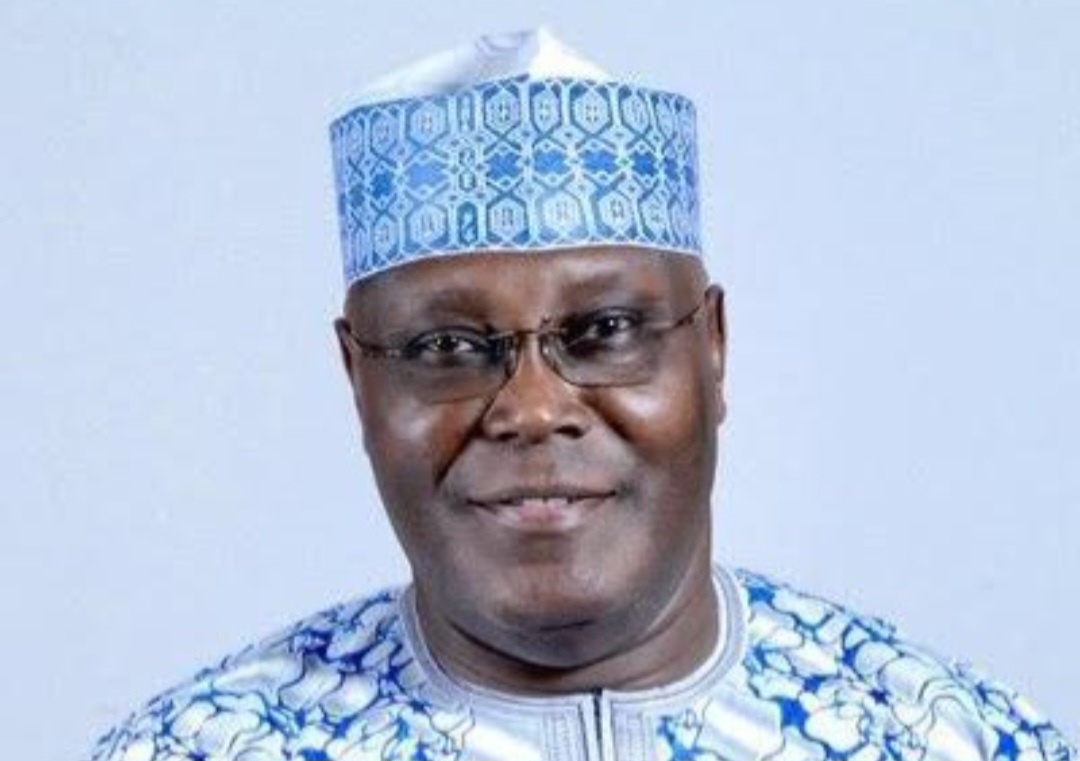
Former Vice President Atiku Abubakar has condemned the attempted arrest of former Kaduna State Governor Nasir El-Rufai, describing the incident as a national embarrassment.
Atiku made the remark on Thursday during a solidarity visit to El-Rufai at his residence in Abuja.
Politics Nigeria earlier reported that operatives of the Department of State Services (DSS) allegedly attempted to arrest El-Rufai, a development that has triggered reactions from various quarters.
The visit followed an incident at the Nnamdi Azikiwe International Airport, Abuja, where operatives reportedly tried to detain El-Rufai shortly after he arrived from Cairo, Egypt, aboard an EgyptAir flight.
Former Minister of Transport, Rotimi Amaechi, had earlier paid a similar solidarity visit to the former governor.
Speaking during the visit, Atiku said Nigeria is governed by the rule of law and that there was no justification for the manner in which El-Rufai was treated.
“They could have allowed you to return home and then invited you if necessary. You have held high public offices, as a minister and as a governor and discharged your duties successfully.
“There was no need to embarrass you, because by doing so, they embarrass the entire society. We will stand by you and every law-abiding citizen of Nigeria,” he said.


PDP Crisis Deepens As Another Governor Hints At APC Defection

‘How Murtala Muhammed Was Assassinated, Other Untold Stories’

Revealed: Police Officers Withdrawn From VIPs Deployed in InSecurity-Prone Communities

Former Super Eagles Star Loses Life Savings, Duped By A Pastor of ₦1.2 Billion

These ’90s fashion trends are making a comeback in 2017

I’m A Married Man, I Can Never Get Myself Involved With Such A Thing, Delta Gov Aide Reveals Why He Offered Comfort ₦500,000 Job
-
 Politics1 day ago
Terrorism: NNPP Breaks Silence To US Move To Blacklist Kwankwaso
-
 Politics1 day ago
Umahi Speaks on Resigning as Tinubu’s Minister, Gives Condition
-

 Uncategorized1 day ago
Terrorist Kidnap Kaduna Lawmaker While Returning From Official Trip
-
 News1 day ago
El-Rufai To Return To Nigeria, Storm EFCC HQ
-
 News19 hours ago
Senate Threatens To Withhold Approval Of Accountant‑General’s 2026 Budget
-
 Uncategorized7 hours ago
Impersonation: Army Arrests Man Posing As Military General
-
 Politics2 hours ago
PDP Crisis Deepens As Another Governor Hints At APC Defection
-

 Business19 hours ago
FG Issues Ban on Naira Spraying, Money Bouquets as Valentine’s Day Nears