
News
Tension In APC As NWC Dumps Tinubu’s Governor’s Ticket Control

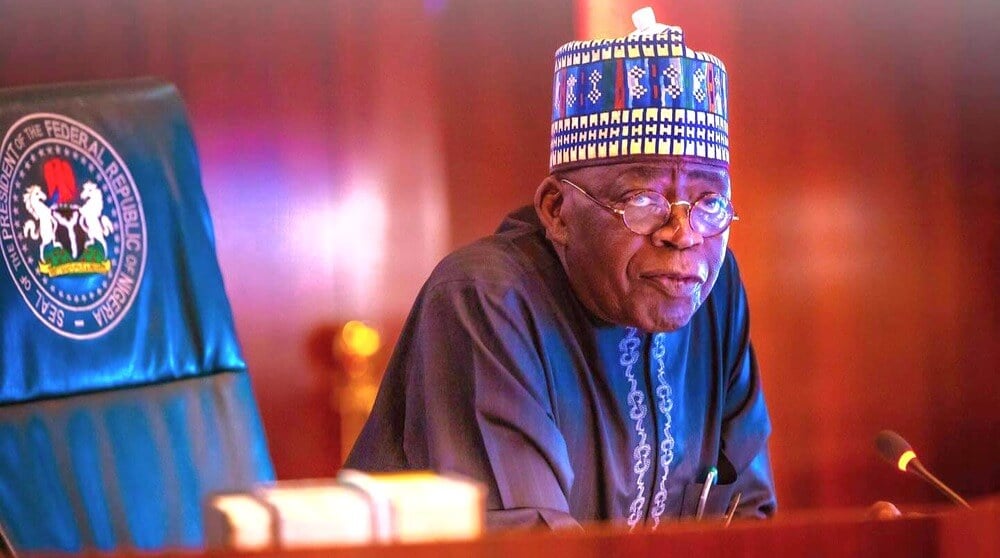
There is growing tension within the All Progressives Congress (APC) as members of the party’s National Working Committee (NWC) move to resist President Bola Tinubu’s directive granting state governors significant control over party tickets ahead of the primaries.
An uneasy calm pervades the party, with findings indicating a widening rift between the presidency and the APC leadership.
Insiders warn that the directive risks eroding the authority of the party’s central structure, weakening internal democracy and triggering widespread disaffection across states.
The development followed Tinubu’s conferment of powers on the 31 governors under the APC to decide the fate of aspirants in their states ahead of the 2027 general election.
Sources within the NWC told THE WHISTLER that the president’s position, which effectively empowers governors to determine candidates in their states, has sidelined the party leadership and undermined its relevance.
“What the president has done is to remove powers from the party leadership, make them redundant and kill the party,” an NWC member said.
Consequently, multiple sources disclosed that some within the NWC are already weighing options to push back against the directive, including leveraging aggrieved aspirants as a pressure point to force a rethink.

According to one official, “If this stands, the party structure becomes irrelevant. There are already suggestions that those who feel shortchanged should be allowed to ventilate their grievances, even if it unsettles the system, in order to compel a reversal.”
The controversy follows recent remarks by President Tinubu in which he signalled that state governors should take the lead in determining party candidates ahead of the primaries, arguing that they best understand the political dynamics within their states and should therefore guide the process.
The president said this was necessary to preserve the party’s unity and cohesion ahead of the poll in 2027.
However, party insiders insist the pronouncement has had unintended consequences, emboldening state-level power blocs, intensifying rivalries, and triggering open contests for control.
Infighting Spreads Across States
The directive has already fuelled internal battles in several states and widened already existing crises in some states. In Abia State, a fierce supremacy contest has erupted between Deputy Speaker of the House of Representatives, Benjamin Kalu, and former governor, Senator Orji Uzor Kalu, with both men laying claim to presidential backing as the party’s leader in the state.
Abia is led by a governor under the platform of the Labour Party, Dr Alex Otti.
The Deputy Speaker said he has been chosen by Tinubu to lead the APC in the state.
Orji Uzor Kalu – an outspoken campaigner for Tinubu’s second term – has dismissed the claims, insisting that Tinubu chose him to lead the party in the state.
Delta, Nasarawa Crises Deepen
In Delta State, the directive has intensified a brewing contest between Senator Ifeanyi Okowa and former Deputy Senate President Ovie Omo-Agege. Governor Sheriff Oborevwori is reportedly backing Okowa, his predecessor, for a return to the Senate – placing him at odds with Omo-Agege and his loyalists.
A serving commissioner in the state hinted that all three serving senators may fail to secure return tickets, a development that has heightened anxiety and uncertainty among party stakeholders.
Party leaders argue that such outcomes reflect the diminishing role of the NWC in ensuring fairness and balance.
“All the privileges and influence tied to purchasing tickets and conducting primaries have been lost,” an NWC member lamented. “Rather than creating a level playing field, the president has made things difficult by lighting an over-dried grass.”
In Nasarawa State, a similar crisis is unfolding. Governor Abdullahi Sule’s alleged backing of Senator Ahmed Wadada – who only recently defected from the Social Democratic Party (SDP) – has sparked resistance among long-standing party members.
Former Inspector-General of Police, Mohammed Adamu Idris, has rejected the governor’s position and is preparing to challenge the arrangement, with the backing of former governor Tanko Al-Makura, setting the stage for a high-stakes internal showdown.
Cross River, Others on Edge
In Cross River State, tensions are also mounting as founding members of the party push back against recent defectors, insisting they should have priority in the allocation of tickets.
They are reportedly pressuring Governor Bassey Otu to sideline new entrants from the Peoples Democratic Party (PDP), a move that could reshape the state’s political calculations.
As a result, figures like Senator Jarigbe Agom are said to be at risk of losing out to former governor Ben Ayade, while several House of Representatives seats – particularly in northern Cross River – are being pencilled in for long-standing party members as compensation.
The development has created palpable tension, with defectors threatening a showdown if denied fair opportunities.
Warning Signs from Party Leadership
The crisis is not limited to a few states. Similar fault lines are reportedly emerging in Rivers, Akwa Ibom, Enugu, Benue, Kwara, Lagos, Ogun and Ondo, raising concerns about a nationwide ripple effect ahead of the primaries.
In Rivers State, the contest which portends danger for the APC is between the Governor, Siminalayi Fubara, and FCT Minister Nyesom Wike. Wike was instrumental to the emergence of Tinubu as president while Fubara is the party leader as a governor in the state.
With the president’s pronouncement, Fubara camp said they have been given the upper hand, which would pit him against Wike.
However, some APC leaders in the state have said there is likely to be a sharing formula where the Governor will concede some candidates to the Wike-led PDP as the APC, including the president, would not allow the APC to lose out completely during the elections in the state.
Meanwhile, in Benue, the power struggle is between Governor Hyacinth Alia and the Secretary to the Government of the Federation, George Akume, which has effectively split the party’s structure in the state and forced elected officials to take sides.
Party sources have expressed worries that the struggle portends danger and could imperil the prospects of the party in 2027.
Similarly, in Plateau State, the Governor, Caleb Mutfwang, who decamped from the PDP to the APC, is seen as an outsider who wants to usurp power and has been told by the old guards that he would have no control over the party tickets despite the president’s directive.
In Akwa Ibom State, the conflict is between the governor and the third most powerful constitutional officer, Senate President Godswill Akpabio.
Akpabio, as the presiding officer of the Senate and the leader of the delegation that went to Tinubu to lobby unsuccessfully for automatic tickets, carries with him the institutional prestige of an office that the President’s directive has now, in effect, subordinated to that of his home-state governor.
That this arrangement has begun to generate friction.
The senators’ meeting with Tinubu, at which the plea for automatic tickets was rebuffed, was led by Akpabio, who returned from that encounter with the knowledge that the President had, in effect, signalled that the governor of Akwa Ibom, not the Senate President, would determine who gets the APC ticket in that state.
A member of the APC National Executive Committee (NEC) warned that the directive could significantly weaken the party’s electoral strength, as aggrieved members may withdraw from mobilisation efforts.
“No one would be interested again in mobilising for the party because they would be aggrieved that they lost out unfairly,” the source said.
He added that “party politics is dicey and tricky and requires careful management, not pronouncements that can unsettle unity and give the opposition the opportunity to capitalise and wreak havoc.”
When contacted, the spokesman of the APC, Felix Morka expressed reservations about making comments that he may be misunderstood. Questions sent to him for further comments were not answered.
The Niger State Government has confirmed the death of a former Chief Judge of the state, Justice Muhammad Mayaki, at the age of 73.
The circumstances surrounding his death have yet to be disclosed, as the state government did not provide details of the incident in its announcement.
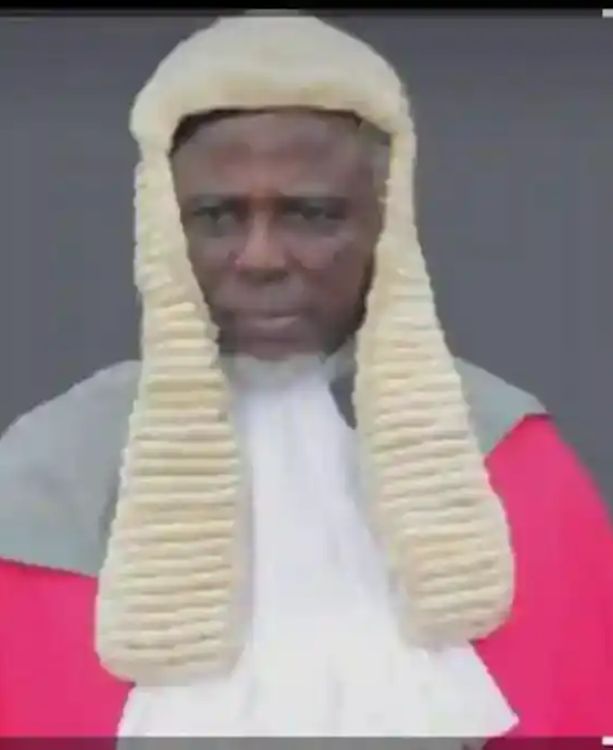
The government announced his death on Monday in a condolence message issued by Governor Mohammed Bago, who described his passing as a major loss to the state and the legal profession.
Bago commended the late jurist for his contributions to the development of the judiciary, describing him as a dedicated, hardworking and disciplined legal luminary.
The governor said Mayaki deployed his wealth of judicial experience to promote meaningful reforms in the justice sector, leaving lasting contributions to the judiciary in Niger State and the country.
He also expressed sympathy to the state judiciary and extended his condolences to the incumbent Chief Judge of Niger State, Justice Halima Abdulmalik, as well as the immediate and extended families of the deceased.
During his judicial career, Mayaki chaired a commission of inquiry established by former Governor Mu’azu Aliyu to investigate the administration of his predecessor, the late Governor Abdulkadir Kure.
He also served on several election petition tribunals, including the governorship election petition proceedings in Calabar during the 2015 electoral cycle.
Mayaki was appointed a judge of the Niger State High Court in 1998 and became Acting Chief Judge on June 15, 2019. He was confirmed as the substantive Chief Judge on August 2, 2019.
He retired from the judiciary in October 2020 after attaining the mandatory retirement age.
The late jurist was called to the Nigerian Bar on November 22, 1980, and began his career in the Niger State Judiciary as a magistrate in 1981.
News
BREAKING: Video of Alleged Sexu@l Ass@ult by Emir of Daura grabbing Foreign Tourist Bre@sts Surfaces Online

A foreign tourist has accused Umar Faruk Umar, the Emir of Daura in Katsina state, of sexual assault during a visit to the palace of the monarch.
In a post on Instagram by @beduinqa, on Saturday, the tourist said he had a bad experience when he visited Daura.
The tourist alleged that at the emir’s palace on November 14, she was taken to an “elegant” room, where she and Umar sat on a couch and started talking.
The tourist said the Emir grabbed her hand and started playing with it.
“It was strange for me that he grabbed my hand and started playing with it. Then when we stood up, he hugged me, kissed my cheek (which was also surprising for me), and then he grabbed my boobs,” the tourist wrote on Instagram.
“That was a shock for me. I told him ’emir no, no, no, no; emir you cannot be touching’, but he was just laughing about it.”
The tourist said she was shocked by the behaviour of the emir, adding that she was not sexually assaulted while walking through the streets of Nigeria, even in crowded places.
In the video published by the tourist, the emir appears to be holding the hands of a woman, while they were sitting on a couch.
In the video, the emir could be seen caressing the hand of the woman.
After some seconds, it appeared that the emir hugged the woman and touched a part of her body.
Immediately the woman responded: “Emir, no, no, no, why are you touching? Emir, you can’t be touching…”
The tourist said she recorded the video through meta glasses, an eyewear that has the capacity to take video and pictures.
A review of her Instagram page shows that she arrived Nigeria on October 19.
During her stay in Nigeria, she also visited the palace of the Oba of Benin in Benin city, Edo State, Makoko in Lagos, Bauchi, and Kano
The Nigeria Correctional Service, NCoS, Kwara State Command, has released the names and photos of the two death-row inmates who escaped from the Medium Security Custodial Centre, Oke-Kura, Ilorin.
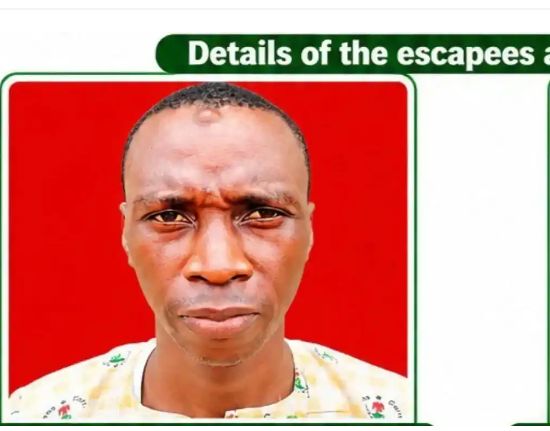
The two inmates escaped in the early hours of Wednesday, November 18, after breaking through and scaling the perimeter wall of the facility.
Their identities were disclosed in a statement issued on Friday by the Kwara State Command’s Public Relations Officer, Adegbulugbe Olumide.
According to NCoS, the first inmate is 41-year-old Segun Abraham Nasiru from Lokoja, Kogi State, while the second person is 38-year-old Oluwasegun Omoyajowo Ajiboye from Ilaro, Ekiti State.
The NCoS disclosed that Nasiru had earlier escaped from the Mandala Custodial Centre, been rearrested and transferred to Oke-Kura.
The Controller-General of the NCoS, Sylvester Ndidi Nwakuche, while reacting, blamed the incident on negligence.
“This is unfortunate and unacceptable. This is a facility that locks over 600 inmates, and about two inmates have found their way out, but I can assure you the dragnet has been spread and we will get them back,” he said.
According to him, any officer found culpable will be severely punished.
The NCoS appealed to members of the public to help with useful information that can lead to the recapture of the fugitives.


BREAKING: Prominent Ex-Chief Judge Dies
BREAKING: Video of Alleged Sexu@l Ass@ult by Emir of Daura grabbing Foreign Tourist Bre@sts Surfaces Online