News
Tinubu Aims for Tech Creators, Not Consumers – Minister

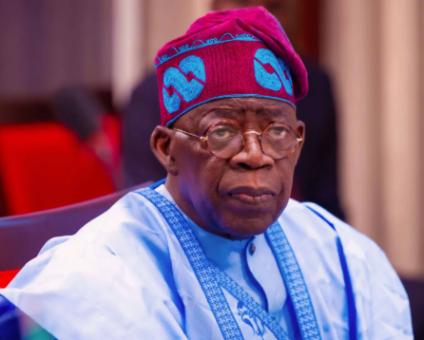
The Minister of Humanitarian Affairs and Poverty Reduction, Prof. Nentawe Yilwatda Gashwer, on Monday said President Bola Ahmed Tinubu’s administration is steadily transforming Nigeria into a nation that exports digital skills like crude oil, empowering citizens to become creators, not just consumers of technology.
Prof. Gashwer made the statement during the graduation ceremony of 35 Nigerian youths who completed a digital skills training programme co-organised by the Ministry and the Digital Bridge Institute (DBI), held at DBI’s headquarters in Abuja.
In his remarks, DBI President and CEO, David Daser, underscored the urgent need to equip Nigerian youths with income-generating digital skills, warning that the country cannot achieve meaningful development without investing in youth training and up-skilling for wealth creation.
Delivering the keynote address at the event themed “Skills for Empowerment,” the Minister stressed that the global economy is increasingly driven by data, coded systems, and creativity, noting that digital skills now form the backbone of economic power worldwide.
He said: “This programme, under the Renewed Hope Agenda of President Bola Ahmed Tinubu, was not designed to hand out aid but to hand over agency. The future we envision is not one where people wait to be rescued, but where they rise to become solution creators, job makers, and wealth builders.
“You are not just graduates; you are the vanguard of a new Nigeria a Nigeria where young people do not flee from poverty but defeat it with knowledge; a Nigeria where digital skills are exported like oil; a Nigeria where we are no longer consumers of technology, but creators of it.”
The Minister further noted that the government is committed to building community tech hubs where skills are nurtured, and innovation is celebrated. He highlighted plans to develop online platforms to connect skilled Nigerians with local and global opportunities, and to establish funding pathways so that innovative ideas can transition from notebooks to the marketplace.

“If we want to reduce poverty sustainably, we must make wealth inclusive, digital, and locally driven,” he added.
Daser thanked the Minister for his unwavering commitment to national development and his visible support for the programme, as evidenced by his presence at the graduation ceremony.
He noted that this year’s theme, “Skills for Empowerment,” directly addresses one of the most critical needs of the time economic self-reliance through practical skill acquisition.
“As a nation striving toward sustainable development, the importance of equipping individuals with relevant, income-generating skills cannot be overstated,” Daser said.
He revealed that the initiative was not limited to DBI’s Abuja campus but extended to its other national campuses in Enugu, Lagos, Yola, and Kano, thereby bringing opportunities closer to diverse communities and advancing the institute’s mission of bridging the digital and development divide in Nigeria.
The DBI boss stated that participants received hands-on training in Web Application Design, Graphic Design, and Image Editing, among other high-impact areas.
“These are not just technical skills,” he said. “They are tools of transformation, pathways to independence, creativity, and sustainable livelihood.”
He urged the graduates not to see their certificates as an end, but as the beginning of a journey filled with innovation, contribution, and value creation.
“I encourage you to see yourselves not just as job seekers, but as job creators as catalysts of hope and change,” Daser said.
He reaffirmed DBI’s commitment to national development through technology, capacity building, and strategic partnerships that empower lives and reduce poverty across Nigeria.
Thenationonlineng.net

NELFUND has rejected allegations that the Federal Government’s student loan scheme is being used to favour supporters or children of members of the All Progressives Congress (APC).
The Managing Director and Chief Executive Officer of the Nigerian Education Loan Fund, Akintunde Sawyerr, dismissed the claim as “completely ridiculous.”
Moreover, he said the structure of the application system does not allow political affiliation to determine who receives the loans.
Sawyerr spoke during an interview on Channels Television’s Sunday Politics programme.
He explained that the loan scheme is operated through an electronic application process.
Applicants are required to provide personal and academic information, including their names and matriculation numbers.
According to him, the system is designed to establish whether an applicant meets the requirements for the programme.
It does not collect information that would enable NELFUND to determine whether a student belongs to the APC or supports another political party.
“I have not heard this allegation, but I can tell you that it’s a completely ridiculous idea that the administration of Bola Tinubu is focused on trying to fund people who support the party. We are talking about students; many of them are yet to vote, some of them are going to be voting for the first time, [and] many of them are not party members.
“How, in any event, do we determine who is a party member and who isn’t? Even if you are running a manual process, how do you do that? You can’t. It’s unlikely to yield you any result.
“It is a process you have to apply for this loan electronically. If you don’t have a name, you can’t apply for this loan. You provide your matriculation number; you have to be in a public institution,” he said.
The NELFUND boss said the allegation also failed to take into account the nature of the beneficiaries targeted by the programme.
He noted that many students accessing the loans are young people who have not yet participated in an election. Some are also not members of any political party.Executive Branch
Sawyerr therefore maintained that using political affiliation as a basis for deciding beneficiaries would be impractical under the existing system.
He said NELFUND’s focus is on Nigerian students who meet the conditions for the loan and are enrolled in eligible public tertiary institutions.
Sawyerr described the demand for the scheme as “overwhelming”, saying many students and their families were struggling to meet the financial demands of tertiary education.
“The demand has been overwhelming, because clearly a lot of people have struggled to get into these institutions,” he said. “They are hanging on by the skin of their teeth to stay in the institution, and this programme came as a rescue for them.”
He disclosed that NELFUND had so far disbursed about N162 billion in upkeep allowances to students.
The fund is also examining application and disbursement figures as demand increases, with the agency seeking to understand the financial requirements needed to sustain the programme.
The student loan initiative was introduced by the Federal Government as part of efforts to reduce financial barriers to higher education.
President Bola Tinubu signed the Student Loans Act into law in April 2024, paving the way for the current NELFUND structure. The scheme provides interest-free financial support to eligible Nigerian students in public tertiary institutions.
It covers approved institutional charges and upkeep support for qualified beneficiaries.
The programme was designed to give students access to funding without requiring them to depend entirely on their parents or guardians to remain in school.
NELFUND has repeatedly stressed the importance of an electronic process in managing applications and disbursements.
The system allows applicants to submit their information for verification before their applications are processed.
Sawyerr further insisted that the system does not discriminate based on religion, ethnicity or gender.
“We have a system that is focused on people who are Nigerians and meet the standard. The system doesn’t recognise your gender. There is no bias in the system at the front end or the back end.
“This is a system that doesn’t care whether you are of one tribe or the other. This system does not have a view or an opinion on whether you are a Christian, a Muslim, or an African traditional religionist; it doesn’t want to know.”
The NELFUND chief also spoke about the impact of the scheme on student retention.
He said available figures indicated that the programme had contributed to a reduction in the number of students dropping out of tertiary institutions, with the reduction put at about 20 per cent.
Sawyerr also addressed concerns surrounding repayment of the loans.
He maintained that beneficiaries would not be subjected to an unreasonable repayment burden, noting that repayment would be tied to their ability to pay after completing their studies.
Under the current structure, repayment is expected to commence two years after beneficiaries complete the National Youth Service Corps programme.
The NELFUND boss also disclosed that funds President Tinubu announced would be recovered by the Economic and Financial Crimes Commission (EFCC) and channelled into the student loan scheme had not yet been received by the fund.

The UK Government has appointed Alastair Long as His Majesty’s Trade Commissioner (HMTC) for Africa, with a mandate to deepen economic ties and expand commercial partnerships between Britain and the continent.
The UK Department for Business and Trade welcomed Long to the position, according to a statement issued on Monday by the British Deputy High Commission.
The mission said Long would work with African governments, investors, businesses and institutions to strengthen economic relations between the UK and African countries.
It added that his responsibilities would include expanding commercial partnerships, supporting UK and African businesses, attracting investment and helping to build sustainable, resilient and productive economies across the continent.
“Long returns to a region he knows well, having previously served as Deputy Trade Commissioner and then HMTC for Africa between 2019 and 2022.
“Before taking up his current position, he served as His Majesty’s Ambassador to the Kingdom of Bahrain from August 2023,” the mission said.
Long said he was thrilled to resume his work in Africa.
He described Africa as the future, saying he had witnessed the continent’s “boundless energy and ambition” during his previous assignments.
“The UK is committed to being a partner that supports African and British growth by listening to African priorities and bringing the very best the UK has to offer.
“I look forward to engaging across the continent, with the UK business community, and with the UK Government team, to realise as many mutual opportunities as possible.”
Long succeeds John Humphrey, who had served as the UK Trade Commissioner for Africa since June 2022.
The British Deputy High Commission said Long inherited strong UK momentum in Africa and would bring extensive trade expertise to the role, as well as the focus and energy required to deepen partnerships and unlock further opportunities for mutual benefit.
The News Agency of Nigeria (NAN) reports that the HMTC leads the UK’s overseas efforts to promote trade, investment, export opportunities and trade policy objectives.
The Commissioner works closely with the wider diplomatic network and other government officials to coordinate Britain’s overseas efforts to promote UK trade and prosperity.
The office also has responsibility for the Department for Business and Trade’s work in Africa, including growing the overall trade and investment relationship, improving market access for British companies, particularly small and medium-sized enterprises, and developing trade policy.
Long joined the Foreign, Commonwealth & Development Office in 2002 and has held previous postings in the Middle East and North Africa.
He was educated at Clare College, Cambridge University, and the Guildhall School of Music and Drama in London.
NAN
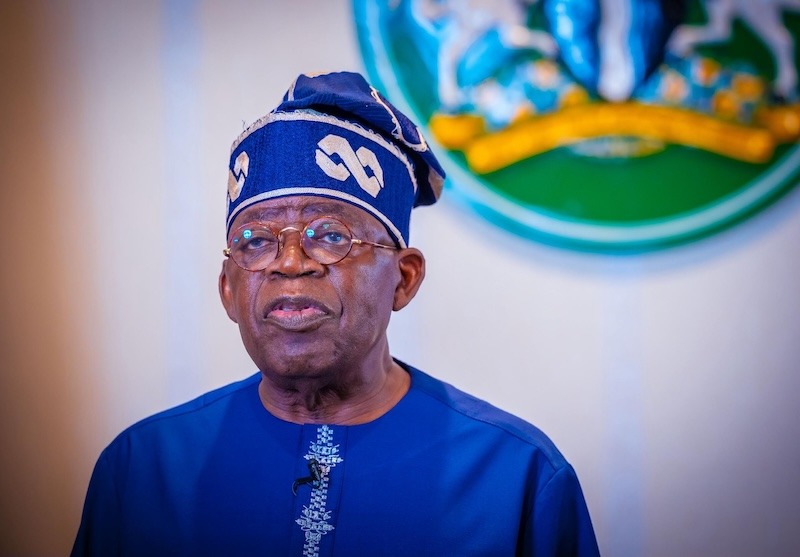
The Federal Government has indicated that the review of Nigeria’s national minimum wage will be addressed through fresh negotiations with organised labour, amid growing pressure for an upward adjustment of the current ₦70,000 wage.
The development comes as workers and labour unions intensify calls for a new wage structure, arguing that rising living costs have significantly eroded the purchasing power of the minimum wage introduced in 2024.
The Nigeria Labour Congress (NLC) and the Trade Union Congress (TUC) had earlier announced plans to commence negotiations with the Federal Government on a new minimum wage in 2026. The unions said the review was necessary because of increases in the cost of food, transportation, housing, healthcare and other essential services.
The Federal Government had also acknowledged that the current ₦70,000 minimum wage no longer fully reflects prevailing economic realities. Chief of Staff to President Bola Tinubu, Femi Gbajabiamila, said the government would approach the next wage review as a partner to labour, while stressing that workers’ welfare should also be addressed through measures covering housing, healthcare, transportation and other social interventions.
The latest development has been accompanied by renewed demands from federal workers. The Federal Workers Forum recently asked the government to increase the minimum wage from ₦70,000 to ₦300,000, citing the rising cost of living and what it described as inadequacies in the implementation of the existing wage structure.
However, the demand for ₦300,000 has faced opposition from sections of the Organised Private Sector. The Lagos Chamber of Commerce and Industry and other business groups warned that an abrupt increase to that level could fuel inflation, increase production costs and potentially result in job losses if businesses are unable to sustain the higher wage bill.
The debate is therefore expected to centre on finding a balance between workers’ demand for improved wages and the ability of governments and employers to sustain any new wage structure without worsening inflation or threatening employment.
The current ₦70,000 national minimum wage was signed into law in July 2024 following negotiations between the Federal Government, organised labour and the private sector. Labour has since maintained that the rapid increase in the cost of living has made another review necessary.
As the fresh negotiations gather momentum, workers are awaiting a formal framework and timeline for the talks, while government, labour and employers are expected to negotiate a wage level that reflects current economic realities and remains sustainable for the Nigerian economy.


New Files Allege Sudan Military Built Chlorine Weapons Program

Former Nigerian Senator dies At 62

2027: ADC Suffers Setback As Popular Reps Aspirant Dumps Party

Former Super Eagles Star Loses Life Savings, Duped By A Pastor of ₦1.2 Billion

I’m A Married Man, I Can Never Get Myself Involved With Such A Thing, Delta Gov Aide Reveals Why He Offered Comfort ₦500,000 Job