
News
Boko Haram Informants Among Politicians, Soldiers

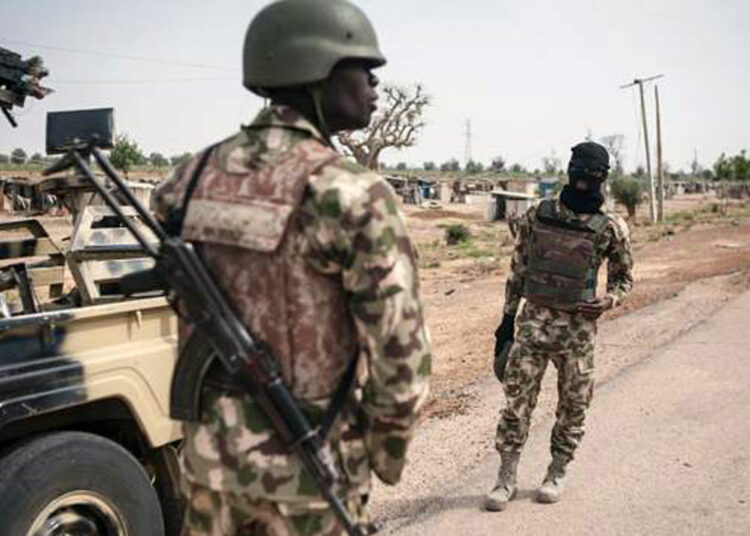
Borno State Governor Babagana Zulum has once again drawn national attention to the resurgence of Boko Haram in the state. One of his most alarming, and significant claims is that certain military officers and politicians are acting as informants and collaborators for the terrorist group.
This revelation is not entirely new, but it remains insightful and deeply troubling. Former President Goodluck Jonathan had similarly acknowledged that members of the bloodthirsty sect had infiltrated his administration. Explaining his government’s difficulties in combating the insurgency, he stated that Boko Haram operatives had embedded themselves within the three arms of government, including the armed forces, police, and other security agencies.
He made this startling admission during an inter-denominational service to mark the 2012 Armed Forces Remembrance Day at the National Christian Centre in Abuja. The country was stunned. Yet, despite the gravity of that confession, no names were mentioned. That failure allowed the sect’s collaborators to continue operating from the shadows.
At the time, Boko Haram was at its most savage, destroying police stations, killing security personnel, deploying suicide bombers, and detonating car bombs in cities. In its campaign against Western education, it targeted students and carried out the infamous abduction of schoolgirls from Chibok, an incident that brought the group global infamy.

Eventually, the Jonathan administration, in a bid to push back the militants, engaged mercenaries who helped reclaim swathes of land seized by the sect. When the Muhammadu Buhari administration took over, it declared that Boko Haram had been “technically defeated.” Repentant fighters were reabsorbed into society, and attacks decreased significantly. There was a glimmer of hope that Nigeria was turning the corner. But that hope has since dimmed.
Governor Zulum’s latest declaration is more than a cry for help; it is an indictment of the entrenched rot within our political and military systems. It underscores a tragic truth: the persistence of Boko Haram is not due to the group’s strength alone, but to the betrayal within our own ranks. After over a decade of carnage, that should alarm us all.
This cannot continue. This treachery must end, not only because we desire peace, but because the government has a duty to act decisively and courageously. The nation must be tired by now of burying its citizens and watching helplessly as terrorists strike, regroup, and strike again.
We commend Governor Zulum’s courage in highlighting the involvement of insiders. But we believe he must go further. It is time to name names. The era of vague accusations is over. Nigerians deserve to know who is enabling this terror from within.

We also commend the military for their sacrifices and commitment to defending the country, often at great personal cost. Neutralising bloodthirsty militants, many of them misguided youths, is a heavy burden on our troops and society at large. But without cutting off the head of the snake, the sponsors, the terror will continue.
There was a moment of hope in 2020 when six Nigerians were identified, prosecuted, and jailed in the United Arab Emirates for funding Boko Haram. Abdurrahman Ado Musa, Salihu Yusuf Adamu, Bashir Ali Yusuf, Muhammed Ibrahim Isa, Ibrahim Ali Alhassan, and Surajo Abubakar Muhammad were convicted for attempting to send $782,000 from Dubai to Nigeria to support the sect.
That action by a foreign government should have inspired similar prosecutions at home. Indeed, in 2021, the Buhari administration announced that it had arrested and begun prosecuting some Boko Haram sponsors. But years later, Nigerians are still waiting for names. Nothing has been disclosed. No convictions have been secured. Silence has taken the place of justice.
The introduction of forest guards and other kinetic measures is commendable. But the real solution lies in breaking the financial and logistical lifelines of the terror groups. That means identifying, prosecuting, and punishing the sponsors, no matter how powerful.
Yes, we recognise the danger of politically motivated accusations. That is why such disclosures must be followed by thorough and credible investigations, backed by solid intelligence and forensic financial tracking. With the right international collaboration and political will, this is not only possible, but imperative.
Over the years, many Nigerians have called for the public naming of Boko Haram sponsors. But those calls have been ignored. From the shadows, these masters of terror have continued to orchestrate death and destruction across Nigeria.
As a newspaper, we believe Nigeria could and should have stopped this evil long ago, but this is still a good time to do so.
Leadership.ng

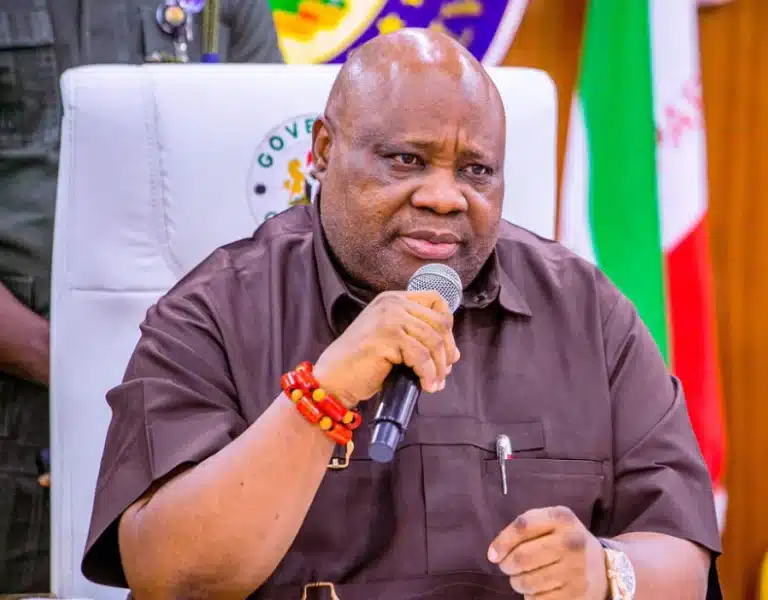
The factional National Chairman of the Accord Party, Prof. Chris Imumolen, has reaffirmed the party’s support for President Bola Tinubu’s administration and endorsed his re-election bid, while insisting that the decision does not amount to a merger with the All Progressives Congress (APC).
Imumolen also announced that Accord had resolved to support the APC governorship candidate in Osun State, Asiwaju Munirudeen Bola Oyebamiji, ahead of the forthcoming governorship election.
The Accord chairman said the party’s support for Tinubu was based on its assessment of the administration’s economic reforms and efforts towards national development.
“Our support for President Bola Ahmed Tinubu is based on our conviction that Nigeria’s progress requires continuity in policies that strengthen our economy, deepen reforms, and promote national stability.
“We have therefore endorsed his re-election because we believe it is in the best interest of our country,” Imumolen said.
The party chairman, however, cautioned against interpreting the endorsement as evidence that Accord had surrendered its political identity or merged with another party.
“Let me state this clearly: the party’s endorsement of President Tinubu does not amount to the dissolution of the Accord Party or its merger with any political platform.
“Accord remains an independent political party with its own constitution, leadership, ideology, and vision for Nigeria,” he said.
Imumolen maintained that the party would continue to take independent positions on political and governance issues despite its support for Tinubu. On the Osun State governorship election, the party said it had taken a strategic decision to adopt Oyebamiji, the APC candidate. Imumolen said the decision followed consultations and an assessment of the political situation in the state.
“After careful consultations and a thorough assessment of the political realities in Osun State, the Accord Party has resolved to adopt and support the APC governorship candidate, Asiwaju Munirudeen Bola Oyebamiji.
“This strategic decision is driven solely by our commitment to ensuring competent leadership and sustainable development for the people of Osun State,” he stated.
Accord urged members of the public, the media and political stakeholders to distinguish between its endorsement of Tinubu at the national level and its alliance with the APC candidate in Osun State. The party said suggestions that it had ceased to operate independently were inaccurate and misleading.
It added that it remained committed to democratic principles, national unity and issue-based politics, stressing that its political decisions would continue to be guided by what it considered the best interests of Nigerians.
Naija News reports that the Accord Party faction loyal to Governor Ademola Adeleke had earlier endorsed President Tinubu for the 2027 presidential election.
The party chairman, however, cautioned against interpreting the endorsement as evidence that Accord had surrendered its political identity or merged with another party.
“Let me state this clearly: the party’s endorsement of President Tinubu does not amount to the dissolution of the Accord Party or its merger with any political platform.
“Accord remains an independent political party with its own constitution, leadership, ideology, and vision for Nigeria,” he said.
Imumolen maintained that the party would continue to take independent positions on political and governance issues despite its support for Tinubu. On the Osun State governorship election, the party said it had taken a strategic decision to adopt Oyebamiji, the APC candidate.
Imumolen said the decision followed consultations and an assessment of the political situation in the state.
After careful consultations and a thorough assessment of the political realities in Osun State, the Accord Party has resolved to adopt and support the APC governorship candidate, Asiwaju Munirudeen Bola Oyebamiji.
“This strategic decision is driven solely by our commitment to ensuring competent leadership and sustainable development for the people of Osun State,” he stated.
Accord urged members of the public, the media and political stakeholders to distinguish between its endorsement of Tinubu at the national level and its alliance with the APC candidate in Osun State.
The party said suggestions that it had ceased to operate independently were inaccurate and misleading.
It added that it remained committed to democratic principles, national unity and issue-based politics, stressing that its political decisions would continue to be guided by what it considered the best interests of Nigerians.
Daily voice reports that the Accord Party faction loyal to Governor Ademola Adeleke had earlier endorsed President Tinubu for the 2027 presidential election.
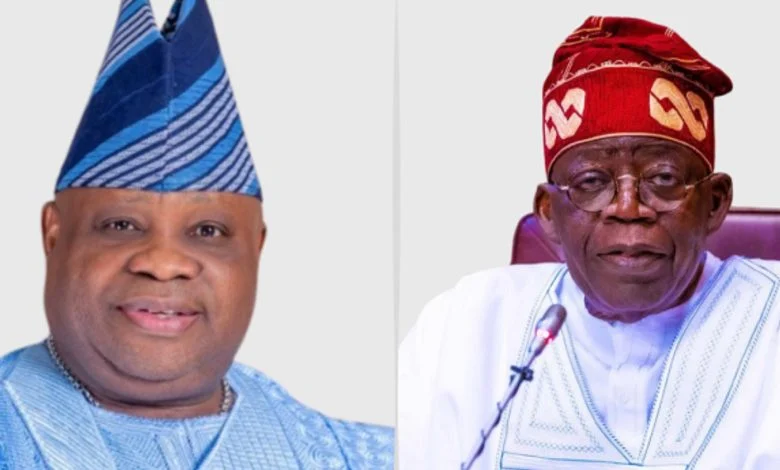
President Bola Tinubu has been adopted as the preferred presidential candidate for the 2027 election by Osun State Governor Ademola Adeleke and the national leadership of the Accord Party. The decision was reached during a meeting held on Saturday night in Osogbo, the Osun State capital.
The gathering brought together top officials of the party from across the country, including members of the National Working Committee and state chairmen.
According to a statement issued on Sunday by Adeleke’s re-election campaign spokesman, Pelumi Olajengbesi, discussions at the meeting focused on the future of the party, national development issues and preparations ahead of the forthcoming Osun governorship election.
Party leaders said their support for Tinubu was influenced by the need for continuity in ongoing infrastructure projects being executed by the Federal Government.
They stressed that major road projects across the country should be completed without interruption.
Among the projects highlighted were the Lagos-Calabar Coastal Highway and the Sokoto-Badagry Super Highway.
The party leadership maintained that continuity would help ensure the successful delivery of the projects and their expected economic benefits.
The meeting also reviewed the political atmosphere ahead of the August governorship election in Osun State. Leaders of the party called for a peaceful electoral process and urged all stakeholders to avoid actions capable of undermining the credibility of the poll.
They warned against violence, intimidation of political opponents, electoral malpractice and the alleged use of security agencies to harass members of the party during the election period.
The party further appealed to the Independent National Electoral Commission, security agencies and other relevant institutions to ensure a level playing field for all contestants.
Several national officers attended the meeting. They included the National Chairman of the Accord Party, Maxwell Mgbudem; Deputy National Chairman, Maryam Sale; National Secretary, Ajaja Abiola Adebukola; National Treasurer, Abdulazeez Oyeniyi Salaudeen; National Organising Secretary, Ibe Thankgod; and National Publicity Secretary, Omorogbe Joseph.Political communication services
Also present were state chairmen and other senior party officials drawn from different parts of the country.
The endorsement marks another significant political development in the growing relationship between Adeleke and the Accord Party following the governor’s alignment with the platform ahead of the Osun governorship election.
Party leaders at the meeting expressed confidence in Adeleke’s chances in the forthcoming poll and pledged to mobilise support structures across the state to secure victory.
They also reaffirmed their commitment to strengthening the party nationwide while positioning it for future political contests. Moreover, Governor Ademola Adeleke publicly reaffirmed his support for President Bola Tinubu’s second-term ambition on several occasions. He described the move as being in the interest of Osun State and the South-West region. Leadership development programs
Speaking on May this year, during an inspection of the ongoing reconstruction work on the Ibadan-Ile Ife-Ilesa Expressway, Adeleke said his support for the President went beyond partisan politics.
The governor described Tinubu as “our own son, father and leader,” insisting that he needed no persuasion to back the President’s re-election bid.
“I am the governor of the ancestral birthplace of Mr President. How can I have my own in the saddle and think twice before embracing him? I need no persuasion to act as I have declared repeatedly our endorsement of Mr President,” Adeleke said.
He added that the endorsement was a “moral and development-driven action” aimed at advancing the interests of Osun State and the Yoruba people.
The governor maintained that supporting Tinubu would help sustain ongoing federal projects and strengthen cooperation between Osun State and the Federal Government.
The position was again repeated on June, when Adeleke formally flagged off his re-election campaign in Osogbo.
Addressing supporters at the event, he declared: “As we seek your votes on August 15, we also restate our endorsement of our son, father and leader, President Bola Ahmed Tinubu, for re-election in 2027. Our support for Mr President is unshaken and total.”
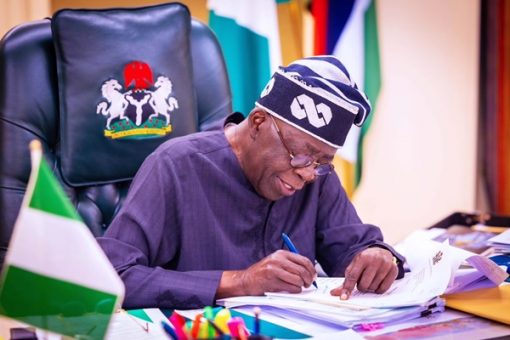
President Bola Ahmed Tinubu has appointed Wasiu Olanrewaju-Smart as Special Adviser to the President on National Assembly Matters, House of Representatives.
Naija News reports that the appointment takes immediate effect, according to a statement issued on Sunday by the Special Adviser to the President on Information and Strategy, Bayo Onanuga.
Olanrewaju-Smart succeeds Ibrahim Olanrewaju, who resigned from the position to contest an elective office in his home state.
ALSO READ
“This appointment is with immediate effect,” Onanuga said in the statement titled, “President Tinubu Appoints Wasiu Olanrewaju-Smart as Special Adviser on National Assembly Matters – House of Representatives.”
The Presidency said the 40-year-old appointee brings extensive experience in legislative affairs and public policy to the position.
According to the statement, Olanrewaju-Smart holds a doctorate in Educational Management from Lead City University and a Master’s degree in Public Administration from Harvard University.
He was an Edward Mason Fellow in Public Policy at the Harvard Kennedy School and also holds a professional diploma in Public Relations from the London School of Public Relations.
The Presidency added that he was a LEAPS Fellow at the Massachusetts Institute of Technology and a Policy Fellow at Quantum Alliance AI in the United States, where his work focused on artificial intelligence and civic technology.
Olanrewaju-Smart has held several positions within the National Assembly over the years.
The statement read, “His National Assembly career spans Research and Media Assistant to the Minority/Majority Leader, House of Representatives (7th–8th Assemblies), to Special Adviser, Deputy Chief of Staff, and ultimately the Chief of Staff to the Speaker of the House of Representatives in the 9th and 10th Assemblies.”
The Presidency said his career trajectory provided him with experience in legislative research, administration and relations between lawmakers and the executive.
Olanrewaju-Smart joined the Presidency in October 2023 as Senior Special Assistant to the President on Intergovernmental Affairs.
He remained in the position until his latest appointment.
“Olanrewaju-Smart later joined the Presidency in October 2023 as Senior Special Assistant to the President on Intergovernmental Affairs, a position he held until this new appointment,” the statement said.
The Presidency added that his public policy research portfolio included contributions to several pieces of legislation.
“His public policy research portfolio includes work on several landmark legislations, such as the Interest-Free Student Loan Act, among others,” it added.
The Presidency said Tinubu was confident that Olanrewaju-Smart’s experience and knowledge would help deepen relations between the executive and the House of Representatives.


2027 Election: Top APC Governor Finally Speaks on Joining ADC

No More N1,300/Litre: Relief As Petrol Prices Drop, Marketers Announce New Rates

Nigerian Gov Declares Tuesday Public Holiday Across State

Former Super Eagles Star Loses Life Savings, Duped By A Pastor of ₦1.2 Billion

I’m A Married Man, I Can Never Get Myself Involved With Such A Thing, Delta Gov Aide Reveals Why He Offered Comfort ₦500,000 Job

Lagos Imposes ₦250,000 Fine For Illegal Waste Disposal

-
 Business2 days ago
FG Unveils Portal, Targets 26,961 Nigerians for New Positions
-

 Business2 days ago
Top 10 Richest Yoruba Billionaires: South West Wealthiest Entrepreneurs, Key Factors Behind Their Wealth
-
 Politics1 day ago
2027: ADC Gov Candidate Announces Top Ex-Lawmaker as Running Mate
-
 News1 day ago
BREAKING: Tinubu Gives New Top Appointment
-
 Politics1 day ago
REVEALED: Why Makinde Dropped Speaker Ogundoyin and Picked Bimbo Adekanmbi as Successor
-
 News2 days ago
REVEALED: Five Governors Set to Convert Local Security Groups Into State Police
-
 Tech13 hours ago
Nigerian Gov Declares Tuesday Public Holiday Across State
-
 Politics2 days ago
2027 Presidency: Kwankwaso Breaks Silence on Peter Obi’s Controversial One-Term Commitment