
News
Nigeria’s Strategic Role In Israel-Iran Conflict: Key Benefits


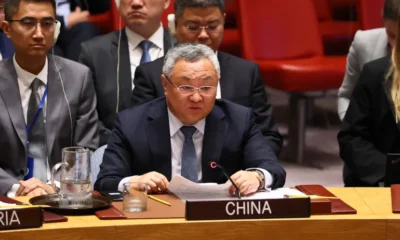
Nigeria’s involvement and positioning in the ongoing Israel–Iran conflict may appear distant at first glance, but the ripple effects are far-reaching and strategically significant. As tensions rise in the Middle East, Nigeria finds itself gaining in several subtle but critical ways such as economically and diplomatically, and also in terms of national security. We shall attempt to explore some major benefits Nigeria can draw from its connection to this geopolitical fault line.
First and most immediate is the economic benefit from rising global oil prices. As the Israel–Iran conflict fuels instability across the Middle East, crude oil prices have surged. For an oil-dependent economy like Nigeria’s, this translates into higher export revenues. Recent figures show Nigerian crude blends such as Brass River trading near $93.89 per barrel, about $16 above Nigeria’s 2025 budget benchmark. This price bump provides the government with much-needed fiscal space, helping to stabilize the naira, fund development, and reduce budget deficits.
Another benefit lies in expanding diplomatic and development partnerships. Nigeria’s balanced posture in the conflict supporting Palestinian dignity while also maintaining strong relations with Israel has opened up avenues for enhanced bilateral cooperation. Israel’s expertise in technology, agriculture, water systems, and energy efficiency offers Nigeria critical tools for diversifying its economy beyond oil dependency. This is especially important as Nigeria faces food security challenges and a rapidly growing population.
Nigeria’s proximity to the conflict through diplomatic engagement also boosts its capacity for geopolitical risk management. Intelligence cooperation and regional monitoring particularly concerning Iran’s growing influence in parts of West Africa help Nigeria protect its borders and identify early signs of extremist spillovers. With West African states increasingly vulnerable to ideological and militant infiltration, Nigeria’s proactive positioning reduces its own exposure and contributes to subregional stability.

Lastly, the situation forces Nigeria to reassess and refine its internal and external security strategies. In a world increasingly shaped by hybrid warfare, asymmetric threats, and ideological battles, Nigeria’s engagement in complex global issues like the Israel–Iran conflict strengthens its understanding of the interconnectedness of domestic and international security. This awareness is crucial for a country managing its own internal conflicts such as banditry and other prevalent crimes.
In conclusion, while Nigeria is geographically removed from the Middle East, its involvement in or reaction to the Israel–Iran conflict brings tangible benefits. From increased oil revenues and enhanced diplomatic clout to opportunities for technological partnerships and improved national security, Nigeria’s strategic engagement reflects a broader trend: that global conflicts, no matter how distant, increasingly shape local outcomes. By navigating this space thoughtfully, Nigeria positions itself not just as a bystander, but as a beneficiary and, potentially, a peacemaker.
Thisdaylive.com

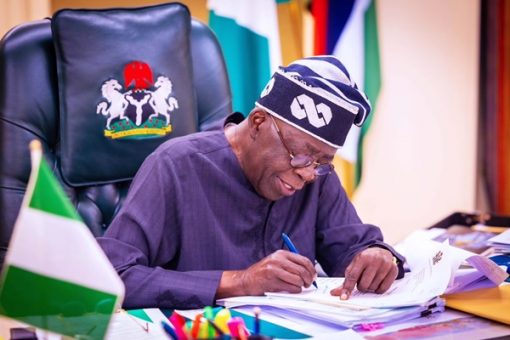
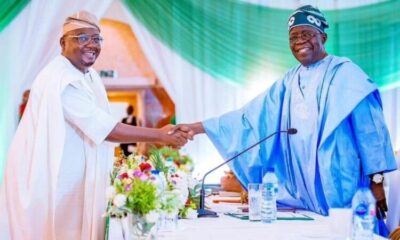
President Bola Ahmed Tinubu has appointed Wasiu Olanrewaju-Smart as Special Adviser to the President on National Assembly Matters, House of Representatives.
Naija News reports that the appointment takes immediate effect, according to a statement issued on Sunday by the Special Adviser to the President on Information and Strategy, Bayo Onanuga.
Olanrewaju-Smart succeeds Ibrahim Olanrewaju, who resigned from the position to contest an elective office in his home state.
ALSO READ
“This appointment is with immediate effect,” Onanuga said in the statement titled, “President Tinubu Appoints Wasiu Olanrewaju-Smart as Special Adviser on National Assembly Matters – House of Representatives.”
The Presidency said the 40-year-old appointee brings extensive experience in legislative affairs and public policy to the position.
According to the statement, Olanrewaju-Smart holds a doctorate in Educational Management from Lead City University and a Master’s degree in Public Administration from Harvard University.

He was an Edward Mason Fellow in Public Policy at the Harvard Kennedy School and also holds a professional diploma in Public Relations from the London School of Public Relations.
The Presidency added that he was a LEAPS Fellow at the Massachusetts Institute of Technology and a Policy Fellow at Quantum Alliance AI in the United States, where his work focused on artificial intelligence and civic technology.
Olanrewaju-Smart has held several positions within the National Assembly over the years.
The statement read, “His National Assembly career spans Research and Media Assistant to the Minority/Majority Leader, House of Representatives (7th–8th Assemblies), to Special Adviser, Deputy Chief of Staff, and ultimately the Chief of Staff to the Speaker of the House of Representatives in the 9th and 10th Assemblies.”
The Presidency said his career trajectory provided him with experience in legislative research, administration and relations between lawmakers and the executive.
Olanrewaju-Smart joined the Presidency in October 2023 as Senior Special Assistant to the President on Intergovernmental Affairs.
He remained in the position until his latest appointment.
“Olanrewaju-Smart later joined the Presidency in October 2023 as Senior Special Assistant to the President on Intergovernmental Affairs, a position he held until this new appointment,” the statement said.
The Presidency added that his public policy research portfolio included contributions to several pieces of legislation.
“His public policy research portfolio includes work on several landmark legislations, such as the Interest-Free Student Loan Act, among others,” it added.
The Presidency said Tinubu was confident that Olanrewaju-Smart’s experience and knowledge would help deepen relations between the executive and the House of Representatives.
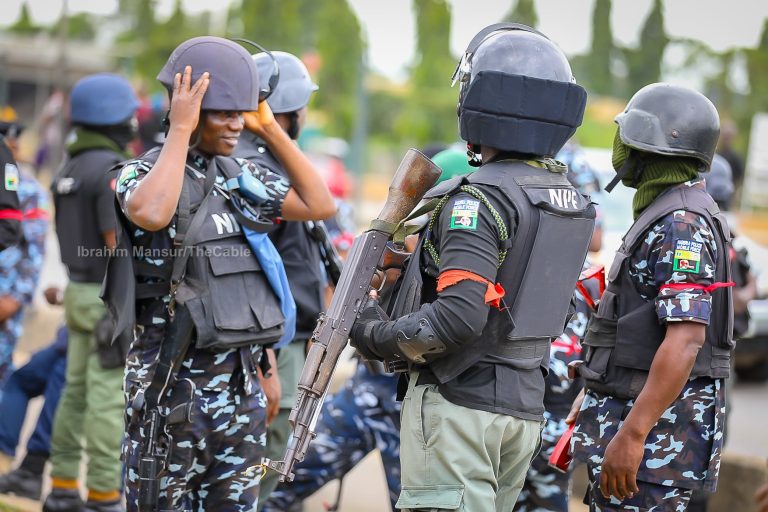
Five state governments have said they plan to transform their existing local security outfits into state police once the constitutional process is finalised, following the House of Representatives’ passage of an Executive Bill.
Legit reports that the House of Representatives passed the Executive Bill on state police during plenary session on Thursday, July 23, 2026.
The bill’s passage marked a major shift in Nigeria’s policing structure, with the House withdrawing its earlier constitutional amendment proposal in favour of the Executive Bill.
As reported by The Punch, while some states are waiting for the process to conclude before deciding on a structure, Ondo, Kaduna, Anambra, Zamfara, and Abia have all indicated they intend to build on what already exists rather than start from scratch.
Officials across the five states argued that their security outfits already have the personnel, community knowledge, and operational frameworks needed for a smooth handover.
They said building entirely new institutions would take longer and cost more, while the existing agencies had already established intelligence networks and local trust.
In Ondo State, the Special Adviser to Governor Lucky Aiyedatiwa on Strategic Communication, Allen Sowore, said the Amotekun Corps was well placed to make the transition
“The men and officers of the Amotekun Corps would also be well positioned for recruitment into the state police system. Their years of experience, knowledge of the local terrain, community relationships, and understanding of the security challenges confronting our people are invaluable assets that should not be discarded.”
The Governor’s Chief Press Secretary, Ebenezer Adeniyan, added that Amotekun’s current structure offered a ready implementation template. Kaduna’s Commissioner for Internal Security and Home Affairs, Sule Shu’aibu, told a training programme for personnel of the Kaduna State Vigilance Service (KADVIS) on Wednesday that the state was already upgrading the outfit to serve as the starting point for state police.
“When the Constitution is eventually reviewed, and state police become operational, where do we start from? You can rest assured it will start from here.”
A senior government official who spoke anonymously confirmed that the focus was on strengthening KADVIS rather than creating a new agency.
In Zamfara, Special Assistant to Governor Dauda Lawal on Media and Publicity, Mustafa Kaura, said the Civilian Protection Guards would be converted, given the experience its personnel had gained fighting insecurity in the state.
The Senior Special Adviser to Anambra Governor on Media, Dr Ejimofor Opara, said the state’s Agunechemba security outfit would be “rejigged to fulfil the mandate of the state police.”
Opara noted that the existing Anambra State Homeland Security Law already shared many features with the incoming legislation. Abia’s Commissioner for Information, Okey Kanu, said the state intended to merge its Homeland Security outfit and community vigilante groups into the new state police structure, with modalities to be worked out ahead of the take-off.
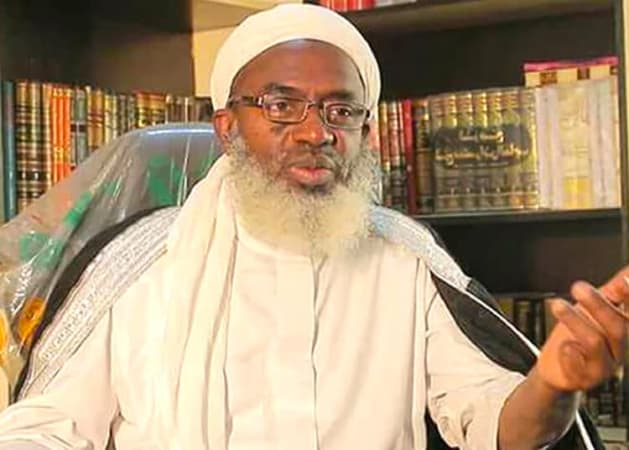
Islamic cleric Sheikh Ahmad Gumi has raised questions about why no Nigerian government official has engaged Boko Haram terrorists and bandits through direct negotiations, drawing a comparison with the high-level outreach that helped end Niger Delta militancy
Gumi made the argument in a Facebook post on Saturday, July 25, citing how former President Goodluck Jonathan and former Vice President Yemi Osinbajo personally entered the Niger Delta creeks to meet armed militants and returned with frameworks that reduced the violence.
“The former President Jonathan visited delta militants in the creeks, so also the former vice president Osinbajo. They all came up with a program to tame the militants.”
He then directed a pointed question at critics of such engagement in the North: “Who is going to visit BH and bandits to tame them without fools castigating them?”
He then directed a pointed question at critics of such engagement in the North: “Who is going to visit BH and bandits to tame them without fools castigating them?”
The retired soldier has spent years positioning himself as a mediator between the Nigerian state and armed groups operating in the North-West and North-East, making repeated visits to bandit camps in Zamfara and other states to hear their demands. His core argument has remained consistent — that negotiation ended Niger Delta militancy and should be tried in the North.
His interventions have not been without controversy. Some Nigerians accuse him of legitimising groups responsible for kidnappings, killings and cattle rustling, while others credit his work with securing the freedom of kidnap victims. Gumi has denied backing terrorism, saying his goal is to end bloodshed through dialogue and rehabilitation.
The amnesty programme that Gumi referenced was launched in 2009 under the late President Umaru Yar’Adua and continued under Jonathan. Thousands of militants were disarmed in exchange for training, monthly stipends and reintegration support, which significantly reduced attacks on oil infrastructure in
Jonathan’s first direct engagement with Niger Delta militants came in 2007, when he was serving as vice-president.
He entered the creeks in Warri, Delta State, without armed protection to meet ex-militant leader Government Ekpemupolo, known as Tompolo. Jonathan later said that the meeting laid the groundwork for the amnesty programme, which remains operational today.
Osinbajo undertook a similar mission in 2017, visiting Niger Delta communities as acting president and meeting directly with militants and traditional leaders.
He justified the visits by describing those in the creeks as citizens with genuine grievances rather than purely security threats.


BREAKING: Tinubu Gives New Top Appointment

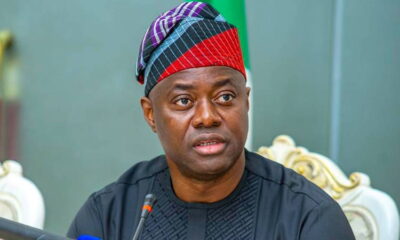
REVEALED: Why Makinde Dropped Speaker Ogundoyin and Picked Bimbo Adekanmbi as Successor

2027: ADC Gov Candidate Announces Top Ex-Lawmaker as Running Mate

Former Super Eagles Star Loses Life Savings, Duped By A Pastor of ₦1.2 Billion

I’m A Married Man, I Can Never Get Myself Involved With Such A Thing, Delta Gov Aide Reveals Why He Offered Comfort ₦500,000 Job

Lagos Imposes ₦250,000 Fine For Illegal Waste Disposal

-

 Tech2 days ago
BREAKING: Painful, APC Chairman Bereaved
-
 Politics2 days ago
2027 Election: Tinubu’s Ex-Minister Adelabu Speaks On Dumping APC
-
 Business23 hours ago
FG Unveils Employment Portal, Targets 26,961 Nigerians for New Jobs
-

 Business20 hours ago
Top 10 Richest Yoruba Billionaires: South West Wealthiest Entrepreneurs, Key Factors Behind Their Wealth
-

 Business2 days ago
UK Lists 10 Requirements Nigerians Need To Secure Work Visa
-

 News1 day ago
SHOCKER! Sheikh Gumi Mentions Two Top Nigerian Leaders Who Visited Militants
-
 Politics15 hours ago
2027: ADC Gov Candidate Announces Top Ex-Lawmaker as Running Mate
-
 Politics14 hours ago
REVEALED: Why Makinde Dropped Speaker Ogundoyin and Picked Bimbo Adekanmbi as Successor