Foreign
Nike To Hike Prices Amid Trump’s China Tariffs

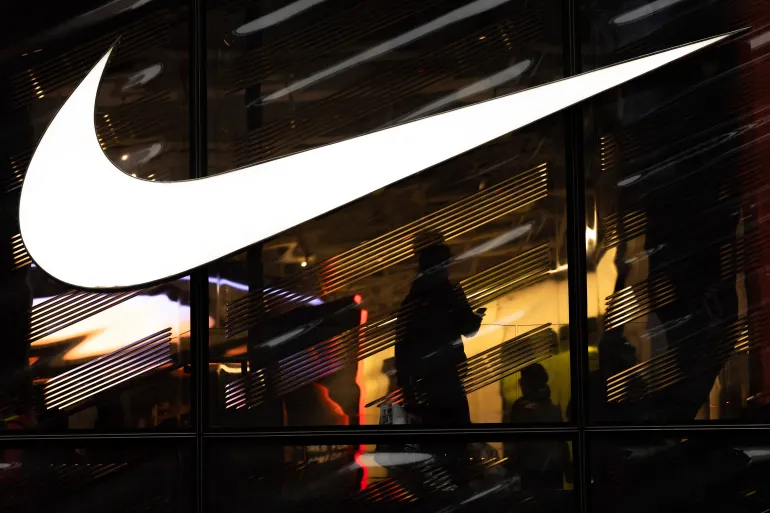
Nike joins companies like Walmart, Target and Mattel that have said they will need to raise prices.
Nike has said it will cut its reliance on production in China for the United States market to mitigate the impact from US tariffs on imports, and forecast a smaller-than-expected drop in first-quarter revenue.
The sportswear giant’s shares zoomed 15 percent at the opening bell on Friday morning after it announced the change in conjunction with its earnings report released on Thursday.
US President Donald Trump’s sweeping tariffs on imports from key trading partners could add about $1bn to Nike’s costs, company executives said on a post-earnings call after the sportswear giant topped estimates for fourth-quarter results.
China, subject to the biggest tariff increases imposed by Trump, accounts for about 16 percent of the shoes Nike imports into the US, Chief Financial Officer Matthew Friend said. However, the company aims to cut the figure to a “high single-digit percentage range” by the end of May 2026 as it reallocates Chinese production to other countries.
“We will optimise our sourcing mix and allocate production differently across countries to mitigate the new cost headwind into the United States,” he said on a call with investors.
Consumer goods are one of the most affected areas by the tariff dispute between the world’s two largest economies, but Nike’s executives said they were focused on cutting the financial pain. Nike will “evaluate” corporate cost reductions to deal with the tariff impact, Friend said. The company has already announced price increases for some products in the US.

“The tariff impact is significant. However, I expect others in the sportswear industry will also raise prices, so Nike may not lose much share in the US,” David Swartz, analyst at Morningstar Research, told the Reuters news agency.
CEO Elliott Hill’s strategy to focus product innovation and marketing around sports is beginning to show some fruit, with the running category returning to growth in the fourth quarter after several quarters of weakness.
Having lost share in the fast-growing running market, Nike has invested heavily in running shoes such as Pegasus and Vomero, while scaling back production of sneakers such as the Air Force 1.
“Running has performed especially strongly for Nike,” said Citi analyst Monique Pollard, adding that new running shoes and sportswear products are expected to offset the declines in Nike’s classic sneaker franchises at wholesale partner stores.
Marketing spending was up 15 percent year on year in the quarter.
On Thursday, Nike hosted an event in which its sponsored athlete Faith Kipyegon attempted to run a mile in under four minutes. Paced by other star athletes in the glitzy event that was livestreamed from a Paris stadium, Kipyegon fell short of the goal but set a new unofficial record.
Nike forecast first-quarter revenue to fall in the mid-single digits, slightly better than analysts’ expectations of a 7.3 percent drop, according to data compiled by LSEG. Its fourth-quarter sales fell 12 percent to $11.10bn, but still beat estimates of a 14.9 percent drop to $10.72bn.
China continued to be a pain point, with executives saying a turnaround in the country will take time as Nike contends with tougher economic conditions and competition.
Looming trade deal as prices rise
Nike’s woes come as a trade deal with China could be on the horizon. US Treasury Secretary Scott Bessett said on Friday that the administration could have a deal with Beijing by Labor Day, which is on September 1.
Under the deal, the US will likely impose 55 percent tariffs across the board on Chinese goods, down from 145 percent, still a significant burden on businesses.
o a survey from Allianz Global Trade last month, 38 percent of businesses say they will need to raise prices for consumers, with Nike being the latest.
In April, competitor Adidas said it would need to eventually raise prices for US consumers.
“Cost increases due to higher tariffs will eventually cause price increases,” CEO Bjorn Gulden said at the time.
Walmart said last month that its customers will see higher price tags in its stores as the nation’s biggest big box retailer prepares for back to school shopping season.
Target, which had a bad first quarter driven by boycotts and the looming threat of tariffs, also has been hit as the big box retailer gets 30 percent of its goods from China.
Aljazeera.com

No fewer than six people, including popular billionaire businessman, Wicknell Chivayo and his wife, Lucy Muteke, have been killed in a helicopter crash.
Naija News learnt that the family spokesperson, Herbert Chivayo, confirmed the deaths to ZBC News, saying those closest to the couple were struggling to come to terms with the loss.
Similarly, the Information, Publicity and Broadcasting Services Permanent Secretary, Nick Mangwana, also confirmed the incident in a statement on 𝕏.
He said the helicopter was carrying the businessman, three other passengers and two pilots when it crashed in Marondera, Mashonaland East on Wednesday, September 30, 2026.
The government extended its condolences to the victims’ families and friends.
The statement read, “The Government wishes to confirm that a helicopter crash has occurred, involving one high-profile businessman, three other passengers, and two pilots.
“Current information indicates that there were no survivors in this crash. The Zimbabwe Republic Police will confirm the names of the victims in due course.
“We extend our deepest condolences and prayers to the victims, their families, and their friends during this difficult time.”
In other news, the Chairman of the Nigeria Democratic Congress (NDC) in Fiidi Council Ward, Makurdi Local Government Area of Benue State, Igbu Job Terhemen, has reportedly been killed by unknown assailants.
Terhemen was allegedly attacked in the early hours of Wednesday and later found unconscious near his residence along the Makurdi-Otukpo Road.
According to Daily Trust, a friend of the deceased, who spoke on condition of anonymity, said Terhemen left his home on Tuesday evening to watch a local football match in the Kanshio area of Makurdi.
According to the source, he did not return home after the match, prompting relatives and friends to search for him.
The source said Terhemen was eventually found around 2 am in a bush near his residence, close to the NNPC depot.
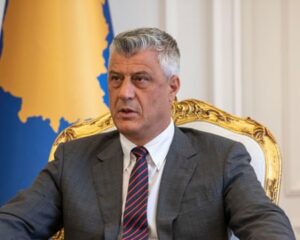
A court in The Hague sentenced Kosovo’s former president Hashim Thaci to 25 years in prison on Thursday after finding him guilty of war crimes committed during the late 1990s conflict in which Kosovo broke away from Serbia
The Kosovo Specialist Chambers convicted Thaci, 58, of murder, torture, cruel treatment, and the illegal detention of civilians
The tribunal determined that he bore criminal responsibility as the top commander of the Kosovo Liberation Army (KLA), the ethnic Albanian separatist force that fought Serbian security forces between 1998 and 1999. Presiding judge Charles Smith said Thaci “actively participated in and encouraged crimes.”
The court established that KLA forces under his command murdered 96 people identified as political opponents or perceived collaborators with Serbian authorities. A further 385 people were arbitrarily detained, 303 were tortured, and around 50 others suffered cruel treatment.
Judge Smith told the court: “The scale and nature of the crimes committed were very serious. The so-called intelligence on which many of these victims were arrested, detained and killed was little more than unverified rumours. Based on that information, victims were called and described as spies and collaborators and violently treated.”
The American judge was careful to clarify that the proceedings were “not about the legitimacy of the Kosovo Liberation Army” or Kosovo’s goal of independence. Thaci, who denied all charges, stood in silence as the sentence was delivered. He retains the right to appeal.
Three other former senior KLA figures were tried alongside Thaci. Jakup Krasniqi also received a 25-year sentence, while Kadri Veseli was jailed for 18 years and Rexhep Selimi for 13 years. All four had denied the charges.
The panel acquitted the four men on six counts of crimes against humanity, ruling that prosecutors failed to prove those crimes were part of a widespread and systematic attack on civilians.
The verdicts drew an immediate public response in Kosovo, where Thaci remains a revered figure for many ethnic Albanians. Thousands had gathered in the capital Pristina ahead of the ruling, with crowds filling a central square waving red and black Albanian flags and banners calling for the men’s acquittal. When the guilty verdicts were announced on a big screen, many in the crowd booed and wept.
Thaci had resigned from the Kosovo presidency in late 2020 to face the charges, after nearly three years of trial proceedings. In his closing address to the court in February, he said: “Throughout my life, I stood with the people of Kosovo defending freedom, life and dignity. I was always guided by the Western ideals of democracy, equality and justice.”
Albania’s Prime Minister Edi Rama reacted to the verdict by posting an image of barbed wire stretched across a map of Europe, with a single word: “Unbelievable.”
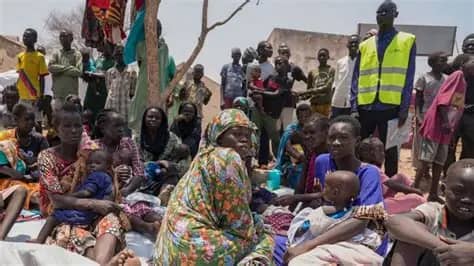
A new investigation by The New York Times claims Sudan’s military ran an organized program in 2024 to develop and produce chlorine-based munitions, escalating long-standing allegations of chemical weapons use in the country’s war.
According to the report, the Times reviewed nearly 150 documents, plus photos, videos, audio recordings and thousands of messages. The materials describe months of work to design, test and manufacture about 300 bombs filled with chlorine.
Brigadier General Tariq Hussein is named as one of the principal supervisors. The documents detail a munition that combined explosives with large quantities of chlorine, and tests carried out before production.
One of the most serious claims involves the source of the chemical. The dossier alleges that some chlorine was taken from a water-treatment facility in Omdurman, at a time when Sudan is facing cholera outbreaks and a collapse of basic services.
The investigation also points to senior leadership. Voice and text messages reportedly implicate army chief Gen. Abdel Fattah al-Burhan in knowledge of the program, and in orders to “remove all traces” after U.S. pressure and sanctions.
This is not the first time chemical weapons have been alleged in Sudan. Independent.ng reported that the Sudanese Alliance for Rights filed a case at the International Criminal Court against four senior Port Sudan Authority leaders, including al-Burhan, accusing them of using chemical weapons and committing serious violations against civilians. The lawsuit also names Yasser al-Atta, Shams al-Din al-Kabashi and Major General Taher Mohammed, and calls for an urgent ICC investigation.
The U.S. has already acted on earlier findings.
Independent.ng noted that Washington imposed additional penalties in May 2025 over the alleged use of chemical weapons, further linking Sudan’s war to international politics.
Chlorine is permitted for water purification, but using it as a weapon violates the Chemical Weapons Convention, which Sudan ratified. Experts say its civilian availability makes it easier to obtain and harder to monitor than military-grade agents.
With the conflict since April 2023 already causing mass displacement and famine, rights groups are now calling for an independent international investigation with access to sites, documents and the chain of command.


Salary: Fresh Update Emerges On Payment To Nigerian Workers

Obasanjo’s Son Picks Side In 2027 Race