Business
Tax Law: Man Who Made His First Transaction in 2026 Shares What Happened When He Sent N20k


A Nigerian man shared his experience on X (formerly Twitter) after making his first transaction on January 1, 2026
Amid fears about the new tax laws and reported deductions by some netizens, the man said his experience was quite different
In an exclusive chat with Legit.ng, Barrister Chidera Divine Ebimnamaonye responded to the question of whether the government did enough to explain the new tax laws to Nigerians before implementing them
A man, known on X as @QuantUMYTE, has gone public with his personal experience after making his first financial transaction in 2026.
This came amid concerns and reservations about the new tax laws that the federal government implemented.
According to @QuantUMYTE, he sent someone N20k and expected to be taxed or a deduction of N4k, but neither of those happened.
He condemned the widespread misinformation about the new tax laws on social media and advised netizens to always verify any information concerning it. His tweet read:

Just made my first transaction in 2026.
“₦20k sent, no 20% tax, no ₦4k charge.
“A lot of misinformation online always verify.”
New tax laws: Nigerian barrister comments
When asked if he believes the government did enough to explain the new tax laws to Nigerians before implementing them, Barrister Chidera Divine Ebimnamaonye told Daily voice
“The government did to some extent, as some tax officers were all over the media explaining the controversies surrounding the newly made tax law.
Meanwhile, it is noteworthy that ignorance of the law is not an excuse.”
Daily Voice has compiled some reactions to the man’s experience below:
Just made my first transaction in 2026.
₦20k sent, no 20% tax, no ₦4k charge.
A lot of misinformation online always verify.— QUANTUM.SOL (@QuantUMYTE) January 1, 2026
@GIbadin said:
“Your tax is paid at year end. So if your cumulative salary is more than 800k, you will be subjected to tax.
“Besides the tax, now if you transfer funds of ₦10,000 and above, Tinubu will deduct ₦50 from the sender and ₦50 from the receiver. If the receiver then sends ₦10,000 to another person, ₦50 is deducted from the sender (This is in addition to the ₦50 the receiver already paid), and the new receiver pays another ₦50, with the cycle continuing. This is robbery.”
@EniolaShodeinde said:
“That’s isn’t how it works, you get taxed as an individual after you exhausted the 800k threshold yearly for personal account, and by end of the year your cumulative will be known.”
@wisdomthefunds said:
I keep wondering if they will take me even if i make transactions way over 800k this year. “I thought it was just for salary earners. I don’t just get this thing yet.”
@kenjith3creator said:
“Do you think they’ll be deducting it as you’re transacting lol? “It’s a cumulative thing, when you file your taxes.”
@laide0 said:
“So you actually believed 20% of your money would be deducted from any amount you sent or received?? Wow wawu wawest.”
@toyosialliowe said:
“20% kheee.. No naaa. You have a threshold of 800k taxfree. Then the tax starts and gets progressive as your income increases.”
@joshua_pharmd said:
“It’s not per transaction though. And yes, it’s for income.
“Now I wonder how they’ll know how much you earn if you’re not a worker under the government. Exception to the businesses that pay taxes because they declare how much each staff earns.”
Meanwhile, Daily Voice previously reported that a lady lamented the unexpected value-added tax she was charged after making a purchase of N6.5 million.
In a now-viral tweet on X, the lady displayed the total bill for her recent purchase, showing that she was charged 7.5% VAT.
In the comment section, she added that the seller informed her that the VAT would not have been added to her bill if she had made the purchase on December 31, 2025.

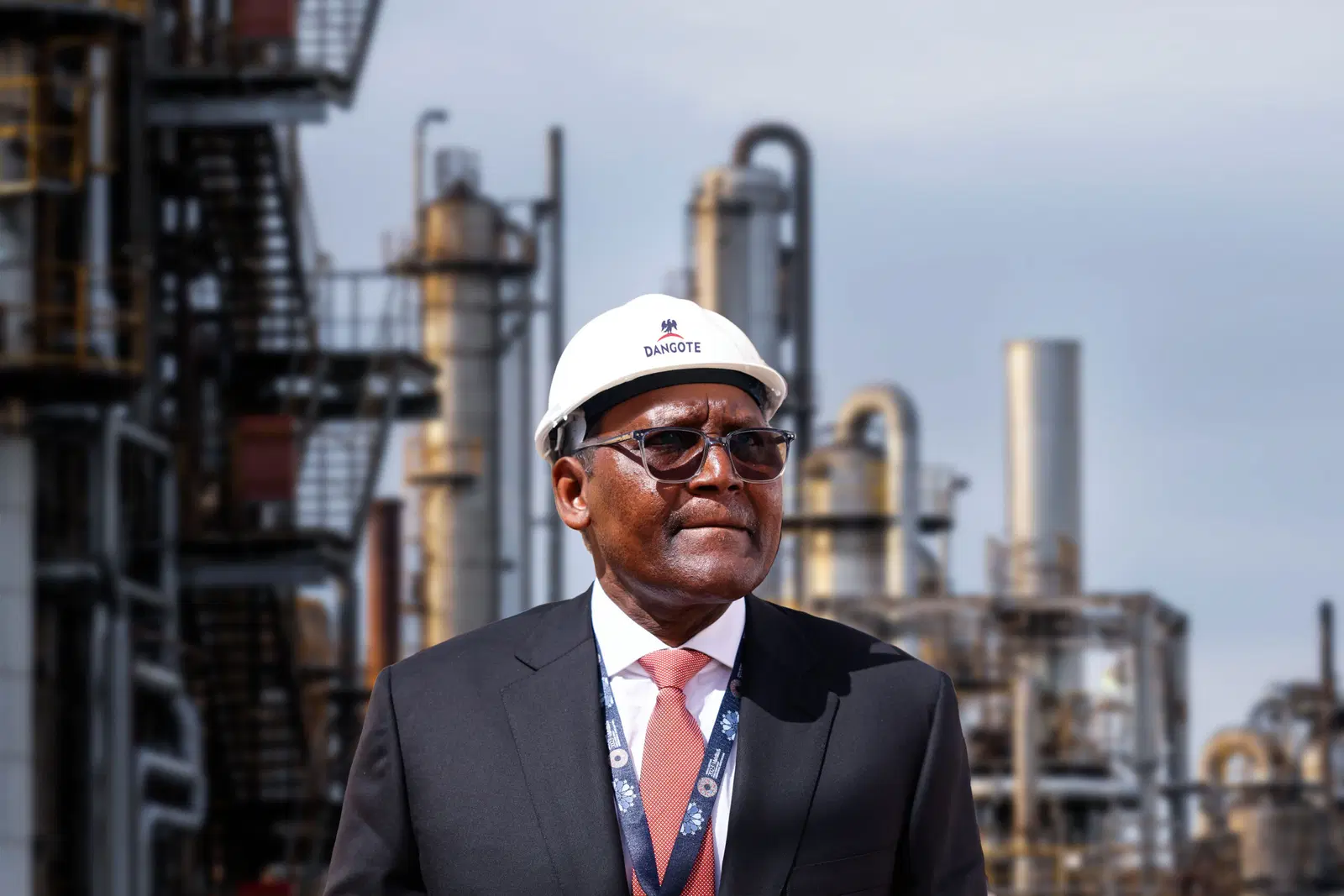
The Emir of Kano, Muhammadu Sanusi II, has warned prospective investors against using their children’s school fees or selling their homes to invest in shares.
Sanusi gave the warning on Thursday while speaking at the Dangote Refinery Initial Public Offering investor roadshow in Kano.
He urged Kano residents and other prospective investors to invest only money they could afford to set aside for some time, saying they could consider amounts such as N10,000, N20,000 or N30,000.
He said, “Do not take your children’s school fees and put in shares, Do not sell the house that you live in and put in shares.
“But what you can afford,10,000, 20,000, 30,000, what you can afford to set aside for some time, set it aside. And if you look at the fundamentals of the economy, over time you can be assured that this investment will grow, and you will not regret it.”
The Emir was speaking as part of the ongoing investor outreach for the Dangote Refinery IPO, which opened on September 14.
Sanusi urged Kano residents to participate in the capital market, saying they should seek to become shareholders in the refinery founded by Kano-born businessman, Aliko Dangote.
“I speak as the Emir of Kano, I would like my people to be owners of this company.
“I do not want us to be left behind in the capital markets. I do not want us to be left behind in financial inclusion. So this is the time and this is the opportunity,” he said.
The Emir also urged representatives of unions and other groups to educate their members about the opportunity to invest.
He advised prospective investors to adopt a long-term approach rather than buying shares in anticipation of quick profits.
“And I’m not talking about someone who will buy 5,000 shares and want to sell tomorrow and believe he will get 10,000. No, I’m talking about you have some money, put it in, leave it there for some time, and just watch your money grow.
“Forget about it for some time. You’ll be surprised in five years the 10,000 Naira you invest today, what it will be. The 100,000 Naira you invest, what it will be,” Sanusi said.
Sanusi also said the location of the refinery should not discourage Kano residents from investing, stressing that shareholders, rather than the location of the facility, determine ownership of the company.
“It doesn’t matter where the refinery is located. It could be located in Lagos, or Ibadan, or on the moon. It is the shareholders who own it.
“It is the shareholders who own it. It’s the shareholders who take the return. It is the shareholders who own the profit,” he said.
The Emir described Dangote as a son of Kano and urged residents to take advantage of the IPO to have a stake in the company.
“We have heard Lagos claim Aliko. I know very soon even Egypt will claim him, America will claim him. But we all know where he comes from,” Sanusi said.
He added, “I would like to say that this is his grand homecoming. We are happy to donate him.
“We are happy to share him, but please do not take him away from us.”
Sanusi also highlighted the refinery’s operations, saying prospective shareholders could see the assets and activities of the company, including its production of refined petroleum products and fertiliser.
He said the refinery was also creating direct and indirect jobs and had secured its gas supply, port access and markets.
-Punch
Alhaji Aliko Dangote, President and Chief Executive Officer of Dangote Industries Limited, has said the Initial Public Offering, IPO, of Dangote Petroleum Refinery and Petrochemicals, FZE, would democratise wealth creation by giving Nigerians and investors globally an opportunity to own shares in one of Africa’s major industrial projects.
Dangote stated this yesterday at the “Facts Behind the Offer” presentation and opening gong ceremony for the refinery’s IPO in Lagos, where the Nigerian Exchange Limited, NGX, formally opened the N2.2 trillion offer.
The IPO comprises 4.1 billion new ordinary shares offered at N525 per share, with a minimum subscription of 10 shares valued at N5,250. The offer is scheduled to close on October 13, subject to the terms contained in the prospectus.
Describing the offer as a historic moment for Nigeria’s capital market, the Dangote Group and Africa, Dangote said: “It would enable ordinary Nigerians and investors globally to own shares in one of Africa’s major industrial projects.
“What initially belongs to a country, begins in a deeper sense, now belongs to the people. Today is such a moment; today is a historic day
“The IPO is not simply about listing a company but creating a new possibility for Nigeria and Africa by broadening ownership of a major industrial asset.
“The decision to offer shares to the public was driven by the desire to allow more people participate in and benefit from the prosperity created by the refinery.
“An asset of this magnitude should not create value for only a very few people. It should create value for millions of people, not only Nigerians, but all over the world.”
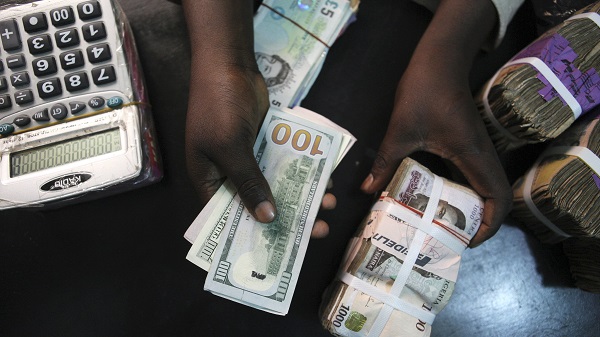
The Nigerian currency, Naira (₦), continued its battle against the United States dollar at the official foreign exchange market on Saturday.
Daily Voice reports that data from the Central Bank of Nigeria (CBN) showed that the local currency sold at ₦1,321.2160/1$ on Sunday.
The latest rate is the same as Saturday’s rate of ₦1,321.2160/1$.
At the parallel market (black market), however, the naira closed on Sunday at ₦1,400 to the dollar.
The offers by commercial banks, Bureau de Change (BDC) operators, and other foreign exchange dealers may, however, differ from the reference rates due to transaction margins and prevailing demand and supply conditions.
Market participants will continue to monitor foreign exchange inflows, demand for dollars, and CBN policies for indications of whether the naira can sustain its gains through the month.


Courts Sacks ADC Prominent Candidate

Ex Police Commissioner Dies

Minimum Wage: Proposed Salary Structure for Nigerian Workers, Levels 1–17 Emerges

Former Super Eagles Star Loses Life Savings, Duped By A Pastor of ₦1.2 Billion

I’m A Married Man, I Can Never Get Myself Involved With Such A Thing, Delta Gov Aide Reveals Why He Offered Comfort ₦500,000 Job