
News
El-Rufai Breaks Silence On FG’s Decision, Advices Tinubu’s Gov’t

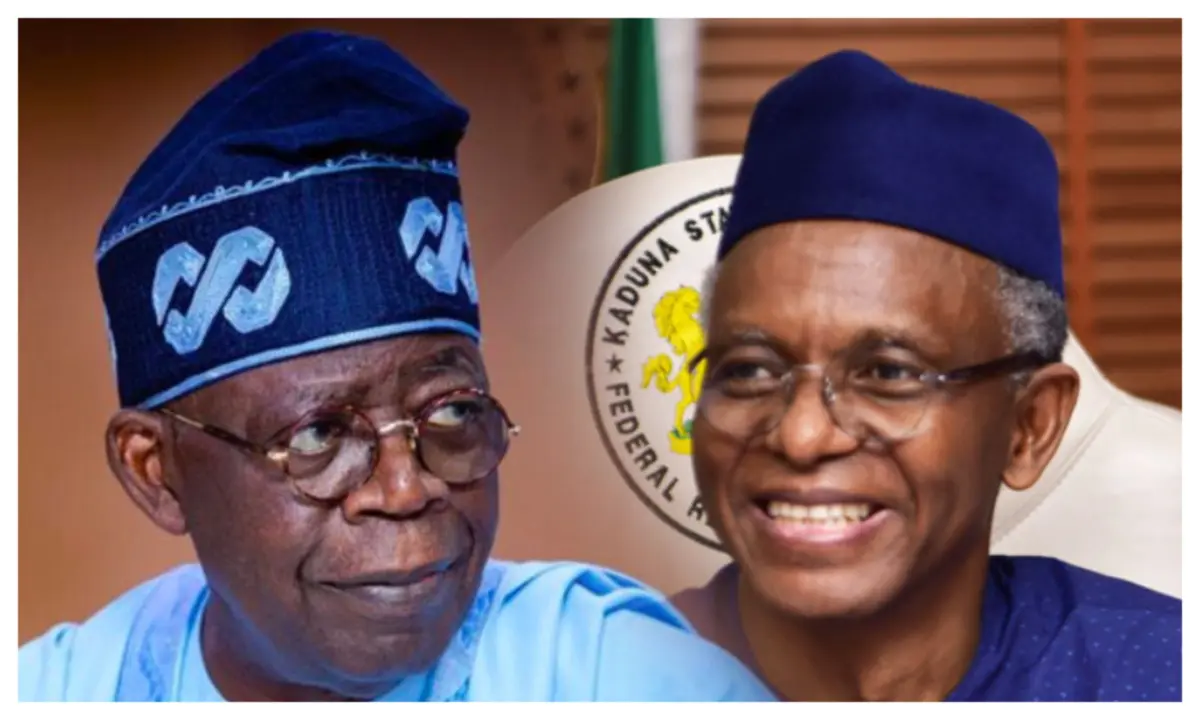
Former Kaduna State governor Nasir El-Rufai praised Defence Minister Christopher Musa for insisting that the Federal Government does not pay ransom to kidnappers. The defence minister said abducted victims are rescued through sustained military pressure and intelligence-led operations, not negotiations with bandits. El-Rufai had been warning that ransom payments to bandits and peace deals only fuel insecurity in the country.
Former Kaduna state governor, Nasir El-Rufai, has commended the Federal Government’s stance on banditry after the Minister of Defence, General Christopher Musa (retd), reiterated that the government does not pay ransom to kidnappers.
El-Rufai, who had consistently opposed ransom payments during his time as governor, praised the defence minister for publicly affirming the policy. E-Rufai was reacting to Musa’s recent remarks during an interview with BBC Hausa, where the minister dismissed claims that the government negotiates with bandits or pays ransom to secure the release of abducted victims.
Dailyvoice.ng reports that the Federal Government has repeatedly denied allegations that it pays ransom, maintaining that sustained military pressure and intelligence-led operations remain its primary strategy against kidnapping and banditry across the country.
Speaking during the interview, Musa said the government’s position was clear despite persistent public speculation, especially in cases involving abducted schoolchildren. “The Federal Government does not pay ransom. Even if others do, the Federal Government does not. We do not pay ransom,” Musa said.
Reacting via his X handle, El-Rufai described the defence minister’s comments as reassuring and refreshing. “God bless Minister Chris Musa for being a breathe of fresh air. May Almighty God help him in his honest quest for real security,” he wrote.
He also advised that the interview should be rebroadcast in English to reach a wider audience. “This interview should be rebroadcast with English Language translation as a matter of urgency,” he added.

Many users on X who commented corroborated their opinion with that of El-Rufa’i, while others tackled the decision.
@UK_Moyi
The is so bold and eloquent. We expect excellent result him
@NuhuSada0
Absolutely, Malam A breath of fresh air indeed. May God continue to strengthen him in delivering genuine security for our nation.
@betternow40471
The key phrase emphasized by the minister, is that ” If everyone comes together to work as a single entity against insecurity, insurgency and banditry will be overcome.” Question: will you be willing to be part that entity that will work together with government or sabotage govt?
@MoodLivestock
A point of correction, H.E. Nasir El-Rufai: He is a General and not just a Minister. God bless Gen. Christopher Musa. I stand with the General always.
@MuhammadAb31571
Perfect leaders like u will change nigeria @AbuZulkarnaini Words of wisdom, a true peace advocate.
The defence minister explained that many victims regain their freedom after security forces intensify operations against criminal enclaves, forcing kidnappers to abandon their captives while fleeing.
“People only assume that ransom is paid. Whenever children are kidnapped from schools, soldiers go into the forest to apply pressure on the bandits so they will flee and abandon the children, and then we recover them. There is no issue of paying ransom,” Musa said.
He stressed that intelligence gathering and coordinated military action remain central to the government’s response to kidnapping nationwide.
Paying ransom fuels more kidnappings
Musa warned that paying ransom only emboldens criminals and worsens the problem of kidnapping for financial gain. “We also oppose it because if it continues, it will encourage people to kidnap for money. That is why we say people should stop paying ransom,” he said. He appealed to families and communities affected by abductions to promptly involve security agencies rather than negotiating directly with kidnappers.
The defence minister also cautioned communities against any form of collaboration with bandits, including providing food, drinks, or other necessities.
“We always tell people not to have anything to do with the bandits and not to sell them food or drinks,” Musa said. Emphasising the importance of local intelligence in dismantling criminal networks, he warned against benefiting financially from such dealings. “What people must understand is that when you sell them food and they give you money, you’re eating blood money, and that’s not good,” he said.
Defence minister warns Gumi
Dailyvoice.ng earlier reported that Nigeria’s Defence Minister, General Christopher Musa (rtd), has issued a stern warning to cleric Sheikh Ahmed Gumi and others perceived to be sympathetic to terrorists and bandits, declaring that anyone who aligns with criminals shares responsibility for their actions.
Speaking during an official visit to Maiduguri on Tuesday, Musa cautioned against offering moral, rhetorical, or material support to groups engaged in terrorism and banditry.
Sheikh Gumi slams Trump’s Sokoto bombing
Earlier, Legit.ng reported that Islamic cleric Sheikh Ahmad Gumi had urged the United States to redirect resources from military action to education and social support for pastoral communities, reacting to reported U.S. airstrikes on suspected terrorist camps in northwestern Nigeria.
Gumi spoke amid growing public debate over the Christmas Day strikes, which the Nigerian Army later confirmed were carried out in coordination with the United States Africa Command against Lakurawa terrorist hideouts in parts of Sokoto State.

President Bola Ahmed Tinubu is set to give Minister of the Federal Capital Territory, Nyesom Wike, a defined role in his 2027 presidential campaign, with the former Rivers State governor expected to coordinate the campaign structure in Rivers State and the Federal Capital Territory.
The arrangement is expected to allow Tinubu’s campaign to benefit from Wike’s political network in the two territories while avoiding a formal change in the minister’s party affiliation.
Wike remains a member of the Peoples Democratic Party despite his open support for Tinubu’s re-election bid.
This appointment is coming against the background of disagreements between Wike and some APC governors over the best way to mobilise support for Tinubu.
Wike has consistently maintained that he does not need to join the APC before supporting the President in 2027.
He has also rejected the idea that his political relevance should be measured by whether he occupies a top position in the APC Presidential Campaign Council.
In August, Wike made his position clear after the APC unveiled its Presidential Campaign Council and appointed former Zamfara State Governor, Abdulaziz Yari, as Director-General.
The FCT minister said he would rather concentrate on Rivers State and the FCT than pursue the position of campaign director-general.
“What’s important is that you are able to deliver those two states. So it’s not about being DG. If you’re DG and you don’t win your state, what’s the essence of the DG?” Wike said.
“I don’t want to lose my state,” he added.
The proposed arrangement would therefore give Wike a specific responsibility without placing him under the formal hierarchy of the APC.
His expected assignment is particularly significant because of his political influence in Rivers State, where he served as governor for eight years, and the FCT, where he has served as minister since 2023.
Wike has repeatedly claimed responsibility for the political structure in both territories and has promised to work for Tinubu’s victory in the presidential election.
During a recent media engagement, he described himself as the “General Commander of the Political Infantry” and insisted that occupying the office of governor was not the only way to remain politically influential in a state.
“You do not need to be governor before you can be in charge. I am the General Commander of the Political Infantry; therefore, I am in charge,” Wike said.
The minister has also drawn a distinction between supporting Tinubu for president and supporting individual candidates seeking other elective positions.
He recently said his support for the President should not be interpreted as an undertaking to help politicians win their respective state-level contests.
Wike said his focus would remain the presidential election and that politicians seeking victories in governorship and legislative elections should handle their own political battles.
“Rainbow coalition has nothing to do with the APC. Rather, it is our own way of mobilising support across political parties for Mr President, who has done well to deserve a second term,” Wike said.
The Rainbow Coalition promoted by Wike is made up of politicians and political interests from different parties who support Tinubu’s return to office in 2027.
However, the arrangement has created tension with some APC governors who have questioned the need for a separate political structure outside the party.
The disagreement became more pronounced after Imo State Governor and Chairman of the Progressive Governors’ Forum, Hope Uzodimma, announced that APC governors had rejected the Rainbow Coalition.
Wike subsequently criticised some APC governors, including Uzodimma and Kwara State Governor AbdulRahman AbdulRazaq.
He accused some politicians of being more interested in being seen as the people working for Tinubu than in building genuine support for the President.
“You see, the problem with people, they want them to be seen, that they are the people working for the President. I don’t do that,” Wike said.
Under the new role, Wike would focus on Rivers and the FCT, while other senior members of the campaign would handle their own areas of responsibility.
Yari is expected to remain Director-General of the Presidential Campaign Council.
However, the proposed structure is not expected to operate strictly through a single chain of command.
Senate President Godswill Akpabio and Deputy Senate President Jibrin Barau are reportedly not expected to report directly to Yari despite their roles within the campaign structure.
Another prominent figure expected to play a major role in the campaign is Minister of Aviation and Aerospace Development, Festus Keyamo.
Keyamo is being considered for a major spokesperson position in the campaign.
He has considerable experience in presidential campaign communication.
He served as a spokesperson and Director of Public Affairs during Tinubu’s 2023 presidential campaign.
He also played a senior communications role in former President Muhammadu Buhari’s 2019 re-election campaign.
Keyamo later served as Minister of State for Labour and Employment under Buhari before becoming the Minister of Aviation and Aerospace Development under Tinubu.

The Niger State Government has imposed a 24-hour curfew following protests over the death of 37 suspected illegal miners in the state.
The state governor, Mohammed Umaru Bago, announced the curfew during a press conference on Friday.
According to the governor, the curfew takes effect immediately after Juma’at prayers on Friday.
The development follows protests sparked by the deaths of the 37 miners, who were reportedly arrested over alleged illegal mining activities.
Recall that the Commissioner of Police in Niger State, Adamu Abdullahi Elleman, ordered an investigation into the incident, which occurred in the early hours of Thursday, September 17, 2026.
According to a statement by the Police Public Relations Officer, Wasiu Abiodun, the suspects arrested over alleged illegal mining were found dead while in the custody of the Niger State Command of the Nigeria Security and Civil Defence Corps, NSCDC.
Adamawa State Governor, Ahmadu Fintiri, has declared Monday a work-free day across the state in honour of the late former Governor of Gongola State and former National Chairman of the Peoples Democratic Party, Alhaji Bamanga Mohammed Tukur.
The declaration came a day after Tukur was buried in Yola following funeral prayers held at the Lamido’s Palace on Sunday.
Daily Voice reports that political leaders, traditional rulers, family members, associates and sympathisers gathered to pay their final respects to the elder statesman.
Fintiri announced the work-free day in a statement issued by his Chief Press Secretary, Humwashi Wonosikou, saying the decision was intended to give residents an opportunity to honour Tukur and reflect on his contributions to Adamawa State and Nigeria.Nigeria travel guides
The governor described Tukur as a prominent statesman whose contributions to the growth and development of the state and the country would remain part of his enduring legacy.
According to Fintiri, the work-free day is part of activities surrounding the three-day mourning period earlier declared by his administration following the death of the former Gongola State governor.
Fintiri urged residents to use Monday to pray for the peaceful repose of Tukur’s soul and seek comfort for his family, friends and other people affected by his death.
He also directed that government flags across Adamawa State would continue to fly at half-mast throughout the mourning period as a mark of respect for the late statesman.
However, the governor clarified that the declaration would not affect essential services, directing workers in critical sectors to continue their duties.
The latest announcement follows Fintiri’s earlier declaration of three days of mourning after Tukur died on Saturday at the age of 90.
At the time, the governor had described the death as a major loss to Adamawa State and Nigeria, recalling Tukur’s long years of service in public life.Nigeria travel guides
“It is with deep sadness that I mourn the passing of Alhaji Bamanga Tukur, former Governor of Gongola State and an elder statesman whose contributions to our state and nation will remain indelible,” Fintiri had said.
The governor had also announced that government flags would be flown at half-mast throughout the mourning period.
“In his honour and in recognition of his selfless service, I have declared three days of mourning across Adamawa State, during which all government flags will fly at half-mast,” he said.
Fintiri further extended his condolences to Tukur’s family, associates and the people of Adamawa State, saying they were united in grief over the death of the former governor.
“My heart goes out to his family, associates, and the good people of our state during this period of grief,” he said.
Tukur’s family had announced his death in a statement signed by his son, Awwal D. Tukur, on behalf of the family. The statement said the former PDP chairman had “returned to his Creator” after a lifetime devoted to public service, business and community development.
The family described Tukur as a man whose influence extended beyond his immediate family to Adamawa State and Nigeria, citing his wisdom, generosity and commitment to national development.
It also expressed appreciation to Nigerians and others who offered prayers, condolences and support following his death.
Tukur was one of the prominent political figures from the old Gongola region and occupied several important positions during his decades in public and private life.
He served as the third civilian governor of the defunct Gongola State, an entity that existed before the creation of Adamawa and Taraba states. His tenure remains part of the political history of the region.
Beyond his role as governor, Tukur served as Minister of Industries during the military administration of former Head of State, General Sani Abacha. He was also involved in business and economic development activities and, in 2012, served as president of the Africa Business Roundtable.
Tukur later became national chairman of the PDP in March 2012, remaining in the position until January 2014 during a politically turbulent period in Nigeria.Nigeria travel guides
His death came shortly before his 91st birthday, which would have been celebrated on September 15.


Tinubu To Appoint Wike As APC Campaign Coordinator For 2027 Election

Government Declares Monday, September 21 Public Holiday
BREAKING: Tears as Prominent Nigerian Ex-Governor Dies in UK

Former Super Eagles Star Loses Life Savings, Duped By A Pastor of ₦1.2 Billion

I’m A Married Man, I Can Never Get Myself Involved With Such A Thing, Delta Gov Aide Reveals Why He Offered Comfort ₦500,000 Job