
Business
New Cement Prices Emerge as Dangote, BUA Release Fresh Rates

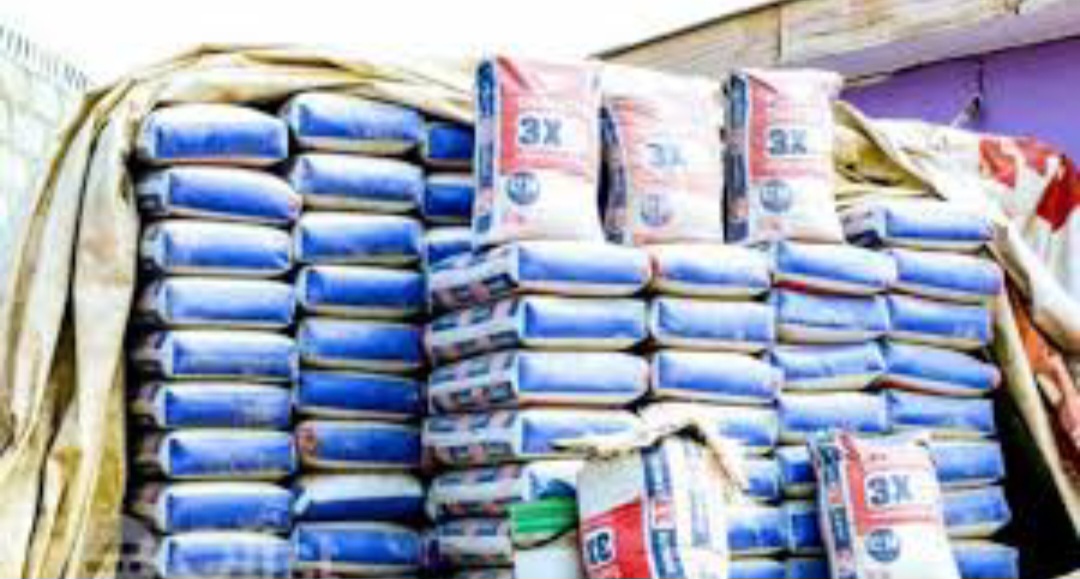
The Federal Government has expressed concern over the continued rise in cement prices, warning that the trend is piling pressure on ongoing infrastructure projects across the country.
Minister of Works, David Umahi, said the persistent increase in cement prices is driving up the cost of road and other public infrastructure projects, forcing contractors to seek contract reviews due to escalating construction expenses.
According to the minister, the Federal Government is investing heavily in critical infrastructure and requires the support of cement manufacturers through more affordable pricing to ensure the timely execution of projects.
Market prices have continued to climb despite appeals by the government. A 50kg bag of cement, which sold for between ₦7,500 and ₦10,000 in 2025, now retails for between ₦11,500 and ₦15,000 in many parts of the country, with some locations recording prices as high as ₦13,000 and above.

Current market checks also show that Dangote Cement and BUA Cement are selling for between ₦11,500 and ₦13,000 per 50kg bag in several states, depending on the location and distributor.
Umahi attributed the growing concern to the impact of rising cement prices on the cost of delivering major infrastructure projects, urging manufacturers to reduce prices and expand production capacity to support the government’s infrastructure agenda and ease the burden on contractors and Nigerians.


The World Bank has said Nigeria’s biggest fiscal challenge is weak revenue mobilisation rather than excessive borrowing, urging the government to prioritise efforts to boost revenue generation to support sustainable economic growth.
Speaking during an interview on Channels Television on Friday, the World Bank Country Director for Nigeria, Mathew Verghis, said Nigeria’s debt profile remains moderate by international standards and is significantly different from countries experiencing debt distress.
“From our assessment, Nigeria doesn’t have a high indebtedness problem; it has a low revenue problem,” Verghis said.
He explained that Nigeria’s debt-to-GDP ratio is lower than that of many comparable countries, stressing that concerns should focus on improving government revenue rather than limiting borrowing.
“When we looked at the numbers, Nigeria is a moderately indebted country, meaning it has less debt relative to its economy than most of its neighbours and many other countries,” he said.
“Nigeria is in a very different situation than Ghana, for example, which is going through a debt restructuring.”
Verghis defended government borrowing as a necessary tool for financing long-term investments that stimulate economic growth and improve living standards.
“Nigeria borrows for the same reasons that all countries borrow. If you want to deliver results to people, the money available on an annual basis is not enough. So you borrow, deliver results, and that improves your ability to repay,” he said.

He cited the expansion of electricity access as an example, noting that providing power to about 32 million Nigerians requires substantial upfront investment.
“To be able to connect and provide energy to 32 million Nigerians, Nigeria needs to borrow money now. But with increased access to energy, the country will become wealthier and better positioned to repay the loans,” he added.
The World Bank official, however, warned that low government revenue poses a greater threat to Nigeria’s fiscal sustainability than its current debt level.
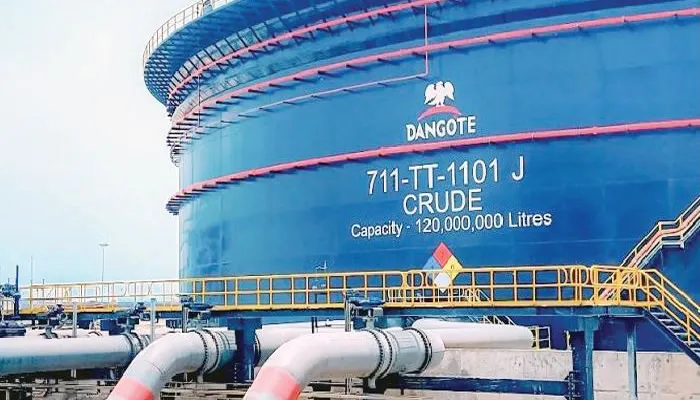
Dangote Petroleum Refinery & Petrochemicals has announced a reduction in the ex-depot price of Premium Motor Spirit (PMS), commonly referred to as petrol, by N50, bringing the new price to N1,075 per litre.
This marks the fourth price cut in just one month. The update was shared in a statement on X (formerly Twitter) on Thursday.
With this latest adjustment, the total decrease in the refinery’s petrol ex-depot price amounts to N200 per litre since May 30, 2026.
The company emphasizes that it is continuing to pass lower production costs on to consumers, although it is still refining crude oil that has been purchased at significantly elevated international prices.
Dangote Refinery said the latest price adjustment reflects its commitment to transferring the benefits of improving market conditions to consumers while ensuring the sustainability of its operations.
“The latest N50 per litre reduction brings the cumulative decrease in the refinery’s PMS ex-depot price to N200 per litre since May 30, 2026, reducing the gantry price to N1,075.”
“Over the same period, the refinery has reduced the ex-depot price of Automotive Gas Oil (AGO) by N300 per litre and Jet A1 aviation fuel by N520 per litre.”
The company said the successive reductions demonstrate its commitment to ensuring Nigerians benefit from favourable market developments while maintaining the long-term sustainability of domestic refining operations.
The latest adjustment is expected to influence pump prices as marketers begin to reflect the lower ex-depot cost in retail sales.
The latest reduction comes as regulators and government officials continue to emphasise that fuel prices under Nigeria’s deregulated downstream petroleum market will be determined by market forces rather than government intervention.
Minister of State for Petroleum Resources (Oil), Heineken Lokpobiri, recently reiterated that petrol prices in a deregulated market would be driven by competition, not government directives.
The Nigerian Midstream and Downstream Petroleum Regulatory Authority (NMDPRA) has repeatedly maintained that petrol prices must remain cost-reflective, while warning marketers against profiteering and arbitrary pricing.
The Federal Competition and Consumer Protection Commission (FCCPC) has also advocated competitive market practices, insisting that consumers should benefit from lower prices resulting from improved supply conditions and stronger competition.
The increasing domestic supply of refined petroleum products is expected to intensify competition among suppliers, creating room for further price adjustments where market conditions permit.
The latest price reduction extends Dangote Refinery’s aggressive pricing strategy since the end of May as competition in Nigeria’s downstream petroleum sector continues to deepen.
The National Bureau of Statistics earlier reported that the average retail price of Premium Motor Spirit, commonly known as petrol, rose by 55.31% year-on-year to N1,596.25 per litre in May 2026.
The latest petrol price data comes amid renewed pressure on global commodity markets, driven by geopolitical developments in the Middle East and disruptions to global energy supply chains.
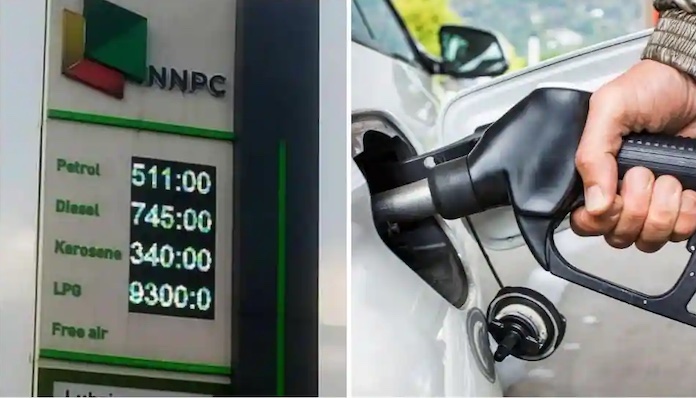
The Nigerian National Petroleum Company Limited (NNPCL) has reduced its retail pump price of Premium Motor Spirit(PMS) again. This is the second drop in as many weeks, reflecting the changes in the global crude oil market.
While prices in Lagos reduced from N1,210 to N1,125 a litre, motorists at the Abuja depot now pay N1,170 per litre, down from N1,260 per litre at NNPC stations.
This review comes less than a week after the company slashed petrol prices from N1,165 per litre to N1,150 per litre in Lagos and N1,255 per litre to N1,190 per litre in the FCT. NNPC retail stations in Lagos, Abuja and some other locations have adjusted to N1,170 Petroleumprice.ng reports.
Many independent and major marketers have reduced their pump prices due to a decrease in ex-depot prices and intensifying competition.
The changes followed as marketers buy petrol at depots at a lower price than last week.
For example, Integrated, Ascon, Sahara, Bono, and African Terminal supplied petrol at N1,120 per litre while Pinnacle and Techno Oil supplied petrol at N1,121 per litre, which makes it easy for retailers to lower their pump price.
The latest adjustment would increase competitive pressure on the oil marketers, and will further drive competition among them to woo customers and retain market share.
The federal government has also urged marketers to bring down domestic pump price whenever prices crash due to global oil price decline.
Although petrol price in the country is determined by market dynamics under the deregulated system, the government has said that it has the responsibility to protect the consumers.
Market experts are optimistic that the latest reduction by NNPC could trigger another round of downward reviews by the competing oil marketers within the week.


Sad End: Death Strikes, Nigerian Sitting Senator Bereaved

2027: Pick Christian Deputy Or Risk Losing Votes – APC Chieftain Tells Bago

Fresh Tr0uble: Amaechi Rejected as Atiku’s Running Mate

Former Super Eagles Star Loses Life Savings, Duped By A Pastor of ₦1.2 Billion

I’m A Married Man, I Can Never Get Myself Involved With Such A Thing, Delta Gov Aide Reveals Why He Offered Comfort ₦500,000 Job

Lagos Imposes ₦250,000 Fine For Illegal Waste Disposal

-
 News1 day ago
Jubilation as Nigerian Gov Declares Permanent 13th-Month Salary for Workers
-

 Tech2 days ago
Apply Now: FRSC Opens Portal for 2026 Recruitment Exercise, Gives Application Deadline
-

 Politics1 day ago
Ganduje Breaks Silence On Dumping APC
-

 News1 day ago
Presidency Asks DSS, EFCC To Probe Govt Officials Linked To PFIPC Scandal
-

 Sports1 day ago
World Cup 2026: Messi Pinpoints What Argentina Did Wrong Against Cape Verde
-

 Uncategorized1 day ago
Toyin Abraham Addresses Feud With Funke Akindele
-
 Uncategorized9 hours ago
Fresh Tr0uble: Amaechi Rejected as Atiku’s Running Mate
-

 Politics9 hours ago
BREAKING: Kalu Declares Who Will Win 2027 Election, “I Checked It Inside My Room