
Business
₦6,000/Bag: Dangote, BUA Adjust Cement Rates as List of Africa’s Cheapest Prices Emerge

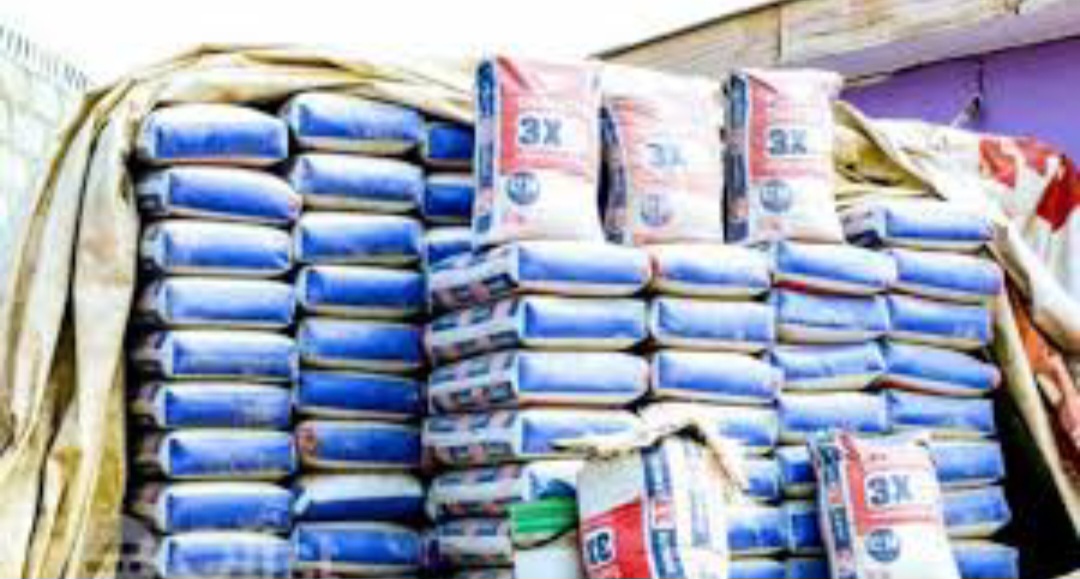
Cement prices in Nigeria have continued their upward climb in July 2026, adding fresh pressure on builders, contractors, and millions of Nigerians planning construction projects.
A market survey conducted by Legit.ng shows that the retail price of a 50kg bag of cement now ranges between ₦12,500 and ₦15,000, depending on the brand, location, and distribution costs.
The latest increase comes at a time when Nigeria’s cement industry is undergoing a major transformation following Huaxin Cement’s acquisition of Lafarge Africa.
Dealers across major cities report that cement prices have become highly volatile, with costs differing from one region to another due to transportation expenses and supply conditions.
 In some parts of Lagos, Abuja, Port Harcourt, and the South-East, prices have reportedly crossed the ₦15,000 mark, particularly for retail purchases in smaller quantities.
Nigeria has a robust local production capacity of over 60 million metric tonnes of cement annually, ranking among the highest in Africa.
Despite this significant production capability, domestic consumers face some of the highest cement prices on the continent, paying nearly double the average prices in other countries.

The cement industry in Nigeria is primarily led by three major companies: Dangote Cement, BUA Cement, and Lafarge Africa, which has recently rebranded as HBM Nigeria Plc.
Collectively, these companies have an installed production capacity estimated between 60 and 65 million metric tonnes per year.
With the ongoing development of new plants, this national capacity is projected to increase to approximately 85 million tonnes annually in the near future.
Currently, the actual domestic consumption of cement in Nigeria ranges from 25 to 30 million tonnes each year. This indicates that Nigeria produces a surplus of cement, allowing for exports to neighboring countries.
In major urban markets such as Abia, Lagos, and Abuja, the price for a 50-kilogramme bag of cement typically falls between N12,500 and N15,000, with variations depending on location and distribution costs.
A continental comparison shows that the local rate is higher than the cement price in several African countries, despite Nigeria’s supply glut.
In South Africa, where the cement industry is competitive and supported by efficient logistics, a 50kg bag of cement averages between N6,000 and N7,000. In Egypt, one of the world’s largest cement producers, prices could fall to the equivalent of N4,000–N5,000 per bag, largely due to surplus capacity and lower production costs.
In Kenya, cement sells for about N6,500–N7,500 per bag, while in Ghana, prices typically range between N7,000 and N8,000 per bag, depending on exchange rates and imports.
Market insights show that Dangote alone controls more than half of Nigeria’s cement production, with an installed capacity of about 35–35.3 million tonnes per year across Obajana, Ibese, Gboko and Okpella plants. The estimated capacity will exceed 41 million upon completion of the new plant in Itori, Ogun State.
BUA Cement is currently the second-largest producer, with an installed capacity of about 17–20 million tonnes per year. Its major plants are in Obu, Edo State, and Sokoto (Kalambaina), while a new line is planned in Edo State. Lafarge Africa has an installed capacity of about 10.5 million tonnes per year, with plants at Ewekoro and Sagamu in Ogun State, Ashaka in Gombe State and Mfamosing in Cross River State.
Several new plants are also underway. These include MSM Cement in Kebbi State, with a planned capacity of three million tonnes per year, and Resident Cement in Bauchi State, with a proposed capacity of 10 million tonnes per year.
The three firms generated over N6.53 trillion in revenue in 2025, while their combined after-tax profit reached about N1.65 trillion, representing a 142 per cent increase from 2024.
For critics, these profitability figures raise questions about whether Nigerian consumers are paying more than necessary for a product produced locally at scale.
Manufacturers, however, argue that cement production in Nigeria is far from cheap. Cement plants require enormous amounts of energy, and producers rely heavily on gas, coal, alternative fuels and diesel to power kilns and generators. With the removal of fuel subsidies and rising energy prices, production costs have surged. Although most raw materials, such as limestone, are sourced locally, manufacturers still import equipment, spare parts, refractory materials, packaging materials, and some additives. The depreciation of the naira has sharply increased these costs.
They also point to logistics and infrastructure challenges. Nigeria’s major cement plants are located far from some key consumption centres. Industry estimates suggest that logistics alone can account for 30 – 40 per cent of the final retail price of cement.
According to the producers, rising labour costs, financing costs, maintenance expenses, and general inflation increase the overall cost of production and distribution, and they add that Nigeria’s housing deficit, infrastructure projects, and private construction keep demand high. “When demand remains strong, manufacturers have little incentive to cut prices.”
Ironically, Nigeria exports cement and clinker to neighbouring countries such as Ghana, Cameroon and Niger. While exports earn valuable foreign exchange for producers, they also reduce pressure to lower prices in the domestic market.
The high cement prices have far-reaching consequences for the housing and construction industry. Already, the Federal Government is feeling the pinch of the problem as the Minister of Works, David Umahi, recently urged producers to reduce their prices. He warned that the current cost of cement is making infrastructure projects difficult, and the government is being forced to continually adjust project contracts.
Umahi said the government would start formal engagements with cement companies from July 1, 2026.
He added that reducing cement prices would both support the delivery of infrastructure projects and benefit citizens who use cement for domestic construction projects. The minister also urged cement companies to increase their production capacity to support government projects.
Experts estimate that the country faces a housing deficit of more than 16 million units, and cement remains one of the most critical construction materials.
When cement prices rise, the cost of building houses, schools and infrastructure projects increases, placing additional pressure on both government budgets and private developers.
Additional report from Vanguard




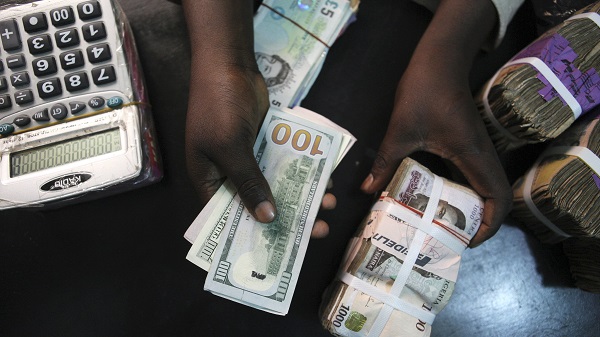
The Nigerian currency, Naira (₦), continued its battle against the United States dollar at the official foreign exchange market on Saturday.
Daily Voice reports that data from the Central Bank of Nigeria (CBN) showed that the local currency sold at ₦1,321.2160/1$ on Sunday.
The latest rate is the same as Saturday’s rate of ₦1,321.2160/1$.
At the parallel market (black market), however, the naira closed on Sunday at ₦1,400 to the dollar.
The offers by commercial banks, Bureau de Change (BDC) operators, and other foreign exchange dealers may, however, differ from the reference rates due to transaction margins and prevailing demand and supply conditions.
Market participants will continue to monitor foreign exchange inflows, demand for dollars, and CBN policies for indications of whether the naira can sustain its gains through the month.
Cement prices in Nigeria remain elevated, with a 50kg bag selling for between ₦12,000 and ₦15,000 in many markets, putting further pressure on builders, contractors and Nigerians planning construction projects.
The latest market data shows that although some brands are currently available below the ₦15,000 mark, the industry remains significantly more expensive than it was at the end of 2025 and early 2026.
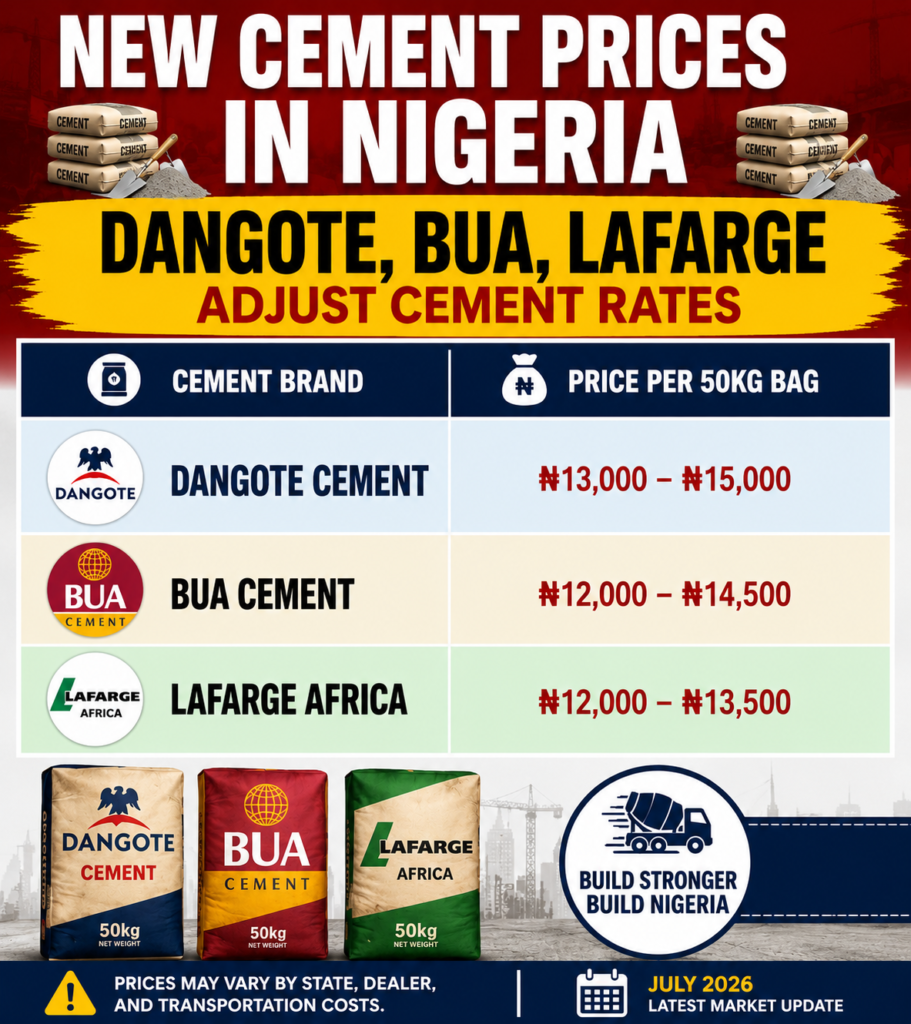
Recent market quotations show the following indicative prices for a 50kg bag:
Note: prices may vary by location and transportation costs.
These figures are based on a September 1 market report and can vary depending on location, transportation costs, dealer margins and supply conditions.
However, July industry data painted a more expensive picture. CementNet reported retail prices of ₦12,000 to ₦15,000, with Dangote selling for about ₦13,000–₦15,000, BUA at ₦12,000–₦14,500, and HBM Nigeria, formerly Lafarge Africa, at ₦12,000–₦13,500.
The latest figures suggest that cement prices may have eased from the highest quotations seen earlier in the year, but the broader trend remains upward.
In July, The Guardian reported that a 50kg bag typically sold for ₦12,500–₦15,000 across major markets including Lagos, Abuja and Abia.
The Federal Competition and Consumer Protection Commission (FCCPC) also reported that prices had reached between ₦13,000 and ₦15,000 in some locations during the first half of 2026.
This means the current ₦12,000–₦14,000 quotations for several major brands should be viewed as some market-level moderation rather than a broad collapse in cement prices.
Why cement remains high
High energy and transportation costs continue to weigh heavily on the industry. Cement manufacturing requires significant amounts of energy, while moving cement from factories and depots to retail markets adds further costs.
Location is also playing an important role. Buyers in areas farther from production centres can pay substantially more because of haulage and distribution expenses.
The situation is particularly significant because Nigeria has substantial cement production capacity, yet retail prices remain high. The Guardian reported that domestic production exceeds consumption, with surplus output exported to neighbouring countries.

Nigerian civil servants on Grade Level 8 now earn between N1,479,276 and N1,914,514 annually, depending on their step within the scale, following the new minimum wage signed under President Bola Tinubu’s administration.
The figures fall under the Consolidated Public Service Salary Structure (CONPSS), the framework that governs pay across Nigeria’s federal civil service.
CONPSS covers 17 grade levels in total, and a worker’s position within each level is shaped by their qualifications, length of service, and performance record.
Grade Level 8 has 14 steps, with each step representing a progression in earnings. Below is the full breakdown:

The gap between the lowest and highest steps at this level amounts to N435,238, reflecting how significantly length of service can affect take-home pay within a single grade.
Interest in the salary structure has grown since Tinubu’s government approved a new national minimum wage, which triggered a review of earnings across the public sector. Civil servants and job seekers have been keenly examining each grade level to understand what the adjusted structure means in practical terms.
Workers at Grade Level 8 are typically mid-level employees with some years of experience in the civil service. Their earnings sit above the entry-level grades but below the senior cadre, making this level a reference point for many who are planning career progression within the federal workforce.


Former Nigerian Senator dies At 62

2027: ADC Suffers Setback As Popular Reps Aspirant Dumps Party

NELFUND Speaks On Alleged Funding Of Tinubu Supporters With Student Loans

Former Super Eagles Star Loses Life Savings, Duped By A Pastor of ₦1.2 Billion

I’m A Married Man, I Can Never Get Myself Involved With Such A Thing, Delta Gov Aide Reveals Why He Offered Comfort ₦500,000 Job

Lagos Imposes ₦250,000 Fine For Illegal Waste Disposal

-

 News1 day ago
Trump Is Behind My Plan To Return Fuel Subsidy – Atiku
-

 News1 day ago
2027 Presidential Election Will Be An Easy Ride For Tinubu – Says Wike’s Aide, Olayinka
-

 Entertainment1 day ago
Toxic Today, Sweet Tomorrow – Deborah Shokoya Speaks On Peller, Jarvis Marriage
-

 Sports1 day ago
Adegbuyi Named WAFU-B Player Of Tournament As Edo Queens Qualify For Champions League
-

 Business1 day ago
Dollar To Naira Exchange Rate Today, September 7th, 2026
-

 Entertainment1 day ago
Wizkid Headlines Afro Plus Fest, Marks 15 Years In Music
-

 News1 day ago
26 States Lean On FAAC As Wage Bills Outstrip IGR
-

 News1 day ago
FG To Give Nigerian Shipowners $25m Each Under New Shipping Fund