
Business
No More N14k/Bag: BUA, Dangote Cement Release Fresh Prices as Chinese Firm Enters Nigeria

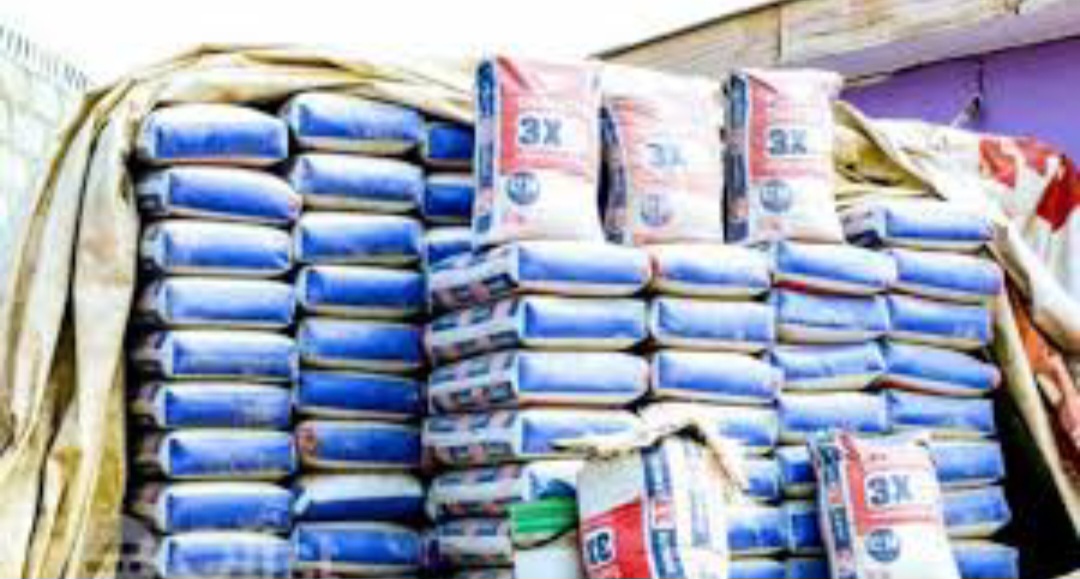
Cement prices in Nigeria have continued their upward climb in July 2026, adding fresh pressure on builders, contractors, and millions of Nigerians planning construction projects.
A market survey conducted by Legit.ng shows that the retail price of a 50kg bag of cement now ranges between ₦12,500 and ₦15,000, depending on the brand, location, and distribution costs.
The latest increase comes at a time when Nigeria’s cement industry is undergoing a major transformation following Huaxin Cement’s acquisition of Lafarge Africa.
Dealers across major cities report that cement prices have become highly volatile, with costs differing from one region to another due to transportation expenses and supply conditions.

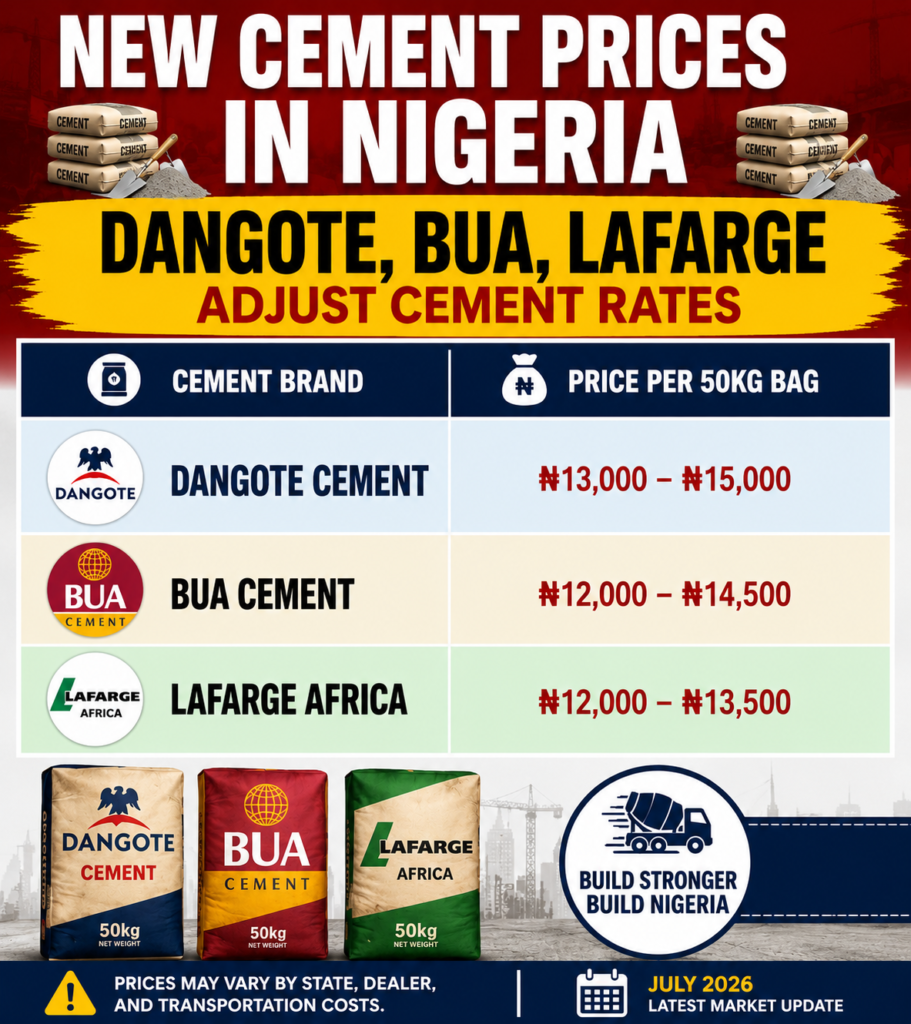 In some parts of Lagos, Abuja, Port Harcourt, and the South-East, prices have reportedly crossed the ₦15,000 mark, particularly for retail purchases in smaller quantities.
The Federal Government has announced plans to expand the reach of its consumer credit programme to 500,000 Nigerians by December 2026, as the Nigerian Consumer Credit Corporation (CREDICORP) shifts focus from building its framework to scaling its impact across the country.
The target was outlined in CREDICORP’s H2 2026 Outlook, published as part of its 2026 Impact Report.
According to a report by The Nation, the document showed that the corporation had already crossed the 300,000-beneficiary mark and disbursed over N45.2 billion in consumer credit during the first six months of the year, which the body described as a major milestone since the programme launched in April 2024 following a presidential directive
For the remainder of the year, the government said its priorities include growing the volume of loans issued, mobilising more capital, strengthening partnerships with lenders and vendors, and deepening consumer education to encourage responsible borrowing.
CREDICORP said it will keep its attention on key sectors, including mobility, digital devices, energy solutions, home improvement and life essentials, to help Nigerians acquire assets that improve their daily lives and economic standing.
The corporation also plans to advance national initiatives such as the Credit Passport, Consumer Credit Guidelines and enabling legislation, while widening participation among lenders, manufacturers, vendors and development partners.
In its own words, CREDICORP said: “Our ambition for H2 is clear: reach more Nigerians, strengthen the consumer credit ecosystem, and accelerate the transition towards a credit-enabled economy where access to finance drives productivity, inclusion, and sustainable economic growth.”
The report noted that CREDICORP’s programmes are deliberately designed to reach women and Nigerians who have been shut out of the formal financial system. More than 40 per cent of current beneficiaries are first-time formal borrowers, according to the corporation.

CREDICORP said its partnership model, which brings together financial institutions, government agencies, development partners and private sector players, has continued to grow, strengthening the foundation for responsible consumer lending in Nigeria.
Looking ahead, the corporation said it remains committed to responsible lending, improved consumer education, stronger governance and mobilising additional investment to build a sustainable credit market that supports inclusive economic growth

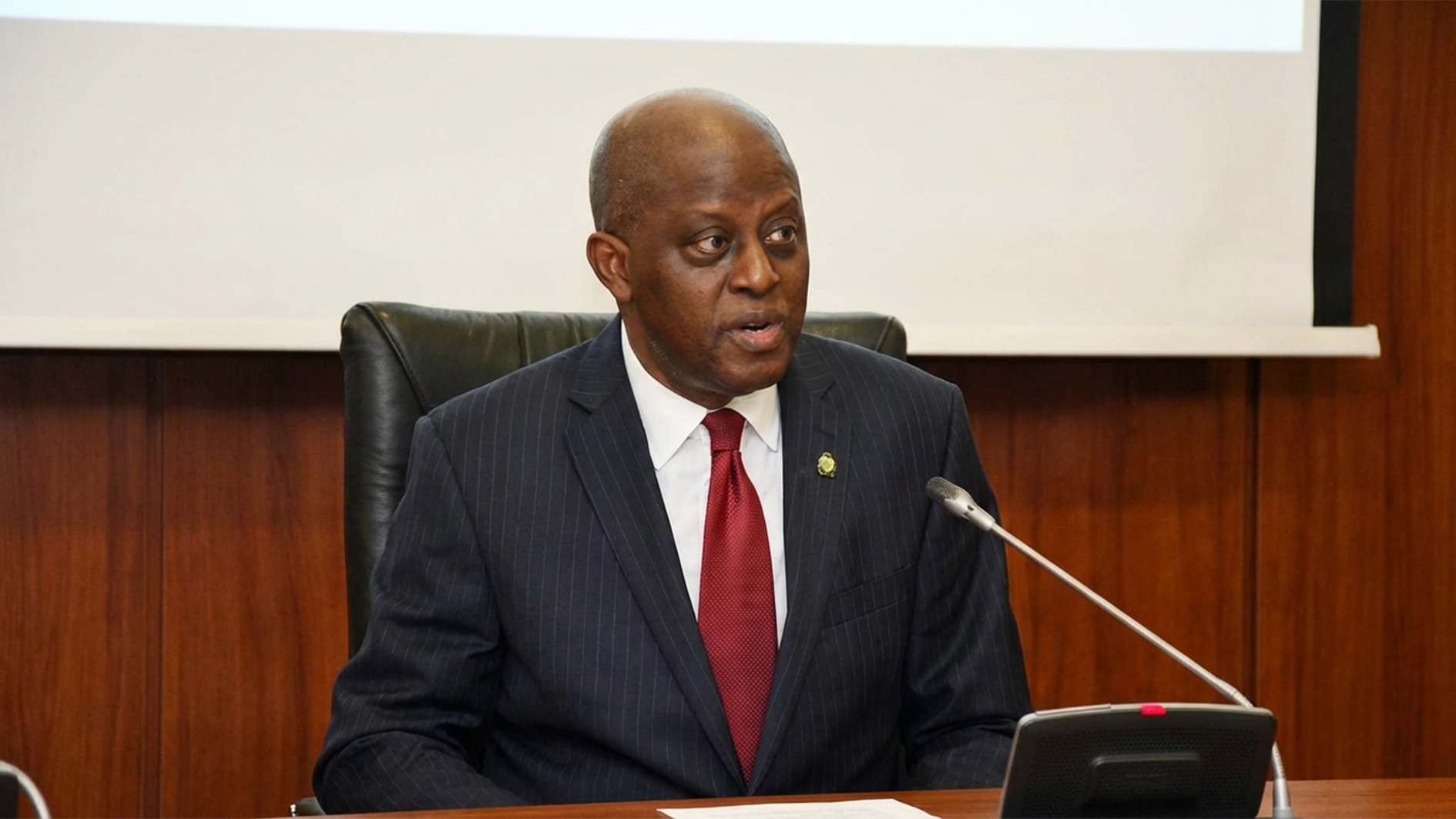
The Monetary Policy Committee of the Central Bank of Nigeria has retained the benchmark interest rate at 26.5 per cent for the second time.
The CBN Governor, Olayemi Cardoso, announced the decision on Tuesday at the end of the committee’s 306th meeting in Abuja.
Cardoso said, “The Committee decided as follows: retain the monetary policy rate at 26.5 per cent.”
The move follows an earlier hold at the previous MPC briefing, and a 50-basis-point cut announced in February 2026.
PUNCH Online observed that the MPC’s decision to retain rates occurred despite a marginal decrease in Nigeria’s inflation rate.
According to the most recent Consumer Price Index report released by the National Bureau of Statistics, Nigeria’s headline inflation rate eased marginally to 15.91 per cent in June 2026 from 15.93 per cent recorded in May.
It observed that the current inflation rate marked its first decline after three consecutive monthly increases, from 15.06 per cent in February to 15.38 per cent in March, 15.69 per cent in April and 15.93 per cent in May.
More to come…
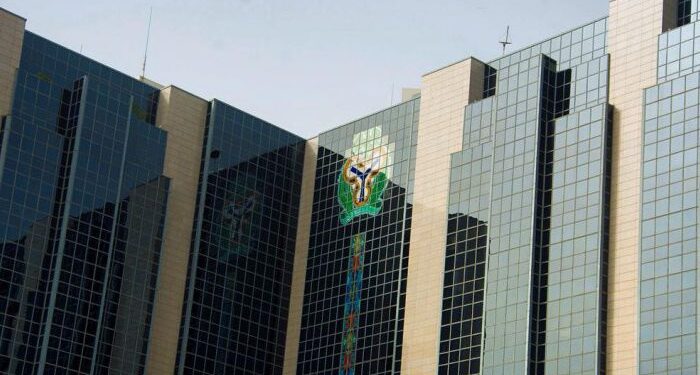
The Central Bank of Nigeria (CBN) has withdrawn about N59.3 trillion from the financial system since January 2026 as part of efforts to tighten liquidity ahead of the 2027 general elections and reduce the risk of election-related cash surges that could encourage vote buying.
The development was disclosed in CardinalStone Research’s 2026 Mid-Year Economic Outlook released by CardinalStone Securities Limited (CSSL), a subsidiary of CardinalStone Partners Limited.
According to the report, the apex bank’s aggressive liquidity management strategy is aimed at preventing excess cash from flooding the economy during the election period while also supporting monetary stability.
The report said the CBN’s actions reflect concerns previously raised by members of the Monetary Policy Committee (MPC) over the possibility of election-driven liquidity injections and increased demand for foreign exchange as political activities gather momentum.
“While data suggests that election cycles do not necessarily translate to FX pressures in isolation, we like that the CBN is taking proactive and cautionary steps,” the report stated.
According to CardinalStone, the CBN has mopped up N59.3 trillion through its liquidity management operations since the beginning of the year, with net issuance standing at N19.8 trillion. The report also revealed that foreign portfolio investors currently hold about $18.5 billion in Open Market Operations (OMO), reflecting continued investor confidence and the central bank’s efforts to strengthen Nigeria’s external reserves.
The tightening policy has already begun to affect the country’s money supply. Money supply growth (M3) slowed to 8.4 percent year-on-year in May 2026, well below the five-year average of 28 percent. CardinalStone said the figure is close to the estimated optimal money supply growth rate of 8.6 percent, suggesting that the CBN is carefully balancing economic growth with the need to control inflation and limit speculation against the naira.
The report also noted that the CBN has introduced broader reforms, including a revised foreign exchange manual designed to improve market regulation, strengthen documentation requirements and increase transparency in the foreign exchange market.
CardinalStone expects the central bank to maintain its tight monetary policy throughout the rest of 2026, with a gradual easing likely after the 2027 elections. The firm projects headline inflation to average 15.9 percent this year before slowing further to 14 percent in 2027.
It, however, warned that the outlook could be affected by renewed geopolitical tensions in the Middle East, rising global energy prices, unexpected domestic or international economic shocks and possible policy reversals.
The report recalled that the disinflation trend expected earlier in the year was interrupted by the conflict involving the United States, Israel and Iran, which pushed up global crude oil prices and added more than 300 basis points to Nigeria’s headline inflation between March and June 2026. It added that the June ceasefire between the United States and Iran has helped ease oil prices, with inflation expected to resume a downward trend from July.
The CBN’s latest move comes against the backdrop of growing concerns over the role of cash in Nigeria’s elections. The 2023 presidential election, one of the most hotly contested polls in the Nigeria’s democratic history, was marred by allegations of vote buying in several parts of the country.


FG Announces Plans to Give 500,000 Nigerians N45.2bn to Purchase Cars, Others

FULL LIST: Top 16 Ballon d’Or Contenders After 2026 World Cup

BREAKING: CBN Retains Interest Rate At 26.5%

Former Super Eagles Star Loses Life Savings, Duped By A Pastor of ₦1.2 Billion

I’m A Married Man, I Can Never Get Myself Involved With Such A Thing, Delta Gov Aide Reveals Why He Offered Comfort ₦500,000 Job

Lagos Imposes ₦250,000 Fine For Illegal Waste Disposal

-

 Politics10 hours ago
APC Removes Bello, 25 Top Candidates as Parties Begin INEC Uploads [ICYMI]
-
 News2 days ago
BREAKING: Tinubu Gives Three Fresh Appointments
-

 News23 hours ago
Shock as ICPC Grills Tinubu’s Chief of Staff Gbajabiamila
-
 Uncategorized21 hours ago
₦6,000/Bag: Dangote, BUA Adjust Cement Rates as List of Africa’s Cheapest Prices Emerge
-

 Entertainment1 day ago
‘Anxiety Almost Killed Me’ – Destiny Etiko Cries Out After Losing ₦5 Million To Betting
-

 News23 hours ago
JUST IN: Anxiety as FG Takes Major Action on El-Rufai’s Doctor
-
 News20 hours ago
Tinubu Gives 26 Fresh Top Appointments
-
Politics11 hours ago
Court Gives Verdict on APC Senatorial Primary Election Crisis