News
Housing Minister Supports NUJ FCT Village In Abuja

…Assures Support via Federal Mortgage Bank
…NUJ Commits to Strengthened Collaboration with Housing Ministry
The Minister of Housing and Urban Development, Arc Ahmed Dangiwa, has expressed strong support for the proposed ‘NUJ FCT Journalists’ Village’, a housing initiative championed by the Federal Capital Territory Council of the Nigerian Union of Journalists (NUJ).
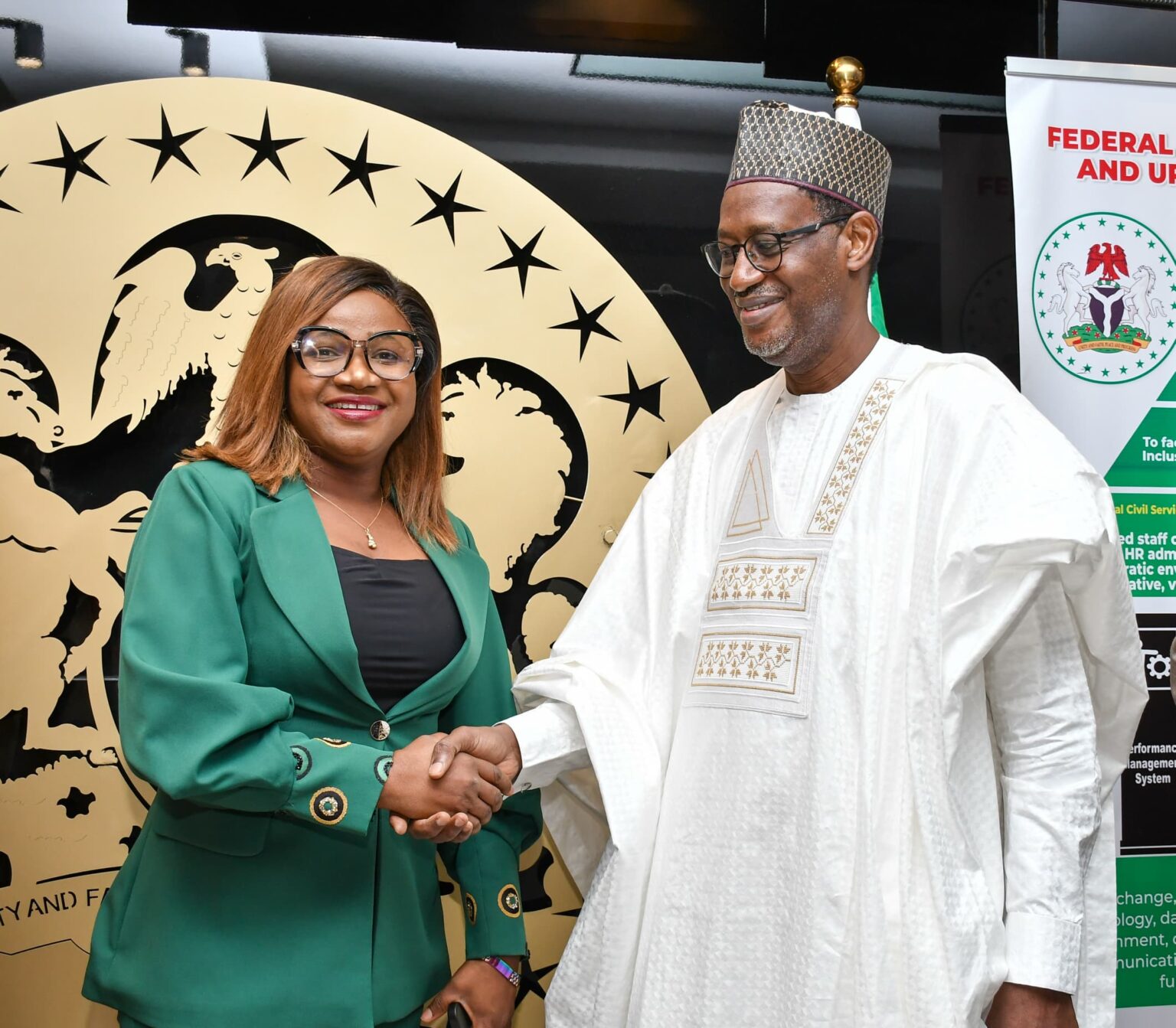
Speaking while receiving a delegation from the NUJ FCT Council led by Chairperson Comrade Grace Ike, the Minister reaffirmed the federal government’s resolve to ensure that media professionals benefit from national housing development efforts.
Dangiwa, joined by the Minister of State, Hon. Yusuf Abdullahi Ata, and senior ministry officials, praised the media for their vital contributions to Nigeria’s progress. “You amplify government policies to the people and hold leaders accountable. We deeply appreciate the critical service you render,” he said.
He announced that the Federal Mortgage Bank of Nigeria (FMBN) would provide backing for the Journalists’ Village under a cooperative model, stressing the need for the NUJ to first secure a properly titled plot of land. He assured the union that once this is in place, and architectural plans are submitted, the Ministry through FMBN would facilitate the construction of affordable homes payable over a 30-year period.
This commitment, he explained, is part of the Renewed Hope Housing Programme of President Bola Ahmed Tinubu’s administration, which aims to bridge the national housing gap, create jobs, and elevate living standards. The programme features three key components: large-scale housing developments in major cities including the FCT under the Renewed Hope Cities plan; 250-unit housing estates for middle-income families in every state capital; and a social housing segment providing 100 homes in each of Nigeria’s 774 local government areas for low-income earners, informal workers, and persons with disabilities.

So far, over 10,000 housing units have been launched across 14 states and the FCT. In addition, more than 150 slum upgrade projects, comprising roads, solar-powered streetlights, potable water systems, and drainage infrastructure, have been implemented to enhance urban living conditions.
To simplify homeownership, the Minister introduced a newly launched digital platform, www.renewedhopehomes.fmhud.gov.ng, which allows citizens to apply for homes, explore mortgage options, and track their applications conveniently online.
He disclosed that the Renewed Hope Programme has already generated over 250,000 jobs nationwide. In a related effort, the Ministry is working to reform land administration systems to unlock an estimated $300 billion in idle real estate assets, making land more accessible for development.
Dangiwa also revealed a strategic partnership with Shelter Afrique Development Bank to fund the construction of 5,000 low-cost housing units. He highlighted plans for the establishment of building materials hubs to help reduce the cost of construction and make homeownership more affordable.
“Our vision is clear,” he stated. “Every Nigerian deserves a decent place to call home.”
Responding, Comrade Grace Ike commended the Minister and President Tinubu for launching the ambitious plan to deliver 50,000 new homes in the first phase. She applauded the milestone of 10,000 completed housing units, the progress in slum regeneration, and ongoing reforms within the Federal Mortgage Bank and Federal Housing Authority.
She praised the Minister’s advocacy on global platforms, including initiatives like the Diaspora Mortgage Scheme and housing provisions for people with disabilities. “Housing is more than shelter, it is a symbol of dignity and a foundation for nation-building,” she remarked. “As protectors of democracy, journalists must not be excluded from homeownership opportunities.”
Comrade Ike called on the Minister to back the NUJ’s vision for a dedicated Journalists’ Village in Abuja, aimed at providing secure and affordable housing for media professionals. She also appealed for infrastructure support to complete the NUJ Pentagon building and to construct a modern convention centre capable of hosting over 2,000 journalists.
She urged the Ministry to partner with the NUJ in urban renewal programmes, positioning journalists not only as communicators but as stakeholders and contributors. Additionally, she requested support in creating access to housing finance and capacity-building for journalists to understand government housing policies and mortgage systems.
Reaffirming the union’s commitment to national development, Ike pledged continued collaboration with the Ministry in promoting government initiatives and facilitating public understanding. She also extended special appreciation to Bar. Festus Adebayo, CEO of the TV Housing Show, for his consistent advocacy for affordable housing opportunities for journalists in the FCT.
Independent.ng


The Nigeria Correctional Service, NCoS, Kwara State Command, has released the names and photos of the two death-row inmates who escaped from the Medium Security Custodial Centre, Oke-Kura, Ilorin.
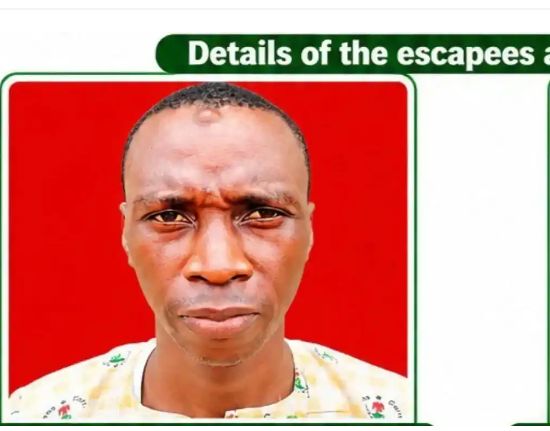
The two inmates escaped in the early hours of Wednesday, November 18, after breaking through and scaling the perimeter wall of the facility.
Their identities were disclosed in a statement issued on Friday by the Kwara State Command’s Public Relations Officer, Adegbulugbe Olumide.
According to NCoS, the first inmate is 41-year-old Segun Abraham Nasiru from Lokoja, Kogi State, while the second person is 38-year-old Oluwasegun Omoyajowo Ajiboye from Ilaro, Ekiti State.
The NCoS disclosed that Nasiru had earlier escaped from the Mandala Custodial Centre, been rearrested and transferred to Oke-Kura.
The Controller-General of the NCoS, Sylvester Ndidi Nwakuche, while reacting, blamed the incident on negligence.
“This is unfortunate and unacceptable. This is a facility that locks over 600 inmates, and about two inmates have found their way out, but I can assure you the dragnet has been spread and we will get them back,” he said.
According to him, any officer found culpable will be severely punished.
The NCoS appealed to members of the public to help with useful information that can lead to the recapture of the fugitives.
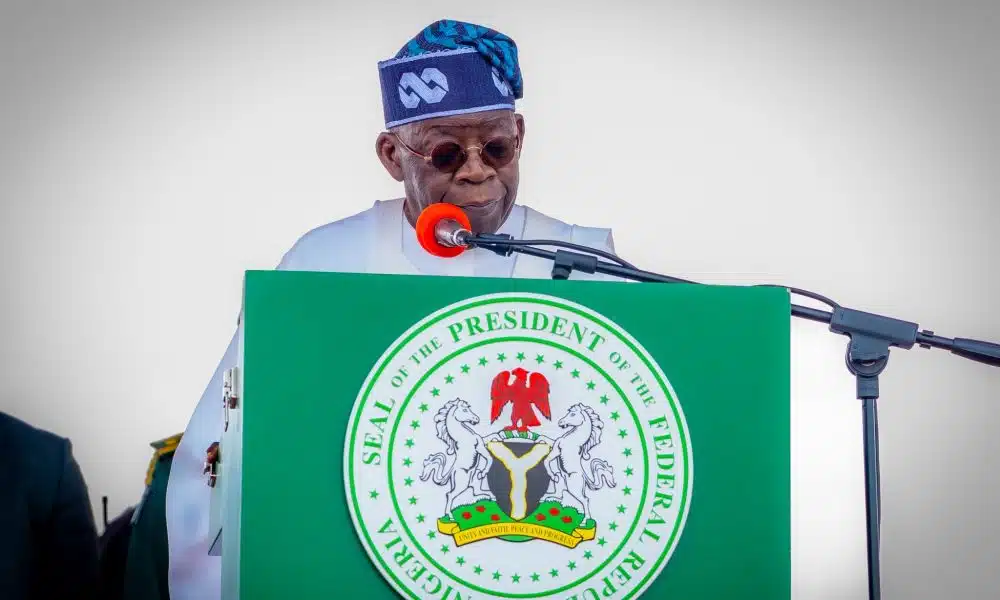
The Presidency said Dabiri’s appointment forms part of Tinubu’s efforts to ensure effective regional representation and inclusivity on the commission.
President Bola Tinubu has appointed Agboola Dabiri as the South-West Commissioner on the National Assembly Service Commission.
Naija News understands that Dabiri, until the recent appointment, was the Lagos State Commissioner for Youth and Social Development.Nigerian news subscription
He takes over from Taiwo Oluwa, who resigned from the commission on March 30, 2026, to run for the Irewole/Isokan Federal Constituency seat in Osun State.
The Special Adviser to the President on Information and Strategy, Bayo Onanuga, announced the appointment in a statement on Friday.
The statement said that, in addition to his work in the Lagos cabinet, Dabiri also worked in the Federal Capital Territory Administration.
It read, “Until his appointment, Dabiri served as Commissioner for Youth and Social Development in Lagos State. He also previously served as Mandate Secretary for Economic Planning, Revenue Generation and Public-Private Partnership in the Federal Capital Territory.”
The Presidency said the appointment was meant to give every region fair representation on the commission.
“The appointment is part of the President’s efforts to ensure effective representation and inclusivity in the National Assembly Service Commission,” the statement added.
Section 157 of the 1999 Constitution establishes the National Assembly Service Commission. The commission appoints, promotes and disciplines the staff of the National Assembly.
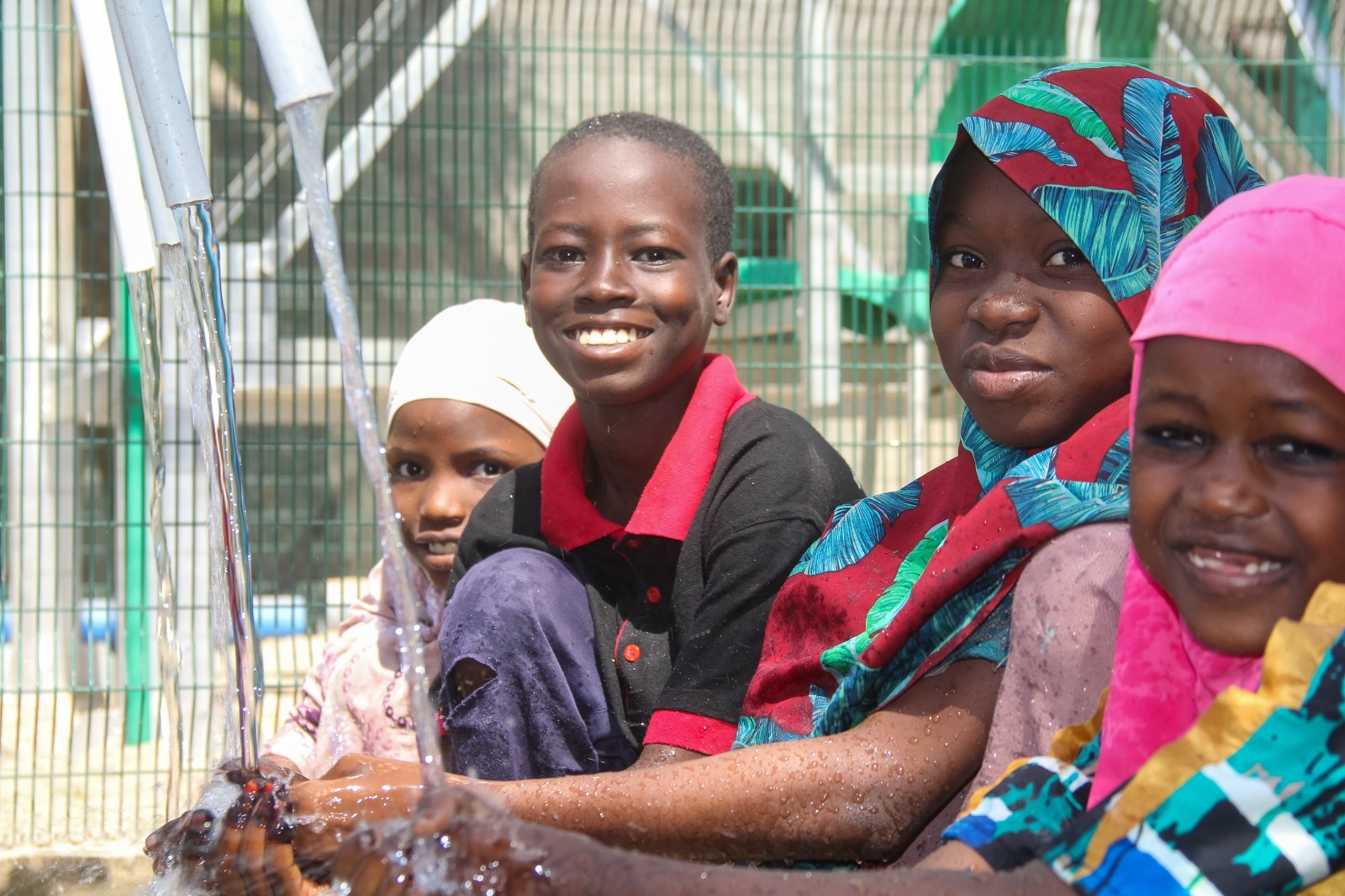
SOS Children’s Villages Nigeria calls on government, communities and development partners to put it into practice by treating children and young people as partners and co-creators of solutions to the issues they face. The call places particular focus on children who have lost parental care or are at risk of losing it.
“Children already have a voice. Our job is to create the conditions in which they can use that voice safely and be taken seriously,” said Eghosa Erhumwunse, National Director of SOS Children’s Villages Nigeria. “Children and young people often know best how to solve the problems they face. What they need is the opportunity and the space to thrive.”
A child should know their rights, know where to go for help and be able to influence decisions about their care, their education and their future. Listening must lead to action.
This principle guides the organisation’s programmes. Family strengthening helps parents and caregivers to care for their children and keep families together. Where children cannot live with their families, alternative care provides safe, family-based settings. Youth development prepares young people for independent adult life, and child rights advocacy strengthens community and state child protection systems. Together, these programmes give children the security they need to exercise their rights.
Violence remains part of daily life for many children in Nigeria. Nine in 10 children aged 1 to 14 experience violent discipline at home (NBS and UNICEF, MICS 2021), and more than 8 in 10 experience it in school (UNICEF, 2022).
Children and young people are already contributing to the response. Ahead of the Second Global Ministerial Conference on Ending Violence Against Children, held in Manila in November 2026, members of the Children and Youth Council in communities we work in set out their position in a policy brief. They believe children should not be seen only as victims in need of protection, but as agents of change who can identify risks, support their peers and help shape the policies that affect them. As one Council member put it: “We cannot build a safer world for children without listening to children.”
Meaningful participation requires age-appropriate information, trusted adults and safe ways to report concerns. Children should be able to express their views in ways that suit their age, ability and circumstances, and be told how those views were used. Children with disabilities, displaced children and children in alternative care need particular attention. Participation must also protect children’s privacy: no child should be pressured to recount a traumatic experience, appear in the media or share personal information to be heard. Supporting children to speak up must never shift the responsibility for their protection onto them.
SOS Children’s Villages Nigeria will continue to strengthen families and communities while creating spaces where children and young people can drive real change.
On World Children’s Day, SOS Children’s Villages Nigeria and its Children and Youth Council call for the following actions:
Government and public institutions: Resource child protection, family support and alternative care services, and strengthen implementation of the Child’s Rights Act 2003, the National Plan of Action to End Violence Against Children (2023 to 2027) and the National Alternative Care Guidelines. Ensure that children who cannot live with their families receive safe, family-based care. Establish confidential, child-friendly reporting mechanisms in schools and communities, and involve children as equal partners in designing and monitoring child protection policies, with clear feedback on how their views were used
Schools, families and communities: Create safe environments in which children can speak up without fear of blame or punishment. Promote positive discipline in place of corporal punishment, challenge harmful practices such as child marriage, teach digital safety alongside children’s rights, and ensure that every report leads to timely support.
Businesses, donors, civil society and the media: Invest in family strengthening, child protection and youth-led initiatives, including peer support and peer mediation in schools. Support children’s own advocacy priorities and protect their dignity and privacy in all communications.
“The test of our commitment is what happens after a child speaks,” Erhumwunse added. “When a concern is raised, it must be addressed. When a right is violated, it must be remedied. Every child should grow up knowing that their voice matters and that adults will act to protect it.”


Govt Release Identities Of Death Rows Inmates Who Escaped From Nigerian Prison

Just In: Tinubu Announces Top New Appointment