
Business
Dangote Refinery Faces Two New Challenges Amid PENGASSAN’s Strike; Details Emerge

The trouble at Dangote Refinery has reportedly deepened as its petrol-producing unit has shut down
Amid the ongoing industrial dispute against Dangote Refinery by the Petroleum and Natural Gas Senior Association of Nigeria (PENGASSAN), the mega refinery has run into new challenges.
Also, data shows that the refinery is facing crude oil challenges as intakes slowed in September.
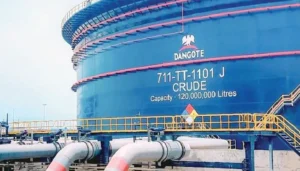
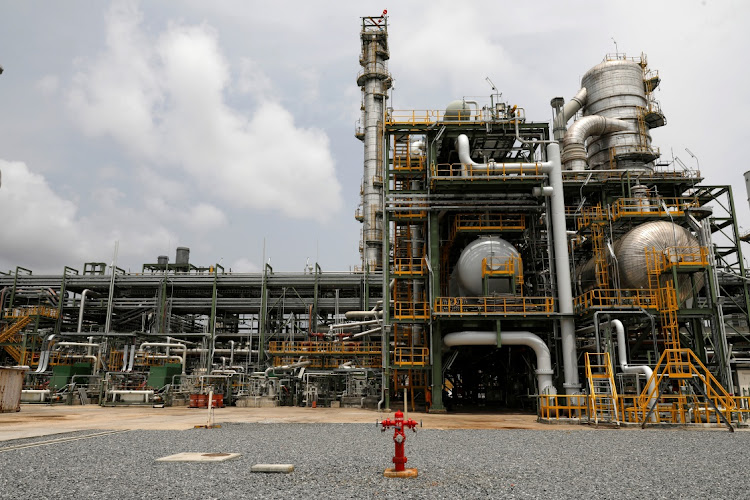
The refinery’s challenges are also compounded by industrial action as oil unions protest the sack of 800 Nigerian workers at the facility
Africa’s largest refinery is reportedly grappling with operational challenges as crude oil inflows drop sharply in September 2025.

Also, the facility’s petrol-producing unit and residual fluid catalytic cracker (RFCC) have allegedly broken down.
According to the petroleum product-tracking platform, PetroleumPriceNG, the failure to issue new pro forma invoices has triggered hoarding at the refinery, leading to higher petrol prices.
Recall that Legit.ng reported that the 650,000 bpd-capacity refinery increased its ex-depot prices for petrol to N860 per litre, up from N825.
Experts attributed the increase, which also affected other depot operators, to a rise in crude prices.
Meanwhile, crude intake into the mega refinery dropped sharply this month. Data from Vortexa shows that inflows dropped to about 250,000 barrels per day.
Energy policy analysts warn that if the scenario continues, it will be the lowest crude supply to the Lekk-based plant since September last year, when Fitch downgraded it and banks tightened finance lines, shrinking its ability to purchase crude.
With less feedstock coming in, the facility cannot run at optimal capacity, which is currently estimated at 500,000 barrels per day. Also, it shows Nigeria’s vulnerability as the world’s largest single-train refinery struggles to maintain stable production.
As crude supply dips, the RFCC has also gone offline for maintenance, with industry watchers speculating that the unit may not resume full operations until early October.
Meanwhile, the refinery has redirected more low-sulphur straight-run fuel into the export market. Data shows that exports hit 320,000 barrels per day this month, the refinery’s highest cargo shipment on record.
The shift may keep revenue coming, but it starves the Nigerian and African market of the much-needed petroleum product supply.
Experts say product inflows from other regions into West Africa have slowed to less than one million tonnes of petrol and blending components in September. The figure is reportedly below the year-to-date average and marks the weakest September arrival on record.
This means West Africa is receiving fewer petrol imports as Dangote struggles to stabilise operations. The squeeze increases the refinery’s dominance as its failure could have multiple ripple effects in the petroleum product market.
The production challenges have affected the downstream sector. In early September, the massive plant halted sales, promising to resume allocation later in the month.
Already, the delay has created panic, as marketers holding old stocks hoard them, selling at premium rates.
Reports say depot prices surged above Dangote’s N820 per litre ex-depot price of N820 to N870, while Wosbab Lagos recorded the highest daily increase at almost three per cent.
The situation at Dangote demonstrates that sheer size does not guarantee stability. The refinery’s challenges highlight Nigeria’s precarious balance between energy security and vulnerability to global oil volatility.
Every disruption quickly translates into inflationary pressures within the downstream market. For Dangote, the immediate priorities are clear: restore RFCC operations and ensure timely PFI issuance.
For Nigeria, the lesson is more profound: without enhanced upstream output and improved policy coordination, the aspiration of affordable, dependable petrol may remain elusive, even with Africa’s largest refinery.
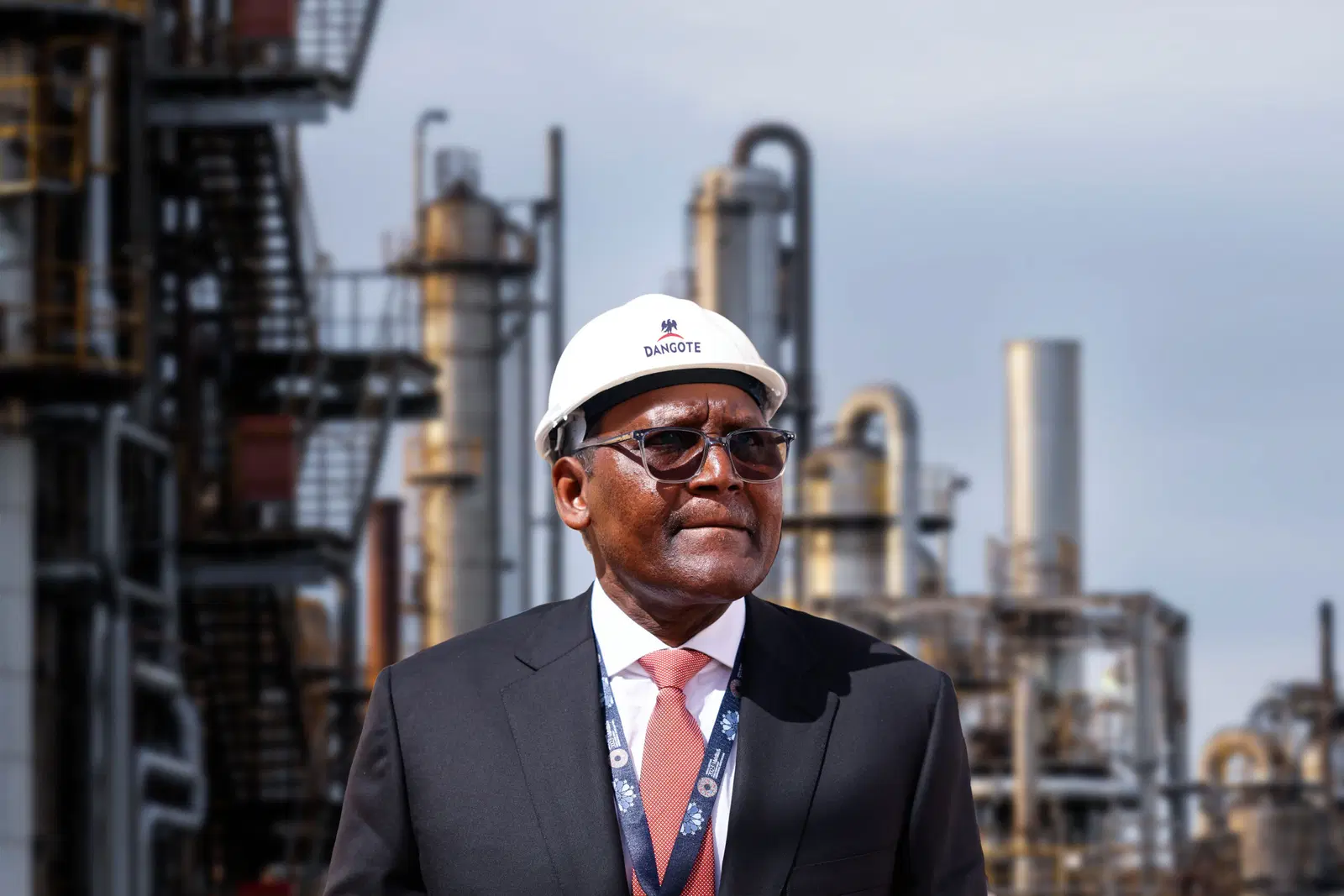
The Emir of Kano, Muhammadu Sanusi II, has warned prospective investors against using their children’s school fees or selling their homes to invest in shares.
Sanusi gave the warning on Thursday while speaking at the Dangote Refinery Initial Public Offering investor roadshow in Kano.
He urged Kano residents and other prospective investors to invest only money they could afford to set aside for some time, saying they could consider amounts such as N10,000, N20,000 or N30,000.
He said, “Do not take your children’s school fees and put in shares, Do not sell the house that you live in and put in shares.
“But what you can afford,10,000, 20,000, 30,000, what you can afford to set aside for some time, set it aside. And if you look at the fundamentals of the economy, over time you can be assured that this investment will grow, and you will not regret it.”
The Emir was speaking as part of the ongoing investor outreach for the Dangote Refinery IPO, which opened on September 14.
Sanusi urged Kano residents to participate in the capital market, saying they should seek to become shareholders in the refinery founded by Kano-born businessman, Aliko Dangote.
“I speak as the Emir of Kano, I would like my people to be owners of this company.
“I do not want us to be left behind in the capital markets. I do not want us to be left behind in financial inclusion. So this is the time and this is the opportunity,” he said.
The Emir also urged representatives of unions and other groups to educate their members about the opportunity to invest.
He advised prospective investors to adopt a long-term approach rather than buying shares in anticipation of quick profits.
“And I’m not talking about someone who will buy 5,000 shares and want to sell tomorrow and believe he will get 10,000. No, I’m talking about you have some money, put it in, leave it there for some time, and just watch your money grow.
“Forget about it for some time. You’ll be surprised in five years the 10,000 Naira you invest today, what it will be. The 100,000 Naira you invest, what it will be,” Sanusi said.
Sanusi also said the location of the refinery should not discourage Kano residents from investing, stressing that shareholders, rather than the location of the facility, determine ownership of the company.
“It doesn’t matter where the refinery is located. It could be located in Lagos, or Ibadan, or on the moon. It is the shareholders who own it.
“It is the shareholders who own it. It’s the shareholders who take the return. It is the shareholders who own the profit,” he said.
The Emir described Dangote as a son of Kano and urged residents to take advantage of the IPO to have a stake in the company.
“We have heard Lagos claim Aliko. I know very soon even Egypt will claim him, America will claim him. But we all know where he comes from,” Sanusi said.
He added, “I would like to say that this is his grand homecoming. We are happy to donate him.
“We are happy to share him, but please do not take him away from us.”
Sanusi also highlighted the refinery’s operations, saying prospective shareholders could see the assets and activities of the company, including its production of refined petroleum products and fertiliser.
He said the refinery was also creating direct and indirect jobs and had secured its gas supply, port access and markets.
-Punch

Alhaji Aliko Dangote, President and Chief Executive Officer of Dangote Industries Limited, has said the Initial Public Offering, IPO, of Dangote Petroleum Refinery and Petrochemicals, FZE, would democratise wealth creation by giving Nigerians and investors globally an opportunity to own shares in one of Africa’s major industrial projects.
Dangote stated this yesterday at the “Facts Behind the Offer” presentation and opening gong ceremony for the refinery’s IPO in Lagos, where the Nigerian Exchange Limited, NGX, formally opened the N2.2 trillion offer.
The IPO comprises 4.1 billion new ordinary shares offered at N525 per share, with a minimum subscription of 10 shares valued at N5,250. The offer is scheduled to close on October 13, subject to the terms contained in the prospectus.
Describing the offer as a historic moment for Nigeria’s capital market, the Dangote Group and Africa, Dangote said: “It would enable ordinary Nigerians and investors globally to own shares in one of Africa’s major industrial projects.
“What initially belongs to a country, begins in a deeper sense, now belongs to the people. Today is such a moment; today is a historic day
“The IPO is not simply about listing a company but creating a new possibility for Nigeria and Africa by broadening ownership of a major industrial asset.
“The decision to offer shares to the public was driven by the desire to allow more people participate in and benefit from the prosperity created by the refinery.
“An asset of this magnitude should not create value for only a very few people. It should create value for millions of people, not only Nigerians, but all over the world.”
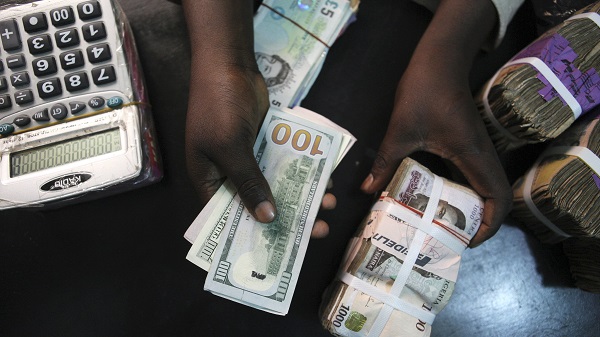
The Nigerian currency, Naira (₦), continued its battle against the United States dollar at the official foreign exchange market on Saturday.
Daily Voice reports that data from the Central Bank of Nigeria (CBN) showed that the local currency sold at ₦1,321.2160/1$ on Sunday.
The latest rate is the same as Saturday’s rate of ₦1,321.2160/1$.
At the parallel market (black market), however, the naira closed on Sunday at ₦1,400 to the dollar.
The offers by commercial banks, Bureau de Change (BDC) operators, and other foreign exchange dealers may, however, differ from the reference rates due to transaction margins and prevailing demand and supply conditions.
Market participants will continue to monitor foreign exchange inflows, demand for dollars, and CBN policies for indications of whether the naira can sustain its gains through the month.


Tinubu To Appoint Wike As APC Campaign Coordinator For 2027 Election

Government Declares Monday, September 21 Public Holiday
BREAKING: Tears as Prominent Nigerian Ex-Governor Dies in UK

Former Super Eagles Star Loses Life Savings, Duped By A Pastor of ₦1.2 Billion

I’m A Married Man, I Can Never Get Myself Involved With Such A Thing, Delta Gov Aide Reveals Why He Offered Comfort ₦500,000 Job