
Business
Firm Unveils First Phase Of 100MW Data Centre


Kasi Cloud has commissioned the first phase of its planned 100-megawatt AI-ready hyperscale data centre campus in Lekki, Lagos, marking one of Nigeria’s most ambitious investments yet in digital infrastructure and local compute capacity.
The company said the facility is designed to support artificial intelligence workloads, cloud computing, enterprise storage and high-density digital services at a time when global demand for AI infrastructure is accelerating rapidly.
The project, estimated to cost about $250m, broke ground in April 2022, while major construction work began in the second quarter of 2023. The commissioning marks the first operational deployment within the broader campus, which Kasi Cloud plans to scale over time into a 100MW data infrastructure ecosystem.
Nigeria currently has about 17 operational data centres, according to industry estimates, with most facilities operating below 25MW capacity. Kasi Cloud said the Lekki campus is intended to significantly expand the country’s compute footprint and reduce dependence on foreign-hosted infrastructure.
Founder and Chief Executive Officer Johnson Agogbua said the project is intended to help reverse Africa’s dependence on foreign digital infrastructure by creating local capacity capable of supporting the next generation of AI-driven applications.
“What we’re most proud of is the role that our people and our team have played,” Agogbua said during a media briefing at the facility in Lagos on Saturday. “Almost every other data centre built here was designed by others for us. Kasi is Nigeria proper. Africa proper.”
The company said the first deployment includes a 5.5-megawatt data hall and a 7.5-megawatt ecosystem floor designed to accommodate local and international businesses requiring colocation, cloud hosting, storage and networking services.

According to Agogbua, the ecosystem floor is intended to allow customers to lease infrastructure ranging from a single server node to an entire aisle of racks, depending on operational requirements.
“It’s an opportunity for our international partners, local partners and local businesses to take up anything between a single node and a rack to a full aisle of IT workloads,” he said.
Global Director, Marketing and Sales Operations at Kasi Cloud, Ngozika Agogbua, said the project sits at the intersection of technology, economics and geopolitics at a time Africa is increasingly seeking greater control over its digital future.
“Africa has become one of the fastest-growing digital markets in the world,” she said during a press conference in Lagos on Saturday. Yet when it comes to artificial intelligence, the continent still operates with less than one per cent of global compute capacity, relying almost entirely on infrastructure located outside its borders.”
According to her, the dependence on overseas infrastructure means African businesses continue exporting critical data and economic value whenever they run AI workloads.
“Every time an African business runs an AI workload, the data travels to a server in Europe or America,” she said. “The economic and strategic cost of that dependency is enormous and largely invisible.”
Agogbua described the Lagos campus as part of what could become a structural shift in Africa’s digital economy, comparing the moment to the expansion of subsea cable systems and mobile telecommunications networks that transformed connectivity across the continent over the past two decades.
“We believe this is less a company launch and more a structural turning point,” she said.
The company argued that large-scale local compute infrastructure is becoming increasingly important as governments, financial institutions, startups and enterprises across Africa accelerate adoption of AI-enabled systems and cloud-based services.
The company said the facility is also being designed to support certain GPU-intensive workloads required for AI computing while providing a carrier-neutral interconnection hub linking telecommunications operators and international submarine cable providers.
Agogbua said the upper floors of the campus are specifically designed for wholesale and hyperscale cloud providers such as Amazon Web Services, Google and Microsoft seeking expansion capacity in West Africa.
“Players like AWS, Google and Microsoft find it difficult to enter new markets and build at scale,” he said. “We have both the power and the space they need to expand.”
The company disclosed that the campus has a dedicated 132-kilovolt substation capable of scaling deployments to approximately 100 megawatts of IT load, positioning it among the largest planned AI-ready compute facilities in the region.
Agogbua repeatedly emphasised the distinction between total power infrastructure and “critical load”, the electricity directly delivered to computing systems, storage infrastructure and networking equipment.
“When we say critical load, we mean the things that go to computers, routers and storage devices,” he said.
According to him, each floor of the facility is capable of supporting approximately eight megawatts of critical load, while a single building on the campus could ultimately scale to more than 30 megawatts.
“That’s bigger than power delivered to some small cities in Nigeria,” he said.
He argued that Nigeria’s ability to compete in the digital economy will increasingly depend on whether the country can develop infrastructure capable of supporting AI systems locally.
“If we’re going to really embrace digital and employ AI-related systems to leapfrog into modernity, we need facilities of this scale,” he said.
Agogbua said Nigeria missed earlier phases of industrialisation but could still leapfrog economically through rapid adoption of modern digital infrastructure and AI technologies.
“We can digitise early, apply modern tech and leapfrog into it,” he said. “It requires facilities of this scale. It requires deployment of this scale.”
He also urged policymakers to create conditions that encourage international technology companies to establish local operations while ensuring Nigerian talent participates directly in the ecosystem.
“Make it easy for them to enter,” he said. “But require them to have us working on it. That’s how we get training.”
A major theme throughout the briefing was data sovereignty and concerns that Africa risks remaining dependent on foreign-owned AI systems if local compute infrastructure is not developed.
Agogbua argued that African languages, culture, commerce and historical records may become under-represented in future AI models if the continent does not build domestic infrastructure and local AI ecosystems.
“Will the brain that will run the future be on our soil?” he asked. “Or are we going to be renting it?”
He said AI systems shaping future digital experiences should increasingly be developed and operated within African cities rather than entirely from technology hubs in North America, Europe or Asia.
“If those coding the model reside in San Francisco, Munich or Shanghai and documenting our language and culture, we’ll be lost,” he said. “They should be in Yaba, Abuja, Enugu, Kano, and all of our cities.”
Agogbua said the company established an internal training initiative known as Kasi Academy to develop local engineering talent capable of supporting advanced digital infrastructure projects.
“When people asked how we would replicate world-class execution, we said we would grow them,” he said.
According to him, many of the engineers working on the project were trained internally through the academy, with Nigerian teams directly involved in designing and deploying key systems across the facility.
“The final design, the final rendering, is done here,” he said.
While acknowledging that some equipment and specialised manufacturing capabilities still need to be sourced internationally, he maintained that Africa already possesses the technical talent needed to build sophisticated infrastructure locally.
Beyond enterprise cloud infrastructure, Agogbua linked AI deployment to broader economic transformation across Nigeria’s informal economy, including retail markets, healthcare delivery, logistics and inventory management.
“Go to the market and watch what’s going on,” he said. “Their ledger is on worn-out paper. Their inventory is in their brain. All those are opportunities.”
According to him, AI-enabled systems supported by local infrastructure could help small businesses automate inventory management, improve forecasting and strengthen supply chains.
“That’s the opportunity for our boys and girls,” he said. “But infrastructure for it must be accessible to them.”
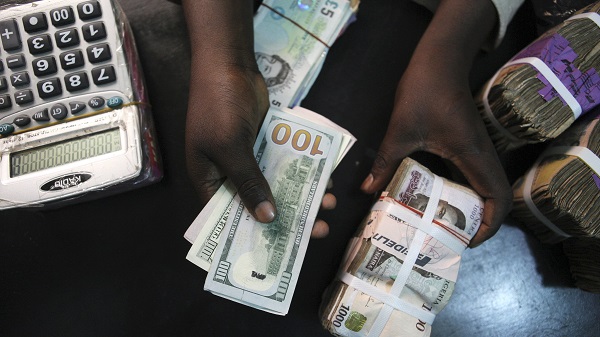
The Nigerian currency, Naira (₦), continued its battle against the United States dollar at the official foreign exchange market on Saturday.
Daily Voice reports that data from the Central Bank of Nigeria (CBN) showed that the local currency sold at ₦1,321.2160/1$ on Sunday.
The latest rate is the same as Saturday’s rate of ₦1,321.2160/1$.
At the parallel market (black market), however, the naira closed on Sunday at ₦1,400 to the dollar.
The offers by commercial banks, Bureau de Change (BDC) operators, and other foreign exchange dealers may, however, differ from the reference rates due to transaction margins and prevailing demand and supply conditions.
Market participants will continue to monitor foreign exchange inflows, demand for dollars, and CBN policies for indications of whether the naira can sustain its gains through the month.
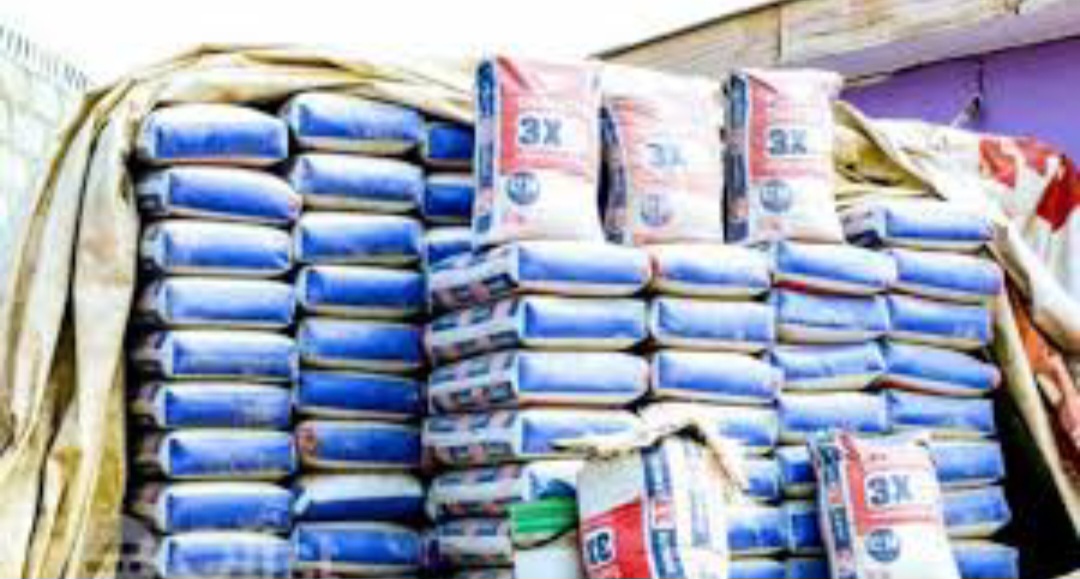
Cement prices in Nigeria remain elevated, with a 50kg bag selling for between ₦12,000 and ₦15,000 in many markets, putting further pressure on builders, contractors and Nigerians planning construction projects.
The latest market data shows that although some brands are currently available below the ₦15,000 mark, the industry remains significantly more expensive than it was at the end of 2025 and early 2026.
Recent market quotations show the following indicative prices for a 50kg bag:
Note: prices may vary by location and transportation costs.
These figures are based on a September 1 market report and can vary depending on location, transportation costs, dealer margins and supply conditions.
However, July industry data painted a more expensive picture. CementNet reported retail prices of ₦12,000 to ₦15,000, with Dangote selling for about ₦13,000–₦15,000, BUA at ₦12,000–₦14,500, and HBM Nigeria, formerly Lafarge Africa, at ₦12,000–₦13,500.
The latest figures suggest that cement prices may have eased from the highest quotations seen earlier in the year, but the broader trend remains upward.
In July, The Guardian reported that a 50kg bag typically sold for ₦12,500–₦15,000 across major markets including Lagos, Abuja and Abia.
The Federal Competition and Consumer Protection Commission (FCCPC) also reported that prices had reached between ₦13,000 and ₦15,000 in some locations during the first half of 2026.
This means the current ₦12,000–₦14,000 quotations for several major brands should be viewed as some market-level moderation rather than a broad collapse in cement prices.
Why cement remains high
High energy and transportation costs continue to weigh heavily on the industry. Cement manufacturing requires significant amounts of energy, while moving cement from factories and depots to retail markets adds further costs.
Location is also playing an important role. Buyers in areas farther from production centres can pay substantially more because of haulage and distribution expenses.
The situation is particularly significant because Nigeria has substantial cement production capacity, yet retail prices remain high. The Guardian reported that domestic production exceeds consumption, with surplus output exported to neighbouring countries.


Nigerian civil servants on Grade Level 8 now earn between N1,479,276 and N1,914,514 annually, depending on their step within the scale, following the new minimum wage signed under President Bola Tinubu’s administration.
The figures fall under the Consolidated Public Service Salary Structure (CONPSS), the framework that governs pay across Nigeria’s federal civil service.
CONPSS covers 17 grade levels in total, and a worker’s position within each level is shaped by their qualifications, length of service, and performance record.
Grade Level 8 has 14 steps, with each step representing a progression in earnings. Below is the full breakdown:
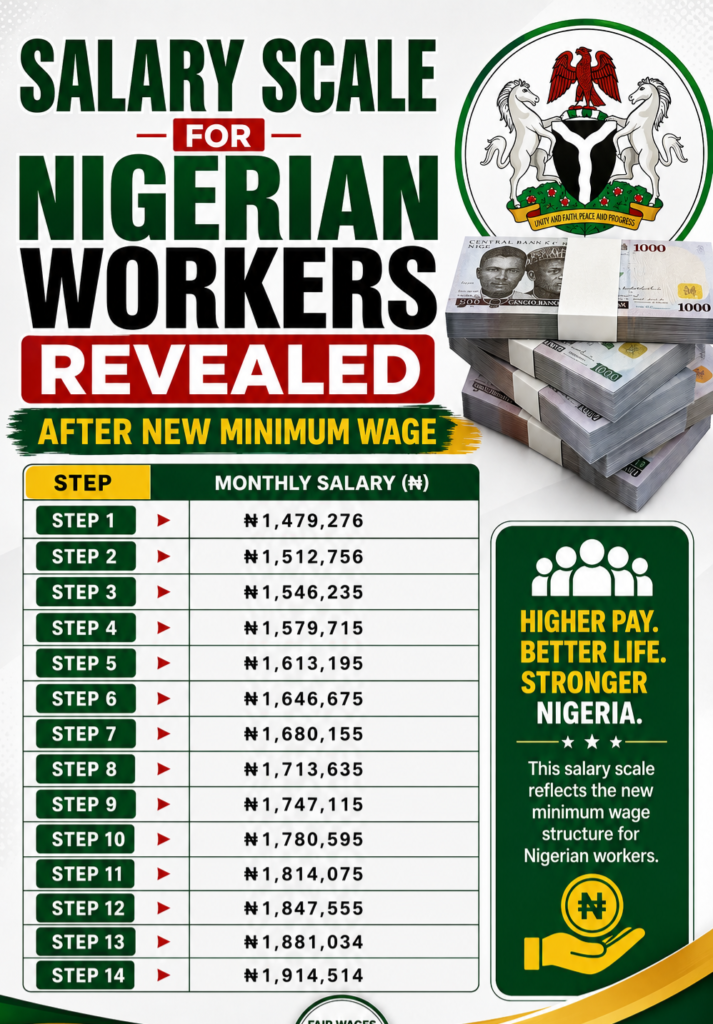
The gap between the lowest and highest steps at this level amounts to N435,238, reflecting how significantly length of service can affect take-home pay within a single grade.
Interest in the salary structure has grown since Tinubu’s government approved a new national minimum wage, which triggered a review of earnings across the public sector. Civil servants and job seekers have been keenly examining each grade level to understand what the adjusted structure means in practical terms.
Workers at Grade Level 8 are typically mid-level employees with some years of experience in the civil service. Their earnings sit above the entry-level grades but below the senior cadre, making this level a reference point for many who are planning career progression within the federal workforce.


Nigerian Gov Declares Public Holiday

Anambra Still Repaying Loans Borrowed Under Peter Obi – Soludo Govt

2027: INEC Final List Sets Off Senate Race

Former Super Eagles Star Loses Life Savings, Duped By A Pastor of ₦1.2 Billion

I’m A Married Man, I Can Never Get Myself Involved With Such A Thing, Delta Gov Aide Reveals Why He Offered Comfort ₦500,000 Job

Lagos Imposes ₦250,000 Fine For Illegal Waste Disposal

-
 News17 hours ago
2027 Budget: FG Gives MDAs September 18 Deadline
-

 News17 hours ago
Terrorists kill Nine Passengers, Six Others In Plateau Attack
-
 Politics17 hours ago
2027: INEC Final List Sets Off Senate Race
-
 News17 hours ago
Anambra Still Repaying Loans Borrowed Under Peter Obi – Soludo Govt
-
 News9 hours ago
Nigerian Gov Declares Public Holiday