
Business
The 9 worst mistakes you can ever make at work
Lorem ipsum dolor sit amet, consectetur adipisicing elit, sed do eiusmod tempor incididunt ut labore et dolore magna aliqua.


Lorem ipsum dolor sit amet, consectetur adipisicing elit, sed do eiusmod tempor incididunt ut labore et dolore magna aliqua. Ut enim ad minim veniam, quis nostrud exercitation ullamco laboris nisi ut aliquip ex ea commodo consequat.
Nemo enim ipsam voluptatem quia voluptas sit aspernatur aut odit aut fugit, sed quia consequuntur magni dolores eos qui ratione voluptatem sequi nesciunt.
Et harum quidem rerum facilis est et expedita distinctio. Nam libero tempore, cum soluta nobis est eligendi optio cumque nihil impedit quo minus id quod maxime placeat facere possimus, omnis voluptas assumenda est, omnis dolor repellendus.
Nulla pariatur. Excepteur sint occaecat cupidatat non proident, sunt in culpa qui officia deserunt mollit anim id est laborum.
Sed ut perspiciatis unde omnis iste natus error sit voluptatem accusantium doloremque laudantium, totam rem aperiam, eaque ipsa quae ab illo inventore veritatis et quasi architecto beatae vitae dicta sunt explicabo.
“Duis aute irure dolor in reprehenderit in voluptate velit esse cillum dolore eu fugiat”
Neque porro quisquam est, qui dolorem ipsum quia dolor sit amet, consectetur, adipisci velit, sed quia non numquam eius modi tempora incidunt ut labore et dolore magnam aliquam quaerat voluptatem. Ut enim ad minima veniam, quis nostrum exercitationem ullam corporis suscipit laboriosam, nisi ut aliquid ex ea commodi consequatur.
At vero eos et accusamus et iusto odio dignissimos ducimus qui blanditiis praesentium voluptatum deleniti atque corrupti quos dolores et quas molestias excepturi sint occaecati cupiditate non provident, similique sunt in culpa qui officia deserunt mollitia animi, id est laborum et dolorum fuga.
Quis autem vel eum iure reprehenderit qui in ea voluptate velit esse quam nihil molestiae consequatur, vel illum qui dolorem eum fugiat quo voluptas nulla pariatur.
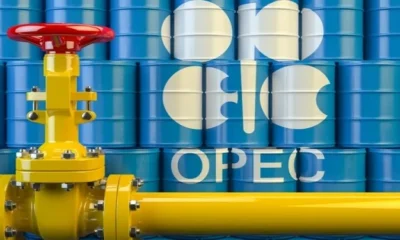



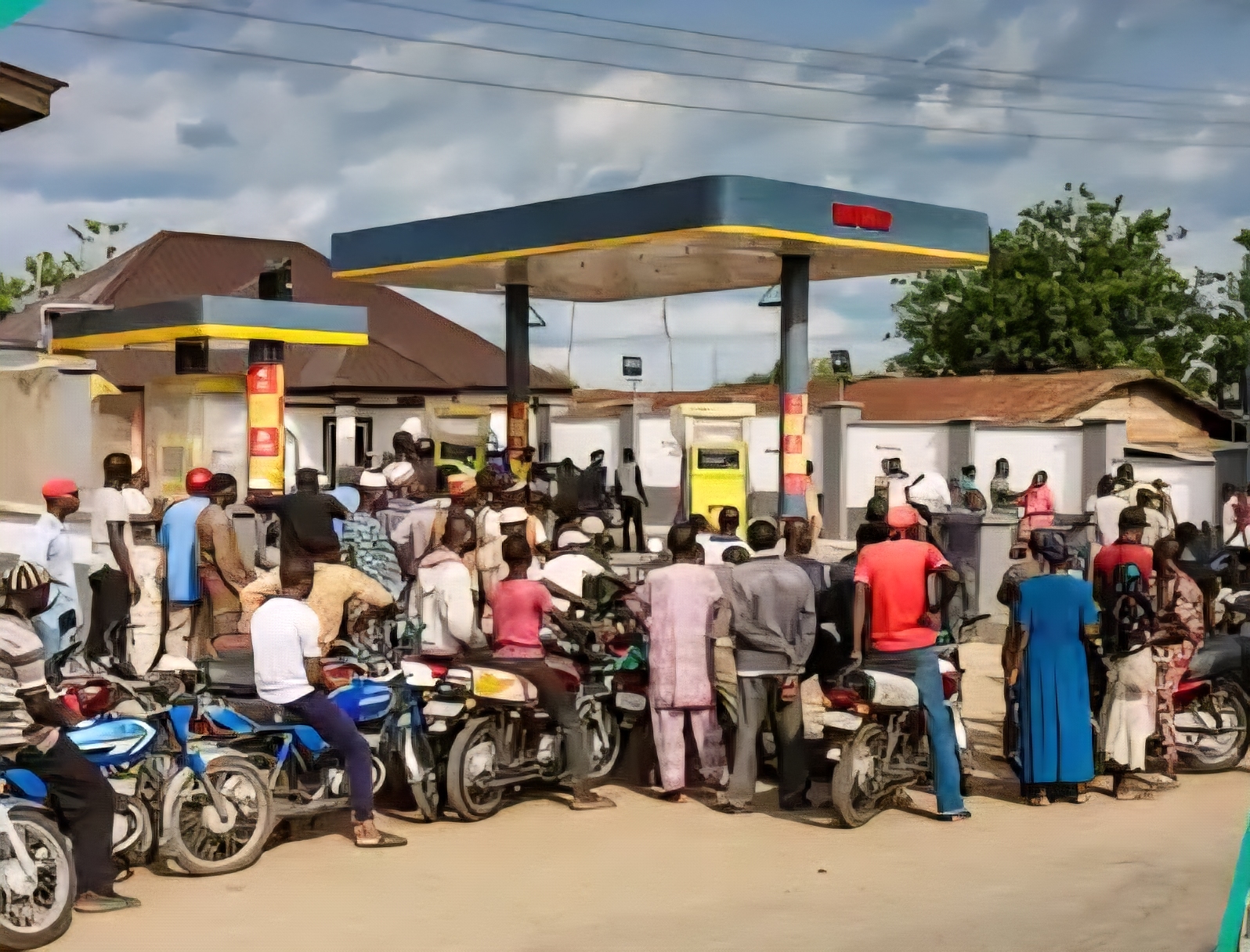
Petrol prices at Nigerian depots have dropped to their lowest levels in months as intense competition grips the downstream market, following the apparent collapse of the fuel supply agreement between the Dangote Petroleum Refinery and independent marketers.
Fresh findings show that depot owners have slashed ex-depot prices to as low as N710 per litre, a sharp reversal from the steep hikes recorded just weeks earlier.,
In the first week of January 2026, depot owners sharply increased gantry prices after reports emerged that the Dangote Refinery had shut down its petrol production unit for maintenance.
Although the refinery denied the reports, the speculation was enough to jolt the market.
Depot prices surged, and the increases quickly filtered through to filling stations nationwide.
Independent marketers raised gantry prices from around N720 per litre to over N800 per litre, with analysts noting that depot operators were exploiting uncertainty surrounding Africa’s largest refinery.
Depot owners reverse course as competition intensifies
The price spike, however, has proven short-lived.
Checks reveal that depot owners have now reversed course, cutting prices aggressively to stay competitive with Dangote Refinery’s pricing structure, especially as fresh fuel imports enter the Nigerian market.
Data from PetroleumPriceNG shows that several major depots reduced prices significantly in recent days.
As of Sunday, January 11, 2026, ShellPlux sold petrol at N710 per litre, MAO at N715, while A.Y.M.
Falling crude oil prices add more pressure
Energy experts say global oil market dynamics are also contributing to the decline in local petrol prices.
“Crude oil is currently trading between $50 and $60 per barrel in the international market,” energy policy analyst Adeola Yusuf told Legit.ng.
According to him, ongoing geopolitical tensions involving Venezuela and Iran have pushed crude prices lower, with direct implications for refined fuel costs.
“Crude oil is often used as a political tool and is highly sensitive to geopolitical developments. When prices drop, refined product prices usually follow, especially in domestic markets,” Yusuf explained.
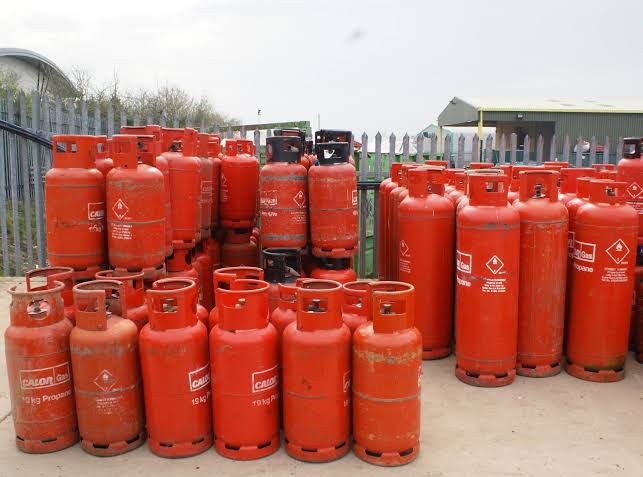
Prices of liquefied petroleum gas (LPG), commonly known as cooking gas, are crashing in several parts of the country as retailers report improved supplies.
According to a market survey by PUNCH, retailers and consumers confirmed that prices have dropped and the product has become more available across the country.
This development follows months of scarcity, which led to a nationwide hike in prices. The scarcity peaked in September 2025.
Consumers in Lagos, Ogun, Oyo and other states confirmed that they purchased cooking gas within the N1,050 to N1,400 range. Some major marketers were also reported to be selling directly to consumers at around N900 per kilogramme.
For many households, the current prices represent a significant improvement from the sharp increases recorded last year, when LPG prices surged after a dispute involving the Dangote refinery and the Petroleum and Natural Gas Senior Staff Association of Nigeria (PENGASSAN) led to the shutdown of some gas facilities.
Despite the improvement, several consumers said they were hopeful that prices would fall below N1,000 per kilogramme in the new year, arguing that lower costs are critical to promoting clean cooking and reducing reliance on firewood and kerosene.
Speaking on the situation, the National Chairman of the Liquefied Petroleum Gas Retailers branch of the Nigeria Union of Petroleum and Natural Gas Workers (NUPENG), Ayobami Olarinoye, said the LPG market had become relatively stable, with increased supply reaching Lagos.
According to Olarinoye, some off-takers are now receiving gas in Apapa, Lagos, helping to ease availability challenges experienced in previous months.
He explained that retail prices at street-level outlets currently range between N1,300 and N1,400 per kilogramme, noting that costs vary based on neighbourhoods, transportation and logistics.
Olarinoye added that prices could be lower at filling stations and gas plants, where operational and distribution costs are reduced.
He further disclosed that retailers currently purchase LPG from major marketers at prices between N960 and N1,050 per kilogram, depending on the supplier. According to the NUPENG official, sellers offering LPG below N1,000 per kilogramme are typically major dealers who own their own plants and sell directly to end users and do not distribute to retailers.

Amid its struggles to pay the over N4tn debt owed to power generation companies, the Federal Government incurred a total of N1.98tn in electricity subsidy obligations in 12 months, from October 2024 to September 2025.
This was according to the quarterly reports released by the Nigerian Electricity Regulatory Commission. In the fourth quarter of 2024, covering October to December, the electricity subsidy incurred by the government was N471.69bn. It was N536.4bn in the first quarter of 2025 and N514.35bn in the second quarter of last year.
The latest report from NERC released on Tuesday showed that the Federal Government incurred a power subsidy burden of N458.75bn in the third quarter of 2025 as electricity tariffs remained below cost-reflective levels, making a total of N1.98tn in the 12-month period, from October 2024 to September 2025.
NERC stated in its reports that in the absence of cost-reflective tariffs, the government undertook to cover the resultant gap between the cost-reflective and allowed tariff in the form of tariff subsidies.
The PUNCH observed that the subsidy burden remains high despite the Band A tariff adjustments of April 2024. Recall that the Minister of Power, Adebayo Adelabu, has repeatedly pointed out that the electricity subsidy was no longer sustainable, proposing a subsidy arrangement that would cover only the poor.
Experts who spoke with The PUNCH also maintained that the government should find a way out of the burden of electricity subsidy.
NERC stated that the subsidy is applied at source through the DisCos’ payment obligations to the Nigerian Bulk Electricity Trading Plc. It stated that for ease of administration, the subsidy is only applied to the generation cost payable by DisCos to NBET at source in the form of a DisCo’s Remittance Obligation.
According to the regulator, the DRO represents the total GenCo invoice that is billed to the DisCos by NBET based on what the allowed DisCo tariffs can cover. NERC added that DisCos are still required to fully meet other market invoices.
“DisCos are expected to remit 100 per cent of the invoices received from the MO for transmission and administrative service costs.” It disclosed that the subsidy obligation in Q3 amounted to N458.75bn, though it represented a decline from the previous quarter.
“Due to the absence of cost-reflective tariffs across all DisCos, the government incurred a subsidy obligation of N458.75bn; this represents a N55.59bn reduction in FGN subsidy compared to 2025/Q2 (N514.35bn),” it said.
The commission said the subsidy accounted for over half of total generation invoices, stating, “The subsidy obligation of the government decreased in naira terms and accounted for 58.63 per cent of the total GenCo invoice, which is a 0.97 pp decrease compared to 2025/Q2 when the subsidy accounted for 59.60 per cent of the total GenCo invoice.”
According to NERC, the reduction was driven by lower energy offtake and a marginal decline in generation cost. “This is because while the allowed end-user tariffs remained unchanged across the quarters, there was a 6.08 per cent decrease in energy offtake by the DisCos during the quarter, as well as a reduction in actual generation cost (N/kWh) by 0.98 per cent,” the report added.
The commission noted that the DRO framework replaced the Minimum Remittance Obligation regime in January 2024, and DisCos are expected to pay 100 per cent of their DROs.
Explaining the reason for the policy shift, NERC said, “The transition to the DRO regime was necessitated by the risk of unpaid tariff subsidy debts encumbering the balance sheets of the DisCos, thereby preventing them from raising finance to undertake critical investments in their distribution network.”
Under the framework, the regulator said the Federal Government directly settles the subsidy component of generation costs. Under the DRO framework, NBET directly invoices the portion of GenCo costs not covered by DRO (tariff subsidy) to the Federal Ministry of Finance for immediate settlement.
On payments to NBET, the regulator said DisCos recorded a remittance rate of 95.23 per cent in Q3. The DRO-adjusted invoice from NBET to the DisCos was N323.70bn, while the total remittance made was N308.25bn, according to NERC.
It added, “Comparatively, in 2025/Q2, the DRO-adjusted invoice from NBET to DisCos was N348.66bn, and the total remittance was N333.90bn, which translated to 95.77 per cent remittance performance.”
NERC explained that most DisCos met their obligations in full, as disaggregated remittance performance of the DisCos to NBET in 2025/Q3 shows that all DisCos, except Kano (98.74 per cent), Benin (94.77 per cent), Jos (65.13 per cent), and Kaduna (40.16 per cent), achieved 100 per cent remittance performance.
The commission noted mixed performance among the defaulting DisCos on a quarter-on-quarter basis, adding, “A quarter-on-quarter analysis showed that Jos (+4.29 pp) DisCo recorded an improvement in remittance performance to NBET in 2025/Q3 compared to 2025/Q2, while Benin (-5.23 pp), Kaduna (-1.68 pp) and Kano (-1.26 pp) DisCos recorded decreases in remittance performance.”
The report showed that all other DisCos (Abuja, Eko, Enugu, Ibadan, Ikeja, Port Harcourt, and Yola) maintained 100 per cent remittance to NBET across the quarters.
On remittances to the Market Operator, the regulator said DisCos paid N73.03bn out of N76.77bn invoiced in Q3. This payment translates to 95.13 per cent remittance performance. “This represents a marginal increase when compared to the 95.07 per cent remittance performance recorded in 2025/Q2 when DisCos remitted N65.30bn out of the N68.68bn invoice issued by the MO.”
According to the commission, the disaggregated remittance performance of the DisCos to the MO shows that all the DisCos, except Jos and Kaduna, recorded 100 per cent remittance performance to the MO in the third quarter.
It further stated, “Since January 2025, only Jos and Kaduna DisCos have failed to remit 100 per cent of the MO invoice,” adding that “between 2025/Q2 and 2025/Q3, Jos recorded an increase of 6.72 pp, while Kaduna recorded a decline of 4.29 pp in their remittance performance to MO.”
Operators in the power sector have repeatedly called on the Federal Government to remove the subsidies on electricity so as to end the challenges of liquidity. Since April 2024, customers on Band A have stopped enjoying electricity subsidies.
The report further showed that total generation costs for Q3 would have stood at N782.45bn without government intervention. However, due to the subsidy, the Nigerian Bulk Electricity Trading Plc invoice payable by DisCos fell to N323.70bn.
Despite modest improvements in billing and collection efficiency, electricity distribution companies recorded combined billing losses of N315.17bn between the second and third quarters of 2025, largely due to energy theft, poor metering, and weak commercial controls.
NERC disclosed that DisCos were unable to account for N167.25bn worth of energy received at their trading points in Q2, while billing losses in Q3 stood at N147.92bn. The commission did not state the billing loss figure for the first quarter.
In Q3, the naira value of total energy offtake by all DisCos stood at N854.53bn, while energy billed amounted to N706.61bn, translating to a billing efficiency of 82.69 per cent. Although this represented an improvement of 1.08 percentage points over the 81.61 per cent recorded in Q2, DisCos still suffered significant revenue leakages.
NERC said the losses were driven largely by commercial losses, including energy theft and poor energy accounting, as well as the inability of DisCos to bill energy at the weighted average allowed tariff.
On revenue collection, DisCos generated N570.25bn out of the N706.61bn billed in Q3, resulting in a collection efficiency of 80.70 per cent, up from 76.07 per cent in the previous quarter.
However, the regulator said the weighted average aggregate technical, commercial, and collection loss across all DisCos remained high at 33.27 per cent, exceeding the 2025 MYTO target of 20.54 per cent by 12.73 percentage points.
This translated to a cumulative revenue loss of N108.75bn, despite a 4.65 percentage point improvement from the 37.92 per cent recorded in Q2. Only Eko and Ikeja Electricity Distribution Companies met their ATC&C loss targets during the quarter, while Kaduna DisCo posted the worst performance, recording an actual ATC&C loss of 71.10 per cent against a target of 21.32 per cent.
On market remittances, DisCos were billed a cumulative upstream invoice of N400.48bn in Q3, comprising N323.70bn payable to NBET and N76.77bn for transmission and administrative services owed to the Market Operator.
Out of this amount, DisCos remitted N381.29bn, leaving an outstanding balance of N19.18bn and a remittance performance of 95.21 per cent, slightly below the 95.65 per cent recorded in Q2.
However, the report highlighted weak remittances from international bilateral customers, who paid only $7.13m out of the $18.69m invoiced, representing a 38.09 per cent remittance rate. By contrast, domestic bilateral customers paid N3.19bn out of N3.64bn invoiced, achieving a stronger 87.61 per cent remittance rate.
The convener of PowerUp Nigeria, Adetayo Adegbemle, said the electricity subsidy is no longer sustainable, saying the government ought to have found a way out of the burden. Adegbemle said the subsidy affects the entire value chain as the Federal Government failed to fulfill the subsidy obligations.
“I’ve been pushing that our current subsidy is not sustainable. And that’s because it affects the value chain all the way down. If you are asking me today again what I feel about power subsidy, I have not changed my position on that. Subsidy is not sustainable. The government is supposed to have evolved a way out of it,” he said.
Adegbemle believed that one of the reasons why the government had yet to remove subsidies was because of political considerations, especially the effects of the fuel subsidy removal.
“I believe that there are some political considerations as well. One of them was the shock effect of the removal of the fuel subsidy. And the rising exchange rates. If anything, we all know that the shock effect led to high inflation.
“So, on one hand, I want to believe that that’s one of the reasons why they’ve not removed power subsidies. But then, we have also proposed alternatives for them, one of which is the Power Consumer Assistance Fund that the Electricity Act itself asked them to work on. The Federal Government has not paid these subsidies; if it had paid, we wouldn’t be owing the GenCos. We need to bring manufacturers back to the grid,” he said.
Meanwhile, the Nigeria Electricity Consumers Advocacy Network has described the Federal Government’s service-based tariff policy as a failure, warning that recent electricity tariff adjustments have failed to reduce subsidy payments and instead deepened inefficiencies in the power sector.
Speaking with The PUNCH on Tuesday, the National Secretary of NECAN, Uket Obonga, said the introduction of the Band A tariff regime, which was justified by government officials as a pathway to subsidy reduction, had delivered the opposite outcome.
“I have always called the service-based tariff policy a scam from the beginning, and going by the promise made by the regulator, minister, and the government in introducing the Band A tariff to reduce subsidy, has it been reduced now? The more baffling thing is how revenue collected by the Discos is almost now at par with the amount incurred as electricity subsidy,” Obonga said.
He also expressed concern that revenue collected by electricity distribution companies was now almost at par with the amount the Federal Government was paying as an electricity subsidy, raising questions about the effectiveness of the policy.
“The most baffling thing is how revenue collected by DisCos is almost now at the same level as what the government is incurring as an electricity subsidy,” he said. “That alone shows that the policy and its implementation have failed.”
The consumer advocate accused DisCos of benefiting from poor supply while continuing to collect tariffs from customers. “DisCos are now benefiting from selling darkness to Nigerians and still collecting money,” Obonga said. “They are charging for power that is not supplied. That is the reality.”
He said the original objective of the service-based tariff regime had collapsed because the structure of electricity demand in Nigeria was fundamentally flawed.
“The whole idea behind the service-based tariff was that industrial customers would off-take power, pay commercial rates, and help sustain the industry,” he said. “But today, we don’t have enough industrial customers on the grid. Residential customers cannot pay what is required to sustain the power sector.”
Obonga also faulted the Federal Government’s claim that industrial users were being encouraged back to the national grid, insisting there was no evidence to support such assertions.
“The government is not using data to do its projections,” he said. “Recall that the Minister of Power said the government was working to bring industrial customers back to the grid. How many companies have actually returned? Where is the data?”
According to him, poor supply quality, unreliable power, and high tariffs had made it difficult to convince manufacturers to abandon self-generation. “It is even difficult to convince them to return to the grid,” he said. “Once a company has invested heavily in alternative power, it will not come back easily.”
The NECAN secretary also raised concerns over the Federal Government’s N4tn electricity bond, which was issued to address legacy debts and stabilise the power sector.
“Now the government has come up with a N4tn bond, and it has already been issued,” Obonga said. “What is the result of that bond? It was concluded last year, but there is still no clarity on what it has achieved.”
He expressed doubts over investor appetite for the bond, warning that it may not have attracted the level of investment expected by the government. “I will not be surprised if the bond does not attract the required investment from investors,” he said.


FCT Minister Wike Reacts To Call For Tinubu To Sack Him

2Baba – Officially Blind

BREAKING: KWAM 1 Writes Ogun Govt, Accuses Fusengbuwa Ruling House of Plot to Exclude Him From Awujale Selection

These ’90s fashion trends are making a comeback in 2017

Former Super Eagles Star Loses Life Savings, Duped By A Pastor of ₦1.2 Billion

I’m A Married Man, I Can Never Get Myself Involved With Such A Thing, Delta Gov Aide Reveals Why He Offered Comfort ₦500,000 Job
-

 Business15 hours ago
BREAKING: Petrol Depot Owners Crash Prices To Cheapest; Details Emerge
-

 News2 days ago
Buhari’s Ex-Minister Pantami Breaks Silence Over Alleged Wedding Plan With Aisha Buhari
-

 News1 day ago
“Do Not Test Trump’s Resolve”: US Issues Fresh Threat To Nigeria
-

 Lifestyle2 days ago
Chimamanda: Heartbreaking Details About What Killed Author’s Late Son Emerge
-

 Entertainment21 hours ago
SO SAD: Actress and Content Creator Sunshine D!es After Surgery; Details of Last Moment Trends
-

 Sports2 days ago
AFCON: Nigerian Billionaire Splashes Dollars On Super Eagles
-
 Politics3 hours ago
FCT Minister Wike Reacts To Call For Tinubu To Sack Him
-
 News15 hours ago
BREAKING: KWAM 1 Writes Ogun Govt, Accuses Fusengbuwa Ruling House of Plot to Exclude Him From Awujale Selection