
Tech
Lagos Innovation Bill Localizes Tech Venture Funds

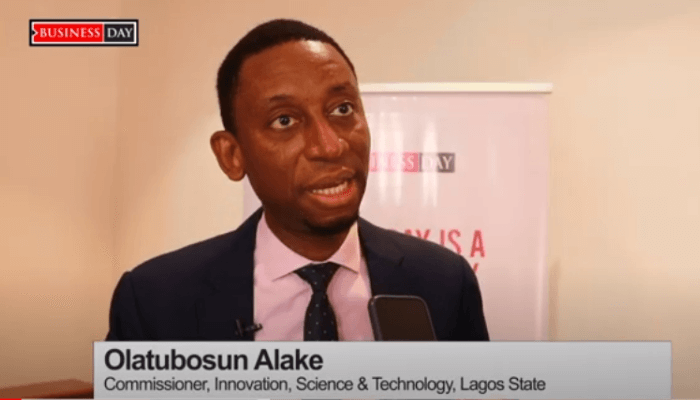
Imagine a one-stop shop or lab where governments, venture capital (VC) firms, private equity, research labs, front-line universities are all in the same location.
Then a University graduate comes with a great tech idea, to this lab for him to carry out the experiment. As he’s experimenting, a venture capitalist is in the room, does his rounds, looks for the next big idea to fund, then a breakthrough happens.
Tubosun Alake, the Commissioner for Innovation, Science and Technology, Lagos State, cited this example of Fraunhofer Institute in Germany during his keynote address on successful innovation ecosystems worldwide.
He explained that despite the desire to invest locally, venture funds are still domiciled abroad due to regulatory complexities, which must change.

He stated this during a multi-stakeholder participatory forum on Lagos state’s proposed Innovation Bill, still in draft form, that reflects the realities and needs of the innovation ecosystem.
According to him, Lagos must emulate such an ecosystem cited, in order to encourage local ownership while attracting foreign capital.
He recommends a collaborative space like the institute in Germany where universities, venture capital, and government co-creates commercial breakthroughs, which can be a blueprint for Lagos state to emulate.
He therefore stressed the need for the state to adopt the same model in creating a tech innovation one-stop shop to enable tech venture funds from being domiciled abroad to becoming local, even as regulation is made less complex.

The ambition of the bill was made clear: To position Lagos as a globally recognised innovation capital driven by research, home-grown ideas, smart policy, and inclusive economic growth.
The bill draws inspiration from Delaware in the United States, an international business hub praised for its pro-innovation regulatory framework as it affords founders the opportunity to start up their tech businesses easily.
The bill seeks to institutionalise innovation within the state’s legal and policy architecture to drive technology adoption, local investment, R&D, regulation, and eliminate structural barriers to innovation; while embedding sustainable mechanisms for growth, talent development, and global competitiveness.
Key officials from Lagos state were represented such as Engr. Ibilola Kasunmu, permanent secretary, Min. of Science and Technology, Gbemisola Bolarinwa, head, strategy and governance department, Min. of Science and Technology, Olusegun Sanwo-Olu, executive assistant to the Governor on Project Implementation and Monitoring, and other Lagos state officials.
Speaking further in exemplifying best practices on the ecosystem of innovation in Fraunhofer Institute which Lagos can adopt, Alake stated,
“The Fraunhofer Institute pays and files the patents. The patents is jointly owned. The VC provides funding to quickly incorporate and build the company, as that product is now the new primary product that they will ship into”.
“And then the Fraunhofer Institute also provides contracting to governments….in fact, the Fraunhofer Institute is run by municipal governments”.
“So when new ideas and products come on, they are also giving these companies contracts. So there is a whole ecosystem of innovation”.
Sustained R&D investment- Lessons from global best practices
In providing a historical and global context, Alake cited the evolution of Silicon Valley, driven by the cold-war eras contracts to Fairchild Semiconductor, and the R&D breakthroughs of institutions like Oak Ridge in the United States.
Alake underscored that countries such as South Korea, Israel, and Germany have demonstrated the strategic economic value of sustained R&D investment. He noted that South Korea currently spends 4.8 percent of its GDP on R&D, compared to Nigeria’s 0.13 percent.
“There is a pipeline of development that must be embedded into our national agenda. Research and development is a fundamental pillar of every developed economy,” he argued.
Speaking during the event, Joel Ogunsola, founder of Tech4Dev, reiterated the urgent need for cross-border collaboration, accountability, and skills development.
“To every young dreamer in Nigeria, to every parent hoping for their child’s breakthrough, this bill is the answer,” he said.
Ogunsola emphasised that the proposed bill is not just about startups, but also about enabling policies that creates access to capital, skills, and regulatory support. He pointed to the potential of local sandboxes, diaspora investment channels, and intellectual property rights as critical enablers of Nigeria’s innovation potential.
During the stakeholder engagement, participants representing organisations such as Google, Huawei, Semicolon, ENC Legal, Corporate BC Innovation Lab, BusinessDay, Beyond the Brief Council, among others, shared more insights and recommendations for the bill.
Encourage ease of doing business
A consistent theme was the difficulty early-stage businesses face in navigating Lagos’ fragmented incentive and regulatory landscape.
It was noted that startups face challenges with ease of doing business; foreign models are often used without localisation. Hence, it was decided that the law must help contextualise our realities as Africans to create the right enabling environment.
Create a dedicated Lagos innovation portal (Innovation one-stop shop)
The proposed law aims to streamline processes through a dedicated Lagos Innovation Portal, envisaged as a one-stop-shop for registration, funding access, and resource discovery.
This digital platform is expected to reduce bureaucratic hurdles in starting tech business and identify the incentives available to them, therefore increasing transparency.
It will enable participants register, get access, and find the opportunities.
Align research with industry needs
While some Nigerian universities such as the University of Lagos have made strides in research, the lack of coordination across institutions and industry remains a significant barrier.
The Innovation Bill, aims to close this gap by fostering structured collaboration, incentivising problem-solving in universities, and aligning curricula with industry needs.
This fund will be geared to support academic collaboration, tech transfer, and the commercialisation of local innovations.
The proposed law envisions stronger partnerships between academia, government, and industry, facilitated by joint grants and co-creation incentives.
Protect intellectual property and attract global capital
A critical element of the legislation is its emphasis on intellectual property (IP) protection. The bill acknowledges IP as a fundamental economic asset and proposes provisions to safeguard it, thereby boosting investor confidence.
Establish a governing commission
Central to the legislation is the creation of a Lagos State Science, Research and Innovation Commission, tasked with coordinating the innovation agenda.
Backed by law, the Commission will oversee grant administration, policy implementation, stakeholder engagement, and ecosystem monitoring.
Provide tax relief
The complexity of taxation for startups and innovators also emerged as a key challenge.
Participants pointed out the fragmented nature of tax regimes across federal, state, and local levels.
To drive participation, the bill proposes a suite of incentives for eligible stakeholders, ranging from fast-tracked patent support and tax relief to legal advisory services and IP waivers.
Create accountability and compliance
To maintain fiscal and operational transparency, registered entities will be subject to basic compliance requirements such as annual reporting and financial disclosure.
These will become checks and balances that are set in place.
Develop talent and infrastructure
The bill includes measures to expand the local talent pool through scholarships, innovation fellowships, boot camps, and access to state-supported labs and incubators.
As Lagos state moves closer to enacting the bill, the focus will now shift to legislative passage, institutional alignment, and continued public engagement.
Businessday.ng

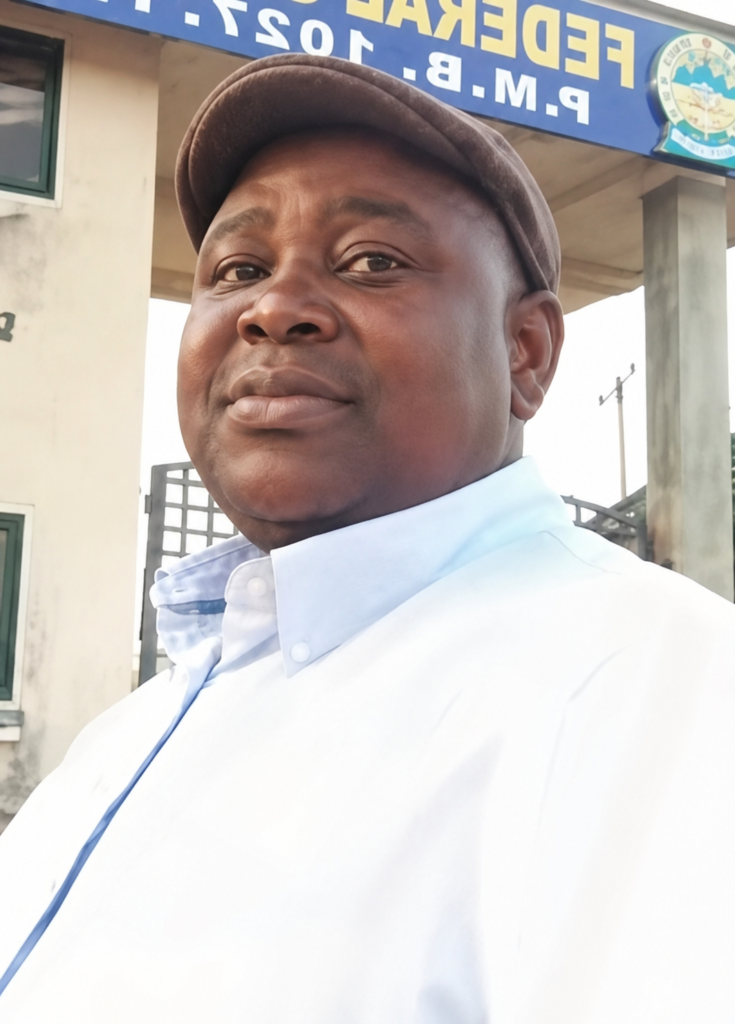
Ibrahim Kwande, brother of the chairman of the ruling All Progressives Congress (APC) in Nasarawa state, Aliyu Bello, is dead.
Nasarawa-born journalist Ibrahim Aminu, who confirmed the sad update via his Facebook page, said Kwande died on Friday afternoon, July 24.
Legit learnt that Kwande died as a result of a fatal motor accident. From breaking news to viral moments. Follow Legit.ng on Instagram. The deceased is expected to be buried on Saturday, July 25, in accordance with Islamic rites.
Aminu wrote on Facebook, sharing photos of sympathisers paying condolence visits alongside a photograph of the deceased: “INNA LILLAHI WA INNA ILAIHI RAJI’UN.
“It is with profound sadness that we announce the passing of Ibrahim Kwande, beloved brother of the chairman of the All Progressives Congress (APC) in Nasarawa State, Hon. Aliyu Bello, PhD, who departed this life this afternoon.
“He will be laid to rest in accordance with Islamic rites tomorrow 25th of July, 2026 at 9am.
“May Almighty Allah (SWT) forgive the deceased, grant him Aljannatul Firdaus, and give the family the strength and patience to bear this irreparable loss.
“Allah Ya Jikansa da Rahama. Ameen.”

An influential former Nigerian Senator Omololu Meroyi, who represented Ondo South Senatorial District in the National Assembly (NASS) between 1999 and 2003, died aged 76.
Legit reports that the ex-legislator’s younger brother, Meroyi Yomi Charles, broke the news to journalists that same Wednesday, July 22, saying his sibling passed away earlier that morning. Charles did not reveal what caused the death.
The Achievers Progressive Group, a prominent grassroots organisation based in Ondo state, was among the first to publicly mourn his passing.
In a statement released on Wednesday, July 22, obtained by Legit, the group said it received news of Senator Meroyi’s death with “deep sorrow,” describing the late federal lawmaker as “our leader and father.”
The statement read: “On behalf of the entire members of Achievers Progressive Group, we extend our heartfelt condolences to everyone. We share in your grief and pray that God Almighty grants you and the family the strength to bear this irreparable loss.”
As of the time of this report, the family had yet to announce funeral or burial arrangements.
Born on January 1, 1950, Meroyi earned a Master of Science degree in Economics from the London School of Economics.
He first entered federal politics in 1983 when he was elected to the House of Representatives. 16 years later, he returned to the National Assembly after winning a Senate seat in 1999 on the platform of the Alliance for Democracy (AD), representing Ondo South.
He later crossed to the Peoples Democratic Party (PDP) during his political career.
After leaving the Senate, Meroyi remained engaged in public affairs, eventually serving as the South-West National Vice Chairman of the Nigerian Senators’ Forum.
Outside politics, he worked as a management consultant and held the position of chairman at Araromi Rubber Estates Limited.
Adefunke Kuyoro, a former president of the Association of Professional Party Organisers and Event Managers of Nigeria (APPOEMN), is dead. Kuyoro’s death was confirmed in a statement released by the deceased’s family.
Legit.ng learnt that Kuyoro, 64, “peacefully transitioned to glory”.
Kuyoro’s company, TWC Events Services, also confirmed the sad update. TWC Events’ statement, jointly released by the Kuyoro family, read
“It is with a heavy heart that we, the TWC Event Management Services, announce the passing of our beloved CEO, Mrs. Adefunke Kuyoro, fondly known to us all as Mummy K/Mrs. K.
“Mummy K was not just our leader; she was our pillar, our inspiration, and the heart of everything we built together.
Her grace, vision, and passion for excellence defined TWC Event Management Service, and her impact will live on in every event we ever touch.
“We are devastated by this loss, but we are comforted knowing that she lived a life full of purpose, love, and dedication.”
The statement added: “To everyone who has reached out with condolence messages, calls, and kind words, the family and the entire TWC team are deeply grateful. Your love and support during this incredibly difficult time means more than words can express.
Thank you from the bottom of our hearts. “Mummy K, you will forever remain in our hearts. Rest in perfect peace.”
A Facebook post on Adefunke Kuyoro confirming the entrepreneur’s demise can be viewed:



SHOCKER! Sheikh Gumi Mentions Two Top Nigerian Leaders Who Visited Militants

2027 Election: Tinubu’s Ex-Minister Adelabu Speaks On Dumping APC

UK Lists 10 Requirements Nigerians Need To Secure Work Visa

Former Super Eagles Star Loses Life Savings, Duped By A Pastor of ₦1.2 Billion

I’m A Married Man, I Can Never Get Myself Involved With Such A Thing, Delta Gov Aide Reveals Why He Offered Comfort ₦500,000 Job

Lagos Imposes ₦250,000 Fine For Illegal Waste Disposal

-

 Politics2 days ago
FULL LIST: APC Uploads 13 Governorship Candidates to INEC Portal
-

 Business1 day ago
No More N1300/liter: Petrol Stations Release New Fuel Prices Nationwide
-

 Tech17 hours ago
BREAKING: Painful, APC Chairman Bereaved
-

 Business1 day ago
BREAKING: Tears as Top Nigerian Buśineśś Icon Passes Away
-

 Entertainment2 days ago
BBNaija Season 11 Returns With Bigger Prize, Twists [All You Need To Know]
-
 Politics12 hours ago
2027 Election: Tinubu’s Ex-Minister Adelabu Speaks On Dumping APC
-

 Entertainment2 days ago
‘Woman’s Financial Status Doesn’t Matter To Me’ – Singer Ruger
-

 Entertainment2 days ago
From Stage To Style: Davido Sets The Standard In Royal Blue