
Business
16 Reasons Femi Otedola’s ‘Making It Big’ Is A Must-Read Life-Changer-Kunle Bakare Reveals


…has settled comfortably on the bestseller list
Femi Otedola’s ‘Making It Big: Lessons from a Life in Business’ debuted online and in bookstores on Monday, August 18 across the world to rave reviews. And in one week of release, it has settled comfortably on the bestseller list.
Applauded by moguls, economists and technocrats, the 286-page business memoir of the Chairman of First HoldCo PLC and Geregu Power PLC topped charts and discourses in just seven days of global release.
Appearing at number 4 on Amazon UK best seller list in business biographies and memoirs on Tuesday, August 19, it rose to number 3 on Wednesday, August 20—and it has settled there for many days.
Part-autobiographical and self-help, ‘Making It Big’ is laced with lessons for budding entrepreneurs and aspiring business leaders. It tells Otedola’s story vividly and refreshingly—from birth, family, schools, businesses and more—as well as lists pieces of tips and advice to show us how to advance in life and in business.
Otedola narrated the story of his life and business with honesty and candour—no-holds-barred, with details many will refuse to share in order to save face, or to portray a no blemish persona.
Inspirational and riveting, ‘Making It Big’ has been described as ‘one of the most important books you will ever read’ for these reasons and more:
.Tells an inspiring grass-to-grace-to-grass-and-grace story
Otedola’s remarkable journey to billionaire status sounds like a fairy-tale which warms hearts and bosoms immeasurably.
Though born into a middle class family on November 4, 1962, the author struggled through school, and managed to go beyond only O’level as he refused to continue his A’level.
He became his father’s driver and personal assistant, joined the old man’s printing press, and moved on to the corridors of power when Sir Michael Agbolade Otedola was governor of Lagos.
After power, he became a money lender whose occupation was described as ‘sleeping for a living’ by his daughter.
He started Zenon Petroleum and Gas on March 10, 1999, made billions and lost all of it.
He bounced back with Forte Oil, and reclaimed his wealth and glory.
.Provides actionable business advice and tips
Practical strategies for entrepreneurs and business leaders are well articulated and graphically presented.
Divided into 5 sections—In the beginning, Growth and expansion, Reaching the top, Collapse and rebirth, and Rediscovery—‘Making It Big’ has 23 lessons with hundreds of actionable tips to navigate business and life.
From ‘start small, keep dreaming’ to ‘know your market’, ‘don’t fool around with your health’, ‘recognise your limits’ and ‘appreciate the God factor’, Otedola recounted compelling accounts and offered easy-to-follow-and-execute tips.
Coaches proven leadership techniques and effective team management methods
Effective methods for building and managing successful teams are put to rewarding ends by the mogul.
From hands on do-most-of-the-work yourself when starting out as a micro business, to having reliable and dutiful staff as you grow the business, and sit-back and allow younger talents to flower and flourish, different models are on display in ‘Making It Big’.
Otedola had only two workers in the money lending business, worked with only a driver at the beginning of Zenon, and grew bigger with marketing executives driving cars emblazoned with Zenon on the streets of Lagos.
At the beginning of Forte Oil, he was no longer the MD. He ceded the role to a younger man—and became an entrepreneur in the real sense of the word.
Teaches resilience in adversity
Otedola’s ability to overcome obstacles and challenges made him the man he has become.
On many occasions, the author was down on his luck. He was embarrassed and humiliated, derided and laughed at. But he never dwelt on the reversal of fortune for too long.
For a man who lost $1.218 billion in 2009, hounded by bank chiefs who were too glad to hawk his assets, he’s resilience in flesh and blood.
With the God factor and grace, he inched his way back to profitability after rebranding—and returned with glory to the celebrated Forbes’ rich list.
Illuminates insight into Africa’s business workings
Context-specific expertise for entrepreneurs and policymakers is necessary to successfully get ahead in Nigeria and beyond.
There’s hardly any wealthy African with sustained riches who is not close to the corridors of power. Apart from knowing how government in this part of the world works, keeping your ears to the ground to be abreast of policies that will affect your interest, you have to court those who make important decisions.
And ‘Making It Big’ is packed with details of how this political commonsense helped in humongous measure.
From getting allocation of diesel from Nigeria National Petroleum Corporation (NNPC), to buying African Petroleum, and diesel deregulation, being close to power keeps doors of opportunities ajar.
Spotlights mastery of personal growth principles
Otedola’s philosophy on self-improvement and development gave him an edge.
From primary school, Otedola saw himself as a successful businessman—and the affirmation was put into practice by asking his dad for a briefcase as school bag. When his classmates laughed at him, he didn’t allow it to stop him.
This attitude, of planning and executing his dreams, litter his life.
From trimming nails for a fee as a young lad, learning the rudiments of printing, lending money for appreciable interest, selling diesel in drums in a pick up van, buying tank farms and vessels and diversifying into property, investing in the stock market, power generation and more, ‘Making It Big’ is a testament to a life of purpose.
Showcases the depth of economic empowerment
The impact of entrepreneurship on economic growth and development runs deep and far.
Apart from providing thousands their livelihoods, Otedola’s businesses have turned many lives around for good, built fortunes for some and created immense economic benefits for the state.
The ideas of an entrepreneur, especially those assisted by grace and catapulted by the God factor, create enormous multiplier effects with ample direct and indirect beneficiaries which echo farther than the eyes can see.
From keeping immediate families afloat to making dreams come true, the resources generated by businesses also facilitate the infrastructure provided by the government.
Displays authentic leadership style
Otedola’s genuine and relatable approach to business and life warms hearts and brightens faces.
Though resolute, strong-willed and tough, the author’s simplicity is disarming as it easily makes him approachable and adored.
Let’s just take a look at one example: the start of Zenon Petroleum. The business of diesel supply started with a van loaded with drums of the product, a driver and Otedola in denim trousers and cotton polo shirts. And the two of them—driver and author—moved from offices to houses to deliver the product from sunrise to sunset. Day after day.
Check this scenario: his chief operating officer advised him to resign as MD from the company he founded. And he did! For the benefit of the business.
These uncommon attributes and soft skills transformed his life from ordinary to fabulously extraordinary.
Lists timelesss business lessons and how they work
‘Making It Big’ contains valuable insights applicable across industries and contexts.
Let’s examine just a few: ‘self-belief is non-negotiable’, ‘create a warm working environment’, ‘make your life simple’, ‘leave family out of your business’, ‘forgive those who hurt you’, and ‘indiscipline will ruin your business’.
These lessons are so timeless and tested that it’s impossible to succeed big without living them to the letter!
Highlights guidelines that sharpen motivation and passion
Inspiration to strive for excellence and pursue your passions abound in ‘Making It Big’.
It is important to always know the why (like Simon Sinek preached in his book, ‘Start with Why’). Whatever you plan to do, in business and in life, you get huge returns when you know the reasons for the adventure.
A rickety tanker was dispensing diesel in the author’s house (weeks later than promised), spilling dirty oil all over the compound. And the idea struck: I can clean up this business, provide better service faster and hassle-free.
That’s how Zenon Petroleum started small, with the author continually dreaming of changing the landscape of the diesel business.
And he did: controlling over 90 percent of the business.
Itemises innovative business strategies
Otedola’s creative approach to business and problem-solving is enviable.
The author’s creative approach and problem-solving skills came to play on many occasions, and we couldn’t stop applauding the outcomes.
When Geregu Power was about to start, extensive research and consultation went on behind the scene. And partnering with China’s biggest energy company was a game changer.
Instead of a DisCo, a distribution company (which would have incurred irreparable losses), they settled for a generating company (GenCo). That move saved Geregu Power headaches, and planted it on the path of profitability.
Also, when he had extracted the maximum benefits from Forte Oil, he sold it in 2019—to the amazement and bewilderment of all. Many are still confounded about the sale.
But Otedola moved on—to bigger net worth and more money to deploy to other lucrative concerns. And getting a foot-hold in First Bank, emerging its largest shareholder and now chairman of First HoldCo PLC taught us a hundred and one things about his gift to see far so clearly!
Guides us on how to build strong friendship and networks
The significance of building strong and enduring relationships and networks is apparent in the success story of Olufemi Peter Otedola.
From childhood, he has cultivated warmth and empathy, friendliness and charity.
And Otedola has put to good use his charm and easy ways to land lasting and hugely rewarding relationships.
He wormed his way into the hearts of notable figures like Chief Wahab Folawiyo (whom he joined in counting cash at his palatial home alongside his children), Prince Samuel Adedoyin (who has known him since he was a far younger man, later patronising Zenon and writing a blurb for ‘Making It Big’), Alhaji Aliko Dangote (whose Rolls Royce fascinated him as a young lad, and both evolved as close friends), Chief Olusegun Obasanjo (who provided access which led to diesel deregulation) and many more.
Explains how adaptability in business provides the anchor for survival
The acumen to quickly respond to and navigate changing environments and circumstances catapulted Otedola onto the big league.
At every turn, he knows what business to start and which to drop. His rise testifies
to this gift.
Are we talking about when he saw the need to provide quick loans to customers who couldn’t access the bigger banks? Or, when he stepped in to sell diesel to power homes and companies, industries, vehicles and trawlers?
Will it be when he moved to the power sector with a GenCo? Or when he left the petroleum and oil sector for good?
Demonstrates goal-setting, disciplined execution and high achievement tactics
‘Making It Big’ is full of practical directions on how to set goals, pursue your objectives strategically and diligently, and achieve them.
Every chapter begins with a particular topic, episode, scenario, or experience—and how the author set about achieving his goals. Even when he failed, he listed the reasons and what he learnt from the mishap.
Otedola plans for short, medium and long-term. He thinks through his ideas, nurtures and weeds them before he acts with precision and speed.
Just imagine how he bought African Petroleum. The deal had long been concluded and sealed—before he made a move. And he won.
Illustrates how to learn from failure
Failing forward (as John C. Maxwell described it in his book of the same title) is a mantra Otedola embodied. He’s not a stranger to failure. And even losing everything!
He has managed to overcome the shame and disgrace that come with setbacks—and he emerges stronger with a will of steel.
How many of us can lose $1.218 billion, buried in debt and humiliated, and come out richer and bigger?
Can you withstand the jibes of your friends who discredit your honest toil at random? ‘Where’s your truck?’ his friends laughed at him at nightclubs because he’s the son of a former governor. ‘Are you here to sell diesel?’ they constantly teased.
They treated him as a failure who didn’t leverage on his father’s political goodwill. But they were so wrong. Otedola knew then that he had to take good care of his family, was ready to roll up his sleeves in honour of the dignity of labour, and he eventually built the big business of his dream.
Advises us on philanthropy and giving back
Making a positive impact in society, reducing desperation and angst, and pulling people up with charity always sat well with Otedola.
From scholarship to indigent students to interventions to save people from certain death triggered by failing health, building a faculty in a university, funding projects in churches, mosques and more, much more, he’s a philanthropist with a large heart. Otedola is perpetually stepping forward to lend a helping hand.
His Sunday, November 10 2019, $14 million donation to Save the Children charity stunned all.
Otedola, the cheerful giver, exemplifies a deep Yoruba philosophy of acknowledging that one is wealthy primarily to uplift others: ni t’ori opo eniyan l’ase da e lola; ni t’ori talaka l’ase bukun e [you are splashed with wealth and humongous resources to uplift legions; you are blessed abundantly to change the lives of the less-privileged and the needy].
Femi Otedola took us through all his business adventures and misadventures to provide first-row guidance with ‘Making It Big: Lessons from a Life in Business’.
The ‘nail trimmer’ and ‘money lender’, the man who lost everything, humiliated and derided, has gained so much that he’s living his dream with houses in Lagos, London, Dubai and Monaco—and has at his beck and call all the posh and plush objects of desire dreamt only by men of means. And what’s more, he has turned his empire into a lifeline for his country and compatriots.
For these reasons and more, the business memoir of the 62 year-old Ibadan- born businessman from Odoragunsin (near Epe, Lagos State)—in the top league with Stephen A. Schwarzman’s ‘What It Takes: Lessons in the Pursuit of Excellence’, ‘Winning’ by Jack Welch with Suzy Welch, Jordan B. Peterson’s ’12 Rules for Life: an Antidote to Chaos’, and ‘High Performance: Lessons from the Best on Becoming Your Best’—is a must-read life-changer which is truly ‘one of the most important books you will ever read’.
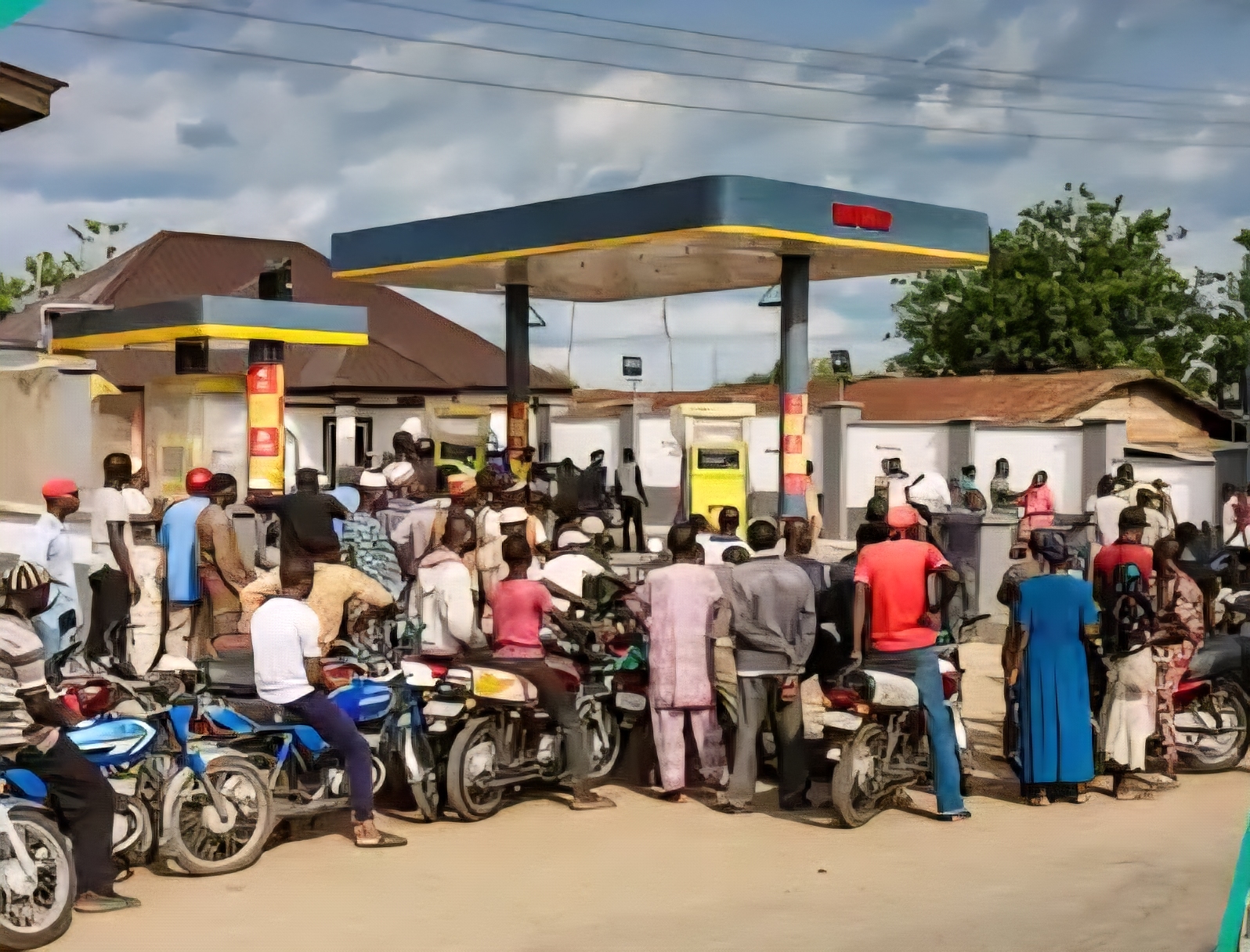
Petrol prices at Nigerian depots have dropped to their lowest levels in months as intense competition grips the downstream market, following the apparent collapse of the fuel supply agreement between the Dangote Petroleum Refinery and independent marketers.
Fresh findings show that depot owners have slashed ex-depot prices to as low as N710 per litre, a sharp reversal from the steep hikes recorded just weeks earlier.,
In the first week of January 2026, depot owners sharply increased gantry prices after reports emerged that the Dangote Refinery had shut down its petrol production unit for maintenance.
Although the refinery denied the reports, the speculation was enough to jolt the market.
Depot prices surged, and the increases quickly filtered through to filling stations nationwide.
Independent marketers raised gantry prices from around N720 per litre to over N800 per litre, with analysts noting that depot operators were exploiting uncertainty surrounding Africa’s largest refinery.
Depot owners reverse course as competition intensifies
The price spike, however, has proven short-lived.
Checks reveal that depot owners have now reversed course, cutting prices aggressively to stay competitive with Dangote Refinery’s pricing structure, especially as fresh fuel imports enter the Nigerian market.
Data from PetroleumPriceNG shows that several major depots reduced prices significantly in recent days.
As of Sunday, January 11, 2026, ShellPlux sold petrol at N710 per litre, MAO at N715, while A.Y.M.
Falling crude oil prices add more pressure
Energy experts say global oil market dynamics are also contributing to the decline in local petrol prices.
“Crude oil is currently trading between $50 and $60 per barrel in the international market,” energy policy analyst Adeola Yusuf told Legit.ng.
According to him, ongoing geopolitical tensions involving Venezuela and Iran have pushed crude prices lower, with direct implications for refined fuel costs.
“Crude oil is often used as a political tool and is highly sensitive to geopolitical developments. When prices drop, refined product prices usually follow, especially in domestic markets,” Yusuf explained.
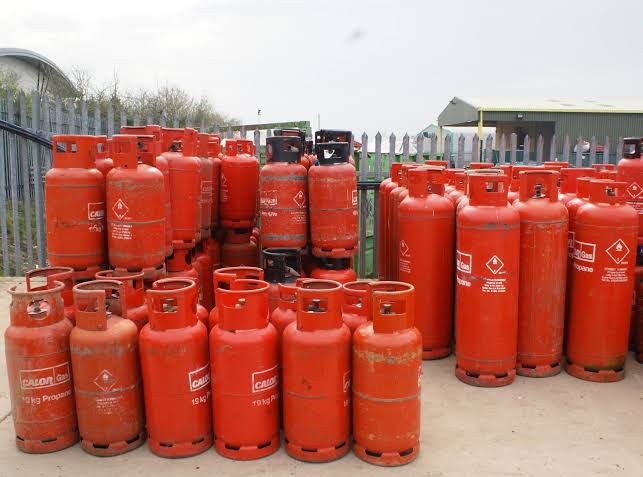
Prices of liquefied petroleum gas (LPG), commonly known as cooking gas, are crashing in several parts of the country as retailers report improved supplies.
According to a market survey by PUNCH, retailers and consumers confirmed that prices have dropped and the product has become more available across the country.
This development follows months of scarcity, which led to a nationwide hike in prices. The scarcity peaked in September 2025.
Consumers in Lagos, Ogun, Oyo and other states confirmed that they purchased cooking gas within the N1,050 to N1,400 range. Some major marketers were also reported to be selling directly to consumers at around N900 per kilogramme.
For many households, the current prices represent a significant improvement from the sharp increases recorded last year, when LPG prices surged after a dispute involving the Dangote refinery and the Petroleum and Natural Gas Senior Staff Association of Nigeria (PENGASSAN) led to the shutdown of some gas facilities.
Despite the improvement, several consumers said they were hopeful that prices would fall below N1,000 per kilogramme in the new year, arguing that lower costs are critical to promoting clean cooking and reducing reliance on firewood and kerosene.
Speaking on the situation, the National Chairman of the Liquefied Petroleum Gas Retailers branch of the Nigeria Union of Petroleum and Natural Gas Workers (NUPENG), Ayobami Olarinoye, said the LPG market had become relatively stable, with increased supply reaching Lagos.
According to Olarinoye, some off-takers are now receiving gas in Apapa, Lagos, helping to ease availability challenges experienced in previous months.
He explained that retail prices at street-level outlets currently range between N1,300 and N1,400 per kilogramme, noting that costs vary based on neighbourhoods, transportation and logistics.
Olarinoye added that prices could be lower at filling stations and gas plants, where operational and distribution costs are reduced.
He further disclosed that retailers currently purchase LPG from major marketers at prices between N960 and N1,050 per kilogram, depending on the supplier. According to the NUPENG official, sellers offering LPG below N1,000 per kilogramme are typically major dealers who own their own plants and sell directly to end users and do not distribute to retailers.


Amid its struggles to pay the over N4tn debt owed to power generation companies, the Federal Government incurred a total of N1.98tn in electricity subsidy obligations in 12 months, from October 2024 to September 2025.
This was according to the quarterly reports released by the Nigerian Electricity Regulatory Commission. In the fourth quarter of 2024, covering October to December, the electricity subsidy incurred by the government was N471.69bn. It was N536.4bn in the first quarter of 2025 and N514.35bn in the second quarter of last year.
The latest report from NERC released on Tuesday showed that the Federal Government incurred a power subsidy burden of N458.75bn in the third quarter of 2025 as electricity tariffs remained below cost-reflective levels, making a total of N1.98tn in the 12-month period, from October 2024 to September 2025.
NERC stated in its reports that in the absence of cost-reflective tariffs, the government undertook to cover the resultant gap between the cost-reflective and allowed tariff in the form of tariff subsidies.
The PUNCH observed that the subsidy burden remains high despite the Band A tariff adjustments of April 2024. Recall that the Minister of Power, Adebayo Adelabu, has repeatedly pointed out that the electricity subsidy was no longer sustainable, proposing a subsidy arrangement that would cover only the poor.
Experts who spoke with The PUNCH also maintained that the government should find a way out of the burden of electricity subsidy.
NERC stated that the subsidy is applied at source through the DisCos’ payment obligations to the Nigerian Bulk Electricity Trading Plc. It stated that for ease of administration, the subsidy is only applied to the generation cost payable by DisCos to NBET at source in the form of a DisCo’s Remittance Obligation.
According to the regulator, the DRO represents the total GenCo invoice that is billed to the DisCos by NBET based on what the allowed DisCo tariffs can cover. NERC added that DisCos are still required to fully meet other market invoices.
“DisCos are expected to remit 100 per cent of the invoices received from the MO for transmission and administrative service costs.” It disclosed that the subsidy obligation in Q3 amounted to N458.75bn, though it represented a decline from the previous quarter.
“Due to the absence of cost-reflective tariffs across all DisCos, the government incurred a subsidy obligation of N458.75bn; this represents a N55.59bn reduction in FGN subsidy compared to 2025/Q2 (N514.35bn),” it said.
The commission said the subsidy accounted for over half of total generation invoices, stating, “The subsidy obligation of the government decreased in naira terms and accounted for 58.63 per cent of the total GenCo invoice, which is a 0.97 pp decrease compared to 2025/Q2 when the subsidy accounted for 59.60 per cent of the total GenCo invoice.”
According to NERC, the reduction was driven by lower energy offtake and a marginal decline in generation cost. “This is because while the allowed end-user tariffs remained unchanged across the quarters, there was a 6.08 per cent decrease in energy offtake by the DisCos during the quarter, as well as a reduction in actual generation cost (N/kWh) by 0.98 per cent,” the report added.
The commission noted that the DRO framework replaced the Minimum Remittance Obligation regime in January 2024, and DisCos are expected to pay 100 per cent of their DROs.
Explaining the reason for the policy shift, NERC said, “The transition to the DRO regime was necessitated by the risk of unpaid tariff subsidy debts encumbering the balance sheets of the DisCos, thereby preventing them from raising finance to undertake critical investments in their distribution network.”
Under the framework, the regulator said the Federal Government directly settles the subsidy component of generation costs. Under the DRO framework, NBET directly invoices the portion of GenCo costs not covered by DRO (tariff subsidy) to the Federal Ministry of Finance for immediate settlement.
On payments to NBET, the regulator said DisCos recorded a remittance rate of 95.23 per cent in Q3. The DRO-adjusted invoice from NBET to the DisCos was N323.70bn, while the total remittance made was N308.25bn, according to NERC.
It added, “Comparatively, in 2025/Q2, the DRO-adjusted invoice from NBET to DisCos was N348.66bn, and the total remittance was N333.90bn, which translated to 95.77 per cent remittance performance.”
NERC explained that most DisCos met their obligations in full, as disaggregated remittance performance of the DisCos to NBET in 2025/Q3 shows that all DisCos, except Kano (98.74 per cent), Benin (94.77 per cent), Jos (65.13 per cent), and Kaduna (40.16 per cent), achieved 100 per cent remittance performance.
The commission noted mixed performance among the defaulting DisCos on a quarter-on-quarter basis, adding, “A quarter-on-quarter analysis showed that Jos (+4.29 pp) DisCo recorded an improvement in remittance performance to NBET in 2025/Q3 compared to 2025/Q2, while Benin (-5.23 pp), Kaduna (-1.68 pp) and Kano (-1.26 pp) DisCos recorded decreases in remittance performance.”
The report showed that all other DisCos (Abuja, Eko, Enugu, Ibadan, Ikeja, Port Harcourt, and Yola) maintained 100 per cent remittance to NBET across the quarters.
On remittances to the Market Operator, the regulator said DisCos paid N73.03bn out of N76.77bn invoiced in Q3. This payment translates to 95.13 per cent remittance performance. “This represents a marginal increase when compared to the 95.07 per cent remittance performance recorded in 2025/Q2 when DisCos remitted N65.30bn out of the N68.68bn invoice issued by the MO.”
According to the commission, the disaggregated remittance performance of the DisCos to the MO shows that all the DisCos, except Jos and Kaduna, recorded 100 per cent remittance performance to the MO in the third quarter.
It further stated, “Since January 2025, only Jos and Kaduna DisCos have failed to remit 100 per cent of the MO invoice,” adding that “between 2025/Q2 and 2025/Q3, Jos recorded an increase of 6.72 pp, while Kaduna recorded a decline of 4.29 pp in their remittance performance to MO.”
Operators in the power sector have repeatedly called on the Federal Government to remove the subsidies on electricity so as to end the challenges of liquidity. Since April 2024, customers on Band A have stopped enjoying electricity subsidies.
The report further showed that total generation costs for Q3 would have stood at N782.45bn without government intervention. However, due to the subsidy, the Nigerian Bulk Electricity Trading Plc invoice payable by DisCos fell to N323.70bn.
Despite modest improvements in billing and collection efficiency, electricity distribution companies recorded combined billing losses of N315.17bn between the second and third quarters of 2025, largely due to energy theft, poor metering, and weak commercial controls.
NERC disclosed that DisCos were unable to account for N167.25bn worth of energy received at their trading points in Q2, while billing losses in Q3 stood at N147.92bn. The commission did not state the billing loss figure for the first quarter.
In Q3, the naira value of total energy offtake by all DisCos stood at N854.53bn, while energy billed amounted to N706.61bn, translating to a billing efficiency of 82.69 per cent. Although this represented an improvement of 1.08 percentage points over the 81.61 per cent recorded in Q2, DisCos still suffered significant revenue leakages.
NERC said the losses were driven largely by commercial losses, including energy theft and poor energy accounting, as well as the inability of DisCos to bill energy at the weighted average allowed tariff.
On revenue collection, DisCos generated N570.25bn out of the N706.61bn billed in Q3, resulting in a collection efficiency of 80.70 per cent, up from 76.07 per cent in the previous quarter.
However, the regulator said the weighted average aggregate technical, commercial, and collection loss across all DisCos remained high at 33.27 per cent, exceeding the 2025 MYTO target of 20.54 per cent by 12.73 percentage points.
This translated to a cumulative revenue loss of N108.75bn, despite a 4.65 percentage point improvement from the 37.92 per cent recorded in Q2. Only Eko and Ikeja Electricity Distribution Companies met their ATC&C loss targets during the quarter, while Kaduna DisCo posted the worst performance, recording an actual ATC&C loss of 71.10 per cent against a target of 21.32 per cent.
On market remittances, DisCos were billed a cumulative upstream invoice of N400.48bn in Q3, comprising N323.70bn payable to NBET and N76.77bn for transmission and administrative services owed to the Market Operator.
Out of this amount, DisCos remitted N381.29bn, leaving an outstanding balance of N19.18bn and a remittance performance of 95.21 per cent, slightly below the 95.65 per cent recorded in Q2.
However, the report highlighted weak remittances from international bilateral customers, who paid only $7.13m out of the $18.69m invoiced, representing a 38.09 per cent remittance rate. By contrast, domestic bilateral customers paid N3.19bn out of N3.64bn invoiced, achieving a stronger 87.61 per cent remittance rate.
The convener of PowerUp Nigeria, Adetayo Adegbemle, said the electricity subsidy is no longer sustainable, saying the government ought to have found a way out of the burden. Adegbemle said the subsidy affects the entire value chain as the Federal Government failed to fulfill the subsidy obligations.
“I’ve been pushing that our current subsidy is not sustainable. And that’s because it affects the value chain all the way down. If you are asking me today again what I feel about power subsidy, I have not changed my position on that. Subsidy is not sustainable. The government is supposed to have evolved a way out of it,” he said.
Adegbemle believed that one of the reasons why the government had yet to remove subsidies was because of political considerations, especially the effects of the fuel subsidy removal.
“I believe that there are some political considerations as well. One of them was the shock effect of the removal of the fuel subsidy. And the rising exchange rates. If anything, we all know that the shock effect led to high inflation.
“So, on one hand, I want to believe that that’s one of the reasons why they’ve not removed power subsidies. But then, we have also proposed alternatives for them, one of which is the Power Consumer Assistance Fund that the Electricity Act itself asked them to work on. The Federal Government has not paid these subsidies; if it had paid, we wouldn’t be owing the GenCos. We need to bring manufacturers back to the grid,” he said.
Meanwhile, the Nigeria Electricity Consumers Advocacy Network has described the Federal Government’s service-based tariff policy as a failure, warning that recent electricity tariff adjustments have failed to reduce subsidy payments and instead deepened inefficiencies in the power sector.
Speaking with The PUNCH on Tuesday, the National Secretary of NECAN, Uket Obonga, said the introduction of the Band A tariff regime, which was justified by government officials as a pathway to subsidy reduction, had delivered the opposite outcome.
“I have always called the service-based tariff policy a scam from the beginning, and going by the promise made by the regulator, minister, and the government in introducing the Band A tariff to reduce subsidy, has it been reduced now? The more baffling thing is how revenue collected by the Discos is almost now at par with the amount incurred as electricity subsidy,” Obonga said.
He also expressed concern that revenue collected by electricity distribution companies was now almost at par with the amount the Federal Government was paying as an electricity subsidy, raising questions about the effectiveness of the policy.
“The most baffling thing is how revenue collected by DisCos is almost now at the same level as what the government is incurring as an electricity subsidy,” he said. “That alone shows that the policy and its implementation have failed.”
The consumer advocate accused DisCos of benefiting from poor supply while continuing to collect tariffs from customers. “DisCos are now benefiting from selling darkness to Nigerians and still collecting money,” Obonga said. “They are charging for power that is not supplied. That is the reality.”
He said the original objective of the service-based tariff regime had collapsed because the structure of electricity demand in Nigeria was fundamentally flawed.
“The whole idea behind the service-based tariff was that industrial customers would off-take power, pay commercial rates, and help sustain the industry,” he said. “But today, we don’t have enough industrial customers on the grid. Residential customers cannot pay what is required to sustain the power sector.”
Obonga also faulted the Federal Government’s claim that industrial users were being encouraged back to the national grid, insisting there was no evidence to support such assertions.
“The government is not using data to do its projections,” he said. “Recall that the Minister of Power said the government was working to bring industrial customers back to the grid. How many companies have actually returned? Where is the data?”
According to him, poor supply quality, unreliable power, and high tariffs had made it difficult to convince manufacturers to abandon self-generation. “It is even difficult to convince them to return to the grid,” he said. “Once a company has invested heavily in alternative power, it will not come back easily.”
The NECAN secretary also raised concerns over the Federal Government’s N4tn electricity bond, which was issued to address legacy debts and stabilise the power sector.
“Now the government has come up with a N4tn bond, and it has already been issued,” Obonga said. “What is the result of that bond? It was concluded last year, but there is still no clarity on what it has achieved.”
He expressed doubts over investor appetite for the bond, warning that it may not have attracted the level of investment expected by the government. “I will not be surprised if the bond does not attract the required investment from investors,” he said.


FCT Minister Wike Reacts To Call For Tinubu To Sack Him

2Baba – Officially Blind

BREAKING: KWAM 1 Writes Ogun Govt, Accuses Fusengbuwa Ruling House of Plot to Exclude Him From Awujale Selection

These ’90s fashion trends are making a comeback in 2017

Former Super Eagles Star Loses Life Savings, Duped By A Pastor of ₦1.2 Billion

I’m A Married Man, I Can Never Get Myself Involved With Such A Thing, Delta Gov Aide Reveals Why He Offered Comfort ₦500,000 Job
-
 Business15 hours ago
BREAKING: Petrol Depot Owners Crash Prices To Cheapest; Details Emerge
-

 News2 days ago
Buhari’s Ex-Minister Pantami Breaks Silence Over Alleged Wedding Plan With Aisha Buhari
-
 News1 day ago
“Do Not Test Trump’s Resolve”: US Issues Fresh Threat To Nigeria
-

 Lifestyle2 days ago
Chimamanda: Heartbreaking Details About What Killed Author’s Late Son Emerge
-

 Entertainment20 hours ago
SO SAD: Actress and Content Creator Sunshine D!es After Surgery; Details of Last Moment Trends
-

 Sports2 days ago
AFCON: Nigerian Billionaire Splashes Dollars On Super Eagles
-
 Politics3 hours ago
FCT Minister Wike Reacts To Call For Tinubu To Sack Him
-
 News15 hours ago
BREAKING: KWAM 1 Writes Ogun Govt, Accuses Fusengbuwa Ruling House of Plot to Exclude Him From Awujale Selection