
Business
REA, NBS Sign MoU To Boost Data-Driven Energy Initiatives

The Rural Electrification Agency and the National Bureau of Statistics have entered into a strategic partnership to conduct a comprehensive National Energy Survey aimed at strengthening data-driven planning in Nigeria’s power and energy sector.
The partnership was sealed through a Memorandum of Understanding signed in Abuja by Managing Director and Chief Executive Officer of the REA, Dr. Abba Aliyu, and Statistician-General of the Federation and Chief Executive Officer of the NBS, Prince Adeyemi Adeniran .
A statement issued by the REA on Tuesday disclosed that the survey will be conducted using the globally recognised Multi-Tier Tracking Framework and implemented under the Energy Sector Management Assistance Programme of the World Bank.
According to the agency, the initiative is designed to generate high-quality and analytical energy data that will support evidence-based policymaking, programme design, and investment decisions across Nigeria’s electricity value chain.
The statement read, “The Rural Electrification Agency and the National Bureau of Statistics have signed a Memorandum of Understanding to collaborate on the conduct of a comprehensive National Energy Survey using the Multi-Tier Tracking Framework in Nigeria.
“The MoU formalises a strategic partnership between the two Federal Government agencies to provide mutual collaboration and technical support for the survey, which is being implemented under the Energy Sector Management Assistance Program of the World Bank.
“The initiative is designed to generate high-quality, analytical data to support evidence-based planning and policy formulation in Nigeria’s power and energy sector.”

Speaking at the signing ceremony, Aliyu said the collaboration underscored the agency’s commitment to data-driven rural electrification and sustainable energy access.
“This collaboration will provide granular, credible data on electricity access, affordability, and off-grid energy solutions across Nigeria. The findings will directly inform national electrification initiatives such as the National Electrification Strategy and Implementation Plan, while also strengthening investor confidence in the sector,” he said.
He explained that the outcome of the survey would directly inform national electrification initiatives, including the National Electrification Strategy and Implementation Plan, while also boosting investor confidence in the power sector.
“As we work towards universal energy access, accurate data remains critical to prioritising interventions, targeting underserved communities and attracting private capital into the sector,” Aliyu added.
On his part, Adeniran emphasised the role of robust statistical standards in national development planning, noting that the NBS would ensure the credibility and reliability of the survey results.
“NBS is pleased to provide technical oversight, sampling expertise, and quality assurance to ensure that the survey adheres to global best practices,” he said.
“Reliable data is fundamental to effective policy formulation and sustainable development, particularly in a sector as critical as energy,” Adeniran stated.
Under the terms of the MoU, both agencies will collaborate to assess energy access at the household, community, enterprise, and public institution levels using the Multi-Tier Framework.
The survey will also examine household energy affordability, expenditure patterns, and willingness to pay for both grid-connected and off-grid solutions, while analysing access to and usage of off-grid technologies such as solar home systems, mini-grids, and clean cooking solutions.
The REA will serve as a key implementation and policy partner, providing sector expertise, stakeholder engagement, public awareness, and alignment with Nigeria’s rural electrification priorities.
Meanwhile, the NBS will be responsible for regulatory approvals, sampling frames, methodological validation, technical supervision, and capacity building for enumerators to ensure data quality and credibility.
The World Bank, through its Energy Sector Management Assistance Programme, will fund and provide technical oversight for the survey, while engaging a qualified survey firm to handle field data collection, analysis, and reporting.
It explained, “Under the MoU, the Parties will work together to: Assess energy access at household, community, enterprise, and public institution levels using the Multi-Tier Framework; Examine household energy affordability, expenditure patterns, and willingness to pay for grid and off-grid solutions;
“Analyse access to and usage of off-grid technologies, including solar home systems, mini-grids, and clean cooking solutions.
“REA will serve as a key implementation and policy partner, providing sectoral expertise, stakeholder engagement, public awareness, and alignment with Nigeria’s rural electrification priorities.
“NBS will provide regulatory approval, sampling frames, methodological validation, technical supervision, and capacity building for enumerators, ensuring data quality and credibility.”
The MoU is expected to remain in force for 18 months, with data generated from the exercise projected to support national energy planning, improve programme targeting, guide private sector investments, and accelerate Nigeria’s transition towards universal access to electricity and clean cooking solutions.
The collaboration comes against the backdrop of Nigeria’s long-standing electricity access gap, particularly in rural and underserved communities, where millions of households still lack reliable power despite ongoing reforms and investment initiatives.
The availability of credible, up-to-date energy data remains a critical constraint to effective planning and sustainable investment in the sector.
The partnership, therefore, signals the Federal Government’s renewed push to strengthen inter-agency collaboration, improve the availability of reliable energy statistics, and advance inclusive and sustainable electrification nationwide.

The Emir of Kano, Muhammadu Sanusi II, has warned prospective investors against using their children’s school fees or selling their homes to invest in shares.
Sanusi gave the warning on Thursday while speaking at the Dangote Refinery Initial Public Offering investor roadshow in Kano.
He urged Kano residents and other prospective investors to invest only money they could afford to set aside for some time, saying they could consider amounts such as N10,000, N20,000 or N30,000.
He said, “Do not take your children’s school fees and put in shares, Do not sell the house that you live in and put in shares.
“But what you can afford,10,000, 20,000, 30,000, what you can afford to set aside for some time, set it aside. And if you look at the fundamentals of the economy, over time you can be assured that this investment will grow, and you will not regret it.”
The Emir was speaking as part of the ongoing investor outreach for the Dangote Refinery IPO, which opened on September 14.
Sanusi urged Kano residents to participate in the capital market, saying they should seek to become shareholders in the refinery founded by Kano-born businessman, Aliko Dangote.
“I speak as the Emir of Kano, I would like my people to be owners of this company.
“I do not want us to be left behind in the capital markets. I do not want us to be left behind in financial inclusion. So this is the time and this is the opportunity,” he said.
The Emir also urged representatives of unions and other groups to educate their members about the opportunity to invest.
He advised prospective investors to adopt a long-term approach rather than buying shares in anticipation of quick profits.
“And I’m not talking about someone who will buy 5,000 shares and want to sell tomorrow and believe he will get 10,000. No, I’m talking about you have some money, put it in, leave it there for some time, and just watch your money grow.
“Forget about it for some time. You’ll be surprised in five years the 10,000 Naira you invest today, what it will be. The 100,000 Naira you invest, what it will be,” Sanusi said.
Sanusi also said the location of the refinery should not discourage Kano residents from investing, stressing that shareholders, rather than the location of the facility, determine ownership of the company.
“It doesn’t matter where the refinery is located. It could be located in Lagos, or Ibadan, or on the moon. It is the shareholders who own it.
“It is the shareholders who own it. It’s the shareholders who take the return. It is the shareholders who own the profit,” he said.
The Emir described Dangote as a son of Kano and urged residents to take advantage of the IPO to have a stake in the company.
“We have heard Lagos claim Aliko. I know very soon even Egypt will claim him, America will claim him. But we all know where he comes from,” Sanusi said.
He added, “I would like to say that this is his grand homecoming. We are happy to donate him.
“We are happy to share him, but please do not take him away from us.”
Sanusi also highlighted the refinery’s operations, saying prospective shareholders could see the assets and activities of the company, including its production of refined petroleum products and fertiliser.
He said the refinery was also creating direct and indirect jobs and had secured its gas supply, port access and markets.
-Punch
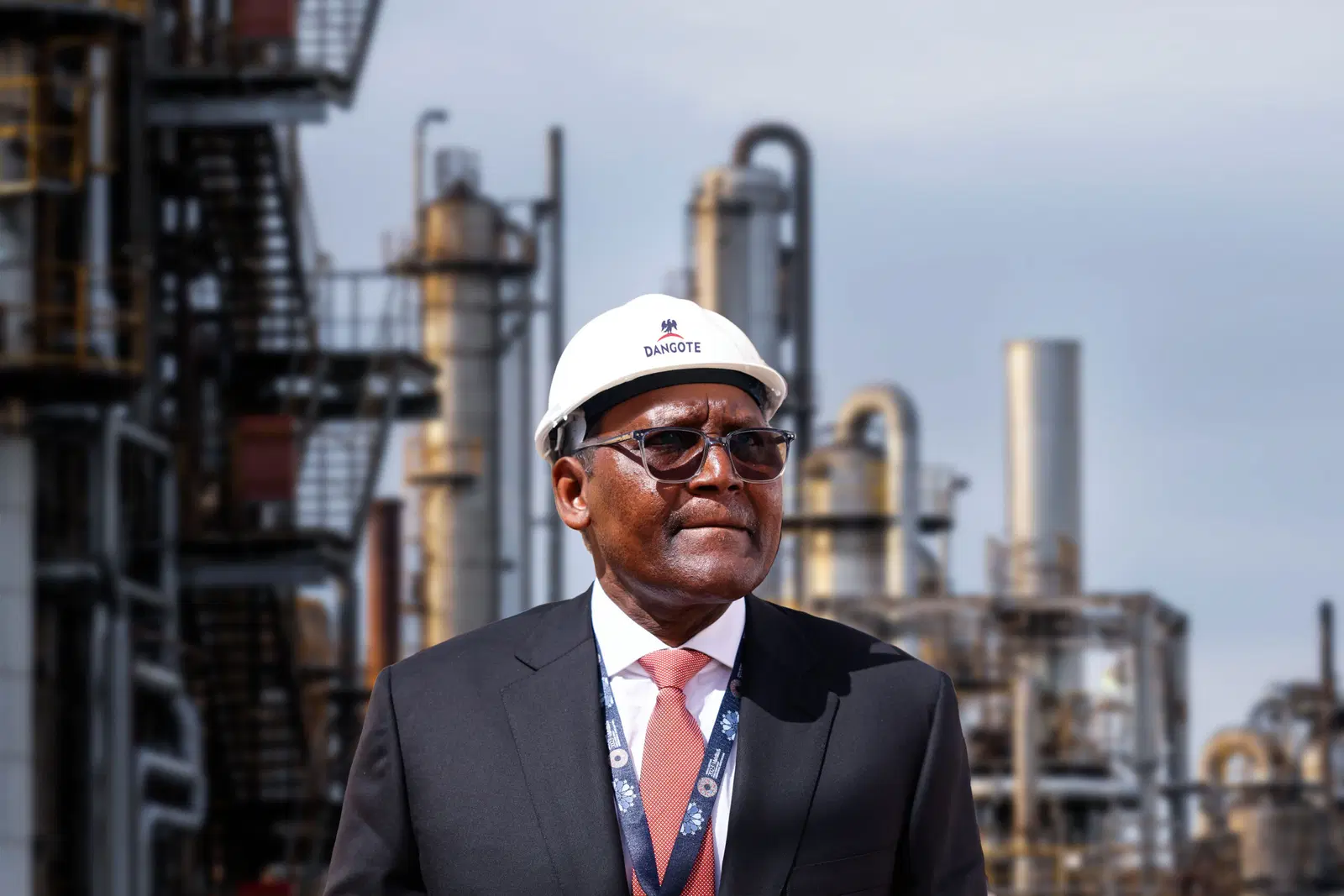
Alhaji Aliko Dangote, President and Chief Executive Officer of Dangote Industries Limited, has said the Initial Public Offering, IPO, of Dangote Petroleum Refinery and Petrochemicals, FZE, would democratise wealth creation by giving Nigerians and investors globally an opportunity to own shares in one of Africa’s major industrial projects.
Dangote stated this yesterday at the “Facts Behind the Offer” presentation and opening gong ceremony for the refinery’s IPO in Lagos, where the Nigerian Exchange Limited, NGX, formally opened the N2.2 trillion offer.
The IPO comprises 4.1 billion new ordinary shares offered at N525 per share, with a minimum subscription of 10 shares valued at N5,250. The offer is scheduled to close on October 13, subject to the terms contained in the prospectus.
Describing the offer as a historic moment for Nigeria’s capital market, the Dangote Group and Africa, Dangote said: “It would enable ordinary Nigerians and investors globally to own shares in one of Africa’s major industrial projects.
“What initially belongs to a country, begins in a deeper sense, now belongs to the people. Today is such a moment; today is a historic day
“The IPO is not simply about listing a company but creating a new possibility for Nigeria and Africa by broadening ownership of a major industrial asset.
“The decision to offer shares to the public was driven by the desire to allow more people participate in and benefit from the prosperity created by the refinery.
“An asset of this magnitude should not create value for only a very few people. It should create value for millions of people, not only Nigerians, but all over the world.”
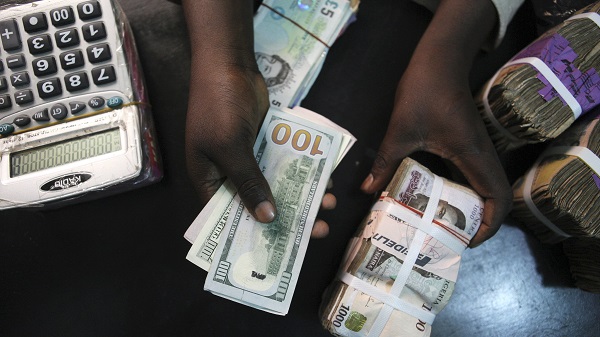
The Nigerian currency, Naira (₦), continued its battle against the United States dollar at the official foreign exchange market on Saturday.
Daily Voice reports that data from the Central Bank of Nigeria (CBN) showed that the local currency sold at ₦1,321.2160/1$ on Sunday.
The latest rate is the same as Saturday’s rate of ₦1,321.2160/1$.
At the parallel market (black market), however, the naira closed on Sunday at ₦1,400 to the dollar.
The offers by commercial banks, Bureau de Change (BDC) operators, and other foreign exchange dealers may, however, differ from the reference rates due to transaction margins and prevailing demand and supply conditions.
Market participants will continue to monitor foreign exchange inflows, demand for dollars, and CBN policies for indications of whether the naira can sustain its gains through the month.


Minimum Wage: Proposed Salary Structure for Nigerian Workers, Levels 1–17 Emerges

‘You Will Hear Full Details Today’ – Wike Speaks On Clash With APC Govs

Tinubu To Appoint Wike As APC Campaign Coordinator For 2027 Election

Former Super Eagles Star Loses Life Savings, Duped By A Pastor of ₦1.2 Billion

I’m A Married Man, I Can Never Get Myself Involved With Such A Thing, Delta Gov Aide Reveals Why He Offered Comfort ₦500,000 Job

Lagos Imposes ₦250,000 Fine For Illegal Waste Disposal

-
 Tech2 days ago
BREAKING: Tears as Prominent Nigerian Ex-Governor Dies in UK
-
Tech2 days ago
Government Declares Monday, September 21 Public Holiday
-
 News1 day ago
Tinubu To Appoint Wike As APC Campaign Coordinator For 2027 Election
-
 Politics22 hours ago
‘You Will Hear Full Details Today’ – Wike Speaks On Clash With APC Govs
-
 News19 hours ago
Minimum Wage: Proposed Salary Structure for Nigerian Workers, Levels 1–17 Emerges