Business
Nigeria Suffers Nearly N1tn Export Loss After Trump Tariff


Nigeria’s exports to the United States fell by N940.98bn in the first nine months of 2025, even as imports from America more than doubled, reversing the trade balance that favored Nigeria a year earlier, findings from the National Bureau of Statistics’ foreign trade data have shown.
An analysis of the NBS figures for Q1–Q3 2024 and Q1–Q3 2025 showed that Nigeria exported goods worth N3.65tn to the US in the first nine months of 2025, down from N4.59tn recorded in the corresponding period of 2024, representing a decline of 20.5 per cent or N940.98bn.
Over the same nine-month period, Nigeria’s imports from the US rose sharply to N6.80tn from N3.01tn, an increase of 125.5 per cent or N3.78tn, indicating that Nigeria bought far more from the US than it sold to the market in 2025.
This left Nigeria with a trade deficit of about N3.15tn with the United States in the first nine months of 2025, compared with a trade surplus of N1.57tn in the corresponding period of 2024.
The deterioration coincided with Washington’s implementation of its “reciprocal” tariff regime, under which Donald Trump signed an executive order raising Nigeria’s tariff rate from 14 per cent to 15 per cent.
The order, issued late July, took effect on August 7, 2025. Although crude oil has been exempted in several cases, the higher duty applies directly to a wide range of non-oil Nigerian exports, creating uncertainty for American importers and dampening demand ahead of and after the effective date.
With crude oil exports largely exempted from the new tariff regime, non-oil exports appear to have borne the brunt of the disruption. In the first nine months of 2024, Nigeria’s exports to the US rose steadily quarter-on-quarter, from N1.31tn in Q1 to N1.59tn in Q2 and N1.69tn in Q3.

Imports, by contrast, remained relatively moderate at N1.01tn, N965.50bn, and N1.04tn respectively. This resulted in trade surpluses of N301.94bn in Q1, N620.99bn in Q2, and N649.71bn in Q3, culminating in a cumulative surplus of N1.57tn for the nine-month period.
That trend reversed sharply in 2025. Although exports opened the year at N1.54tn in Q1, they fell to N1.36tn in Q2 and then plunged to N743.63bn in Q3. Imports followed the opposite trajectory, rising from N1.42tn in Q1 to N2.16tn in Q2 and surging further to N3.22tn in Q3.
Quarter-on-quarter analysis showed that exports declined by 11.9 per cent between Q1 and Q2 2025, before collapsing by 45.3 per cent between Q2 and Q3. Imports, meanwhile, jumped by 51.8 per cent between Q1 and Q2 and rose by another 49.1 per cent between Q2 and Q3, rapidly widening Nigeria’s trade deficit with the US.
On a year-on-year basis, exports to the US grew by 17.7 per cent in Q1 2025 compared with Q1 2024, but the trend reversed thereafter. Exports fell by 14.3 per cent in Q2 2025 compared with Q2 2024 and plunged by 56.0 per cent in Q3 2025 relative to Q3 2024.
Imports increased sharply across all quarters, rising by 40.9 per cent in Q1, 123.5 per cent in Q2, and 209.4 per cent in Q3. The sharp contraction in export earnings explains why the United States dropped out of Nigeria’s top five export destinations by Q2 and Q3 of 2025, despite remaining one of Nigeria’s largest sources of imports.
Product-level data from the NBS further shows the imbalance. In Q1 2025, Nigeria’s exports to the US were dominated by crude petroleum oils valued at N779.38bn, followed by urea at N240.17bn and kerosene-type jet fuel at N214.30bn. Other export items included petroleum gases in gaseous state valued at N95.97bn and standard quality cocoa beans at N58.84bn.
Imports from the US in Q1 2025 were led by crude petroleum oils worth N726.84bn, alongside used diesel vehicles above 2,500cc valued at N93.51bn, lubricating oil additives at N60.12bn, soya beans at N45.04bn, and butanes at N32.85bn.
By Q2 2025, Nigeria’s export basket to the US had narrowed significantly, led by cocoa beans worth N37.39bn and urea valued at N106.44bn, alongside technically specified natural rubber at N10.43bn and leather products valued at N127.22m.
Imports, however, expanded sharply, with crude petroleum oils alone valued at N1.34tn, followed by used vehicles, wheat, motor spirit, and denatured alcohol. In Q3 2025, exports dwindled further to relatively minor items such as soya bean flour valued at N23.60bn, cocoa powder preparations worth N36.83m, and technically specified natural rubber valued at N5.03bn.
Imports from the US continued to surge, with crude petroleum oils rising to N2.31tn, alongside strong inflows of used vehicles, wheat, and industrial plastics. With the US no longer among Nigeria’s top five export destinations by mid-2025 and imports accelerating rapidly, the figures highlight growing structural weaknesses in Nigeria’s trade position and the vulnerability of its export earnings to external policy shifts.
FG pledges resilience
Earlier in September, President Bola Tinubu said his administration will remain resilient and has no fear of the trade policy direction of US President Donald Trump, particularly tariffs targeting Nigerian exports. The President cited Nigeria’s current economic trajectory and growing non-oil revenues as buffers against external shocks. Tinubu said, “If non-oil revenue is growing, then we have no fear of whatever Trump is doing on the other side.”
Also, Nigeria’s Minister of Industry, Trade and Investment, Jumoke Oduwole, said the country would not be stampeded into retaliatory action but would continue on its path of reform and diversification. “Nigeria remains responsive; we’re not reacting. We’re focused on the eight-point agenda of President Bola Tinubu. We will continue to support domestic investors and expand market access for Nigerian businesses,” Oduwole said.
She noted that while the United States remains an important trade partner, Nigeria is strengthening its African Continental Free Trade Area strategy and boosting non-oil exports, which grew by 24 per cent year-on-year in the first quarter of 2025.
“It’s mostly an energy trading relationship, but we are waiting to see what happens with AGOA (African Growth and Opportunity Act) in September. We are also growing exports to other African countries and expanding partnerships with Brazil, China, Japan, and the UAE,” she added.
The minister stressed that Nigeria would seize opportunities for South–South cooperation, pursue export diversification, and reduce dependence on the American market.
Stakeholders in Nigeria’s export sector earlier called on the United States of America to review the tariffs on Nigerian products, while describing the tariff as an opportunity for the country to expand its non-oil exports.
Experts speak
Stakeholders led by the Nigerian American Chamber of Commerce and the Nigerian Export Promotion Council noted that the US tariffs should not be seen only as a challenge but also as a window for growth.
Also, a development economist and Chief Executive Officer of CSA Advisory, Dr Aliyu Ilias, said Nigeria should view the current trade situation as an opportunity to adapt. “I think it’s a good time that this is happening to Nigeria. Trump’s tariff is not only for Nigeria. The advantage is that we are now exporting more overall, which is positive for us,” he said.
Ilias argued that Nigeria could use its position within BRICS and other international alliances to reduce vulnerability and build resilience. He added that with other countries such as India and China also facing US tariffs, Nigeria had an opening to forge new partnerships.
“We also have to start being on our own. We can trade with other partners and see, because other partners are also looking for partners. The tariff that is affecting us is also affecting others, so it may be a good opportunity,” he added.
Similarly, renowned economist and Chief Executive Officer of the Centre for the Promotion of Private Enterprise, Dr Muda Yusuf, downplayed the impact of the US tariffs on Nigeria. “Our trade with the US is not that strategic. When anything goes wrong, it is not as if it can have any fundamental effect on our economy. Our trade exposure to them is very limited,” Yusuf explained.
He noted that Nigerian exports to the US are dominated by crude oil and a handful of other commodities such as fertilizers, making the country’s trade profile narrow and underdeveloped in non-oil areas. Yusuf added that Nigeria’s tariff exposure is relatively moderate compared with other countries. However, he identified another challenge beyond tariffs: US visa policy.
“The bigger challenge for Nigeria’s trade relationship with the U.S. is Washington’s visa policy. Barriers to travel limit business interactions and investment inflows. That is more critical than tariffs in the long run,” he said.
Since its inception, the Trump administration has steadily rolled out a series of visa restrictions and travel bans targeting Nigeria and several other countries.
He has cited the need to reform the US immigration system, strengthen border security, and improve the vetting of foreign nationals as justification for the decisions.
These measures, which have generated diplomatic unease and personal distress, reached a new phase with the latest proclamation signed by the US President.
The proclamation-imposed travel restrictions on Nigerians and citizens of 16 other African countries. According to the White House, holders of the B-1, B-2, B-1/B-2, F, M, and J visas are barred from entering the United States from January 1, 2026.
The visa categories cover business and tourist travel, as well as students and exchange visitors, effectively affecting a broad spectrum of Nigerians.
Beyond security concerns, the US government also cited what it described as a high rate of visa overstays by Nigerian nationals as part of the justification for the restrictions.

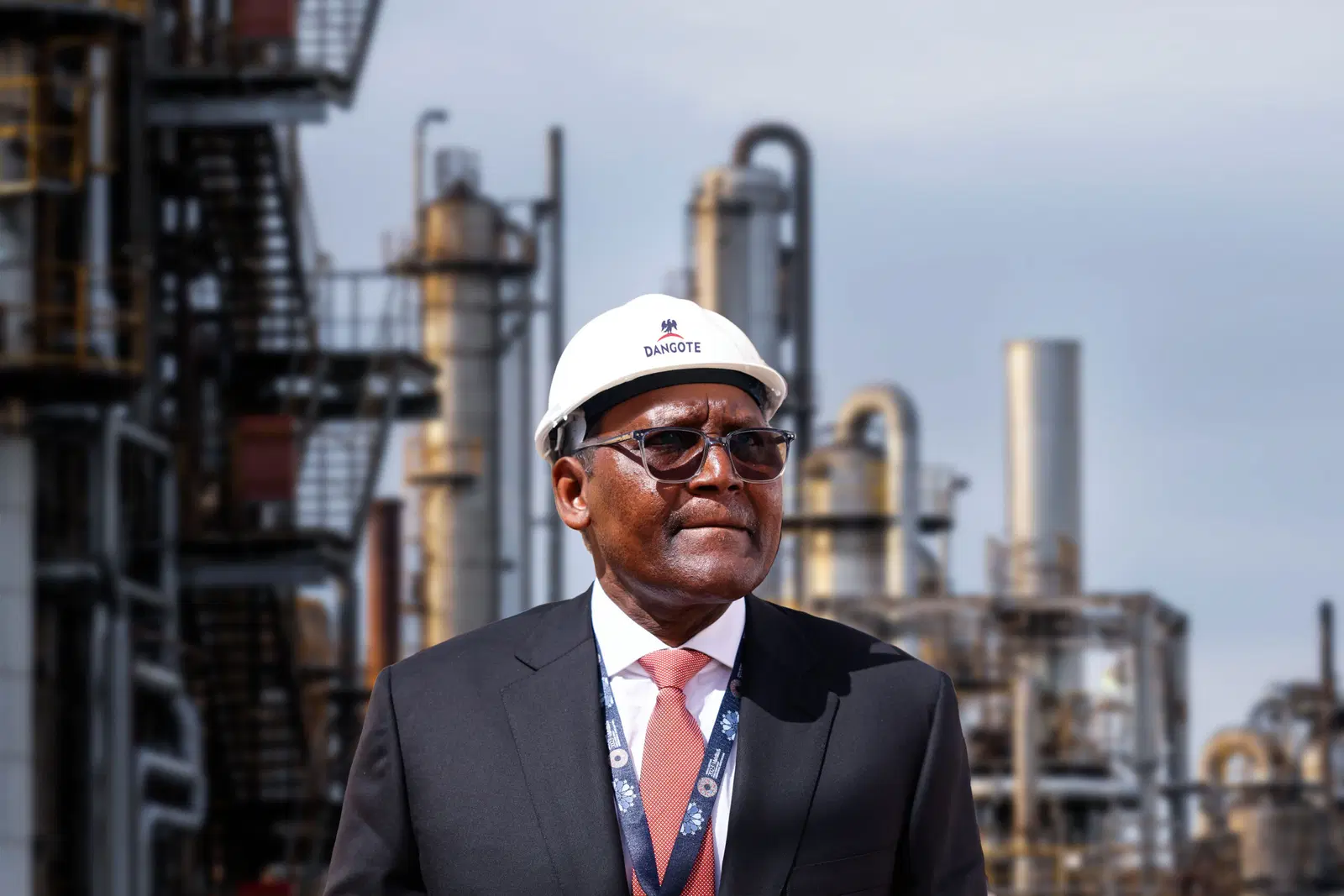
The Emir of Kano, Muhammadu Sanusi II, has warned prospective investors against using their children’s school fees or selling their homes to invest in shares.
Sanusi gave the warning on Thursday while speaking at the Dangote Refinery Initial Public Offering investor roadshow in Kano.
He urged Kano residents and other prospective investors to invest only money they could afford to set aside for some time, saying they could consider amounts such as N10,000, N20,000 or N30,000.
He said, “Do not take your children’s school fees and put in shares, Do not sell the house that you live in and put in shares.
“But what you can afford,10,000, 20,000, 30,000, what you can afford to set aside for some time, set it aside. And if you look at the fundamentals of the economy, over time you can be assured that this investment will grow, and you will not regret it.”
The Emir was speaking as part of the ongoing investor outreach for the Dangote Refinery IPO, which opened on September 14.
Sanusi urged Kano residents to participate in the capital market, saying they should seek to become shareholders in the refinery founded by Kano-born businessman, Aliko Dangote.
“I speak as the Emir of Kano, I would like my people to be owners of this company.
“I do not want us to be left behind in the capital markets. I do not want us to be left behind in financial inclusion. So this is the time and this is the opportunity,” he said.
The Emir also urged representatives of unions and other groups to educate their members about the opportunity to invest.
He advised prospective investors to adopt a long-term approach rather than buying shares in anticipation of quick profits.
“And I’m not talking about someone who will buy 5,000 shares and want to sell tomorrow and believe he will get 10,000. No, I’m talking about you have some money, put it in, leave it there for some time, and just watch your money grow.
“Forget about it for some time. You’ll be surprised in five years the 10,000 Naira you invest today, what it will be. The 100,000 Naira you invest, what it will be,” Sanusi said.
Sanusi also said the location of the refinery should not discourage Kano residents from investing, stressing that shareholders, rather than the location of the facility, determine ownership of the company.
“It doesn’t matter where the refinery is located. It could be located in Lagos, or Ibadan, or on the moon. It is the shareholders who own it.
“It is the shareholders who own it. It’s the shareholders who take the return. It is the shareholders who own the profit,” he said.
The Emir described Dangote as a son of Kano and urged residents to take advantage of the IPO to have a stake in the company.
“We have heard Lagos claim Aliko. I know very soon even Egypt will claim him, America will claim him. But we all know where he comes from,” Sanusi said.
He added, “I would like to say that this is his grand homecoming. We are happy to donate him.
“We are happy to share him, but please do not take him away from us.”
Sanusi also highlighted the refinery’s operations, saying prospective shareholders could see the assets and activities of the company, including its production of refined petroleum products and fertiliser.
He said the refinery was also creating direct and indirect jobs and had secured its gas supply, port access and markets.
-Punch
Alhaji Aliko Dangote, President and Chief Executive Officer of Dangote Industries Limited, has said the Initial Public Offering, IPO, of Dangote Petroleum Refinery and Petrochemicals, FZE, would democratise wealth creation by giving Nigerians and investors globally an opportunity to own shares in one of Africa’s major industrial projects.
Dangote stated this yesterday at the “Facts Behind the Offer” presentation and opening gong ceremony for the refinery’s IPO in Lagos, where the Nigerian Exchange Limited, NGX, formally opened the N2.2 trillion offer.
The IPO comprises 4.1 billion new ordinary shares offered at N525 per share, with a minimum subscription of 10 shares valued at N5,250. The offer is scheduled to close on October 13, subject to the terms contained in the prospectus.
Describing the offer as a historic moment for Nigeria’s capital market, the Dangote Group and Africa, Dangote said: “It would enable ordinary Nigerians and investors globally to own shares in one of Africa’s major industrial projects.
“What initially belongs to a country, begins in a deeper sense, now belongs to the people. Today is such a moment; today is a historic day
“The IPO is not simply about listing a company but creating a new possibility for Nigeria and Africa by broadening ownership of a major industrial asset.
“The decision to offer shares to the public was driven by the desire to allow more people participate in and benefit from the prosperity created by the refinery.
“An asset of this magnitude should not create value for only a very few people. It should create value for millions of people, not only Nigerians, but all over the world.”
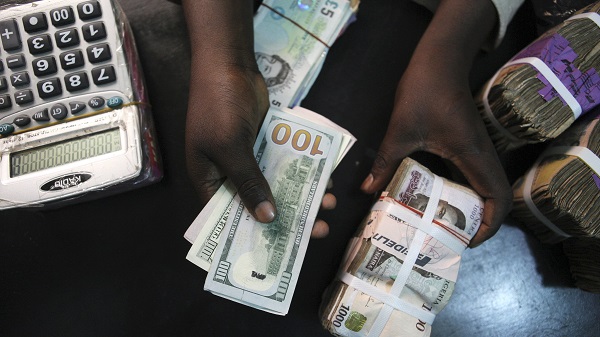
The Nigerian currency, Naira (₦), continued its battle against the United States dollar at the official foreign exchange market on Saturday.
Daily Voice reports that data from the Central Bank of Nigeria (CBN) showed that the local currency sold at ₦1,321.2160/1$ on Sunday.
The latest rate is the same as Saturday’s rate of ₦1,321.2160/1$.
At the parallel market (black market), however, the naira closed on Sunday at ₦1,400 to the dollar.
The offers by commercial banks, Bureau de Change (BDC) operators, and other foreign exchange dealers may, however, differ from the reference rates due to transaction margins and prevailing demand and supply conditions.
Market participants will continue to monitor foreign exchange inflows, demand for dollars, and CBN policies for indications of whether the naira can sustain its gains through the month.


Court Bans INEC From Accepting NDC Candidate For Imo East

EFCC Arrests Olori Tejuoso Over Alleged N600m Fraud

Courts Sacks ADC Prominent Candidate

Former Super Eagles Star Loses Life Savings, Duped By A Pastor of ₦1.2 Billion

I’m A Married Man, I Can Never Get Myself Involved With Such A Thing, Delta Gov Aide Reveals Why He Offered Comfort ₦500,000 Job