
Foreign
Analysts: Israel-Iran Conflict Exposes China’s “Limited Leverage”

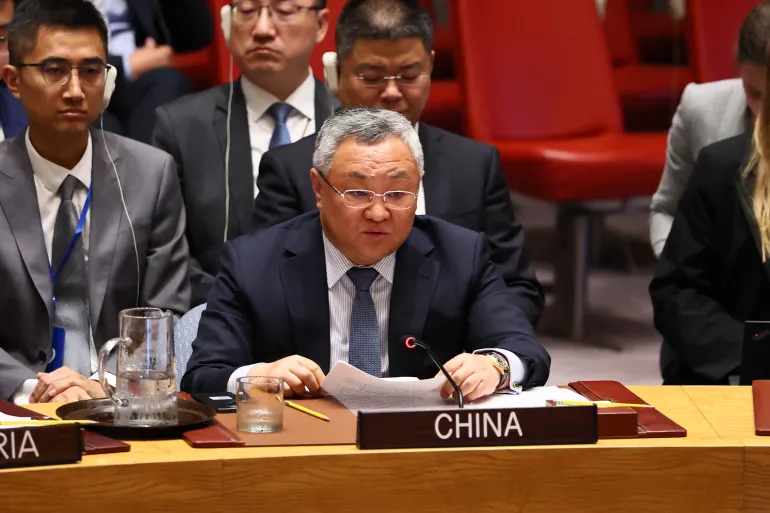
China called for a ceasefire. But despite its recent history of mediation in the region, its role was limited this time.
Through the 12 days of the recent Israel-Iran conflict, China moved quickly to position itself as a potential mediator and voice of reason amid a spiralling regional crisis.
The day after Israel’s unprovoked attack on Iran on June 13, Beijing reached out to both sides to express its desire for a mediated solution even as the country’s top diplomat, Foreign Minister Wang Yi, condemned Israel’s actions as a violation of international law.
Chinese President Xi Jinping soon followed with calls for de-escalation, while at the United Nations Security Council, China joined Russia and Pakistan in calling for an “immediate and unconditional ceasefire”.
When Iran threatened to blockade the strategically important Strait of Hormuz, through which 20 percent of the world’s oil passes, Beijing was also quick to speak out.
The Ministry of Foreign Affairs instead called for the “international community to step up efforts to de-escalate conflicts and prevent regional turmoil from having a greater impact on global economic development”.
Beijing’s stance throughout the conflict remained true to its longstanding noninterference approach to foreign hostilities. But experts say it did little to help shore up its ambition of becoming an influential player in the Middle East, and instead exposed the limitations of its clout in the region.

Why China was worried
Unlike some countries, and the United States in particular, China traditionally approaches foreign policy “through a lens of strategic pragmatism rather than ideological solidarity”, said Evangeline Cheng, a research associate at the National University of Singapore’s Middle East Institute.
This approach means China will always focus on protecting its economic interests, of which it has many in the Middle East, Cheng told Al Jazeera.
China has investments in Israel’s burgeoning tech sector and its Belt and Road infrastructure project spans Iran, Saudi Arabia, Qatar, Oman, Kuwait, Iraq, Egypt and the United Arab Emirates.
Critically, China relies on the Middle East for more than half of its crude oil imports, and it’s the top consumer of Iranian oil. A protracted war would have disrupted its oil supplies, as would an Iranian blockade of the strategically important Strait of Hormuz – something threatened by Tehran’s parliament during the conflict.
“War and security instability not only undermines Chinese investment and trade and business… but also the oil price and gas energy security in general,” said Alam Saleh, a senior Lecturer in Iranian Studies at the Australian National University.
“Therefore, China seeks stability, and it disagrees and opposes any kind of military solution for any type of conflict and confrontations, no matter with whom,” he said.
John Gong, a professor of economics at the University of International Business and Economics in Beijing, told Al Jazeera that China’s top concern through the conflict was to avoid “skyrocketing oil prices” that would threaten its energy security.
Flexing diplomatic muscle, protecting economic might
Aware of China’s friendly relations with Iran and Beijing’s economic fears, US Secretary of State Marco Rubio called on Beijing to keep Tehran from closing the Strait of Hormuz as ceasefire negotiations stumbled forward this week.
It was a brief moment of acknowledgement of Beijing’s influence, but experts say China’s overall diplomatic influence remains limited.
“China’s offer to mediate highlights its desire to be seen as a responsible global player, but its actual leverage remains limited,” Cheng said. “Without military capabilities or deep political influence in the region, and with Israel wary of Beijing’s ties to Iran, China’s role is necessarily constrained.”
To be sure, Beijing has demonstrated its ability to broker major diplomatic deals in the region. In 2023, it mediated the normalisation of relations between Iran and Saudi Arabia. While seen as a huge diplomatic win for China, experts say Beijing owed much of its success to fellow mediators, Oman and Iraq. China also mediated an agreement between Palestinian factions, including Hamas and Fatah, in July 2024, under which they committed to working together on Gaza’s governance after the end of Israel’s ongoing war on the enclave.
But William Yang, a senior analyst for Northeast Asia at the Brussels-based International Crisis Group, said the odds were stacked against China from the beginning of the latest conflict due to Israel’s wariness towards its relationship with Iran.
In 2021, China and Iran signed a 25-year “strategic partnership”, and Iran is an active participant in the Belt and Road project. Iran has also joined the Beijing-led Shanghai Cooperation Organisation and this year took part in China’s “Maritime Security Belt” naval exercises.
Iran’s “resolute opposition to American hegemony” also aligns well with China’s diplomatic interests more broadly, compared with Israel’s close ties to the US, Yang said.
China’s dilemma
It’s a scenario that could be repeated in the future, he said.
“This case also reinforces the dilemma that China faces: while it wants to be viewed as a great power that is capable of mediating in major global conflicts, its close relationship with specific parties in some of the ongoing conflicts diminishes Beijing’s ability to play such a role,” Yang said.
For now, Beijing will continue to rely on the US as a security guarantor in the region, he added.
“It’s clear that China will continue to focus on deepening economic engagement with countries in the Middle East while taking advantage of the US presence in the region, which remains the primary security guarantor for regional countries,” Yang said.
“On the other hand, the US involvement in the conflict, including changing the course of the war by bombing Iranian nuclear sites, creates the condition for China to take the moral high ground in the diplomatic sphere and present itself as the more restrained, calm and responsible major power,” he said.
Aljazeera.com



No fewer than six people, including popular billionaire businessman, Wicknell Chivayo and his wife, Lucy Muteke, have been killed in a helicopter crash.
Naija News learnt that the family spokesperson, Herbert Chivayo, confirmed the deaths to ZBC News, saying those closest to the couple were struggling to come to terms with the loss.
Similarly, the Information, Publicity and Broadcasting Services Permanent Secretary, Nick Mangwana, also confirmed the incident in a statement on 𝕏.
He said the helicopter was carrying the businessman, three other passengers and two pilots when it crashed in Marondera, Mashonaland East on Wednesday, September 30, 2026.
The government extended its condolences to the victims’ families and friends.
The statement read, “The Government wishes to confirm that a helicopter crash has occurred, involving one high-profile businessman, three other passengers, and two pilots.
“Current information indicates that there were no survivors in this crash. The Zimbabwe Republic Police will confirm the names of the victims in due course.
“We extend our deepest condolences and prayers to the victims, their families, and their friends during this difficult time.”
In other news, the Chairman of the Nigeria Democratic Congress (NDC) in Fiidi Council Ward, Makurdi Local Government Area of Benue State, Igbu Job Terhemen, has reportedly been killed by unknown assailants.
Terhemen was allegedly attacked in the early hours of Wednesday and later found unconscious near his residence along the Makurdi-Otukpo Road.
According to Daily Trust, a friend of the deceased, who spoke on condition of anonymity, said Terhemen left his home on Tuesday evening to watch a local football match in the Kanshio area of Makurdi.
According to the source, he did not return home after the match, prompting relatives and friends to search for him.
The source said Terhemen was eventually found around 2 am in a bush near his residence, close to the NNPC depot.
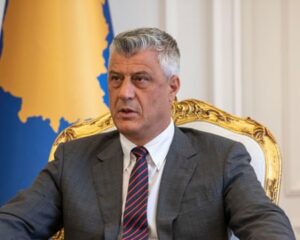
A court in The Hague sentenced Kosovo’s former president Hashim Thaci to 25 years in prison on Thursday after finding him guilty of war crimes committed during the late 1990s conflict in which Kosovo broke away from Serbia
The Kosovo Specialist Chambers convicted Thaci, 58, of murder, torture, cruel treatment, and the illegal detention of civilians
The tribunal determined that he bore criminal responsibility as the top commander of the Kosovo Liberation Army (KLA), the ethnic Albanian separatist force that fought Serbian security forces between 1998 and 1999. Presiding judge Charles Smith said Thaci “actively participated in and encouraged crimes.”
The court established that KLA forces under his command murdered 96 people identified as political opponents or perceived collaborators with Serbian authorities. A further 385 people were arbitrarily detained, 303 were tortured, and around 50 others suffered cruel treatment.
Judge Smith told the court: “The scale and nature of the crimes committed were very serious. The so-called intelligence on which many of these victims were arrested, detained and killed was little more than unverified rumours. Based on that information, victims were called and described as spies and collaborators and violently treated.”
The American judge was careful to clarify that the proceedings were “not about the legitimacy of the Kosovo Liberation Army” or Kosovo’s goal of independence. Thaci, who denied all charges, stood in silence as the sentence was delivered. He retains the right to appeal.
Three other former senior KLA figures were tried alongside Thaci. Jakup Krasniqi also received a 25-year sentence, while Kadri Veseli was jailed for 18 years and Rexhep Selimi for 13 years. All four had denied the charges.
The panel acquitted the four men on six counts of crimes against humanity, ruling that prosecutors failed to prove those crimes were part of a widespread and systematic attack on civilians.
The verdicts drew an immediate public response in Kosovo, where Thaci remains a revered figure for many ethnic Albanians. Thousands had gathered in the capital Pristina ahead of the ruling, with crowds filling a central square waving red and black Albanian flags and banners calling for the men’s acquittal. When the guilty verdicts were announced on a big screen, many in the crowd booed and wept.
Thaci had resigned from the Kosovo presidency in late 2020 to face the charges, after nearly three years of trial proceedings. In his closing address to the court in February, he said: “Throughout my life, I stood with the people of Kosovo defending freedom, life and dignity. I was always guided by the Western ideals of democracy, equality and justice.”
Albania’s Prime Minister Edi Rama reacted to the verdict by posting an image of barbed wire stretched across a map of Europe, with a single word: “Unbelievable.”
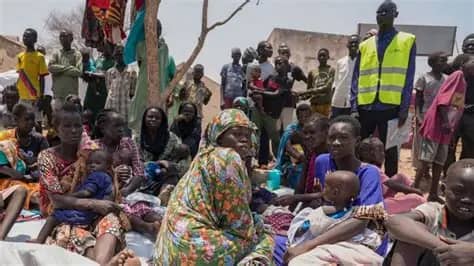
A new investigation by The New York Times claims Sudan’s military ran an organized program in 2024 to develop and produce chlorine-based munitions, escalating long-standing allegations of chemical weapons use in the country’s war.
According to the report, the Times reviewed nearly 150 documents, plus photos, videos, audio recordings and thousands of messages. The materials describe months of work to design, test and manufacture about 300 bombs filled with chlorine.
Brigadier General Tariq Hussein is named as one of the principal supervisors. The documents detail a munition that combined explosives with large quantities of chlorine, and tests carried out before production.
One of the most serious claims involves the source of the chemical. The dossier alleges that some chlorine was taken from a water-treatment facility in Omdurman, at a time when Sudan is facing cholera outbreaks and a collapse of basic services.
The investigation also points to senior leadership. Voice and text messages reportedly implicate army chief Gen. Abdel Fattah al-Burhan in knowledge of the program, and in orders to “remove all traces” after U.S. pressure and sanctions.
This is not the first time chemical weapons have been alleged in Sudan. Independent.ng reported that the Sudanese Alliance for Rights filed a case at the International Criminal Court against four senior Port Sudan Authority leaders, including al-Burhan, accusing them of using chemical weapons and committing serious violations against civilians. The lawsuit also names Yasser al-Atta, Shams al-Din al-Kabashi and Major General Taher Mohammed, and calls for an urgent ICC investigation.
The U.S. has already acted on earlier findings.
Independent.ng noted that Washington imposed additional penalties in May 2025 over the alleged use of chemical weapons, further linking Sudan’s war to international politics.
Chlorine is permitted for water purification, but using it as a weapon violates the Chemical Weapons Convention, which Sudan ratified. Experts say its civilian availability makes it easier to obtain and harder to monitor than military-grade agents.
With the conflict since April 2023 already causing mass displacement and famine, rights groups are now calling for an independent international investigation with access to sites, documents and the chain of command.


Salary: Fresh Update Emerges On Payment To Nigerian Workers

Obasanjo’s Son Picks Side In 2027 Race