Business
Aviation Tax Removal Requires Govt Consensus, Says Keyamo


Minister of Aviation and Aerospace Development, Festus Keyamo, has stated that the removal of taxes in the aviation sector cannot be decided by one individual, noting that such policies are subject to collective government approval and legislative review.
He said this at an event in Abuja on Monday, celebrating 100 years of aviation in Nigeria. The minister clarified that despite industry pressure over multiple taxation, tax removal lies beyond the jurisdiction of the aviation ministry alone. He stressed that statutory levies require input from key institutions, including the Ministry of Finance, tax authorities, and the National Assembly.
“You can see that I am not the owner of Nigeria. There’s a Ministry of Finance. There’s a tax authority. The Minister of Aviation cannot wake up overnight and say, I’m removing taxes. It’s a whole ecosystem, a whole government system that will meet on that. Some of these things are statutory; they are laws already.”
He explained that the legislature must also deliberate on tax adjustments before they can be enforced. According to him, President Bola Tinubu has already shown commitment to addressing tax burdens in the industry.
The National Assembly will be involved too, to remove some of these from the laws. But let me tell you, Mr President himself is so proactive. For the laws that are not taking place, for example, the tax law that was about to take place, he immediately excluded aviation, the four percent tax. The money could have been higher.”
Keyamo added that a review process is now in motion to tackle multiple taxation affecting airline operations.
“The President has set up a team to review all of these multiple taxations. And so we are getting the ball rolling.”

He maintained that the minister alone cannot abolish statutory taxes. “I, as aviation minister, cannot stand up overnight and remove this tax, because I’m not the owner of Nigeria. I’m not the owner. It’s the federal government that owns this money. So we are getting there.”
Beyond taxation, Keyamo highlighted the infrastructure deficit as the biggest challenge facing Nigeria’s aviation growth. He said the country must develop fully functional airport hubs capable of handling seamless international transit.
“The big elephant in the room is infrastructure. We need to convert our major gateways to proper hubs where you can fly in, go through a process of processing you without even entering the country, into another wing, and then you board again and fly out. Now, we have airlines that have the capacity. They are already doing international routes.”
He argued that Nigerian airlines like Air Peace could operate more profitable, long-haul connecting routes if modern hub systems were in place.
“So, for instance, there’s no reason why Airpeace cannot take you from London. If you are coming to Nigeria, or if you are a resident in London, you can buy an Airpeace ticket going to South Africa. And so they lift you from London, they bring you to Nigeria. You don’t need to come to Lagos. We need that facility to process you into the next wing, and you board the same Airpeace, you are connecting to South Africa.”
He added that domestic carriers rely heavily on such infrastructure to expand their operations. “So we need, first of all, infrastructure to develop proper hubs to assist our airline. Because they also need the hubs. Without those infrastructures, they cannot grow in a way to fly.”
Keyamo listed finance and aircraft leasing access as the second major obstacle to airline growth. “The second one is to ensure that we empower the airlines to have access to credits, access to financing, and access to lease aircraft. These are the two major problems. If not, the problem is not in the traffic.”
Despite current challenges, he maintained that market capacity, population, and location are in Nigeria’s favour. The new tax reform law, recently passed as part of the federal government’s fiscal restructuring, has consolidated several tax statutes into a unified framework aimed at widening revenue generation and reducing administrative overlap.
However, the aviation industry has expressed concern over the removal of certain long-standing exemptions, including duties on aircraft parts and components, VAT on tickets, and levies affecting airline operations.

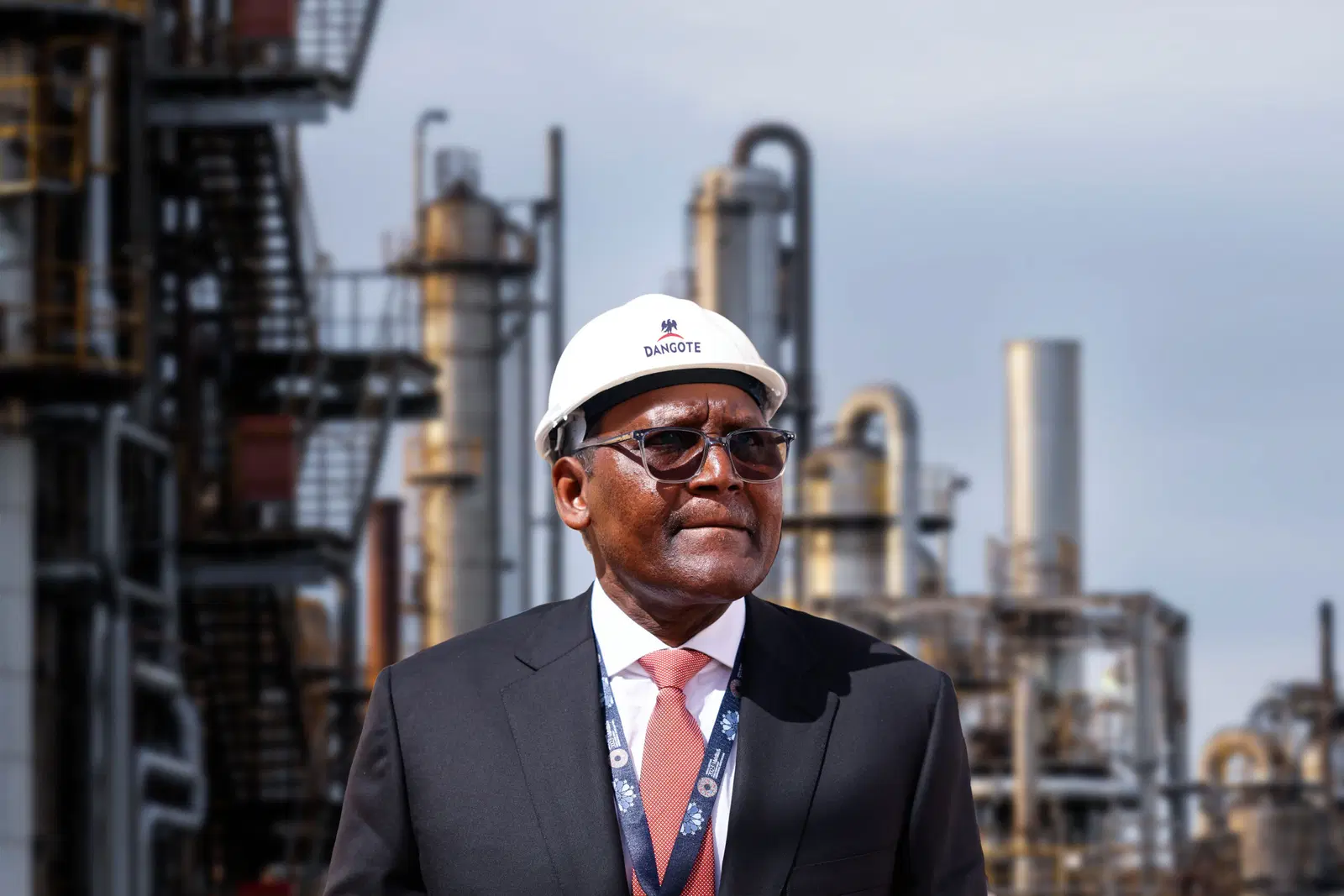
The Emir of Kano, Muhammadu Sanusi II, has warned prospective investors against using their children’s school fees or selling their homes to invest in shares.
Sanusi gave the warning on Thursday while speaking at the Dangote Refinery Initial Public Offering investor roadshow in Kano.
He urged Kano residents and other prospective investors to invest only money they could afford to set aside for some time, saying they could consider amounts such as N10,000, N20,000 or N30,000.
He said, “Do not take your children’s school fees and put in shares, Do not sell the house that you live in and put in shares.
“But what you can afford,10,000, 20,000, 30,000, what you can afford to set aside for some time, set it aside. And if you look at the fundamentals of the economy, over time you can be assured that this investment will grow, and you will not regret it.”
The Emir was speaking as part of the ongoing investor outreach for the Dangote Refinery IPO, which opened on September 14.
Sanusi urged Kano residents to participate in the capital market, saying they should seek to become shareholders in the refinery founded by Kano-born businessman, Aliko Dangote.
“I speak as the Emir of Kano, I would like my people to be owners of this company.
“I do not want us to be left behind in the capital markets. I do not want us to be left behind in financial inclusion. So this is the time and this is the opportunity,” he said.
The Emir also urged representatives of unions and other groups to educate their members about the opportunity to invest.
He advised prospective investors to adopt a long-term approach rather than buying shares in anticipation of quick profits.
“And I’m not talking about someone who will buy 5,000 shares and want to sell tomorrow and believe he will get 10,000. No, I’m talking about you have some money, put it in, leave it there for some time, and just watch your money grow.
“Forget about it for some time. You’ll be surprised in five years the 10,000 Naira you invest today, what it will be. The 100,000 Naira you invest, what it will be,” Sanusi said.
Sanusi also said the location of the refinery should not discourage Kano residents from investing, stressing that shareholders, rather than the location of the facility, determine ownership of the company.
“It doesn’t matter where the refinery is located. It could be located in Lagos, or Ibadan, or on the moon. It is the shareholders who own it.
“It is the shareholders who own it. It’s the shareholders who take the return. It is the shareholders who own the profit,” he said.
The Emir described Dangote as a son of Kano and urged residents to take advantage of the IPO to have a stake in the company.
“We have heard Lagos claim Aliko. I know very soon even Egypt will claim him, America will claim him. But we all know where he comes from,” Sanusi said.
He added, “I would like to say that this is his grand homecoming. We are happy to donate him.
“We are happy to share him, but please do not take him away from us.”
Sanusi also highlighted the refinery’s operations, saying prospective shareholders could see the assets and activities of the company, including its production of refined petroleum products and fertiliser.
He said the refinery was also creating direct and indirect jobs and had secured its gas supply, port access and markets.
-Punch
Alhaji Aliko Dangote, President and Chief Executive Officer of Dangote Industries Limited, has said the Initial Public Offering, IPO, of Dangote Petroleum Refinery and Petrochemicals, FZE, would democratise wealth creation by giving Nigerians and investors globally an opportunity to own shares in one of Africa’s major industrial projects.
Dangote stated this yesterday at the “Facts Behind the Offer” presentation and opening gong ceremony for the refinery’s IPO in Lagos, where the Nigerian Exchange Limited, NGX, formally opened the N2.2 trillion offer.
The IPO comprises 4.1 billion new ordinary shares offered at N525 per share, with a minimum subscription of 10 shares valued at N5,250. The offer is scheduled to close on October 13, subject to the terms contained in the prospectus.
Describing the offer as a historic moment for Nigeria’s capital market, the Dangote Group and Africa, Dangote said: “It would enable ordinary Nigerians and investors globally to own shares in one of Africa’s major industrial projects.
“What initially belongs to a country, begins in a deeper sense, now belongs to the people. Today is such a moment; today is a historic day
“The IPO is not simply about listing a company but creating a new possibility for Nigeria and Africa by broadening ownership of a major industrial asset.
“The decision to offer shares to the public was driven by the desire to allow more people participate in and benefit from the prosperity created by the refinery.
“An asset of this magnitude should not create value for only a very few people. It should create value for millions of people, not only Nigerians, but all over the world.”
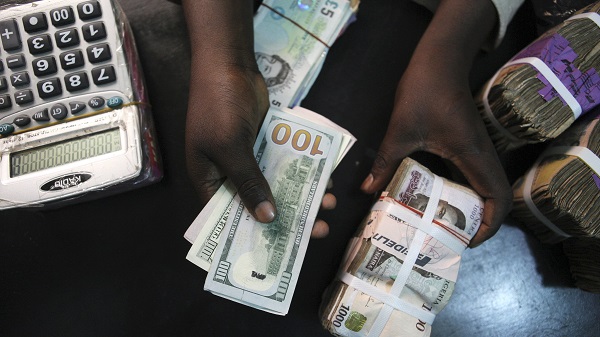
The Nigerian currency, Naira (₦), continued its battle against the United States dollar at the official foreign exchange market on Saturday.
Daily Voice reports that data from the Central Bank of Nigeria (CBN) showed that the local currency sold at ₦1,321.2160/1$ on Sunday.
The latest rate is the same as Saturday’s rate of ₦1,321.2160/1$.
At the parallel market (black market), however, the naira closed on Sunday at ₦1,400 to the dollar.
The offers by commercial banks, Bureau de Change (BDC) operators, and other foreign exchange dealers may, however, differ from the reference rates due to transaction margins and prevailing demand and supply conditions.
Market participants will continue to monitor foreign exchange inflows, demand for dollars, and CBN policies for indications of whether the naira can sustain its gains through the month.


Minimum Wage: Proposed Salary Structure for Nigerian Workers, Levels 1–17 Emerges

‘You Will Hear Full Details Today’ – Wike Speaks On Clash With APC Govs

Tinubu To Appoint Wike As APC Campaign Coordinator For 2027 Election

Former Super Eagles Star Loses Life Savings, Duped By A Pastor of ₦1.2 Billion

I’m A Married Man, I Can Never Get Myself Involved With Such A Thing, Delta Gov Aide Reveals Why He Offered Comfort ₦500,000 Job